


TL;DR:
- Powered toothbrushes improve oral health by providing consistent mechanical motion, timers, and pressure control. Clinical research shows they remove more plaque and reduce gingivitis better than manual brushes when used correctly. Choosing a model with essential features and proper technique increases the benefits of daily brushing.
An automatic toothbrush recommended by dental professionals is a powered oral care device that improves brushing effectiveness through consistent mechanical motion, built-in timing, and pressure control. Unlike manual brushing, which depends entirely on user technique, powered brushes deliver reliable plaque disruption every single session. The industry standard term is “powered toothbrush,” covering both oscillating-rotating models like the Oral-B Pro 1000 and sonic models like the Philips Sonicare 4100. Dentists favor these devices because they remove more plaque, reduce gingivitis, and help people actually brush long enough. Features like two-minute timers and pressure sensors make the difference between a rushed scrub and a clinically effective clean.
What does clinical research say about automatic toothbrush effectiveness?
Powered toothbrushes outperform manual brushing by a measurable margin. A 2014 Cochrane systematic review of 56 trials covering 5,068 participants found that powered brushes reduce plaque by about 21% more than manual brushing after three months and decrease gingivitis by 11%. That is not a marginal gain. It is the difference between controlled gum inflammation and recurring dental visits.
The two dominant technologies work differently. Oscillating-rotating brushes, like those from Oral-B, spin the round brush head back and forth to physically dislodge plaque. Sonic brushes, like Philips Sonicare models, use high-frequency vibrations to break up plaque biofilm and drive fluid between teeth. Both outperform manual brushing, though oscillating-rotating models have slightly stronger evidence in head-to-head comparisons.
“Consistency and adherence to timing guidelines enabled by automatic features drive the oral health advantages of electric toothbrushes.” — Simplyhealth dental guidance
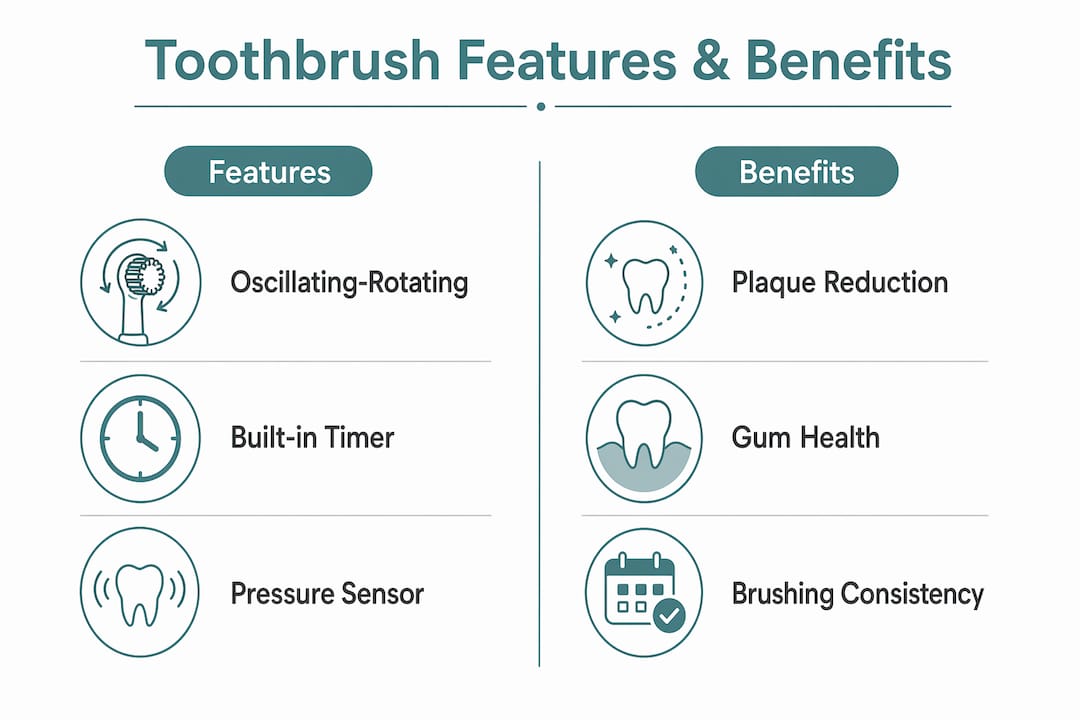
Built-in timers address one of the most common failures in oral hygiene: under-brushing. Timers provide pacing for optimal brushing duration, directly solving the problem of manual routines that fall short of the recommended two minutes. Pressure sensors add a second layer of protection by alerting users when they press too hard, which reduces enamel wear and gum trauma.
| Feature | Clinical benefit |
|---|---|
| Oscillating-rotating head | Stronger plaque removal evidence vs. manual |
| Sonic vibration | Disrupts biofilm between teeth and at gum line |
| Two-minute timer | Ensures full brushing duration compliance |
| Pressure sensor | Prevents enamel abrasion and gum damage |
User technique and baseline oral health still affect outcomes. Someone with advanced gum disease or poor brushing habits will see larger gains than someone who already brushes carefully with a manual brush. The technology creates the conditions for better results. The user still has to show up consistently.
Key features to look for in a dentist-recommended toothbrush
Choosing the right powered toothbrush comes down to a short list of features that dental professionals consistently endorse. Not every premium feature earns its price tag, but a few are genuinely non-negotiable.
- Two-minute timer with quad pacer. The timer keeps you brushing long enough. The quad pacer signals every 30 seconds to shift quadrants, so every section of your mouth gets equal attention. Dentists emphasize that mechanical consistency and timing features are the primary reasons to choose a powered brush.
- Pressure sensor. Pressing too hard is the most common brushing mistake. A pressure sensor alerts you in real time, protecting enamel and gum tissue from unnecessary wear.
- Small, round brush head with soft bristles. A smaller head reaches back molars and curves around each tooth more effectively than a large flat head. Soft bristles clean without abrading.
- Replaceable brush heads. Replace brush heads every 1–3 months or when bristles visibly splay. Worn bristles lose their geometry and clean far less effectively.
- Battery life and ergonomics. A brush you find comfortable to hold and that charges reliably is one you will actually use every day.
For children, look for a brush sized for smaller mouths with a gentler mode. Models designed for ages 4–12 use lower vibration intensity and shorter timer intervals to build good habits without overwhelming young users.
Pro Tip: Mid-range models with a timer and pressure sensor meet most adults’ needs without the cost of app-connected premium tiers. Spending more on replacement heads than on the handle itself is a sound long-term strategy.
How to use an automatic toothbrush correctly
Correct technique with a powered brush is different from manual brushing. Most people make the mistake of scrubbing back and forth, which wastes the brush’s mechanical advantage and risks gum damage.
- Position the brush head at the gum line. Angle the bristles slightly toward the gums, at roughly 45 degrees. This targets the area where plaque accumulates most.
- Let the brush do the work. Proper technique means guiding the brush head slowly from tooth to tooth. Do not scrub or press. The oscillating or sonic action handles the cleaning.
- Spend a few seconds on each tooth surface. Move deliberately through each quadrant. Outer surfaces, inner surfaces, and chewing surfaces all need coverage. Back molars are the most commonly missed.
- Brush twice a day for two full minutes. Brushing routines covering all tooth surfaces along the gum line contribute more to oral health than any single product feature. Frequency and coverage matter most.
- Do not rinse immediately after brushing. Spitting out excess toothpaste but skipping the rinse keeps fluoride in contact with enamel longer. Adults should use toothpaste with 1,350–1,500 ppm fluoride for maximum protection.
- Floss or use interdental brushes daily. A powered toothbrush cleans tooth surfaces effectively. It does not clean between teeth. Flossing or using interdental tools completes the job.
Pro Tip: Follow a consistent path every session, such as starting at the upper right and finishing at the lower right. A fixed route prevents you from skipping sections and builds the habit faster. You can find a full technique walkthrough in this 2-minute plaque guide.
Comparing top dentist-recommended automatic toothbrush models
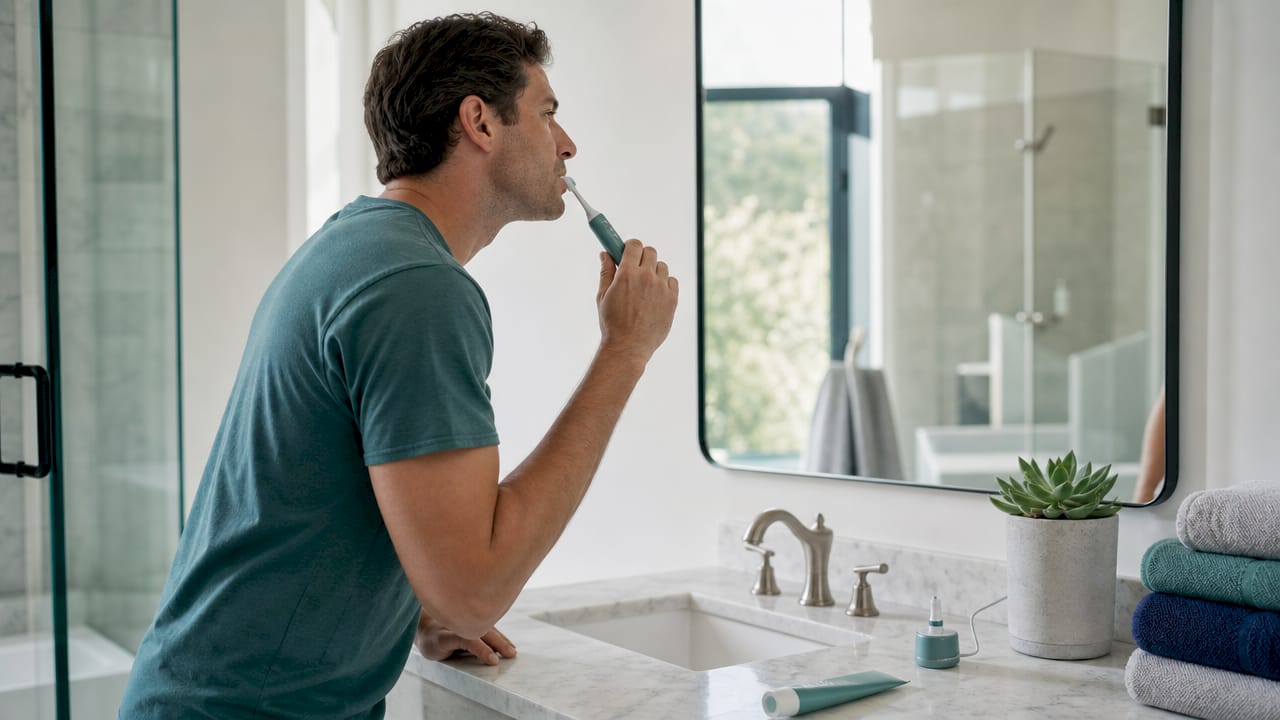
Dentists most frequently recommend oscillating-rotating and sonic models from a short list of well-studied brands. Here is how the most commonly endorsed options compare.
| Model | Technology | Pressure sensor | Timer | Price range |
|---|---|---|---|---|
| Oral-B Pro 1000 | Oscillating-rotating | Yes | 2-minute | $40–$50 |
| Philips Sonicare 4100 | Sonic | Yes | 2-minute, quad pacer | $50–$70 |
| Y-brush Essential Sonic | Sonic | Yes | 2-minute | Mid-range |
| Y-brush Ultra Sonic | Sonic | Yes | 2-minute | Mid-to-upper range |
The Oral-B Pro 1000 is the entry point for oscillating-rotating technology. It includes a pressure sensor and a two-minute timer at a competitive price. Replacement heads are widely available. The Philips Sonicare 4100 adds a quad pacer and uses sonic vibration, which some people find gentler on sensitive gums. Dentists recommend both oscillating-rotating and sonic models for effective plaque control, with the choice often coming down to personal comfort.
Y-brush models use sonic technology and are built around the core features dental professionals prioritize: consistent timing, pressure management, and bristle quality. The Y-brush Essential Sonic is suited for adults who want a clinically grounded daily brush. The Y-brush Ultra Sonic targets those who want a more complete sonic experience. Both include timed brushing features that support the two-minute standard.
Replacement head availability matters as much as the initial purchase. A brush whose heads are hard to find or expensive to replace will cost more over time and may lead to under-maintenance.
Common misconceptions about automatic toothbrushes
Powered toothbrushes carry a few persistent myths that lead people to misuse them or set unrealistic expectations.
- Electric brushes do not replace flossing. A powered brush cleans tooth surfaces. It cannot reach the spaces between teeth where roughly 40% of tooth surfaces lie. Flossing or interdental brushes remain necessary.
- Pressing harder does not clean better. Overbrushing and applying too much force wear enamel and damage gums. The pressure sensor on a quality powered brush exists precisely because this mistake is so common.
- U-shaped automatic brushes are not equivalent to oscillating or sonic models. A published dental study found that U-shaped automatic electric toothbrushes are ineffective for plaque removal compared to oscillating or sonic designs. The shape looks convenient, but the clinical evidence does not support it.
- An electric toothbrush does not guarantee perfect oral hygiene. Technique, frequency, and flossing still determine outcomes. The brush improves your baseline. It does not compensate for skipped sessions or poor coverage.
- All electric toothbrushes are not equally endorsed. Dentists recommend specific designs backed by clinical trials. When choosing a brush, look for models with documented evidence, not just marketing claims.
If you have specific concerns about gum disease, enamel sensitivity, or orthodontic appliances, consult your dentist before switching. A professional recommendation tailored to your oral health history is more reliable than any general guide.
Key takeaways
Dentist-recommended powered toothbrushes deliver measurably better plaque removal and gum health outcomes than manual brushing, but only when used correctly and consistently.
| Point | Details |
|---|---|
| Clinical evidence is strong | Powered brushes reduce plaque by 21% and gingivitis by 11% vs. manual after 3 months. |
| Core features matter most | A timer, pressure sensor, and soft replaceable head cover the essentials for most adults. |
| Technique drives results | Guide the brush slowly; do not scrub. Let the oscillating or sonic action do the work. |
| Replace heads regularly | Swap brush heads every 1–3 months to maintain bristle effectiveness and plaque control. |
| U-shaped designs underperform | Clinical studies show U-shaped automatic brushes are less effective than oscillating or sonic models. |
What I’ve learned after years of watching people brush wrong
Most people buy a powered toothbrush and immediately use it like a manual one. They scrub. They press hard. They rush through 45 seconds and call it done. The brush gets the blame when their gums still bleed at checkups. The brush is not the problem.
The single biggest shift I have seen in people’s oral health comes not from upgrading to a premium model but from actually using the two-minute timer. That one feature, used honestly, changes outcomes more than any other specification on the box. Mid-range models from Oral-B, Philips Sonicare, or Y-brush with a timer and pressure sensor are genuinely sufficient for most adults. You do not need Bluetooth connectivity or a companion app to brush well.
I am also skeptical of U-shaped and novelty automatic designs that promise a full clean in seconds without any technique. The clinical data is clear: those designs do not remove plaque effectively. Convenience is worth pursuing, but not at the cost of results.
The most practical advice I can offer is this: pick a mid-range model with a timer and pressure sensor, replace the head every three months, and floss. That combination, done consistently, will outperform any expensive brush used carelessly. Regular dental checkups complete the picture. No device replaces the professional assessment that catches what daily brushing misses.
— Joris
Y-brush: a sonic toothbrush built around how you actually live
Most people know they should brush for two full minutes. The reality is that the average brush lasts under one minute. Y-brush was built to close that gap, not by lecturing you about compliance but by making a brush that fits real daily routines.
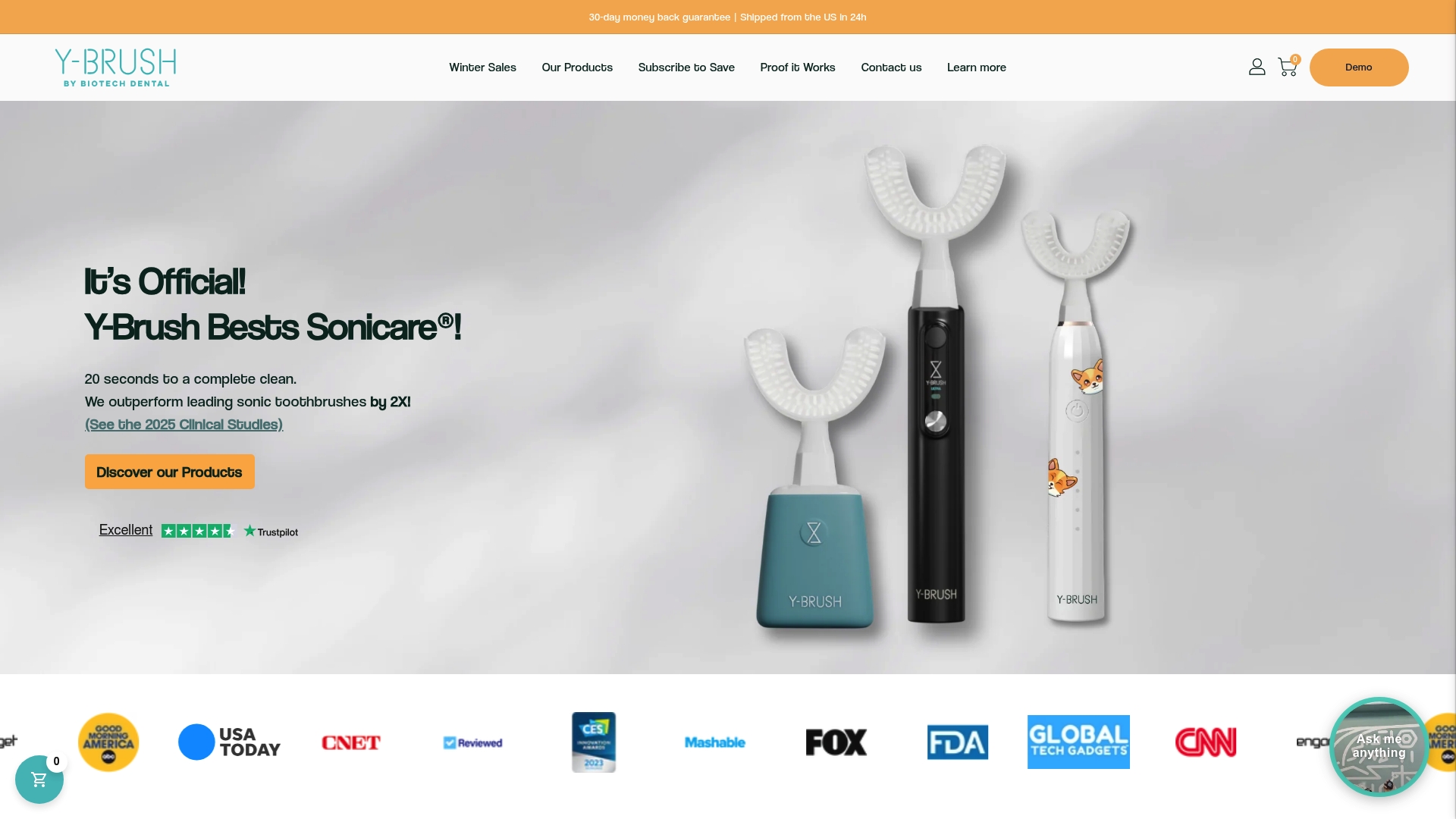
The Y-brush Essential Sonic Toothbrush uses sonic technology with a built-in two-minute timer and pressure management, the exact features dental professionals point to when recommending powered brushes. For families, the Y-brush KidsBrush brings the same dentist-aligned design to children ages 4–12. Both models are built around the principle that a better clean should not require more time or more effort. It should just work.
FAQ
What makes an automatic toothbrush dentist-recommended?
Dentists recommend powered toothbrushes with oscillating-rotating or sonic technology because clinical trials show they remove about 21% more plaque than manual brushing after three months. Models with a two-minute timer and pressure sensor are most consistently endorsed.
Is an electric toothbrush better than a manual one?
A 2014 Cochrane review of 56 trials found powered brushes reduce plaque by 21% and gingivitis by 11% compared to manual brushing. The advantage comes from mechanical consistency, not user effort.
How often should I replace my automatic toothbrush head?
Replace the brush head every 1–3 months or when bristles visibly splay. Worn bristles lose their shape and clean significantly less effectively, reducing the clinical benefit of the powered brush.
Are automatic toothbrushes safe for kids?
Yes, when the model is designed for children. Look for a smaller brush head, a gentler vibration mode, and a shorter timer suited to younger users. The Y-brush KidsBrush is designed for ages 4–12 with these features built in.
Do I still need to floss if I use an electric toothbrush?
Yes. A powered toothbrush cleans tooth surfaces effectively but cannot reach the spaces between teeth. Flossing or using interdental brushes daily is still required for complete plaque control.


