


TL;DR:
- A well-chosen automatic toothbrush tailored to your routine is essential for effective and consistent oral hygiene. Prioritize features like timers, pressure sensors, and design compatibility over high-tech gimmicks, ensuring you use it regularly for optimal results. For orthodontic patients, specialized roto-oscillating models with orthodontic heads are most effective, but consistent technique remains crucial.
Fitting a thorough brushing routine into a packed schedule is harder than it sounds. Most people know they should spend two full minutes at the sink, yet research consistently shows that the average person brushes for less than one minute. Automatic toothbrushes promise a meaningful upgrade, delivering more consistent movement, built-in timers, and superior plaque removal compared to manual brushing. But with dozens of models on the market, ranging from clinically proven oscillating-rotating designs to futuristic hands-free options, the choice can feel overwhelming. This guide cuts through the noise, so you can find a brush that genuinely fits your life.
Table of Contents
- What defines the best automatic toothbrush?
- Top automatic toothbrush picks for busy lifestyles
- Comparison of automatic vs. hands-free toothbrush designs
- Special cases: Brushing with orthodontic appliances
- Why most “automatic” toothbrush advice misses what matters
- Effortless oral care: Next steps and top picks
- Frequently asked questions
Key Takeaways
| Point | Details |
|---|---|
| Prioritize usability | The best automatic toothbrush is one you’ll actually use consistently every day. |
| Timer and sensor matter | Models with timers and pressure sensors help ensure optimal results while saving time. |
| Evidence favors classics | Major studies back conventional electric toothbrushes more strongly than hands-free designs. |
| Braces need special care | For orthodontic appliances, roto-oscillating brushes with dedicated heads are most effective. |
| Innovation isn’t always superior | U-shaped hands-free models are convenient, but their scientific backing is mixed. |
What defines the best automatic toothbrush?
After framing the challenge, it is vital to understand which features truly deliver efficiency and results. Not every automatic toothbrush earns its place in a busy person’s bathroom cabinet. The features that separate a genuinely effective brush from a marketing-heavy gadget are well documented, and they are not always the ones that appear on the front of the box.
The most important considerations when selecting an automatic toothbrush include:
- Built-in timer: A two-minute timer with 30-second quadrant alerts helps you brush evenly without watching the clock. This is the single most practical feature for busy routines.
- Pressure sensor: Brushing too hard causes gum recession and enamel erosion over time. A sensor that alerts you when force exceeds a safe threshold protects your mouth while you focus on speed.
- ADA Seal of Acceptance or credible clinical backing: The American Dental Association’s seal signals that a product has been evaluated for safety and effectiveness. Third-party reviews and peer-reviewed studies add further credibility.
- Design that suits your daily routine: A brush you reach for every morning and night will always outperform one you leave on the charger because it feels awkward or inconvenient.
- Easy cleaning and maintenance: Replacement heads, charging convenience, and waterproofing all affect long-term use. A brush that is difficult to maintain tends to get replaced with manual alternatives.
- Battery life: Frequent travelers need a model that holds a charge for at least two weeks, ideally longer.
“Mainstream buying guidance emphasizes choosing whichever powered type you’ll actually use consistently, because there is no clear winner between sonic and oscillating-rotating in the scientific literature.”
That quote from Consumer Reports captures the most important insight in this entire category. You can spend hundreds of dollars on a premium model, but if it does not fit your routine, it delivers zero benefit. The impact of oral hygiene on overall health is well established, making the stakes real beyond just aesthetics. Achieving effortless oral health starts with selecting a tool you will actually commit to using.
Pro Tip: Before prioritizing technology features like Bluetooth connectivity or app integration, ask yourself whether you will actually engage with those features daily. A reliable brush with a timer and pressure sensor used consistently beats a high-tech model used sporadically.
Top automatic toothbrush picks for busy lifestyles
With features clarified, here is a look at standout models tailored to quick, consistent brushing. Each option below represents a different approach to efficient oral care, from trusted clinical performers to innovative hands-free designs.
Oral-B Pro 1000
The Oral-B Pro 1000 remains one of the most recommended brushes in its price range. Its top overall ranking from CNET for 2026 comes from its two-minute timer, quadrant change alerts, and ADA Seal of Acceptance. The oscillating-rotating brush head delivers proven plaque removal and is widely studied in clinical settings. For busy users who want reliability without complexity, this model consistently delivers.
Autobrush Sonic Pro
The Autobrush Sonic Pro takes a radically different approach. Its U-shaped mouthpiece is designed for full-mouth, hands-free brushing in seconds. The appeal is obvious for time-pressed users. However, Consumer Reports flags that the evidence base is mixed, and at least one independent study did not show superiority over conventional electric toothbrushes. It is a compelling concept, but it requires further clinical validation before it can be recommended without reservation.

Y-Brush (honorable mention)
Y-Brush takes the full mouth automatic brush concept further with a design built around sonic technology and a 20-second full-arch cleaning cycle. It is engineered specifically for people who cannot or will not commit to a traditional two-minute session. Building effective oral habits is easier when the tool itself removes the time barrier entirely.
Key features across top picks:
- Oral-B Pro 1000: oscillating-rotating, ADA Seal, pressure sensor, two-minute timer
- Autobrush Sonic Pro: U-shaped design, hands-free operation, sonic vibration
- Y-Brush: full-arch sonic design, 20-second cleaning cycle, plaque-free results
Statistic callout: CNET tested 24 electric toothbrushes before selecting its top picks for 2026, reflecting how seriously even mainstream media takes the decision.
Pro Tip: If you are drawn to hands-free designs, look specifically for peer-reviewed clinical studies using that exact product model, not just similar U-shaped designs. Product-specific evidence is far more meaningful than category-level claims.
Comparison of automatic vs. hands-free toothbrush designs
Having covered key products, it is worth comparing them across real-world and scientific dimensions. The core question is whether speed and convenience come at the cost of cleaning effectiveness, and the answer depends heavily on the type of design.
Conventional electric toothbrushes, particularly oscillating-rotating models, carry the most robust evidence base. A randomized clinical trial published in Evidence-Based Dentistry reported superior plaque and gingivitis outcomes for an oscillating-rotating toothbrush compared to a sonic toothbrush over four weeks. That does not make sonic brushes ineffective, but it does reinforce that the oscillating-rotating category has a stronger research foundation overall.
Hands-free designs introduce a different trade-off. Consumer Reports notes that some published findings using a U-shaped design did not show superiority over conventional electric brushes. Speed is real, but clinical validation needs to catch up.
| Feature | Conventional electric | Hands-free (U-shaped) | Y-Brush sonic |
|---|---|---|---|
| Brushing time | 2 minutes | 30 to 60 seconds | 20 seconds |
| Clinical evidence | Strong, peer-reviewed | Mixed, limited | Growing |
| Ease of use | Moderate | Very easy | Very easy |
| Pressure control | Sensor available | Limited | Sensor integrated |
| ADA Seal | Available (select models) | Not widely available | Not applicable |
| Ideal user | Detail-focused brusher | Severely time-pressed | Speed and efficiency |
To maximize results from whichever design you choose, follow these steps:
- Position correctly: Even hands-free designs require proper positioning against the gumline. Take five seconds to confirm placement before activating the brush.
- Replace heads on schedule: Most manufacturers recommend replacing brush heads every three months. Worn bristles reduce cleaning efficacy regardless of how advanced the motor is.
- Follow the timer: If your brush has a built-in timer, honor it. If it does not, set a phone timer until the habit is automatic.
- Combine with flossing: No toothbrush, regardless of design, removes interdental plaque effectively. Flossing or using a water flosser remains essential.
- Review your technique with a dentist: A twice-yearly checkup gives your dental professional the opportunity to spot areas you are missing and adjust your approach.
Following efficient brushing steps and leveraging fast oral care solutions together produce measurably better outcomes than relying on any single product alone. Reviewing an oral hygiene checklist regularly also helps maintain consistency between dental visits.
Special cases: Brushing with orthodontic appliances
Beyond general choices, some users need solutions tailored to braces, which alters the best brush selection significantly. Standard brush heads are not always designed to navigate brackets and wires effectively, and the consequences of poor cleaning during orthodontic treatment include white spot lesions, cavities, and prolonged treatment timelines.
A systematic review examining plaque removal for orthodontic patients found that a roto-oscillating toothbrush with an orthodontic brush head appears to be the most effective device among the types compared. Crucially, the review also stresses that individual motivation and consistent home-care follow-up matter just as much as the brush itself. The best tool in the world cannot compensate for irregular use or poor technique.
For users with braces, key considerations include:
- Brush type: Roto-oscillating models with orthodontic-specific heads perform best in clinical comparisons
- Supplemental tools: Interdental brushes, floss threaders, and water flossers are essential companions for cleaning between brackets and under wires
- Brushing frequency: Orthodontic patients often benefit from brushing after every meal, not just morning and night, due to increased food trapping
- Fluoride toothpaste: Using fluoride toothpaste reduces the risk of enamel demineralization around brackets
- Professional monitoring: More frequent checkups during orthodontic treatment allow early detection of hygiene issues
| Cleaning tool | Effectiveness for braces | Ease of use | Time required |
|---|---|---|---|
| Roto-oscillating brush + orthodontic head | High (strongest evidence) | Moderate | 2 minutes |
| Sonic electric toothbrush | Moderate | Easy | 2 minutes |
| Manual toothbrush | Lower without perfect technique | Variable | 2 minutes minimum |
| Water flosser | High for interdental areas | Easy | 1 to 2 minutes |
| Interdental brushes | High for bracket margins | Moderate | 2 to 5 minutes |
For more tailored advice, braces hygiene tips specifically address the challenges teens and busy adults face during orthodontic treatment. Additional guidance on adult braces care and how to select the right appliance can further inform your decisions during this stage of oral care.
Why most “automatic” toothbrush advice misses what matters
Here is an uncomfortable truth: the vast majority of automatic toothbrush advice focuses on features, technology, and performance benchmarks while almost entirely ignoring the behavioral component that determines whether any of it translates to actual oral health improvement.
The evidence consistently shows that conventional oscillating-rotating designs outperform or at minimum match alternatives in clinical settings. Yet the single biggest predictor of oral health outcomes is not which brush a person owns. It is whether they use it properly and regularly. That insight is frequently buried at the bottom of product reviews or omitted entirely in favor of discussing app connectivity and pressure sensor precision.
We see this pattern clearly when examining electric toothbrush benefits in the research. The plaque removal advantage of electric brushing is real and meaningful. But those study participants were brushing consistently for the full recommended duration. The 90% of people who routinely brush for under a minute are not capturing those benefits, regardless of how advanced their brush is.
This is why the most honest recommendation is not necessarily the highest-rated brush. It is the brush that removes friction from your specific routine. If a 20-second design means you brush every single day rather than skipping on rushed mornings, the math favors the faster design even if a two-minute oscillating brush edges it out in a controlled study. Consistency practiced imperfectly is more valuable than perfection practiced occasionally.
Technology is not a substitute for habit. It is a scaffold that makes habit formation easier. The wisest buyers are not chasing the highest specification. They are choosing the tool that genuinely fits how they already live, then building around it.
Pro Tip: Evaluate your actual brushing behavior before your ideal brushing behavior. If you consistently skip or rush brushing, that data matters more than any clinical comparison table when making your final decision.
Effortless oral care: Next steps and top picks
Upgrading your oral care routine does not have to mean spending more time at the sink. It means choosing smarter tools.
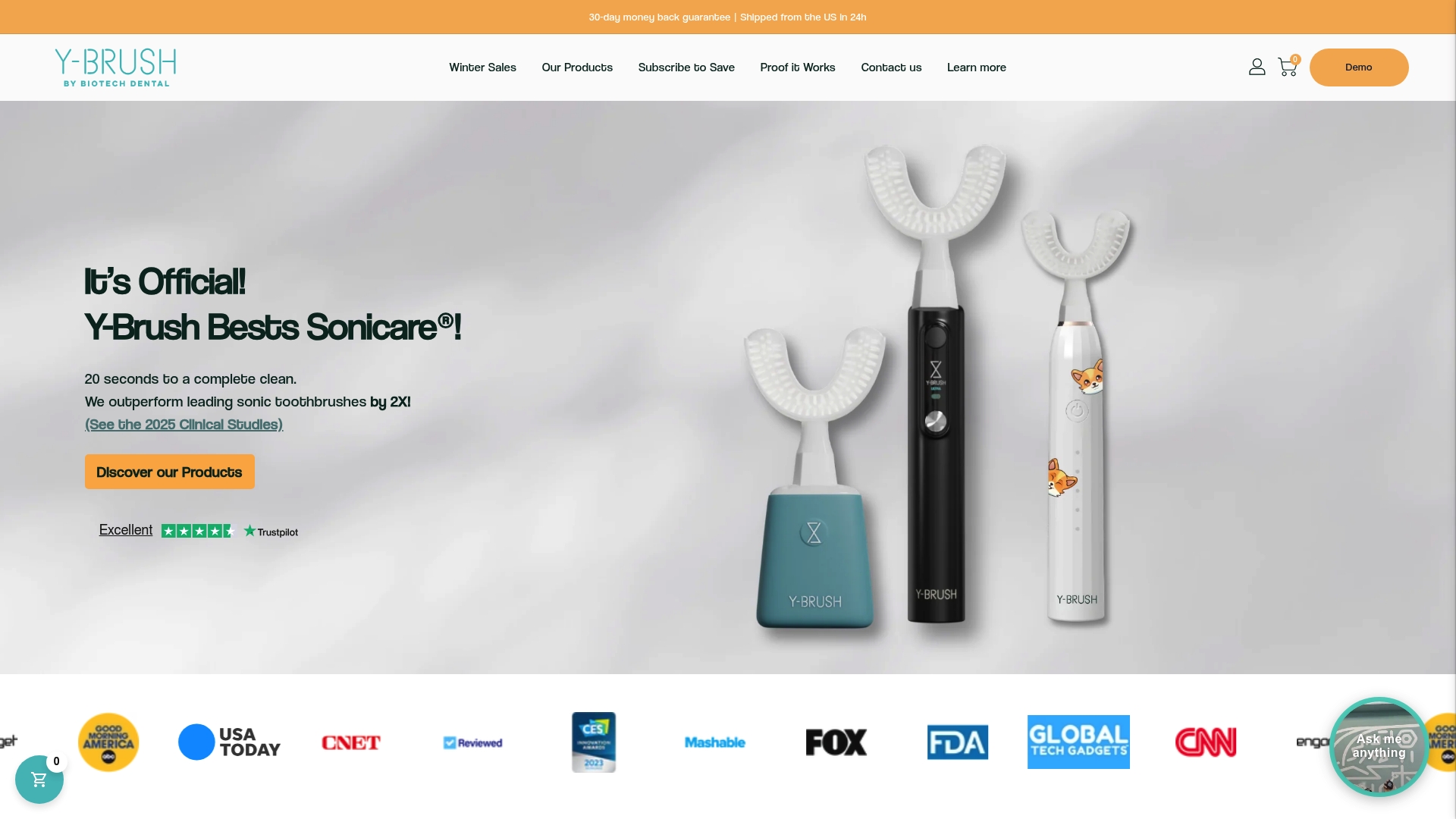
Y-Brush is engineered specifically for people who refuse to let a packed schedule compromise their oral health. The Y-Brush Essential Sonic delivers a full-arch clean in just 20 seconds, combining sonic vibration with a contoured mouthpiece that covers all tooth surfaces simultaneously. For households where two people need efficient brushing solutions, the Y-Brush DuoBrush offers a practical paired option. Those seeking maximum performance can explore the Y-Brush Ultra Sonic, which brings together advanced sonic technology and comprehensive coverage in one premium pack. Every model is built on the same core principle: superior clean, zero compromise on time.
Frequently asked questions
What is the difference between sonic and oscillating-rotating automatic toothbrushes?
Sonic brushes use high-frequency vibrations to disrupt plaque, while oscillating-rotating brushes use a round head that spins back and forth. Both are effective, and scientific reviews show no definitive winner, though oscillating-rotating designs may hold a slight advantage in some clinical studies.
Are U-shaped hands-free toothbrushes effective for quick cleaning?
U-shaped designs enable fast, full-mouth brushing in under a minute, which is appealing for busy users. However, published evidence is mixed compared to conventional electric toothbrushes, and clinical validation specific to individual products remains limited.
Which automatic toothbrush is recommended for people with braces?
A roto-oscillating brush fitted with an orthodontic head is supported by the strongest evidence for cleaning around brackets. That said, a systematic review emphasizes that consistent use and personal motivation are equally critical to good outcomes.
How important is a brush timer for busy routines?
A timer is one of the most practically valuable features in any automatic toothbrush, ensuring you meet the recommended duration without consciously tracking time. The Oral-B Pro 1000’s two-minute timer with quadrant alerts is a strong example of how this feature directly supports better brushing habits in real-world use.


