


Try this tonight: offer one limited choice (“blue cup or red cup?”), say the same calm phrase every time, and brush your own teeth first so your toddler sees it is normal, not a punishment. If your toddler refuses to brush teeth even after that, switch to the lie-back method: sit on the floor, rest their head on your lap facing up, and brush for 20 to 30 seconds total, not two full minutes. Most toddlers will not tolerate a marathon session, and you do not need one to make a real dent in plaque.
Two tactics work fast because they remove the fight over control:
- Lie-back method: Head on your lap, chin up, quick pass over all surfaces, done before they can protest.
- “You do it, I do it”: Hand them the brush for 10 seconds, then say “my turn” and finish the job yourself.
Pro Tip: Keep toothpaste to a very small smear for kids under 3, and stay in the room the entire time. Toddlers swallow reflexively, and supervision matters more than technique.
Key Takeaways
Consistent routines paired with sensory-aware technique resolve most toddler brushing refusal within a few weeks, without ever needing to force the issue.
| Point | Details |
|---|---|
| Start with control, not force | Offer a limited choice (“blue cup or red cup”) before touching the brush at all. |
| Use the lie-back method tonight | Head on your lap, chin up, 20 to 30 seconds total is enough for a real clean. |
| Match toothpaste to age | Grain-of-rice smear for ages 1 to 3, pea-size for age 3 and up, per CDC guidance. |
| Rule out sensory issues before escalating | Try stepwise exposure (lips, then gums, then teeth) before assuming pure defiance. |
| Consider a gentle electric brush | The Y-brush KidsBrush uses a small head and consistent sonic motion to shorten active brushing time for toddlers who resist manual scrubbing. |
Table of Contents
- Why Toddlers Refuse to Brush Their Teeth
- What Are the Best Strategies for a Toddler Who Hates Brushing Teeth?
- How Do You Build a Brushing Routine Toddlers Will Actually Follow?
- What Toothbrush and Toothpaste Should Toddlers Use?
- Handling Sensory Sensitivities and Strong Resistance
- When Should You Call a Dentist or Pediatrician About Brushing Refusal?
- What Actually Moves the Needle With a Brushing Standoff
- A Gentler Option: The Y-brush KidsBrush
- Frequently Asked Questions
- Sources
Why Toddlers Refuse to Brush Their Teeth
Toddlers refuse to brush teeth for the same reason they refuse to wear the “wrong” socks: brushing is one of the last physical acts of the day still fully controlled by someone else. Somewhere between 18 months and 3 years, toddlers realize they can say no, and testing that power on a two-minute routine is developmentally normal, not defiance aimed at you personally.
Sensory issues drive a lot of the pushback that looks like stubbornness. A soft bristle brushed across the gums can feel scratchy to a toddler whose nervous system is still calibrating touch, and mint toothpaste stings in a mouth that has never tasted anything but milk and mashed banana. The gag reflex sits closer to the front of a toddler’s mouth than an adult’s, so a brush that barely reaches the molars can trigger real gagging, not performance.
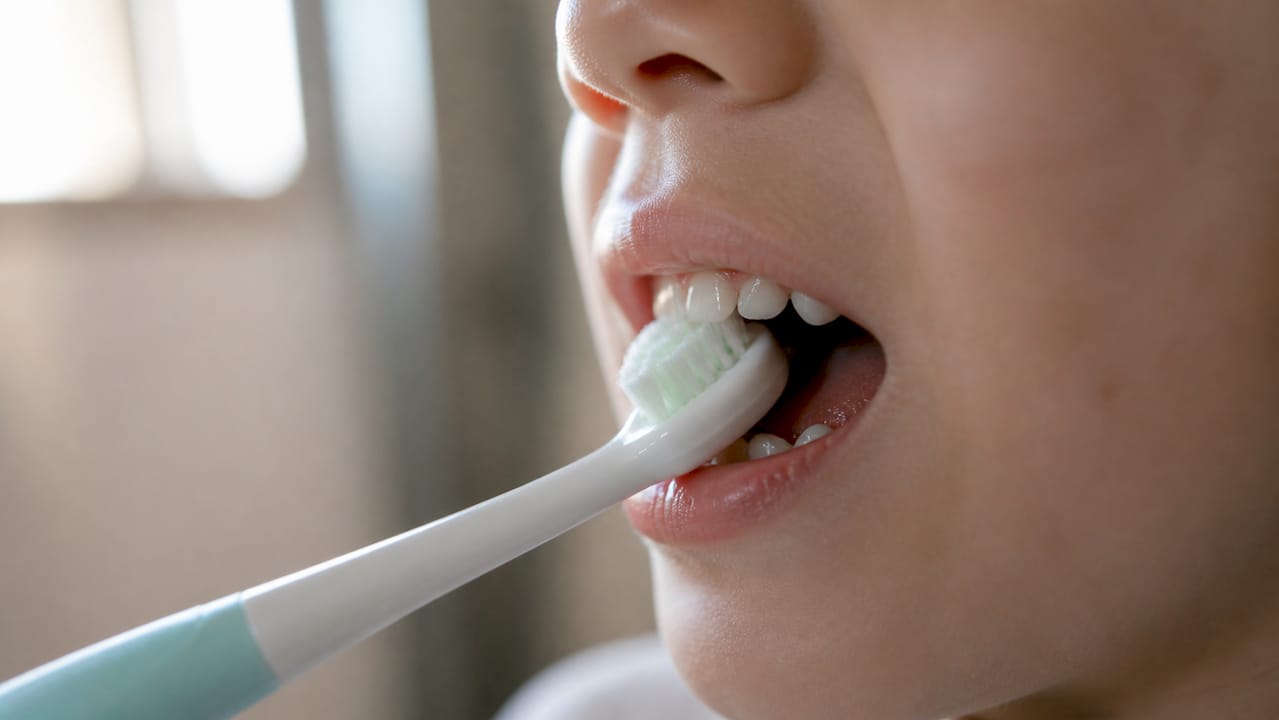
Timing and memory make it worse over time. A toddler who was pinned down and scrubbed once will remember that feeling and resist the next ten attempts, even gentle ones, because the brain files brushing under “thing that happens to me” rather than “thing I do.”
Common resistance triggers include:
- Overtiredness at bedtime, when the nervous system is already maxed out.
- A rushed morning routine that skips straight to force.
- A previous rough brushing experience creating a fear association.
- Taste or texture of a specific toothpaste brand.
Cavities remain the most common chronic disease of childhood, which is exactly why these small, repeated battles matter. Skipping brushing because it is a fight tonight sets up a much bigger fight with a dentist later.
What Are the Best Strategies for a Toddler Who Hates Brushing Teeth?
Not every tactic works for every toddler, and trying five things at once just adds chaos. Work through this list roughly in order. Each one takes less setup than the last one failed to solve.
-
Give a choice within a boundary. Toddlers refuse less when the fight isn’t “brush or don’t brush” but “minty or bubblegum, you choose.” Try: “We’re brushing teeth. Do you want the dinosaur cup or the star cup?” The brushing itself is never up for debate, only the accessory.
-
Turn it into a two-minute game, not a chore. A 20-second brushing song, a sand timer shaped like a tooth, or “let’s find the sugar bugs hiding behind your molars” reframes the task as play. HealthyChildren.org notes that reward charts and predictable brushing games build cooperation gradually, over weeks, not in one lucky night.
-
Brush a stuffed animal or doll first. Let your toddler practice on Teddy’s teeth before you touch theirs. This buys a few seconds of rehearsal and often defuses the anticipatory dread that builds the moment they see the brush.
-
Use the mirror technique. Stand your toddler in front of the bathroom mirror, hand them the brush, and let them go first while watching themselves. After 15 to 20 seconds, say “now Mom’s turn to check for sugar bugs” and finish the job yourself. Watching their own hands do the work satisfies the control need before you take over.
-
Time-box it and stop negotiating mid-brush. Set a firm 20 to 30 second internal clock. A short, complete pass beats a long, contested one, and toddlers sense hesitation. If you’re mentally negotiating while brushing, they’ll escalate.
-
Use short-term rewards to launch the habit, then fade them out. A sticker chart works well for the first two or three weeks of a new routine. Once brushing stops being a novelty and starts being expected, drop the reward and let the routine itself carry the weight. Rewards that never fade teach a toddler to brush for stickers, not for clean teeth.
-
Know when to cut your losses and use distraction. If your toddler is mid-tantrum and nothing above is landing, a quick song, a favorite toy handed over, or letting them stand on a step stool “like a big kid” can break the standoff long enough for a fast, targeted brush of the back molars, where cavities form first. A 15-second brush during a distracted moment beats a full battle that ends in zero brushing.
Pro Tip: Rotate two or three of these tactics rather than relying on one every night. Toddlers get bored of games fast, and a stale trick stops working within a week or two.
If you want more of these built into a repeatable system rather than improvised nightly, a kids’ brushing guide walks through how to sequence songs, choices, and timers so they reinforce each other instead of competing.
How Do You Build a Brushing Routine Toddlers Will Actually Follow?
Consistency does more work than any single trick. Pediatricians recommend a predictable sequence like “bath, book, brush, bed” because toddlers relax into routines they can predict, and predictability quietly kills the anticipatory resistance that builds before brushing even starts.
Bedtime sequence:
- Bath or wash-up.
- One short book, chosen by the toddler.
- Brush teeth, using the lie-back method if standing brushing has failed that night.
- Straight to bed, no negotiating for extra time once brushing is done.
Morning sequence:
- Breakfast first, then brush. Brushing after breakfast rather than before is generally preferable when the schedule allows it, since it clears food debris along with plaque.
- Offer the toothbrush choice from the night’s routine again, keeping the ritual identical morning and night.
- Brush for the same 20 to 30 second count each time.
Scripts matter more than most parents expect. Say the same three or four sentences every single time: “It’s brushing time. Blue cup or red cup? Great choice. Let’s find the sugar bugs.” Toddlers stop arguing with a script faster than they stop arguing with a parent who sounds different every night.
When a brush gets missed or a toddler refuses mid-routine:
- Don’t force it. A firmly held toddler having their mouth scrubbed against their will remembers that far longer than the one skipped brushing.
- Try a fluoride mouth rinse or a quick gauze wipe over the front teeth as a stopgap.
- Circle back 10 minutes later, after the meltdown has passed, rather than escalating in the moment.
If two caregivers share bedtime duty, keep the script and sequence identical between them. A toddler who gets a different routine from Dad than from Mom treats every night as a fresh negotiation. A family routine template can help both caregivers stay on the same page.
What Toothbrush and Toothpaste Should Toddlers Use?
Toothpaste amount is not a matter of preference. The CDC’s own guidance is specific: a grain-of-rice-sized smear for children 1 to 3, moving up to a pea-size amount for children 3 and older, brushed twice a day. Too much fluoride toothpaste swallowed repeatedly over years contributes to mild fluorosis, which is a cosmetic concern worth avoiding even though it isn’t dangerous.
Brush selection matters almost as much as technique:
- Choose a small head sized for a toddler’s mouth, not a scaled-down adult brush.
- Bristles should be soft. Medium or firm bristles on a toddler’s gums cause the exact discomfort that fuels refusal.
- Look for the ADA Seal of Acceptance on any brush or toothpaste, which confirms it met the association’s safety and effectiveness standards.
- Electric brushes with gentle sonic vibration can help toddlers who resist manual scrubbing, since the brush does more of the mechanical work in less active time.
New flavors help more than parents expect. If mint is the sticking point, try a bubblegum or berry fluoride toothpaste before assuming your toddler simply hates brushing. Teach spitting gradually around age 2 to 3 by practicing with plain water in the sink, well before you expect them to spit out toothpaste reliably.
Stay in the bathroom for the entire brushing session. Toddlers under 6 don’t reliably spit instead of swallow, and supervision catches it when they don’t.
Handling Sensory Sensitivities and Strong Resistance
Some toddlers aren’t being stubborn. Their nervous system is genuinely overwhelmed by the sensation of a brush in their mouth, and pushing through with force only deepens the aversion. Dental clinics commonly recommend stepwise sensory exposure: let your toddler touch the brush, then rest it against closed lips, then open lips, then gums, and only then teeth, moving to the next step only once the current one is tolerated without distress.
Alternatives that keep some cleaning happening without a full fight:
- A damp gauze pad wrapped around your finger, wiped gently over teeth and gums.
- A foam mouth prop or teether the toddler can bite down on to keep the mouth open comfortably.
- Lying the toddler flat on a bed or changing table for a few seconds of brushing when upright brushing consistently fails.
Pro Tip: Match the toothpaste and brush to sensory preferences your toddler already shows elsewhere. A child who hates loud noises may do better with a manual brush; a child who loves buzzing toys may actually prefer a gentle electric one.
If a toddler gags on even a fingertip near the back of the mouth, or resistance is extreme and unchanging over several weeks despite these steps, that’s a signal worth raising with a professional rather than pushing through alone. Persistent, severe aversion sometimes points toward a broader sensory processing difference that occupational therapy support can address directly.

When Should You Call a Dentist or Pediatrician About Brushing Refusal?
Most refusal is developmental and resolves with consistent routines over a few weeks. Call a dentist or pediatrician sooner if you notice specific red flags, since these point toward pain or disease rather than ordinary toddler pushback.
- Visible white or brown spots on teeth, which can signal early decay.
- Bleeding gums that don’t resolve within a few days of gentle brushing.
- Sudden refusal after previously accepting brushing without issue, which can indicate a sore tooth or mouth pain.
- Persistent gagging so severe it prevents any cleaning at all.
A pediatric dentist can apply fluoride varnish, coach your toddler through in-office desensitization, or refer you to occupational therapy if sensory issues are driving the resistance. When you call, describe exactly what happens: what your toddler does, when refusal started, and what you’ve already tried, so the clinician isn’t starting from scratch.
What Actually Moves the Needle With a Brushing Standoff
Most advice on toddler brushing treats every child’s refusal as the same problem with the same fix: more games, more songs, more patience. That undersells how often the real issue is sensory, not behavioral, and pushing a scared toddler through a standard routine because “consistency works” just deepens the aversion.
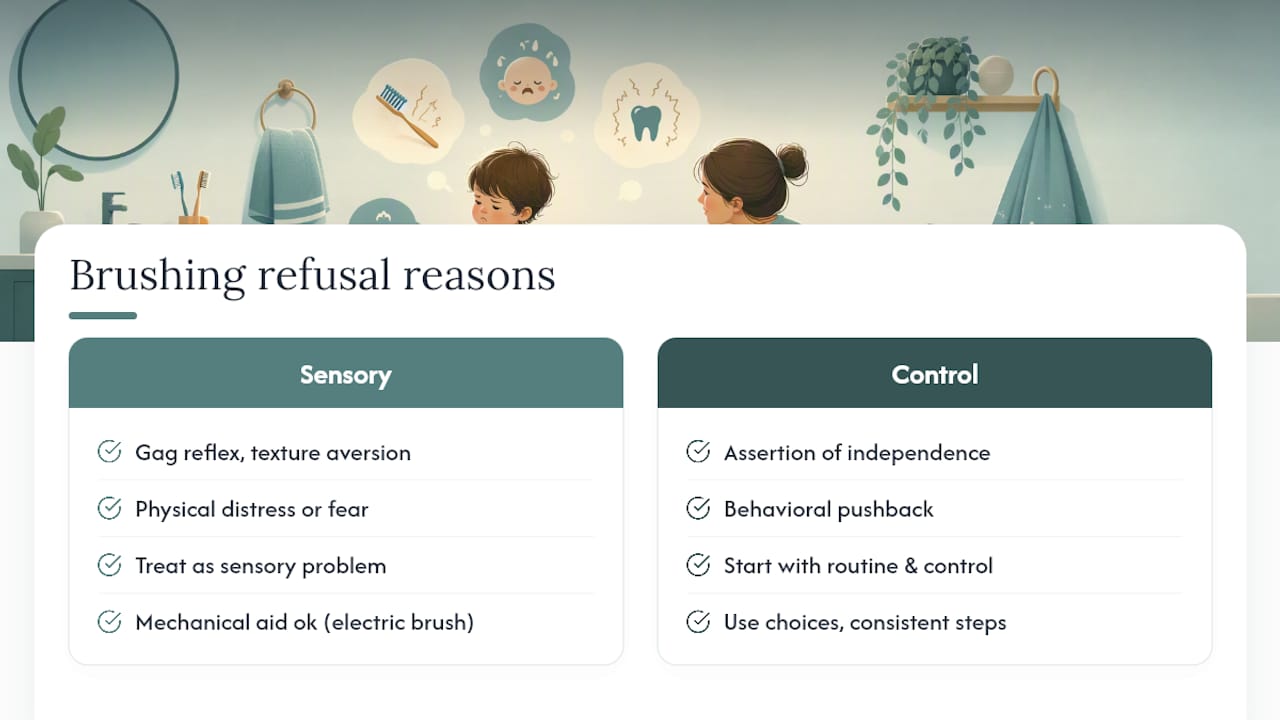
What the evidence actually supports is triage. Try the control and routine fixes first, since those solve the majority of nightly standoffs. If gagging, texture aversion, or genuine distress persists past that, stop treating it as a discipline problem and start treating it as a sensory one.
Where I’d push back on conventional wisdom: parents are told to “just be consistent” as if that alone solves everything. Consistency matters, but it’s the vehicle, not the fix. The fix is figuring out which lever, control, sensation, or timing, is actually driving the refusal, then addressing that lever specifically. A gentle electric brush like Y-brush’s KidsBrush can genuinely help toddlers who resist the drag of manual scrubbing, since less active brushing time means less time to object. But it’s a tool for the mechanical problem, not a substitute for figuring out why your toddler is fighting you in the first place.
A Gentler Option: The Y-brush KidsBrush
If your toddler’s resistance is partly about how brushing feels, a brush designed for shorter, gentler contact can make a real difference. The Y-brush KidsBrush uses a small, child-sized head and consistent sonic vibration instead of manual back-and-forth scrubbing, which means less time spent with a brush dragging across sensitive gums.
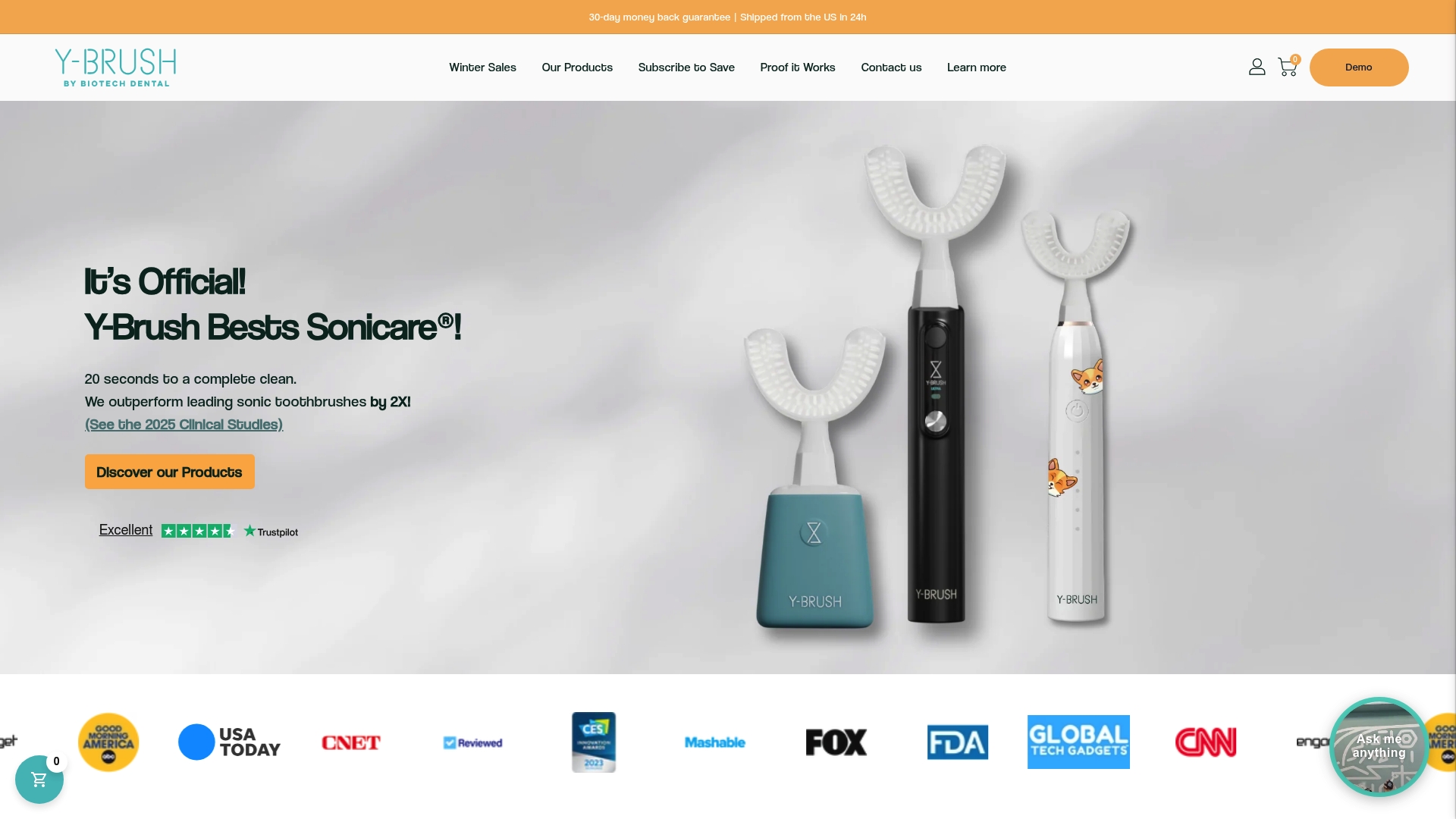
That matters for toddlers who tolerate a quick pass far better than a drawn-out, contested scrub. The KidsBrush is built for young children, with soft bristles and a head sized to fit smaller mouths without triggering the gag reflex the way an adult-scaled brush can. It’s not a replacement for the routines and scripts covered above. Use it alongside choice-within-boundaries, the mirror technique, or the lie-back method, not instead of them, and keep supervising every session the way you would with a manual brush.
You can look through the full Y-Brush toothbrush lineup to compare models, or go straight to the KidsBrush product page to see sizing and features. Once you land on a brush that fits, a membership plan for replacement heads keeps fresh bristles arriving automatically, so you’re not the one remembering to reorder every three months.
Frequently Asked Questions
My toddler refuses to brush teeth every single night. Is that normal? Yes. Nightly refusal peaks between 18 months and 3 years as toddlers test control over their own bodies. Consistent scripts and routines, not more pressure, resolve most of it within a few weeks.
How long should toddler teeth brushing actually take? Twenty to thirty seconds of actual brushing time is enough for a toddler’s mouth. Trying to hit a full two minutes with a resistant toddler usually causes more fighting than cleaning.
Should I let my toddler brush their own teeth if they refuse my help? Let them go first for 10 to 15 seconds, then say “my turn” and finish yourself. Full independent brushing isn’t reliable until around age 7 or 8, so supervision and a parent finish should continue until then.
What if my toddler gags every time the brush touches their back teeth? Try a smaller-headed brush and back off to gum-only brushing for a few days before reintroducing the back teeth gradually. Persistent, severe gagging that doesn’t improve is worth mentioning to your pediatric dentist.
Can an electric toothbrush help with a toddler who hates brushing? It can, particularly for toddlers who resist the physical drag of manual scrubbing. A gentle sonic brush with a small head, like the Y-brush KidsBrush, cleans effectively in less active time, though it works best paired with the routine and script strategies above rather than in place of them.


