


Yes, generic brush heads can be safe, but only under three conditions: the bristles meet recognized softness and end-rounding standards, the head physically fits your handle without forcing a connection, and you buy from a seller who can verify quality rather than the cheapest listing you find. Miss any one of those, and you’re gambling with your gums.
The American Dental Association tests bristle end-rounding as a baseline safety measure, and that standard doesn’t disappear just because a brush head costs a third of the branded version. Independent testing, including Wirecutter’s head-to-head comparison, found that branded heads were generally preferred for feel and caused less gum irritation than the generics tested. That doesn’t mean every generic is risky. It means the burden of verification shifts to you.
Before buying a multi-pack, take these steps:
- Confirm the bristle softness is labeled “soft” and, ideally, references end-rounding testing.
- Match the exact model number of your handle, not just the “compatible with” phrase on the listing.
- Buy one pack first, not a bulk order, and watch your gums for two weeks before committing.
Key Takeaways
Generic brush heads can be safe when the bristles meet ADA softness standards, the fit matches your handle exactly, and the seller can verify quality and testing.
| Point | Details |
|---|---|
| Verify bristle standards | Confirm end-rounding and softness claims before buying, ideally referencing ADA guidance. |
| Match handle type exactly | Standard shafts are lower risk; magnetic or NFC couplings need explicit tested compatibility. |
| Buy from verified sellers | Specialist retailers disclose sourcing better than the cheapest marketplace listings. |
| Watch your gums for two weeks | Stop use and consult a dentist if redness, sensitivity, or fraying appears early. |
| Consider an engineered system | Y-brush’s Y-shaped heads are matched to the handle by design, removing the compatibility guesswork generics require. |
Table of Contents
- Are Generic Brush Heads Safe? Weighing the Pros and Cons
- Compatibility and Fit: Will a Generic Head Actually Work on Your Handle?
- Bristle Safety, Material Quality, and Contamination Concerns
- What Can Go Wrong With Smart Features and Warranties
- How to Choose Safe Generic Brush Heads: A Step-by-Step Checklist
- When to Skip Generics and Stick With Branded or Clinical-Grade Heads
- Why I’d Rather See You Buy Smart Than Buy Cheap
- Skip the Guesswork With Y-brush’s Engineered Brush Heads
- Sources
Are Generic Brush Heads Safe? Weighing the Pros and Cons
Generic brush heads exist because replacement heads for name-brand electric toothbrushes are expensive when bought in small quantities. Families replacing heads for two or three people every three months feel that cost fast. Generics can cut that expense by half or more, which matters most for households on a fixed replacement schedule rather than occasional users.
Performance is where the story gets complicated. Hands-on testing summarized by Wirecutter found that many generic heads clean acceptably on a basic plaque-removal level, but the bristles often feel stiffer against gum tissue. That stiffness isn’t a minor comfort issue. Testers noted that firmer bristles are clinically meaningful because they can irritate gum tissue and, with repeated use, contribute to recession over time.
Here’s how the tradeoffs typically break down:
- Cost savings are real and often substantial for households replacing multiple heads on a quarterly cycle.
- Cleaning performance is usually adequate for basic plaque removal, though not always equivalent to branded heads.
- Bristle feel and durability vary widely between suppliers, even within the same price tier.
- Shedding and premature wear happen more often in unverified, low-cost listings than in heads from established third-party manufacturers.
One detail that surprises most shoppers: some generic heads come from the exact same production lines as branded ones. Quality control, bristle specification, and finishing are what separate a genuinely equivalent head from a rough copy, not the factory of origin. That means a “generic” label alone tells you almost nothing about safety, and a “compatible” label tells you even less.
Specialist retailers who focus specifically on toothbrush head compatibility tend to disclose more about sourcing than general marketplace sellers do. That transparency, more than the price tag, is the real signal worth paying attention to when you’re deciding whether a specific product is worth trying.
Compatibility and Fit: Will a Generic Head Actually Work on Your Handle?
Electric toothbrush handles connect to their heads in one of two ways: a simple friction-fit shaft, or a proprietary magnetic and NFC coupling system built into premium smart brushes. That distinction determines almost everything about whether a generic head is a reasonable option for you.
Standard shaft connections are mechanically simple. A head that matches the shaft diameter and depth will generally seat correctly, vibrate properly, and clean as intended. Magnetic and NFC-based couplings are different. They’re engineered to recognize a genuine head, calibrate motor output to that head’s specifications, and in some cases track brushing data tied to that specific attachment. A generic head built to slightly different tolerances can seat physically but perform electronically like a stranger.
Run these checks before you buy:
- Search your handle’s exact model number, not just the brand name, and cross-reference it against the listing’s stated compatibility.
- Look for seller photos showing the underside of the brush head, where the coupling mechanism is visible.
- Read reviews specifically mentioning your handle model, not generic five-star ratings with no detail.
- Check whether a specialist retailer has published compatibility notes for that exact pairing.
Pro Tip: If your handle uses a magnetic or NFC coupling and the seller can’t explicitly confirm the head has been tested for that system, walk away from the listing. “Universal fit” claims on smart-brush-compatible heads are one of the most common sources of buyer complaints.
Avoid generics entirely on handles with sensor-driven coaching features unless the seller states, in plain language, that the head has been tested and verified for that model. A head that fits loosely or triggers an error code isn’t just an inconvenience. It’s a sign the internal tolerances don’t match what your handle expects.
Bristle Safety, Material Quality, and Contamination Concerns
Bristle softness isn’t a marketing term. It’s a measurable specification, and the ADA’s guidance on end-rounding gives consumers a concrete way to evaluate it. End-rounding refers to the percentage of bristle filaments finished with rounded tips rather than sharp-cut edges, and it’s a practical, testable spec you can actually ask a seller about. If a seller can’t answer basic questions about softness rating or end-rounding, treat that listing cautiously.
Watch for these warning signs after switching to a new brush head:
- Gum redness or tenderness that appears within the first one to two weeks of use.
- Increased sensitivity along the gumline, particularly near the back molars.
- Visible bristle fraying or splaying after fewer than four to six weeks of normal use.
- Bristles that feel noticeably stiffer than your previous head, even when both are labeled “soft.”
On the materials side, the concerns consumers ask about most are PFAS and microplastic exposure from bristle manufacturing. This is a legitimate question, but it’s worth keeping in proportion. Reputable manufacturers, whether branded or third-party, generally follow established plastic-molding and safety-testing practices, and certifications like CE, RoHS, or FDA compliance where applicable are reasonable indicators that a supplier has been vetted for material safety. The real risk concentrates in unverified, ultra-cheap listings with no disclosed certifications or manufacturing origin, not in the broad category of generic heads.
Replacement timing matters regardless of brand. The standard rule is every three months, but bristle fraying is a better trigger than the calendar. If you notice splaying, discoloration, or reduced bristle firmness before the three-month mark, replace the head sooner rather than waiting it out.
What Can Go Wrong With Smart Features and Warranties
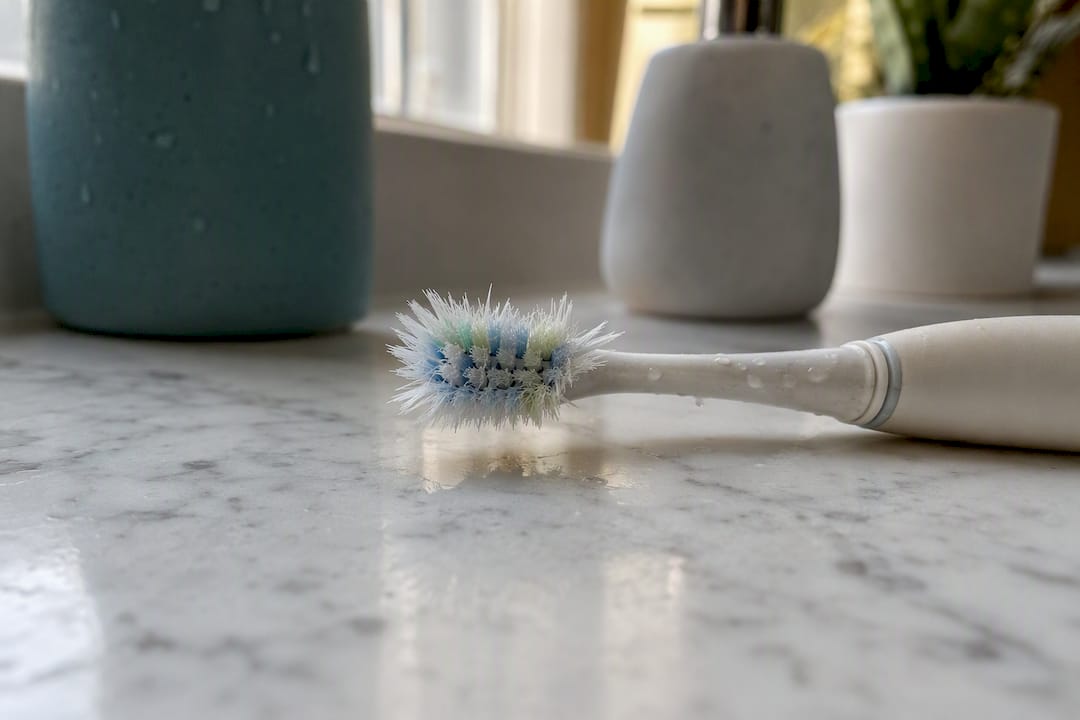
Premium electric toothbrushes with pressure sensors, brushing coaches, and app connectivity rely on precise coupling between the head and the handle to function correctly. TechAdvisor’s testing found that third-party heads can interfere with sensor accuracy and increase motor noise on these systems, since the electronics are calibrated for genuine components.
The failure modes are specific, not hypothetical:
- Vibration imbalance from slightly off-spec bristle mounting, which shows up as unusual buzzing or uneven motor sound.
- Sensor error states that persist until the handle is power-cycled or, in worse cases, sent in for repair.
- Coaching and tracking features that misreport brushing time or pressure because the handle can’t confirm the head’s identity.
There’s a financial angle too. Manufacturers design heads and handles as matched pairs, and using non-official heads that damage the brush base can void your warranty entirely. That’s a real tradeoff: you save a few dollars per head now, but you risk an uncovered repair or replacement bill later if something goes wrong.
Pro Tip: Test a new generic head on a low-value handle first, or check your manufacturer’s support terms before switching, especially if your toothbrush is still under warranty. A five-minute read of the fine print can save you a $150 replacement handle.
If your handle has no sensors or app connection at all, this risk mostly disappears. It’s the smart, connected systems where the math changes.
How to Choose Safe Generic Brush Heads: A Step-by-Step Checklist
Buying a generic brush head safely isn’t complicated, but it does require a sequence, not a single glance at star ratings.
- Match your handle type exactly. Search the model number stamped on your handle, not the brand name alone, and confirm the listing names that exact model.
- Check bristle softness and end-rounding claims. A seller who can cite a softness rating or end-rounding percentage is more trustworthy than one who simply says “soft” with no backup.
- Buy from a specialist or reputable seller. Retailers focused specifically on toothbrush head compatibility tend to test and disclose more than general marketplace listings do, and the highest risk sits with the cheapest, unverified listings, not with the category as a whole.
- Check the return and refund policy before buying in bulk. A seller unwilling to accept returns on an unopened multi-pack is a signal worth noticing.
- Test one head before buying more. Use it daily for two weeks and watch your gums for redness, sensitivity, or bristle fraying before committing to a larger order.
Pro Tip: If the trial head performs well after two weeks, buy your next batch from that same supplier rather than chasing a slightly cheaper listing elsewhere. Supplier consistency matters more than any single low price.
Where you buy matters as much as what you buy. Prioritize specialist oral-care retailers, official direct-to-consumer brands, or sellers with verified compatibility documentation over random marketplace listings with no manufacturing detail. Once you’ve settled on a supplier, set a replacement reminder and inspect bristles at each swap, checking for fraying, discoloration, or splaying before the three-month mark rolls around.
When to Skip Generics and Stick With Branded or Clinical-Grade Heads
Some situations call for less risk-tolerance, not more savings. If you have any of the following, the calculation shifts toward branded or clinically specified heads:
- Active gum disease or a history of periodontal treatment, where bristle stiffness and end-rounding precision directly affect healing tissue.
- Dental implants, where inconsistent bristle quality can scratch or irritate the surrounding gum in ways that are harder to detect early.
- Braces or other orthodontic hardware, where bristle design often needs to account for brackets and wires.
- Recent oral surgery, where tissue is especially sensitive to any variation in bristle firmness.
- Reliance on smart-brush tracking or coaching features, where a generic head risks both irritation and inaccurate feedback.
In these cases, the clinical specification of the bristles isn’t a nice-to-have. It’s a variable that affects healing, comfort, and long-term gum health, and it’s worth talking to a dental professional before switching. If you do try a generic head and notice increased irritation, redness, or bleeding that wasn’t there before, stop using it and get dental advice rather than waiting to see if it resolves on its own.
Why I’d Rather See You Buy Smart Than Buy Cheap
Most articles on this topic frame the decision as brand versus generic, as if that’s the real fault line. It isn’t. The real fault line is verified versus unverified, and that distinction gets lost in most buying guides because “generic” is treated as a single category when it’s actually a spectrum running from carefully manufactured, certified components to unmarked bags of plastic with no disclosed origin.
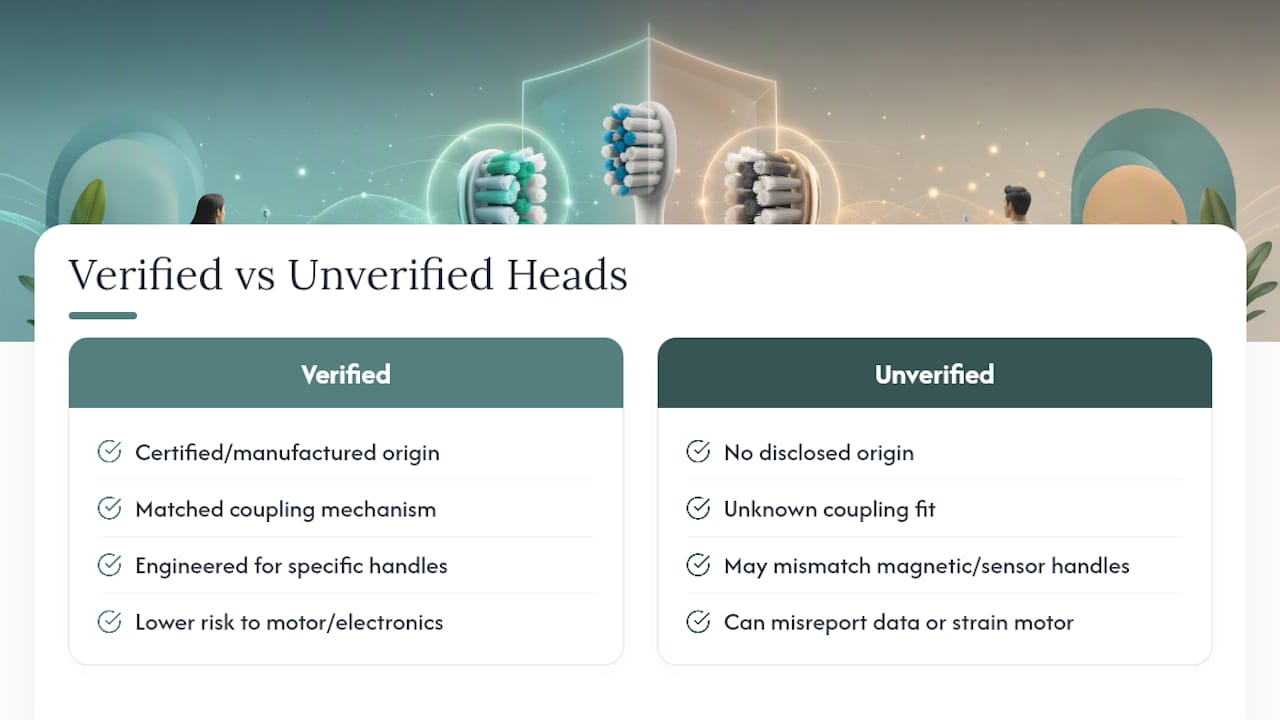
What people consistently underestimate is how much the coupling mechanism itself determines risk, not the bristle quality alone. A generic head with slightly stiffer bristles on a basic handle is a comfort tradeoff. The same head on a magnetic, sensor-driven handle is a mechanical and electronic mismatch that can misreport your brushing data or strain the motor. Reviewers keep testing “generic versus branded” as one question when it’s really two: is this safe for my gums, and is this safe for my handle. Those deserve separate answers.
That’s part of why Y-brush designs its own replacement heads for compatibility with other brands rather than leaving that verification entirely to the buyer. The patented Y-shaped head is engineered as a matched system from the start, built around a design intent that fits real daily habits: a full clean in 20 seconds, not a 2 minute routine most people quietly skip. For anyone shopping generics specifically because the branded ecosystem feels expensive or inflexible, an engineered alternative built around that same daily-life logic is worth a look before you gamble on an unverified listing.
— Joris
Skip the Guesswork With Y-brush’s Engineered Brush Heads
If the compatibility checks and warranty risks above sound like more homework than you want to do every three months, Y-brush offers a straightforward alternative: a brush and head system engineered together from the start, so you’re never gambling on whether a mismatched coupling will damage your handle or void a warranty.
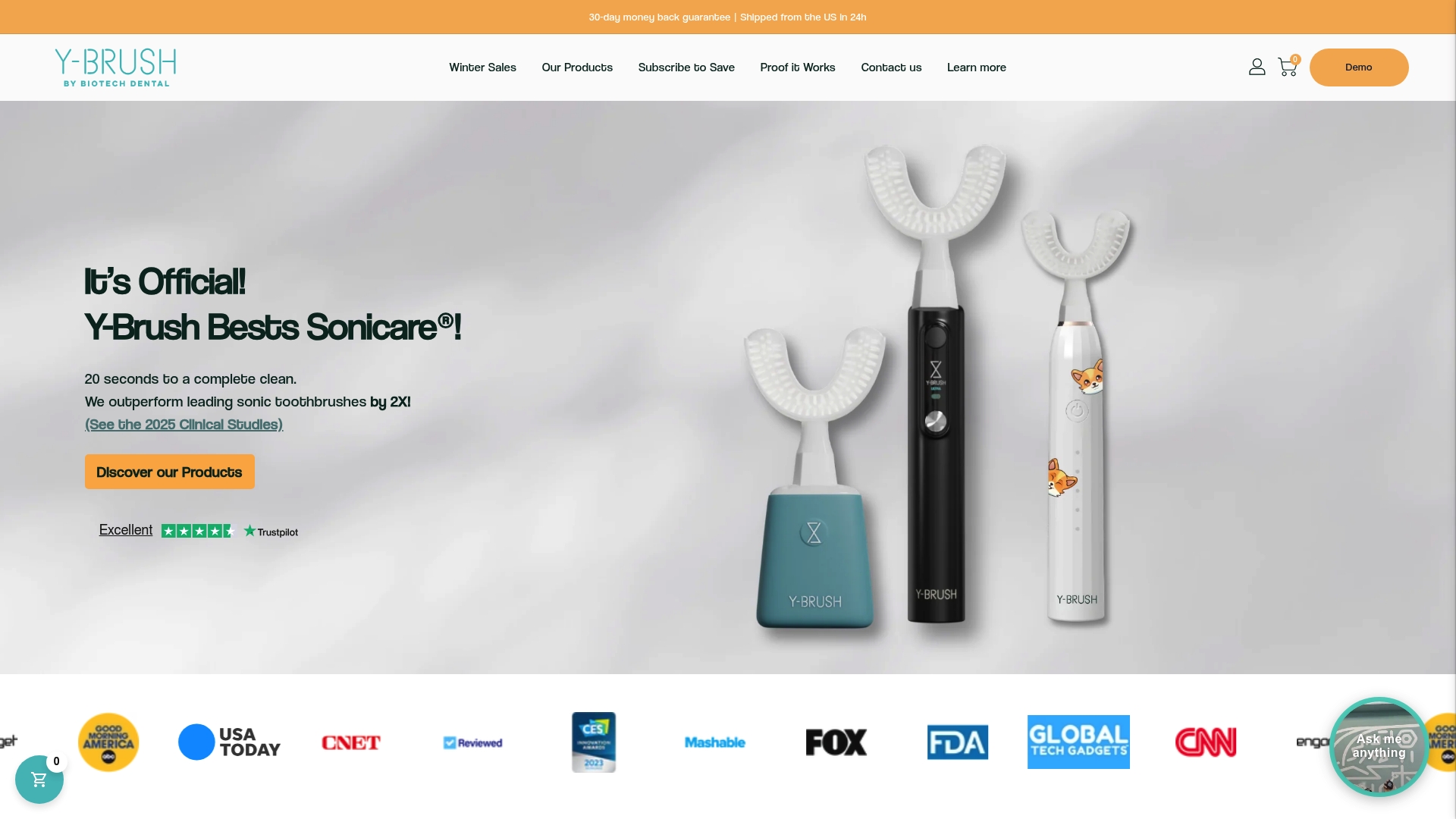
Y-brush’s patented Y-shaped head delivers a full clean in 20 seconds through sonic vibrations, built for people who know they should brush longer but rarely do. Replacement heads are available through membership plans with regular refills, so you’re not stuck manually reordering or vetting a new seller every few months, and Y-brush also makes compatible heads for other brands for readers who want a verified option without switching handles entirely. If you’re weighing cost savings against safety, start with the Y-brush Essential Sonic Toothbrush and see whether an engineered system solves the problem you were trying to solve with a generic head in the first place.
Sources
- Why You Should Avoid Knockoff Oral-B and Philips Sonicare Brush Heads | Wirecutter
- Oral‑B electric toothbrush heads: A primer — OpenCare
- Are generic electric toothbrush heads worth it? — TechAdvisor
- Generic Toothbrush Heads Review: Worth the Switch? - Electrospares.Net LTD
Recommended
- Sonic Toothbrush Gum Safety: What Careful Brushers Need – Y-Brush USA
- Y-Brush Clean240 Brush Head (Replacement Brush Head) - for Ultra, DuoB – Y-Brush USA
- Y-Brush Brush Heads - Compatible with Philips® Sonicare® Brand – Y-Brush USA
- Electric Toothbrush Sensitivity: What You Need to Know – Y-Brush USA


