


Yes, an electric toothbrush can be safe and often gentler for sensitive teeth — provided you choose the right features and use them correctly. Pressure sensors prevent the overbrushing that strips enamel and irritates gum tissue, while sensitive or low-intensity modes deliver a consistent, controlled motion that a manual brush rarely matches. Clinical research also suggests that powered brushing, particularly when paired with fluoride toothpaste, may actively help reduce dentin hypersensitivity over time rather than simply avoiding harm.
Who benefits most:
- People whose sensitivity stems from aggressive brushing technique or inconsistent pressure
- Anyone who struggles to maintain a light, even touch with a manual brush
- Children with early sensitivity who need a gentler, guided clean
Who should be cautious:
- Anyone with acute pain, swelling, or sensitivity that appeared suddenly after dental work
- People with severe gum recession who have not yet had a dental evaluation
Pro Tip: If you already own an electric toothbrush and your teeth feel more sensitive after brushing, switch to the sensitive or low-intensity mode and a soft replacement head before assuming the brush itself is the problem. If discomfort continues beyond two weeks, schedule a dental visit.
Key Takeaways
Electric toothbrushes are safe for sensitive teeth when you pair the right features with correct technique, and certain powered technologies may actively reduce sensitivity over time when used with fluoride toothpaste.
| Point | Details |
|---|---|
| Electric brushes are generally safe | Systematic reviews across 31 trials found no clinically relevant safety concerns vs. manual brushing. |
| Technique matters more than brush type | Pressing too hard or using stiff bristles causes sensitivity regardless of whether the brush is powered or manual. |
| Pressure sensors change behavior | Real-time feedback from a pressure sensor is the most reliable way to correct overbrushing and protect sensitive enamel. |
| Fluoride delivery may improve with sonic vibration | A randomized controlled trial found reduced VAS and SCASS sensitivity scores when a bioelectric brush was used with fluoride toothpaste. |
| Y-brush for sensitive teeth | The Y-Brush Essential Sonic Toothbrush offers soft heads and sensitivity-compatible sonic vibration for adults; the KidsBrush suits children aged 4–12. |
Table of Contents
- Why do teeth become sensitive in the first place?
- Can an electric toothbrush make sensitivity worse?
- How electric toothbrushes can actually help reduce sensitivity
- What features should you look for in a gentle electric toothbrush?
- How to use an electric toothbrush safely when you have sensitive teeth
- Other effective ways to reduce tooth sensitivity
- What does the research actually say about sonic vibration and sensitivity?
- Which Y-brush models work well for people with sensitivity?
- When does sensitivity need professional attention?
- A note on what the evidence actually tells us
- Y-brush is built for people who want a cleaner mouth with less effort and less irritation
- Sources
Why do teeth become sensitive in the first place?
Tooth sensitivity, clinically called dentin hypersensitivity, occurs when the inner layer of the tooth — dentin — becomes exposed. Dentin contains thousands of microscopic channels called dentinal tubules that run toward the nerve. When stimuli like cold air, hot drinks, or brushing pressure reach those tubules, fluid movement inside them triggers a pain response. This is the hydrodynamic theory, and it is the most widely accepted explanation for why sensitivity feels sharp and sudden.
Mayo Clinic identifies several common causes of that exposure:
- Enamel erosion from acidic foods, drinks, or acid reflux
- Gum recession that leaves the root surface unprotected
- Abrasion from brushing too hard or using a stiff-bristled brush
- Tooth grinding (bruxism) that wears down enamel over time
- Recent dental work such as whitening, fillings, or crown placement
For a deeper look at how these causes develop, the Y-brush guide on common causes of tooth sensitivity breaks each one down clearly.
Understanding which cause applies to you matters because it determines whether changing your brushing routine will help or whether you need professional treatment first.
Can an electric toothbrush make sensitivity worse?
An electric toothbrush is not inherently harmful to sensitive teeth. The risk comes from how it is used, not from the technology itself. A systematic review examining 31 human clinical trials found no clinically relevant safety concerns attributable to oscillating-rotating powered brushes compared to manual brushing across two decades of evidence.
That said, certain habits can turn any toothbrush into a source of irritation:
- Pressing too hard. Electric brushes already generate motion; adding manual pressure amplifies abrasion against enamel and gum tissue.
- Using a firm or medium-bristle head. Stiff bristles concentrate force on a small area, accelerating enamel wear and gum recession.
- Horizontal scrubbing. Dragging the brush back and forth rather than letting it oscillate or vibrate defeats the brush’s design and mimics the technique most associated with abrasion damage.
- Very abrasive whitening toothpastes. High-abrasivity pastes combined with powered motion can strip the smear layer that partially protects exposed dentin.
- Brushing immediately after acidic foods or drinks. Enamel is temporarily softened by acid; brushing within 30 minutes of citrus or soda can accelerate erosion.
A systematic review published in 2024 found very low-certainty evidence suggesting powered brushes may cause fewer gingival abrasions than manual brushes in some studies, though no consistent difference in recession was observed. The takeaway: technique and bristle choice matter more than the brush type alone.
Pro Tip: If new sensitivity appeared after switching to an electric toothbrush, note which teeth are affected. Sensitivity concentrated on the outer surfaces of premolars and canines — where people tend to scrub hardest — points to pressure or technique as the cause, not the brush itself.
How electric toothbrushes can actually help reduce sensitivity
Several features built into quality electric toothbrushes work directly against the conditions that cause sensitivity to worsen.
Pressure sensors are the most practical. When you press too hard, the brush either slows its motor, flashes a light, or vibrates differently to alert you. Over time, this feedback retrains brushing habits more reliably than willpower alone.
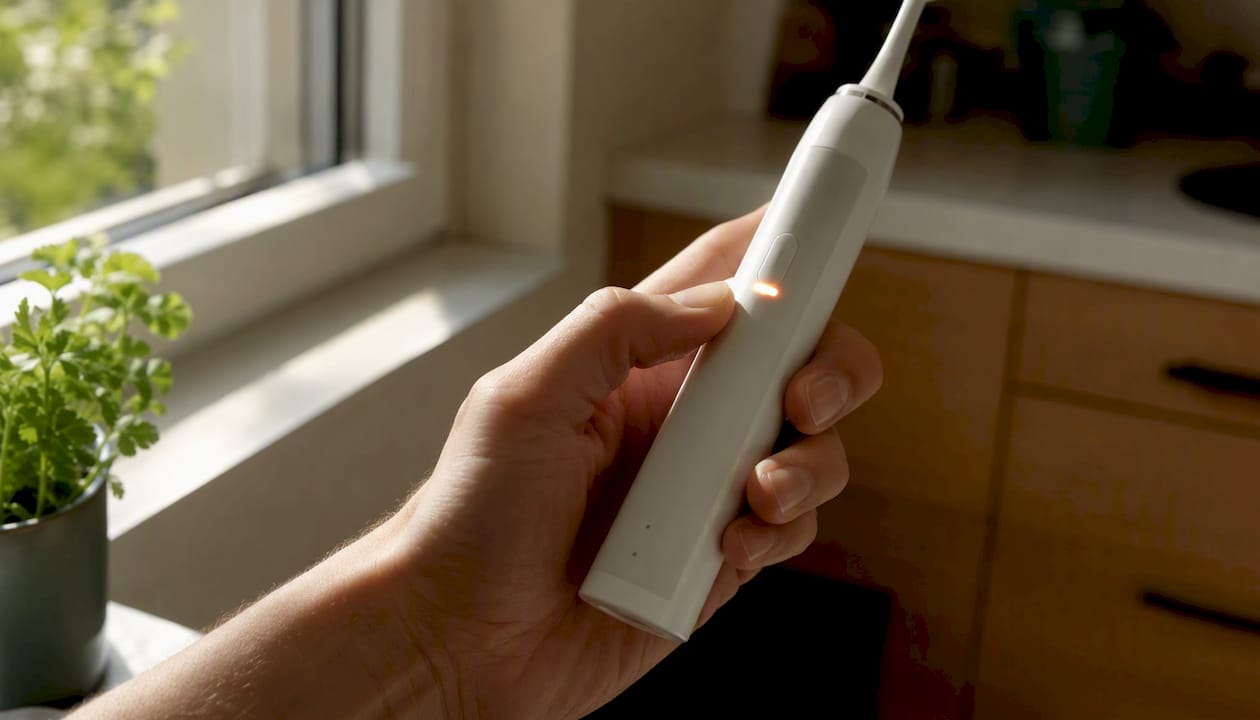
Sensitive or low-intensity modes reduce the oscillation speed or vibration amplitude, delivering a thorough clean without the mechanical force that irritates already-exposed dentin. Most people with sensitivity find these modes sufficient for daily plaque removal.
Improved fluoride delivery is a less obvious but clinically relevant benefit. Sonic vibrations may help fluoride from toothpaste penetrate dentinal tubules more effectively, supporting the formation of a mineral layer that partially blocks those channels. A randomized double-blind controlled trial found that participants using a bioelectric toothbrush with fluoride toothpaste showed greater reductions in patient-reported sensitivity scores (VAS and SCASS) and had fewer hypersensitive teeth than the control group. The trial was smaller in scale (25 in the bioelectric group, 18 in the control), so the findings are promising rather than definitive, but the direction of evidence is consistent with the proposed mechanism.
Longer-term data adds further context. A 36-month randomized subgroup analysis found that a majority of powered-brush users showed a decrease in air-jet-induced dentin hypersensitivity at gingival recession sites, compared to 36% in the manual-brush group. The authors described the finding as small and exploratory and called for confirmation in future trials.
| Study | Population / Length | Main Sensitivity Outcome |
|---|---|---|
| Bioelectric toothbrush RCT (MDPI, 2024) | 43 participants (BET n=25, NBET n=18) | Significant reductions in VAS and SCASS scores; fewer hypersensitive teeth in bioelectric group |
| Powered vs. manual 36-month RCT subgroup | Gingival recession subgroup, 36 months | a majority of powered-brush users showed decreased air-jet sensitivity vs. 36% in manual group (exploratory) |
| Systematic review, oscillating-rotating brushes | 31 clinical trials, two decades | No clinically relevant hard- or soft-tissue safety concerns vs. manual brushing |
For more on how sonic toothbrush technology works at a mechanical level, Y-brush has a detailed breakdown worth reading before you buy.
What features should you look for in a gentle electric toothbrush?
Choosing the right brush for sensitive teeth comes down to a short list of non-negotiable features and a few worth-having extras.
- Soft or extra-soft brush heads. Soft bristles flex rather than scrape, reducing the force transmitted to enamel and gum margins. This is the single most important hardware choice for anyone with sensitivity.
- Sensitive or low-intensity mode. A dedicated mode that reduces vibration or oscillation speed lets you clean effectively without the full mechanical output that can irritate exposed dentin.
- Pressure sensor. Audible, visual, or haptic feedback when you press too hard is the most reliable way to break the overbrushing habit. Look for one that responds in real time, not just at the end of a brushing session.
- Small brush head. A compact head reaches posterior teeth and gum margins more precisely, reducing the tendency to press harder to compensate for poor access.
- Two-minute timer. A built-in timer keeps brushing time consistent without encouraging you to extend sessions, which can increase cumulative abrasion.
- ADA Seal of Acceptance. The ADA recommends looking for this seal as a credibility marker that a product has met independent safety and efficacy standards.
One trade-off worth knowing: softer bristles clean effectively when the brush’s motor does the work, but they wear out faster than medium or firm heads. A worn head with splayed bristles loses both cleaning efficiency and the gentle, even contact that protects sensitive areas.
Pro Tip: Replace brush heads every three months, or sooner if bristles visibly splay. Worn bristles apply uneven pressure and can catch on gum margins, which is a common but overlooked trigger for new or worsening sensitivity.
How to use an electric toothbrush safely when you have sensitive teeth
Getting the technique right matters as much as the brush itself. Follow this routine to clean thoroughly without aggravating sensitivity.
- Select a soft brush head and activate the sensitive mode before you start. If your brush has multiple modes, begin with the lowest intensity and only increase if you feel comfortable after two weeks.
- Apply a low-abrasion fluoride toothpaste. Sensitivity toothpastes containing stannous fluoride or potassium nitrate are good choices. Avoid high-abrasivity whitening pastes during flare-ups.
- Wet the brush head lightly and place it against the gum line at a slight angle before turning the brush on. Starting the motor while the head is already positioned prevents splatter and keeps the initial contact gentle.
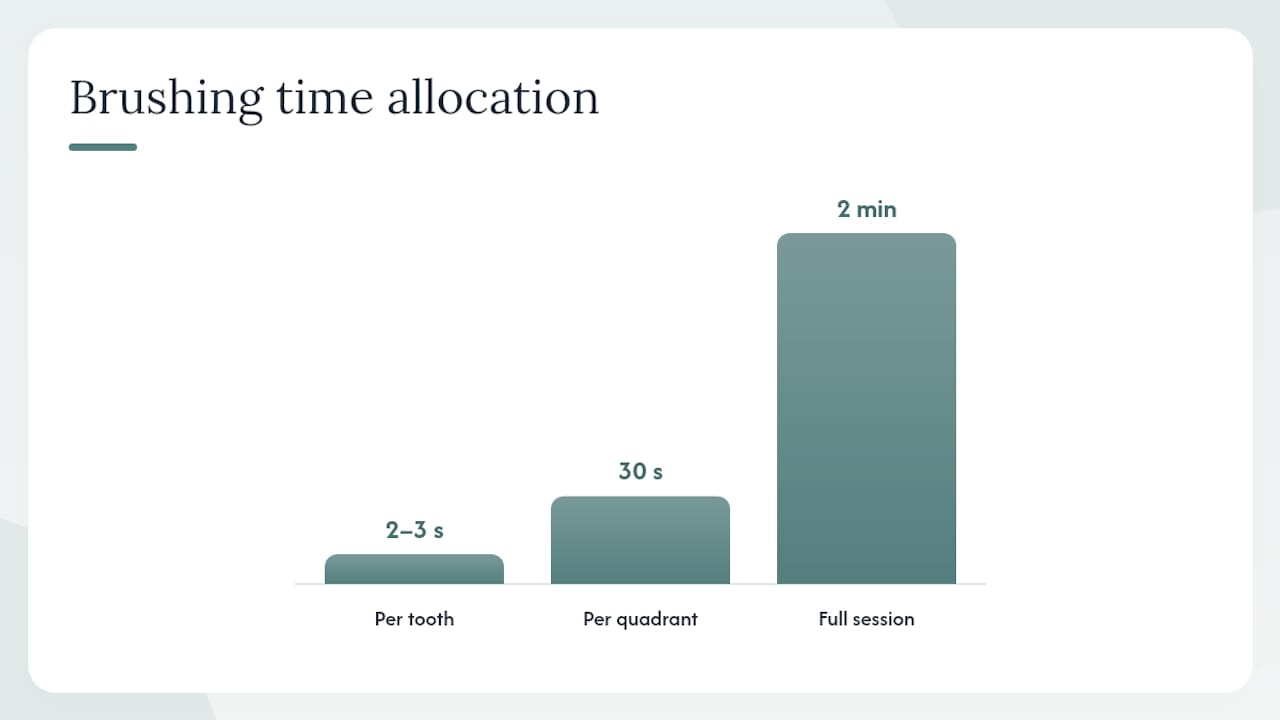
- Let the brush do the work. Guide it slowly from tooth to tooth, spending two to three seconds per tooth. Do not scrub. Your grip should be light enough that you could hold the brush with two fingers.
- Monitor pressure. If your brush has a sensor, watch for the alert signal. If it does not, rest your free hand lightly on your cheek — you should feel vibration, not mechanical force pushing through.
- Brush for two full minutes, divided across all four quadrants. A quadrant timer, if your brush has one, removes the guesswork.
- Finish with a desensitizing rinse if your dentist has recommended one. Fluoride rinses or prescription-strength desensitizing agents can reinforce the tubule-sealing effect of fluoride toothpaste.
Dos and don’ts at a glance:
- Do test the sensitive mode for at least two weeks before drawing conclusions about whether the brush suits you.
- Do replace heads on schedule and check bristle condition monthly.
- Don’t scrub horizontally, even briefly, at the start or end of a session.
- Don’t use a high-abrasivity whitening paste alongside a powered brush if you have active sensitivity.
- Don’t brush within 30 minutes of consuming acidic foods or drinks.
Pro Tip: During the first one to two weeks with a new electric toothbrush, practice holding it with only your thumb and two fingers. Most people grip a toothbrush the same way they grip a pen under stress — tightly. A lighter grip makes it physically harder to apply damaging pressure, and the habit forms faster than you might expect.
For a step-by-step brushing routine built around efficiency and sensitivity prevention, the Y-brush guide on preventing tooth sensitivity through brushing is a practical companion to this article.
Other effective ways to reduce tooth sensitivity
Changing your brush and technique addresses one piece of the puzzle. These additional measures work alongside better brushing to reduce sensitivity more completely.
Desensitizing toothpastes are the most accessible starting point. Formulas containing potassium nitrate calm nerve activity inside the tooth, while stannous fluoride works by depositing a mineral layer over exposed dentinal tubules. Cleveland Clinic recommends using these consistently rather than intermittently, since the protective effect builds over several weeks. For a detailed breakdown of active ingredients and how to choose between them, the Y-brush guide on sensitivity toothpaste covers the key differences clearly.
Diet and acid control reduce the erosion that exposes dentin in the first place. Limiting citrus, carbonated drinks, and vinegar-based foods lowers the acid load on enamel. When you do consume acidic foods, waiting 30–60 minutes before brushing gives saliva time to remineralize the enamel surface.
Professional treatments become relevant when at-home measures plateau. Options your dentist may recommend include:
- In-office fluoride varnish, which delivers a concentrated fluoride dose directly to sensitive areas and can provide relief within days
- Bonding or resin sealants, which physically cover exposed root surfaces and block tubule access
- Prescription desensitizing agents, such as high-concentration fluoride gels or oxalate compounds, for cases that do not respond to over-the-counter products
- Gum grafting, in cases of significant recession where the root surface cannot be adequately protected by topical treatments alone
Most people see meaningful improvement from toothpaste and technique changes within four to eight weeks. Professional treatments are appropriate when symptoms are severe, worsening, or have not responded to conservative care after that window.
What does the research actually say about sonic vibration and sensitivity?
The evidence base for powered brushing and sensitivity is growing, though it remains uneven in quality.
The bioelectric toothbrush RCT is the most mechanistically interesting recent study. Participants using a bioelectric brush with fluoride toothpaste showed statistically significant reductions in both VAS (visual analog scale) pain scores and SCASS (Schiff Cold Air Sensitivity Score) ratings, along with a reduction in the number of hypersensitive teeth. The proposed mechanism is that sonic or bioelectric vibration enhances fluoride penetration into dentinal tubules, accelerating the formation of a mineral plug that reduces fluid movement and therefore pain. The trial’s sample size (43 participants total) limits how far the findings can be generalized, but the design was rigorous — randomized, double-blind, and controlled.
The 36-month powered vs. manual RCT subgroup provides longer-term perspective. Among participants with gingival recession, powered brushing produced a greater reduction in air-jet-induced sensitivity than manual brushing over three years. The authors were explicit that the finding is exploratory and that the subgroup analysis was not the trial’s primary endpoint, so it should be interpreted cautiously.
| Study | Design | Key Finding | Certainty |
|---|---|---|---|
| Bioelectric toothbrush RCT (MDPI, 2024) | Randomized, double-blind, controlled | Reduced VAS and SCASS scores; fewer hypersensitive teeth with bioelectric brush + fluoride | Promising; limited by sample size |
| Powered vs. manual 36-month RCT | Randomized controlled trial, subgroup | 60% vs. 36% reduction in air-jet sensitivity at recession sites | Exploratory; needs confirmation |
| Systematic review, gingival lesions (2024) | Systematic review and meta-analysis to May 2024 | No clear difference in recession; trend toward fewer abrasions with powered brushes; very low certainty | Very low certainty |
| Oscillating-rotating safety review | Systematic review, 31 trials | No clinically relevant safety concerns vs. manual brushing over two decades | Moderate; consistent across studies |
The overall picture: powered brushes are safe, may offer a modest advantage for sensitivity when used correctly, and the fluoride-delivery mechanism is biologically plausible and supported by at least one well-designed trial. Technique and bristle choice remain the most controllable variables for most people.
Which Y-brush models work well for people with sensitivity?
Y-brush offers three models that suit people managing tooth sensitivity, each designed around the brand’s patented Y-shaped brush head that covers all tooth surfaces simultaneously in 20 seconds using sonic vibration.
Y-Brush Essential Sonic Toothbrush
The Y-Brush Essential Sonic Toothbrush is the primary recommendation for adults with sensitivity. Its sonic vibration mode delivers consistent, controlled motion without requiring manual scrubbing, which removes the most common source of pressure-related irritation. Soft brush heads are available, and the Y-shaped design means the brush contacts all surfaces at once rather than dragging across individual teeth.
Key features for sensitive teeth:
- Sonic vibration with sensitive-compatible intensity
- Soft brush head option
- Y-shaped head for full-arch contact, reducing the need to reposition and press
- 20-second full clean that limits cumulative brushing time
Y-Brush KidsBrush Sonic Electric Toothbrush
For children aged 4–12, the Y-Brush KidsBrush applies the same sonic principle with a head sized for smaller mouths. Children are particularly prone to inconsistent pressure and technique, and the full-arch contact design reduces the variables that lead to gum irritation in young brushers.
Key features:
- Child-sized Y-shaped brush head
- Sonic vibration calibrated for smaller mouths
- Short 20-second cycle that suits children’s shorter attention spans
- Soft bristles appropriate for developing enamel
Y-Brush Ultra Sonic Toothbrush
The Y-Brush Ultra Sonic Toothbrush suits adults who want additional modes and accessories. It builds on the Essential’s foundation with expanded feature options for those who want more control over their brushing experience.
Key features:
- Multiple intensity modes, including lower settings suited to sensitivity
- Advanced sonic technology
- Compatible with soft replacement heads
- Full-arch Y-shaped design
All three models are available directly through the Y-brush website and ship within the United States. Replacement heads are available on a subscription plan, which makes it easier to stay on the three-month replacement schedule that matters for maintaining gentle, effective contact.
When does sensitivity need professional attention?
Most sensitivity responds to at-home measures within a few weeks. Some symptoms, however, signal a problem that requires a dentist’s evaluation rather than a new toothpaste.
Seek professional care if you experience:
- Sudden, severe pain that appears without an obvious trigger or is significantly worse than previous sensitivity
- Persistent pain that does not improve after four to eight weeks of consistent desensitizing toothpaste use and technique correction
- Swelling, visible gum changes, or bleeding that does not resolve within a week of gentle brushing
- Pain following recent dental work that intensifies rather than gradually fades over two to three weeks
- Sensitivity in a single tooth that feels different from general sensitivity, which can indicate a cracked tooth, failing restoration, or early pulp involvement
- Loosening teeth or visible changes in tooth position, which may indicate bone loss
If you experience severe, throbbing pain alongside swelling of the face or jaw, seek emergency dental care. These symptoms can indicate an abscess or infection that requires prompt treatment.
A note on what the evidence actually tells us
The conversation around electric toothbrush sensitivity tends to split into two camps: people who dismiss powered brushes as too aggressive for sensitive teeth, and marketing copy that overstates the clinical evidence for sensitivity relief. Neither position is accurate.
The honest picture is more useful. Powered brushes are not inherently risky for sensitive teeth. The research is clear on that point across multiple systematic reviews. What the research also shows is that technique, bristle hardness, and mode selection matter considerably more than whether the brush is powered or manual. A person who presses hard with a stiff-bristle electric brush will cause more damage than someone using a soft manual brush with good technique. The brush type is secondary to the habit.
Where powered brushes genuinely earn their place for sensitive-teeth users is in the feedback loop. Pressure sensors and sensitive modes create a real-time correction mechanism that manual brushing simply cannot replicate. For people who have been told by a dentist that they brush too hard, an electric brush with a pressure sensor is not just a convenience — it is a behavior-change tool. That distinction gets lost in most buying guides, which focus on vibration frequency and bristle count rather than the feature that actually changes outcomes.
The fluoride-delivery angle is worth watching. The bioelectric toothbrush trial results are preliminary, but the mechanism is biologically coherent and the direction of evidence is consistent. If future, larger trials confirm that sonic vibration meaningfully improves fluoride penetration into dentinal tubules, that would shift the recommendation from “safe for sensitive teeth” to “actively beneficial.” We are not there yet, but the trajectory of the evidence is encouraging.
Y-brush is built for people who want a cleaner mouth with less effort and less irritation
Sensitive teeth deserve a brush that works with your mouth, not against it. The Y-Brush Essential Sonic Toothbrush delivers a complete clean in 20 seconds using sonic vibration and a patented Y-shaped head that contacts all tooth surfaces simultaneously, removing the need to scrub or reposition. Soft brush heads and sensitivity-compatible intensity make it a practical daily choice for adults managing dentin hypersensitivity.
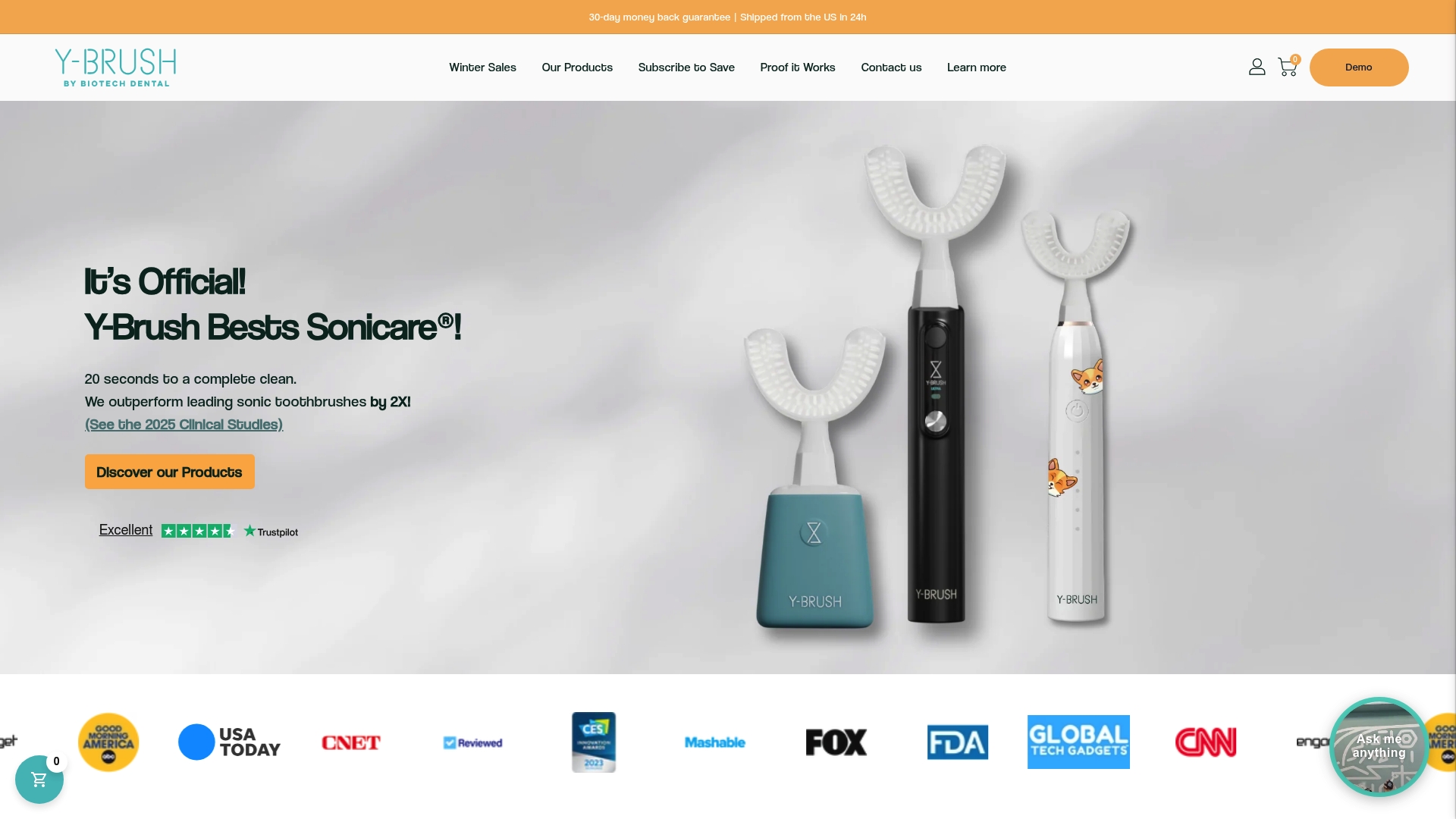
For children with sensitive teeth or developing enamel, the Y-Brush KidsBrush applies the same full-arch sonic approach in a child-sized format. Adults who want expanded mode options can explore the Y-Brush Ultra. All models are available at Y-brush, with U.S. shipping and subscription plans for replacement heads on a three-month schedule.
Individual results vary. If your sensitivity is severe or worsening, consult a dentist before changing your brushing routine. This article provides general information, not a substitute for professional dental advice.
Sources
- Clinical Investigation of Bioelectric Toothbrush for Dentin Hypersensitivity Management: A Randomized Double-Blind Study
- Three years long-term impact of powered vs. manual toothbrushes on hypersensitivity and gingival recession: A randomized controlled trial
- Influence of Manual and Powered Toothbrushes on Gingival Lesions: A Systematic Review and Meta‐Analysis
- Safety of Oscillating‐Rotating Powered Brushes Compared to Manual Toothbrushes: A Systematic Review
- Sensitive teeth: expert answers — Mayo Clinic
Consult your dentist for a personalized assessment, particularly if sensitivity is severe, localized to a single tooth, or has not responded to conservative care within four to eight weeks.


