


Dental tartar, also called dental calculus, is hardened dental plaque that has mineralized onto your teeth and can no longer be removed by brushing or flossing alone. According to the Cleveland Clinic, once tartar forms, only a dental professional using specialized scaling instruments can safely remove it. The practical takeaway is straightforward: daily brushing and flossing prevent tartar, but once it has set, you need professional help.
Your immediate action checklist:
- Schedule a dental cleaning if you have not had one in the past six months
- Brush twice daily for two full minutes and floss once a day
- Switch to a tartar-control toothpaste with pyrophosphates or zinc compounds
- Consider a powered toothbrush to improve plaque removal at the gumline
Key Takeaways
Tartar is hardened dental plaque that requires professional removal; daily brushing and flossing are the only tools that prevent it from forming in the first place.
| Point | Details |
|---|---|
| Tartar needs professional removal | Once plaque mineralizes into tartar, no home tool can safely remove it; only a hygienist’s scaling instruments work. |
| Plaque hardens fast | Under poor hygiene conditions, plaque can begin mineralizing within 24–72 hours, making daily cleaning non-negotiable. |
| Top three prevention habits | Brush twice daily for two minutes, floss once a day, and attend professional cleanings every six months. |
| Choose the right toothpaste | Tartar-control formulas with pyrophosphates and zinc compounds reduce new mineral deposits more effectively than standard paste. |
| Y-brush supports compliance | Y-brush’s 20-second Y-shaped brush head is designed to remove the time barrier that causes most people to cut brushing short. |
Table of Contents
- What is dental tartar and how does it form?
- How are plaque and tartar different, and why does it matter?
- What does tartar look like and where does it form?
- Why is tartar buildup harmful to your oral health?
- How do dental professionals remove tartar?
- How to prevent tartar from building up
- Which tools give you the best defense against tartar?
- When should you see a dentist about tartar?
- An editorial perspective on tartar prevention
- Y-brush: a faster path to consistent plaque removal
- Sources
What is dental tartar and how does it form?
Plaque is a soft, sticky bacterial biofilm that coats your teeth continuously. MedlinePlus describes it as a structured community of bacteria whose biofilm architecture makes the organisms harder to dislodge, which is exactly why consistent mechanical disruption through brushing matters so much. When plaque is not removed regularly, mineral salts — primarily calcium and phosphate — from saliva and gingival crevicular fluid (the fluid that seeps from the tissue around your teeth) precipitate into that soft film, gradually hardening it into the crusty deposit we call tartar, or dental calculus.
Two distinct types form depending on location:
- Supragingival calculus develops above the gumline, where it is visible and more accessible to a hygienist’s instruments
- Subgingival calculus forms below the gumline, inside the periodontal pocket, where it is denser, darker, and far more damaging to surrounding tissue
Under poor oral hygiene conditions, plaque can begin mineralizing relatively quickly, sometimes within just a few days. Within two weeks, a soft deposit can harden into early-stage calculus. That speed is why skipping a few days of thorough brushing is not a trivial lapse.
How are plaque and tartar different, and why does it matter?
Plaque and tartar are related but clinically distinct, and confusing the two leads people to underestimate what they are dealing with. Medical News Today explains the core contrast clearly: plaque is a soft, clear or pale yellow film you can remove with a toothbrush; tartar is a calcified, hard crust that has bonded to the tooth surface and cannot be removed at home.
A quick self-assessment guide:
- Plaque feels fuzzy or filmy on teeth, especially in the morning; it is largely colorless and responds to brushing
- Tartar feels rough or gritty, often appears yellow to brown, and does not budge with a toothbrush
- Removal of plaque is a daily home task; removal of tartar requires a dental professional
The clinical consequence of confusing the two is real. Tartar’s rough, porous surface acts as a scaffold that traps new plaque more efficiently than a clean tooth surface does. More plaque means faster tartar accumulation, which accelerates gum inflammation. Breaking that cycle requires professional removal, not harder brushing.
For a deeper look at how plaque transitions into calculus, the Y-brush guide on limiting dental plaque walks through the progression step by step.
What does tartar look like and where does it form?
Tartar ranges in color from pale yellow to tan or brown, and in advanced cases it can appear almost black, particularly in subgingival deposits. The texture is rough and crusty rather than smooth, and staining agents from coffee, tea, and tobacco bind readily to its porous surface, deepening the discoloration over time.
Two locations account for the majority of visible buildup:
- Inner surfaces of the lower front teeth: These sit directly in front of the sublingual salivary gland ducts. Higher mineral concentration in saliva near those ducts accelerates precipitation, making this the most common site for early tartar deposits.
- Outer surfaces of the upper molars: These teeth are adjacent to the parotid gland ducts, another high-mineral saliva source, according to dental calculus research.
Subgingival tartar is not visible to the naked eye. It is typically darker (ranging from dark brown to black due to blood pigments from inflamed tissue) and is detected by a hygienist probing below the gumline during an exam.
Why is tartar buildup harmful to your oral health?
Tartar is not merely a cosmetic problem. Its presence sets off a cascade of oral health consequences that worsen the longer it remains.
- Gingivitis: Tartar harbors bacteria directly against gum tissue, triggering inflammation, redness, and bleeding. This is the earliest stage of gum disease and is reversible with professional cleaning.
- Periodontitis: If tartar is not removed, inflammation progresses deeper, destroying the connective tissue and bone that anchor teeth. Subgingival calculus is especially implicated here because it shelters bacteria next to the periodontal tissues where they cause the most structural damage.
- Tooth decay: Bacteria embedded in tartar produce acids that erode enamel, creating conditions for cavities.
- Persistent bad breath: The bacterial load in tartar produces volatile sulfur compounds, a primary driver of chronic halitosis.
- Aesthetic staining: Tartar’s porous surface absorbs pigments from food and drink, producing visible discoloration that whitening toothpaste alone cannot address.
The peer-reviewed literature on biofilm and calculus reinforces that the bacterial community within calculus is biologically active and continues contributing to tissue damage as long as the deposit remains. Downstream consequences of untreated gum disease, including bone loss and tooth loss, are well documented. For a broader view of how tartar connects to other oral problems, the Y-brush overview of dental problems covers the full spectrum.
How do dental professionals remove tartar?
Professional tartar removal, called scaling, is the only safe and effective method. The Cleveland Clinic outlines three main approaches used in clinical practice:
- Manual scaling: A hygienist uses hand instruments (scalers and curettes) to chip and scrape calculus from tooth surfaces, working both above and below the gumline.
- Ultrasonic scaling: A vibrating metal tip fragments calculus while a water spray flushes debris away. Ultrasonic scalers are particularly efficient for supragingival deposits and can also access subgingival areas.
- Scaling and root planing (SRP): Recommended when subgingival calculus and early-to-moderate periodontitis are present, SRP goes deeper to clean the root surface and smooth it so bacteria have less surface area to reattach.
Most adults benefit from a professional cleaning every six months, though people with a history of gum disease often need appointments every three to four months.
On cost: a routine prophylaxis cleaning typically runs $75–$200 without insurance in the U.S. SRP is more involved and can range considerably higher per quadrant.
Pro Tip: Never attempt to scrape tartar at home with metal tools purchased online. Amateur scraping can gouge enamel and lacerate gum tissue, creating new sites for bacterial colonization. Leave instrumentation to a licensed hygienist.
How to prevent tartar from building up
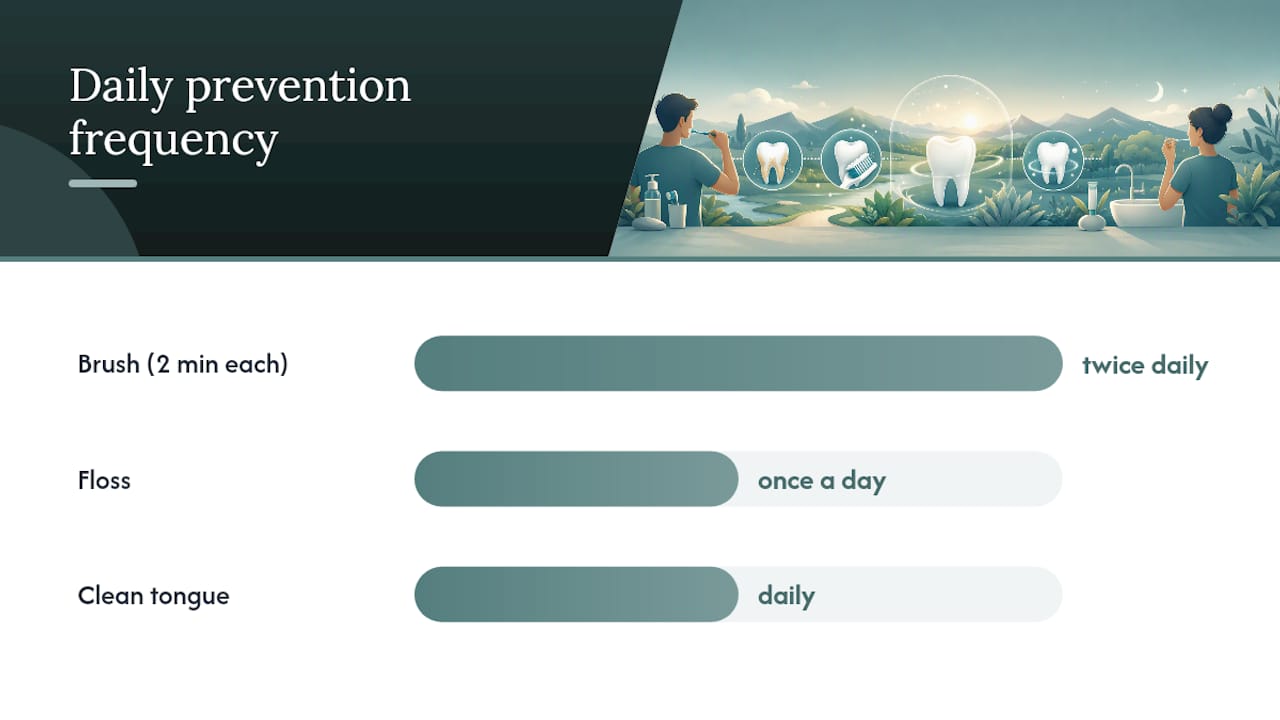
Prevention is far simpler than removal, and the evidence behind each habit is solid.
Daily non-negotiables:
- Brush twice daily for two full minutes, covering all tooth surfaces and the gumline
- Floss once a day to disrupt plaque in the spaces a brush cannot reach
- Clean your tongue daily to reduce overall bacterial load in the mouth
Product choices that make a measurable difference:
- Tartar-control toothpaste: Look for active ingredients like pyrophosphates and zinc compounds, which inhibit mineral crystallization and reduce new tartar formation. Fluoride remains the gold standard for enamel protection and should be present in any toothpaste you choose.
- Antiseptic mouthwash: Chlorhexidine-based rinses (available by prescription) reduce bacterial counts significantly; over-the-counter antiseptic rinses offer a more modest but still useful reduction.
- Anti-tartar toothpaste selection: The Y-brush blog has a practical breakdown of which anti-tartar toothpastes to consider based on ingredient profiles.
Lifestyle and dietary factors:
- Quitting smoking reduces tartar accumulation and the staining that makes deposits more visible
- Limiting sugary and starchy foods reduces the substrate bacteria need to thrive in plaque
- Drinking water throughout the day helps rinse food debris and dilute mineral-rich saliva pooling around teeth
Which tools give you the best defense against tartar?
The evidence that powered toothbrushes outperform manual brushing for plaque removal is well established. Sonic and oscillating-rotating electric toothbrushes consistently show greater plaque reduction in clinical comparisons, particularly at the gumline where tartar formation begins. Better plaque removal upstream means less mineralization opportunity downstream.
Technique matters as much as the tool itself:
- Angle the brush head at 45 degrees toward the gumline to disrupt the plaque film where it meets tissue
- Use light pressure; pressing harder does not improve cleaning and can abrade enamel over time
- Spend equal time on all four quadrants rather than concentrating on visible front surfaces
Pro Tip: When choosing a brush head, select one sized to reach your back molars comfortably. A head that is too large skips the surfaces most prone to tartar buildup near the parotid ducts.
For people who struggle with the recommended two-minute brushing time, compliance is the real barrier to tartar prevention. Y-brush’s patented Y-shaped brush head is designed to clean all tooth surfaces simultaneously, completing a full clean in 20 seconds through sonic vibrations. That is a brand claim, and it is worth noting in the context of compliance: a brush you actually use consistently, for the full recommended contact time, will always outperform a technically superior brush used inconsistently. For efficiency-focused brushing strategies, the Y-brush guide to cleaning teeth in less time offers practical technique adjustments.
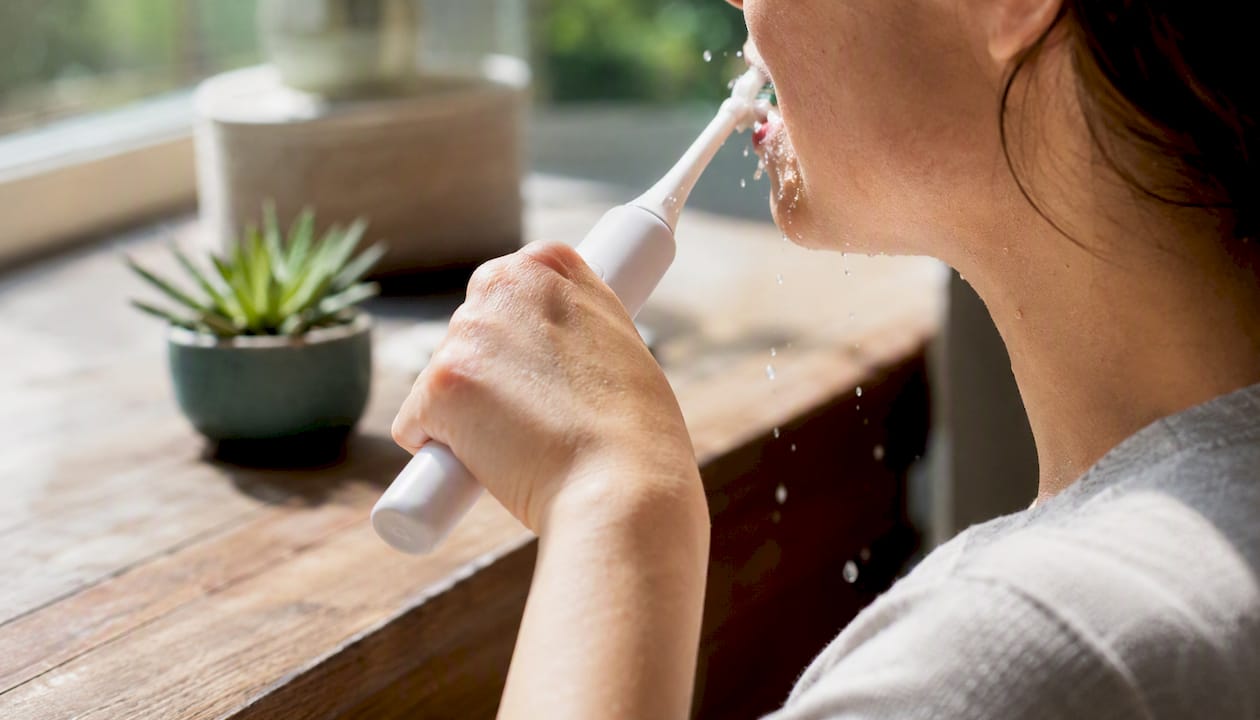
For readers who want to go deeper on the microbial science behind plaque and why disrupting biofilm early is so effective, Stop Oral Care’s guide to dental biofilm is a solid resource.
When should you see a dentist about tartar?
Routine six-month cleanings catch most tartar before it causes serious damage. But certain symptoms call for an earlier appointment:
- Gums that bleed when you brush or floss
- Persistent bad breath that does not resolve with brushing
- Visible yellow, brown, or dark deposits along the gumline
- Gum recession or teeth that appear longer than before
- Loose teeth or a change in how your bite feels
- Pain or sensitivity that is new or worsening
Any one of these warrants a call to your dentist for an exam, not just a cleaning. People with a prior diagnosis of gum disease should already be on a three-to-four-month recall schedule rather than waiting the standard six months.
An editorial perspective on tartar prevention
The conventional advice on tartar prevention is technically correct but practically incomplete. Telling people to “brush for two minutes twice a day” is accurate. The problem is that research consistently shows roughly 90% of people do not actually brush for the full recommended time, with the average session running under one minute. The gap between what people know they should do and what they actually do is where tartar forms.
The more honest framing is this: the best prevention routine is the one you will actually complete, every day, without shortcuts. That means choosing tools and habits that fit your real life rather than an idealized dental hygiene protocol. A tartar-control toothpaste you use consistently beats a premium formula you forget half the time. A powered brush you pick up every morning beats a manual brush sitting on the counter.
What most articles understate is the compounding nature of tartar. Missing thorough cleaning for a few days does not produce a proportional, small amount of tartar. Because tartar’s rough surface accelerates new plaque adhesion, the damage compounds faster than most people expect. Early, consistent disruption of plaque is not just good practice; it is the only window you have before professional intervention becomes necessary.
Y-brush: a faster path to consistent plaque removal
Consistent brushing is the single most effective thing you can do to prevent tartar, and the biggest obstacle most people face is time. Y-brush was built specifically around that reality.
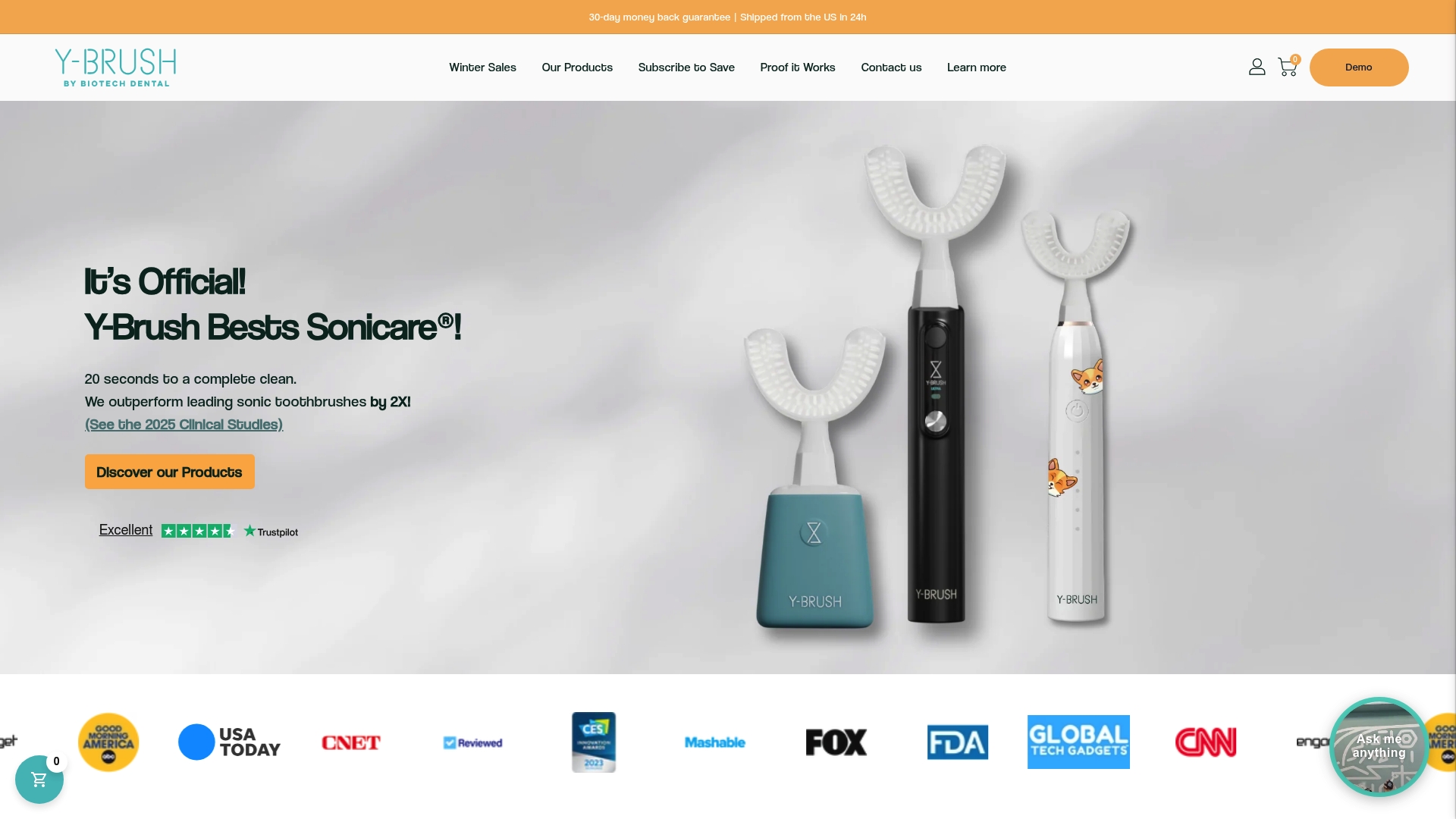
The Y-brush Essential Sonic Toothbrush uses a patented Y-shaped brush head that covers all tooth surfaces at once, delivering a complete clean in 20 seconds through sonic vibrations. For adults who routinely cut brushing short, that design removes the compliance barrier entirely. No two-minute timer to ignore, no technique to perfect. You brush, it cleans. If you have children, the Y-brush KidsBrush applies the same approach for ages 4–12, building consistent habits early. Visit Y-brush to find the model that fits your routine and start protecting your teeth from tartar buildup today.
Sources
The following sources informed this article and are worth consulting directly for additional detail:
- Tartar on Teeth (Dental Calculus): Causes & Removal
- Calculus (dental) - Wikipedia
- Plaque and tartar on teeth: MedlinePlus Medical Encyclopedia
- Plaque vs tartar: What’s the difference? - Medical News Today
- PubMed reference (20359448)


