


Receding gums, clinically called gingival recession, occur when the gum margin pulls away from the tooth surface, exposing the root beneath. According to the Cleveland Clinic, recession cannot reverse itself naturally, which makes early recognition the single most important factor in protecting your teeth long-term. If you notice any of the signs below, schedule a dental exam promptly.
Signs to check for right now:
- Teeth that look longer than they used to
- A yellowish or darker area visible at the base of a tooth (exposed root)
- Sharp sensitivity to hot, cold, or sweet foods and drinks
- A notch or groove you can feel with your tongue at the gumline
Immediate actions:
- Check your brushing pressure: if your bristles splay within weeks, you are brushing too hard
- Switch to a soft-bristled brush if you haven’t already
- Book a dental exam if any of the above signs are present
Key Takeaways
Receding gums cannot reverse on their own, but early detection and consistent daily habits can stop progression and often eliminate the need for surgery.
| Point | Details |
|---|---|
| Definition and reversibility | Gingival recession exposes tooth roots and cannot reverse naturally; only grafting restores lost coverage. |
| Healthy pocket depth | 1–3 mm is the normal range; readings above 3 mm signal active disease requiring professional care. |
| Main causes | Periodontal disease, aggressive brushing, tobacco, thin gum biotype, and occlusal trauma drive most cases. |
| Prevention priority | Soft-bristled or pressure-sensing electric brush plus a 45-degree technique reduces mechanical trauma daily. |
| Y-brush role | Y-brush sonic toothbrushes support gentle, effective plaque removal as part of a dentist-recommended prevention routine. |
Table of Contents
- What is gum recession, and who is most at risk?
- How do you recognize receding gums, and what causes them?
- What does a dental exam for gum recession involve?
- What are your treatment options for receding gums?
- How can you prevent gum recession from getting worse?
- Why technique and tools are backed by clinical evidence
- The case for catching this early
- Gentle, effective brushing starts with the right tool
- Sources
What is gum recession, and who is most at risk?
Gingival recession is not the same as gingivitis or periodontitis, though all three are related. Gingivitis is reversible gum inflammation caused by plaque buildup. Periodontitis is an advanced infection that destroys the bone and connective tissue supporting teeth. Recession is the physical result: the gum margin migrates toward the root, sometimes as a consequence of periodontitis, sometimes from mechanical trauma alone, and sometimes from anatomy.
Many adults have at least some degree of recession, and risk rises steadily with age. A systematic review and meta-analysis identified male gender, smoking, plaque accumulation, high frenulum attachment, occlusal trauma, and a history of periodontal treatment as consistent risk factors across populations. Thin gum tissue and thin buccal bone are anatomical traits that amplify every other risk factor.
Diagnostic anchor: The NIDCR defines healthy periodontal pocket depth as 1–3 mm. Readings above 3 mm signal disease activity; readings combined with visible recession indicate tissue has already been lost.
How do you recognize receding gums, and what causes them?
Symptoms you can spot
Mayo Clinic and NIDCR both describe a consistent cluster of signs that patients often attribute to normal aging until a dentist measures the change:
- Longer-looking teeth: The crown appears taller as the gum margin drops
- Exposed root surface: Yellow or tan discoloration at the tooth base
- Sensitivity: Hot, cold, sweet, or air triggers sharp, brief pain
- Black triangles: Gaps between teeth where interdental tissue has receded
- Bleeding on brushing or flossing
- Persistent bad breath from bacteria colonizing exposed root surfaces
- Tooth mobility in advanced cases where bone support is also compromised
| Symptom | Most likely cause |
|---|---|
| Sensitivity to temperature/sweets | Exposed dentinal tubules on root surface |
| Black triangles between teeth | Interdental tissue loss, often from periodontitis |
| Teeth appear longer | Gum margin migration toward the root |
| Notch at gumline | Abrasion from aggressive brushing or hard brush |
| Bleeding on brushing | Active gingival inflammation or plaque accumulation |
| Loose teeth | Advanced bone loss beneath the gum |
Primary causes and risk factors
Periodontal disease is the most common systemic driver. Plaque-driven infection destroys the connective tissue and bone that anchor the gum margin, causing it to recede. Healthline notes that earlier diagnosis consistently improves outcomes, particularly because non-surgical care is effective when bone loss is still minimal.
Mechanical trauma is the second major cause. Aggressive brushing with a hard-bristled brush physically abrades gum tissue over months and years. The Merck Manual specifically identifies overaggressive brushing as a leading contributor, particularly in patients with naturally thin, delicate gum tissue.
Tobacco use compounds both pathways: it suppresses immune response, promotes plaque, and impairs tissue healing. The meta-analysis confirms smoking as a statistically significant risk factor for recession across multiple study populations.
Genetics and gum biotype matter more than most patients realize. A thin buccal bone plate combined with a thin gum biotype creates a situation where even moderate brushing pressure or minor orthodontic movement can precipitate recession. A clinical review published in PMC clarifies that orthodontic tooth movement is not usually the primary cause of recession, but moving a tooth into an area with thin or absent buccal bone can expose it to conditions that trigger recession. Light, balanced orthodontic forces and a pre-treatment periodontal assessment reduce that risk.
Other contributing factors include occlusal trauma (grinding or clenching that concentrates force at the gumline), high frenulum attachment that pulls the gum margin, and oral piercings that chronically abrade tissue.
Pro Tip: Run your tongue along the gumline of your lower front teeth. A notch or groove you can feel but not see is often the earliest sign of abrasion-related recession, and it appears years before the tooth looks visibly longer.
What does a dental exam for gum recession involve?
Periodontal probing and charting
A dentist or periodontist uses a calibrated probe to measure pocket depth at six points around each tooth. NIDCR defines the healthy range as 1–3 mm. Readings of 4 mm or more indicate active disease; readings above 6 mm often require surgical intervention. Recession measurements are recorded separately in millimeters from the cementoenamel junction (CEJ) to the gum margin, giving the clinician a precise map of tissue loss.
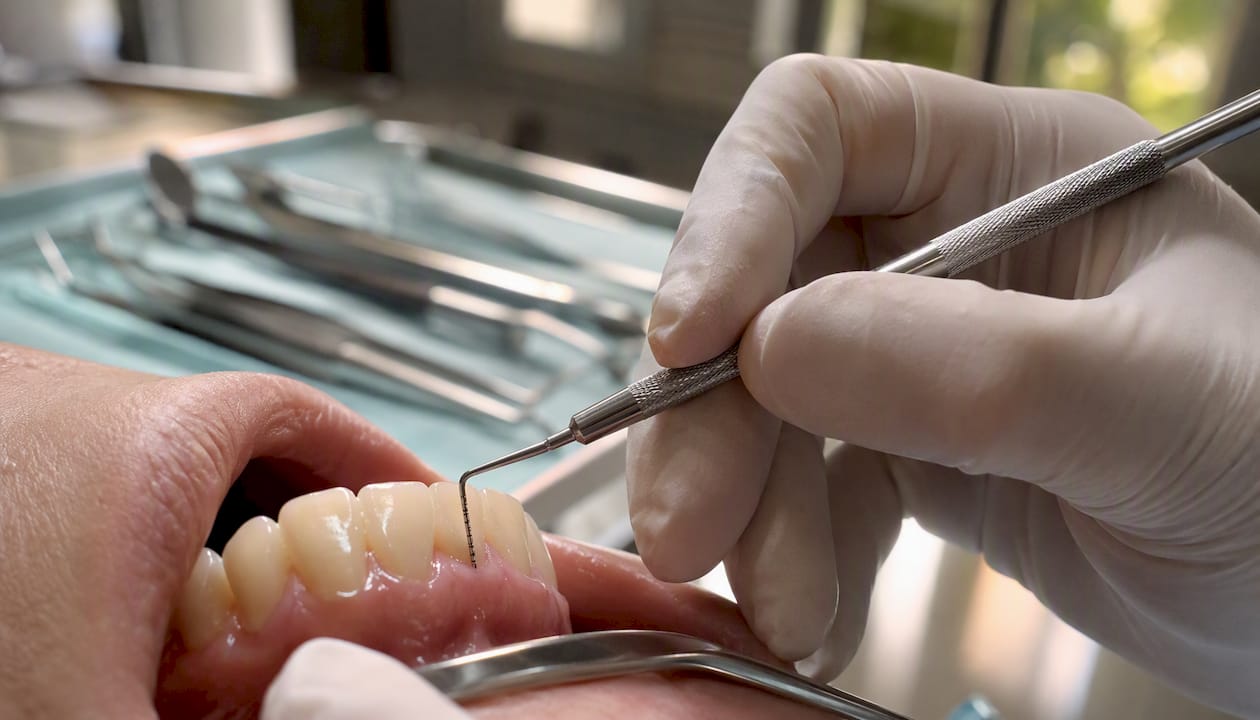
When to expect a periodontist referral: rapid progression between visits, pocket depths consistently above 5 mm, tooth mobility, or recession affecting multiple teeth across different jaw quadrants.
| Diagnostic test | How it’s done | What the result indicates |
|---|---|---|
| Periodontal probing | Calibrated probe inserted at 6 points per tooth | Pocket depth; 1–3 mm healthy, >3 mm disease activity |
| Recession charting | Distance from CEJ to gum margin measured in mm | Extent of tissue already lost |
| Dental X-rays | Periapical or bitewing radiographs | Bone level, bone loss pattern, root anatomy |
| Mobility testing | Gentle pressure applied to crown | Degree of bone support remaining |
Red flags that indicate urgent care
- Pocket depths above 5 mm at multiple sites
- Visible bone loss on X-ray
- Tooth mobility (any movement under light pressure)
- Rapid recession progression noted between two visits
What are your treatment options for receding gums?
Treatment follows severity. Mild recession with no active disease can often be managed without surgery. Moderate to severe cases, or those involving significant root exposure, typically require a procedural or surgical approach.
Non-surgical care
The first step for most patients is correcting the behaviors driving recession. That means improving plaque control, refining brushing technique, and eliminating tobacco. Scaling and root planing (deep cleaning) removes calculus and bacterial deposits from below the gumline, reducing inflammation and halting disease-driven recession. The Merck Manual recommends desensitizing toothpaste, fluoride varnish, and professionally applied desensitizing agents to manage root sensitivity during and after non-surgical care. When bruxism is a contributing factor, an occlusal nightguard reduces the force load at the gumline.
For minor root exposure without significant sensitivity, composite bonding or a cervical restoration can seal the exposed surface and reduce sensitivity without surgery.
Surgical options
When recession is significant, root coverage surgery restores both protection and aesthetics. The four most commonly used procedures are:
- Connective tissue graft (CTG): Tissue harvested from the palate is placed under a flap at the recession site. CTG is the most widely used root-coverage procedure and tends to produce predictable results.
- Coronally advanced flap (CAF): The existing gum tissue is repositioned coronally (toward the crown) to cover the exposed root. Often combined with CTG for better outcomes.
- Free gingival graft (FGG): A strip of tissue taken directly from the palate is sutured at the recession site. Used primarily to increase the width of attached gingiva rather than for cosmetic root coverage.
- Pinhole surgical technique: A minimally invasive approach where a small hole is made in the gum and the tissue is repositioned without incisions or sutures. Suited for multiple adjacent recession sites.
Realistic expectations matter. As the Cleveland Clinic states clearly, lost gum tissue does not biologically regenerate on its own. Grafting restores root coverage and protects the tooth, but it is restorative, not a recreation of original tissue. Success depends on defect class, the amount of interdental tissue remaining, and the clinician’s technique.
| Severity | Likely treatment | Primary goal |
|---|---|---|
| Mild (1–2 mm recession, no active disease) | Technique correction, desensitizing agents, monitoring | Stop progression, relieve sensitivity |
| Moderate (2–4 mm, active disease or abrasion) | Scaling/root planing, behavior change, possible bonding | Halt disease, manage sensitivity |
| Severe (>4 mm, significant root exposure) | Connective tissue graft, CAF, or pinhole technique | Root coverage, tissue augmentation |
| Inadequate attached gingiva | Free gingival graft | Widen keratinized tissue band |
Pro Tip: Before agreeing to any graft procedure, ask your periodontist three questions: What recession classification is this site? What percentage of root coverage is realistic given the interdental tissue present? And what happens if I choose to monitor rather than graft right now? The answers will tell you whether surgery is truly necessary or whether non-surgical management can hold the line.
How can you prevent gum recession from getting worse?
Prevention works on two levels: stopping the behaviors that cause recession and building habits that support tissue health long-term.
Daily hygiene habits
- Brush at a 45-degree angle to the gumline using gentle, short back-and-forth strokes — not a scrubbing motion
- Use a soft-bristled brush exclusively; medium and hard bristles accelerate abrasion on thin tissue
- Floss or use an interdental brush daily to remove plaque from between teeth where a toothbrush cannot reach
- Avoid harsh whitening or tartar-control formulas if your roots are already exposed; they can increase sensitivity
A complete gum care routine built around these fundamentals is the most reliable way to slow or stop recession that isn’t driven by active disease.
The role of electric brushes with pressure sensors
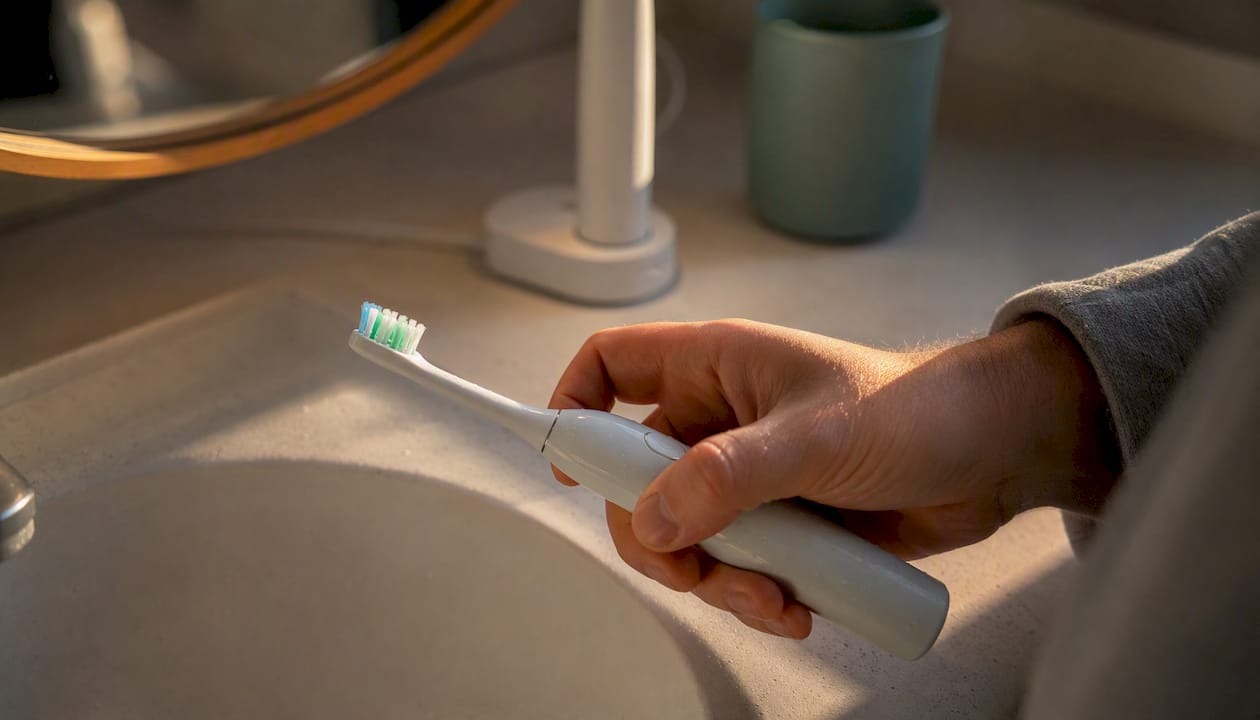
Electric brushes equipped with pressure sensors alert you when you are applying too much force, which is the single most common mechanical cause of recession. The Merck Manual notes that many patients unknowingly worsen recession with aggressive brushing, and that switching to a softer brush or a pressure-sensing electric brush is a practical first step. Sonic electric brushes also tend to produce effective plaque removal with less physical scrubbing, reducing the risk of tissue trauma.
Lifestyle changes
- Quit tobacco: Smoking impairs gum tissue health and healing, and the meta-analysis confirms it as a significant independent risk factor
- Manage bruxism: A custom nightguard from your dentist distributes occlusal force evenly and removes the concentrated pressure that contributes to recession at specific teeth
- Schedule professional cleanings every six months (or more frequently if your dentist recommends it); early detection at a routine visit is far less costly than surgical correction later
Pro Tip: If you are switching from a hard or medium brush to a soft-bristled or electric brush, give your gums two to three weeks to adjust before judging whether sensitivity has improved. Abrupt changes in technique can temporarily increase awareness of already-exposed roots.
Why technique and tools are backed by clinical evidence
The link between brushing behavior and gum recession is well-established in the clinical literature. The PMC clinical review on gingival recession identifies thin buccal bone and mechanical trauma as two of the most consistent anatomical and behavioral contributors. When those two factors combine — a patient with a thin gum biotype who brushes aggressively — recession accelerates faster than either factor alone would predict.
Pocket depth remains the key diagnostic metric. Healthy pockets measuring 1–3 mm per NIDCR allow for effective cleaning with standard tools. Pockets deeper than 3 mm harbor bacteria that standard brushing cannot reach, which is why professional scaling and root planing is necessary once disease is established. Catching pockets at 4 mm rather than 6 mm is the difference between a non-surgical and a surgical treatment plan.
The Merck Manual emphasizes that routine periodontal probing at dental visits is critical precisely because recession often progresses silently. Patients rarely feel the tissue migrating; they notice the result only when sensitivity or visible root exposure becomes obvious. Regular probing catches the change early, when behavioral correction and non-surgical care can still hold the line.
Pro Tip: Switching to a pressure-sensing electric brush and adopting the 45-degree technique simultaneously produces a faster reduction in mechanical trauma than either change alone. Start with the brush; the technique adjustment follows naturally once the device gives you real-time pressure feedback.
The case for catching this early
Gum recession is one of those conditions where the gap between “manageable” and “surgical” is often just a matter of months. Patients who come in with 2 mm of recession and no active disease can frequently stabilize with technique correction and a professional cleaning. Those who wait until sensitivity is severe or teeth look noticeably longer often face grafting, longer recovery, and higher cost.
The clinical evidence is consistent on this point: non-surgical care is effective when recession is caught early, and the Healthline patient-facing summary aligns with what periodontists see in practice. Behavioral factors — brushing technique, tobacco, plaque control — are modifiable. Anatomy is not. Addressing the modifiable factors early, before significant tissue is lost, is the most reliable path to keeping your teeth protected without surgery.
Gentle, effective brushing starts with the right tool
Correcting brushing technique is the single most impactful non-surgical step for preventing recession, and the right brush makes that correction easier to sustain. The Y-brush Essential Sonic Toothbrush uses sonic vibrations and a patented Y-shaped brush head to deliver thorough plaque removal in 20 seconds, without the aggressive scrubbing that damages gum tissue over time. For households with children, the Y-brush KidsBrush applies the same gentle-but-effective approach for ages 4–12, building good habits before recession risk accumulates.
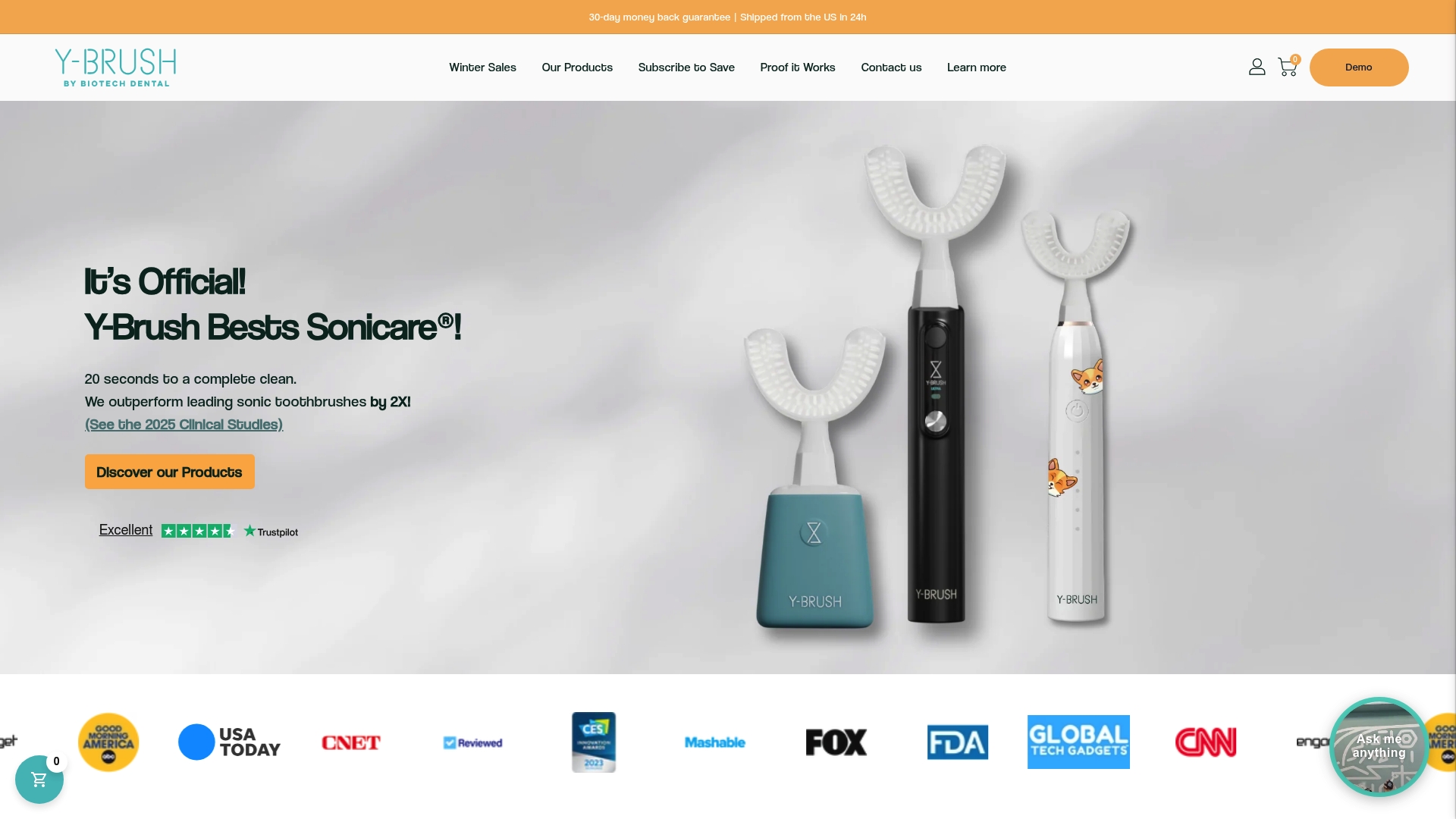
Pair the brush with the 45-degree angle technique your dentist recommends, and you have a daily routine that supports the prevention strategies outlined above. Visit Y-brush to find the right brush for your household and start protecting your gum tissue today.
Sources
The following sources informed this article and are worth bookmarking for ongoing reference:
- Periodontal (Gum) Disease | NIDCR
- Gum Recession: Causes, Prevention, Surgery & Treatment
- Gum recession - Merck Manual Consumer Version
- Periodontitis - Symptoms and causes - Mayo Clinic
- Gingival recession clinical review (PMC article)
- Systematic review/meta-analysis on prevalence and risk factors of gingival recession
- Receding gums: Causes, Symptoms, Diagnosis, and More - Healthline
This article provides general information only and is not a substitute for professional dental advice. If you notice signs of gum recession, consult a licensed dentist or periodontist for an accurate diagnosis and personalized treatment plan.


