


Night brushing is generally the more critical session for preventing cavities and gum disease. When you sleep, saliva flow drops significantly, leaving teeth exposed to any bacteria and food residues left behind from dinner. If you can only brush once, brush before bed with fluoride toothpaste. If you brush twice, both sessions earn their place for different reasons.
Start tonight:
- Brush gently for two minutes before bed using a soft-bristled brush and fluoride toothpaste
- Floss before you brush at night to clear debris from between teeth where bacteria concentrate
Key Takeaways
Night brushing is the higher-priority session because the low-saliva sleep environment gives bacteria unchecked hours to produce enamel-damaging acid, making the pre-bed clean your strongest daily defense against cavities and gum disease.
| Point | Details |
|---|---|
| Night brush comes first | Brush before bed every night; this session prevents overnight acid attack when saliva protection is lowest. |
| Morning brush has real value | It removes overnight biofilm, freshens breath, and deposits fluoride before your first meal. |
| Breakfast timing rule | Wait 30–60 minutes after acidic foods before brushing, or brush before eating and rinse with water after. |
| Two-minute rule | Brush for at least two minutes each session; shorter sessions remove significantly less plaque. |
| Floss and see your dentist | Floss nightly before brushing; schedule a professional cleaning every 6–12 months to remove tartar home brushing cannot reach. |
| Y-brush for consistent coverage | Y-brush’s sonic toothbrush helps you hit the two-minute equivalent every session without relying on willpower alone. |
Table of Contents
- 1. Why morning brushing still matters for your teeth
- 2. Why brushing before bed is the most important clean of the day
- 3. Should you brush before or after breakfast?
- 4. What happens when you only brush once a day?
- 5. How to brush effectively, morning and night
- 6. When does brushing after meals or snacks make sense?
- 7. How professional dental care fits into your routine
- 8. What the research actually shows
- 9. An editorial perspective on building a routine that actually sticks
- The habit gap is the real problem, not the timing debate
- Y-brush makes the two-minute habit easier to keep
- Sources
1. Why morning brushing still matters for your teeth
Overnight, your mouth is a low-saliva environment. Bacteria multiply on tooth surfaces, forming a soft biofilm that, left undisturbed, contributes to plaque buildup and morning breath. A morning brush clears that overnight accumulation before you eat or drink anything.
There is also a fluoride argument. Brushing in the morning deposits a protective fluoride layer on enamel before your first meal, which can help buffer early acid exposure from coffee, juice, or fruit. The American Dental Association recommends brushing twice daily with fluoride toothpaste precisely because each session serves a distinct protective purpose.
Morning brushing benefits at a glance:
- Removes overnight bacterial biofilm and dead cells
- Freshens breath before social or professional interactions
- Deposits fluoride before breakfast, giving enamel early-day protection
- Stimulates saliva production, which naturally neutralizes acids
The timing question, though, is where things get interesting. If you eat an acidic breakfast, brushing immediately afterward can work against you.
2. Why brushing before bed is the most important clean of the day
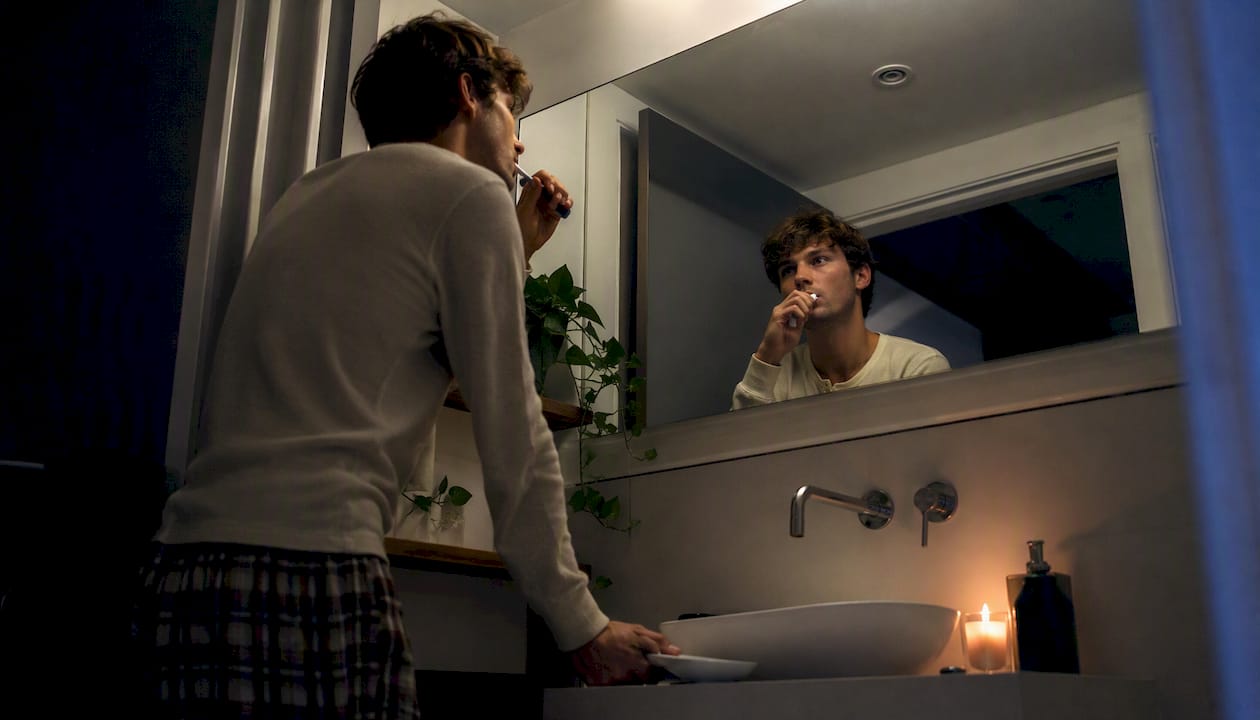
The case for prioritizing the night brush comes down to biology. During sleep, saliva production slows to near-zero. Saliva is your mouth’s natural defense: it dilutes acids, washes away food particles, and delivers minerals that remineralize enamel. Without it, any sugar or starch residue left on teeth after dinner feeds bacteria for hours, producing acids that attack enamel uninterrupted.
Observational research published in Scientific Reports found that groups who brushed at night (or both morning and night) had higher survival estimates than those who did not brush at night, with multivariate analyses suggesting an association between nighttime brushing and certain cardiovascular outcomes. The researchers were careful to note that this was a hospitalized population and that confounding factors limit causal interpretation. Still, the signal is consistent with what dental clinicians have long recommended.
The core risk of skipping the night brush: Bacteria that feed on dinner residues overnight produce acid for six to eight hours with no saliva to neutralize it. That sustained acid exposure is a primary driver of enamel erosion and cavity formation.
Why the night session carries more weight:
- Removes sugar and starch residues before the low-saliva sleep window
- Reduces the bacterial load that would otherwise produce acid for hours
- Fluoride from nighttime toothpaste stays on teeth longer without being rinsed away by food or drink
- Consistent nighttime brushing is linked to lower cavity and gum disease risk in clinical guidance from the Cleveland Clinic
3. Should you brush before or after breakfast?
This is one of the most debated questions in everyday oral care, and the honest answer is: it depends on what you eat. Dental experts are genuinely divided, and professional recommendations vary based on individual diet, enamel sensitivity, and personal preference.
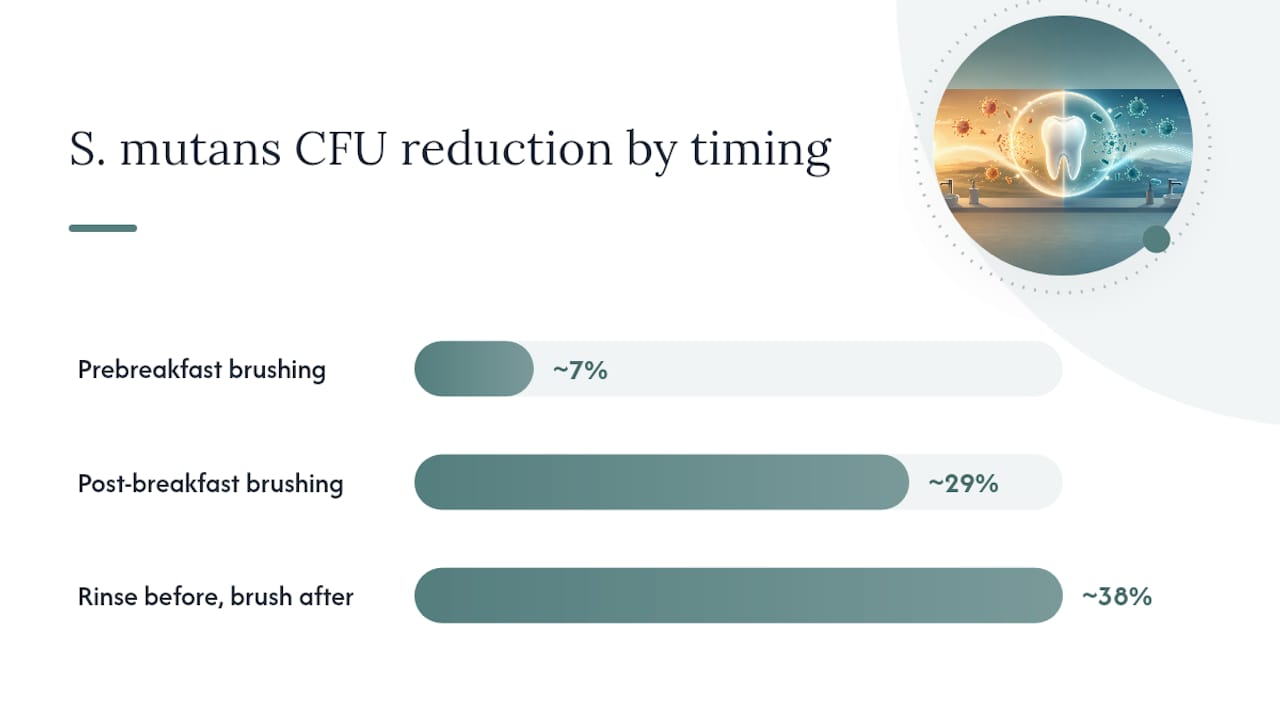
The clearest microbiological evidence comes from a prospective trial that compared prebreakfast brushing (PrBTB) against post-breakfast brushing (PoBTB) and a rinse-then-post-breakfast group (RPoBTB) over 18 months. The PMC-published study found that post-breakfast brushing reduced Streptococcus mutans colony-forming unit counts by approximately 29%, while the rinse-then-post-breakfast group saw roughly a 38% reduction. Prebreakfast brushing produced only about a 7% reduction in S. mutans counts. Importantly, the study used CFU counts as a surrogate endpoint and did not show statistically significant differences in DMFS (decayed, missing, filled surfaces) scores, so clinical caries outcomes remain less certain.
What this means practically: Post-breakfast brushing appears to reduce cavity-linked bacteria more effectively in the short-to-medium term. A prebreakfast water rinse followed by brushing after eating may offer the best of both approaches.
Practical timing rules:
- If your breakfast is low-acid (oatmeal, eggs, toast): brushing right after eating is fine
- If your breakfast is high-acid (orange juice, citrus fruit, yogurt, coffee): wait 30–60 minutes before brushing, or brush before eating and rinse with water after
- If you brush before breakfast: rinse with water after eating to clear residues without risking enamel softened by acid
- On the go: chew sugar-free gum after eating to stimulate saliva and neutralize acids until you can brush
Brushing immediately after acidic foods can abrade softened enamel. Mayo Clinic and Healthline both advise waiting after acidic intake before picking up your brush.
Pro Tip: If your morning routine is rushed, brush before breakfast and keep a travel-size fluoride toothpaste at your desk. A quick two-minute brush mid-morning, after waiting at least 30 minutes post-meal, covers both the fluoride and residue goals.
A morning mouthwash routine can also complement prebreakfast brushing by addressing bacteria and freshening breath before you eat.
4. What happens when you only brush once a day?
Single-session brushing is common, but the trade-offs differ significantly depending on which session you keep.
If you only brush in the morning:
- Dinner residues and sugars remain on teeth all night, feeding bacteria during the low-saliva sleep window
- Overnight acid production goes unchecked for six to eight hours
- Plaque hardens into tartar more quickly without a nightly disruption
- Risk of gum disease and cavities increases, particularly at the gumline and between teeth
If you only brush at night:
- Overnight biofilm from sleep is not cleared in the morning
- Morning breath persists and can affect confidence throughout the day
- You miss the morning fluoride deposit before meals
- Bacterial counts rise again by midday without a morning disruption
For anyone who can only commit to one session, the night brush is the stronger choice. The overnight environment, with its reduced saliva and prolonged acid exposure, creates the highest-risk window for enamel damage.
Special cases where timing advice shifts:
- Dry mouth (xerostomia): Saliva is already reduced, so both sessions become more critical. Mayo Clinic advises tailored brushing schedules and more frequent professional follow-up for these patients.
- Braces or orthodontic appliances: Food traps around brackets make post-meal brushing important; a third gentle brush after lunch is often recommended.
- High caries risk: Clinicians typically recommend adding targeted fluoride applications and increasing brushing frequency beyond twice daily.
5. How to brush effectively, morning and night
Knowing when to brush matters less if the technique is poor. The Cleveland Clinic and ADA both emphasize that technique and consistent duration protect enamel and gums more reliably than aggressive, short scrubs.
The two-minute rule: Research consistently shows that brushing for at least two minutes twice daily removes significantly more plaque than shorter sessions. Most people underestimate how long two minutes actually feels, which is one reason timed or sonic devices help close the compliance gap.
Step-by-step technique (Bass/modified Bass method):
- Hold a soft-bristled brush at a 45-degree angle to the gumline
- Use short, gentle back-and-forth strokes, about the width of one tooth
- Apply light pressure only; pressing harder does not remove more plaque and risks gum recession
- Brush all outer surfaces, then inner surfaces, then chewing surfaces
- Brush the tongue lightly to reduce bacteria and freshen breath
- Spit, but do not rinse immediately after brushing at night; letting fluoride sit on teeth extends its protective effect
Night sequence:
- Floss first to clear interdental debris, then brush, then use mouthwash if desired
- Choosing a toothpaste formulated for gum health adds an extra layer of protection at the gumline
Morning sequence:
- Brush before or after breakfast per the timing rules above
- No need to floss again unless you ate something particularly fibrous
Pro Tip: Replace your brush head every three months, or sooner if bristles splay. Frayed bristles lose up to 30% of their cleaning effectiveness. Sonic and electric devices with built-in timers take the guesswork out of duration and coverage.
6. When does brushing after meals or snacks make sense?
Brushing after every meal is not necessary for most people, and in some situations it can cause harm. The key variable is what you just ate or drank.
Situations where an extra brush makes sense:
- After a high-sugar snack or dessert, particularly if you have a history of cavities
- After meals when you wear braces or a retainer, where food traps easily
- After a meal containing sticky or starchy foods that cling to tooth surfaces
When to skip the brush and rinse instead:
- Immediately after acidic foods or drinks (citrus, soda, sports drinks, wine): brushing within 30 minutes can abrade softened enamel
- When a toothbrush is not available: rinse with water or chew sugar-free gum to stimulate saliva
Signs you may be over-brushing:
- Tooth sensitivity to hot or cold that was not present before
- Visible gum recession or a “longer tooth” appearance
- Enamel that looks thinner or more translucent near the gumline
Brushing more than three times daily rarely adds meaningful benefit for most adults and increases the risk of enamel wear if technique is aggressive. For guidance on brushing steps after meals, timing and gentleness matter more than frequency alone.
7. How professional dental care fits into your routine
Home brushing, no matter how consistent, cannot remove hardened tartar (calculus) once it forms. Only a professional cleaning can do that. This is why the ADA recommends regular dental checkups and cleanings as a complement to daily brushing, not a replacement for it.
What professional care adds:
- Removal of calculus buildup that brushing and flossing cannot address
- Early detection of cavities, gum disease, and oral cancer
- Personalized advice on brushing timing, technique, and product selection based on your specific risk profile
- Fluoride treatments or sealants for higher-risk patients
Typical cadence: Most adults benefit from a professional cleaning and exam every six months. People with active gum disease, high caries risk, dry mouth, or orthodontic appliances often need visits every three to four months. Your dentist is the best source for a schedule tailored to your oral health history.
Using your dental visit strategically: Ask your hygienist to watch your brushing technique. Many people brush the same areas repeatedly while missing others entirely, a habit that a trained eye can spot and correct in minutes. A gum health checklist can also help you track what to discuss at your next appointment.
8. What the research actually shows
The evidence base for morning vs night brushing draws from two distinct types of studies, each with different strengths and limitations.
The S. mutans microbiology trial: The PMC prospective study tracked three groups over 18 months: prebreakfast brushers, post-breakfast brushers, and a group that rinsed before breakfast then brushed after. Post-breakfast brushing reduced S. mutans CFU counts by approximately 29%; the rinse-then-post-breakfast group achieved roughly 38%; prebreakfast brushing produced only about 7%. The study’s limitation is that CFU counts are a surrogate endpoint. DMFS scores did not differ significantly between groups, meaning the clinical translation to actual cavity reduction requires larger, longer trials.
The observational cardiovascular study: Published in Scientific Reports, the Nature-hosted observational analysis found that patients who brushed at night had higher survival estimates for certain cardiovascular outcomes compared with those who did not. The researchers controlled for multiple variables, but the study population was hospitalized patients, which limits generalizability. Confounding by health behavior (people who brush at night may also have healthier overall habits) cannot be ruled out.
| Study type | Main finding | Key limitation |
|---|---|---|
| Microbiology RCT (S. mutans) | Post-breakfast brushing reduced S. mutans CFU counts more than prebreakfast brushing | Surrogate endpoint; no significant DMFS difference |
| Observational (cardiovascular) | Night brushing associated with higher survival estimates | Hospitalized population; confounding possible |
| Clinical guidelines (ADA, Mayo Clinic, Cleveland Clinic) | Brush twice daily, two minutes, fluoride toothpaste, soft bristles | Consensus-based; not a single RCT |
Clinical conclusion: The weight of evidence, from microbiology trials to observational data to clinical consensus, supports brushing twice daily with the night session as the higher-priority clean. The exact timing around breakfast is secondary to simply doing both sessions consistently.
9. An editorial perspective on building a routine that actually sticks
The habit gap is the real problem, not the timing debate
The morning vs night brushing question is genuinely interesting from an evidence standpoint, but the more pressing issue is that most people do not brush for the full two minutes either session. Devices that enforce timing or automate coverage are not a luxury; for many people, they are the practical fix that closes the compliance gap between knowing the right behavior and actually doing it.
The research on breakfast timing is worth knowing, but it should not become a reason to delay or skip a session. A 29% reduction in S. mutans from post-breakfast brushing is meaningful, but zero reduction from not brushing at all is far worse. Pick a consistent cue for each session, morning and night, and attach brushing to it. The exact minute on the clock matters less than the habit being unbreakable.
For people with dry mouth, braces, or a history of cavities, the calculus shifts: more frequent, gentler sessions and closer professional oversight are worth the extra effort. For everyone else, two solid two-minute sessions with fluoride toothpaste, flossing at night, and a dental visit every six months will outperform any elaborate timing strategy applied inconsistently.
Y-brush makes the two-minute habit easier to keep
Two minutes, twice a day, every day. That is the standard, and it is the one most people quietly fail to meet. Y-brush was built specifically for this gap: its patented Y-shaped brush head covers all tooth surfaces simultaneously, delivering a thorough clean in 20 seconds via sonic vibrations, so the two-minute equivalent is no longer a willpower challenge.
Whether you are locking in a better night routine or trying to make morning brushing less of a rush, the Y-brush Essential Sonic Toothbrush fits both sessions without adding time to your day. For families, the Y-brush KidsBrush brings the same consistent coverage to children ages 4–12. Y-brush is the publisher of this article and has a commercial interest in the products linked here. See the full range and find the right fit at Y-brush.
Sources
- Prospective study comparing prebreakfast and postbreakfast tooth brushing and the effect on S. mutans counts | PMC
- Timing of toothbrushing and associations with cardiovascular outcomes (observational study) | Nature (preview)
- How often to brush your teeth | Cleveland Clinic
- Brushing your teeth: How often and when? - Mayo Clinic
- How long should you brush your teeth? (Healthline)
- What dentists say about brushing before or after breakfast | ABC News
Ask your dentist about your personal risk profile. The guidance in this article is general health information and is not a substitute for professional dental advice.


