


Yes, switching to an electric toothbrush is worth it for most people, since it makes consistent plaque control easier to achieve and sustain. The single habit that matters most is letting the brush do the work: guide it slowly across each tooth surface for two full minutes, twice daily, rather than scrubbing the way you would with a manual brush. Options like Y-Brush simplify that transition further for readers who want a faster daily routine.
TL;DR:
- Most people need about two weeks to adjust to guiding an electric toothbrush properly, with discomfort and sensitivity gradually fading during this period.
- Choosing a model with a timer, quadrant alerts, and a pressure sensor maximizes clinical benefit and helps correct poor brushing habits.
- Replacing the brush head every three to four months and rinsing it after every use maintains hygiene and extends the brush’s effectiveness.
- For those struggling with routine, Y-Brush offers a 20-second cleaning option that suits limited dexterity, time constraints, or difficulty establishing a two-minute habit.
- Persistent gum bleeding, sensitivity, or gum recession requires professional consults, as effective routine adjustments might not address underlying issues.
Table of Contents
- How to choose the right electric toothbrush for you
- Step-by-step technique: how to brush with an electric toothbrush
- Common adaptation issues and practical fixes
- Care, maintenance, and replacement schedule
- When to check with a dentist or dental hygienist
- A practical view on making the switch stick
- Y-Brush as a practical option for a faster routine
- Sources
- FAQ
How to choose the right electric toothbrush for you
Electric toothbrushes fall into three general categories. Oscillating-rotating brushes spin the head in small circles and tend to suit people who want a strong mechanical feel. Sonic brushes vibrate at high frequency and often feel gentler on sensitive gums. Simple vibrating brushes cost less and offer basic movement without the more advanced motor technology of the other two types.
The features worth prioritizing matter more than the brand name on the box. A built-in two-minute timer, paired with a quadrant alert every 30 seconds, helps you meet the American Dental Association recommendation of brushing twice daily for two minutes. A pressure sensor protects your gums from overbrushing, and a soft, appropriately sized head reduces irritation for people with smaller mouths or sensitive teeth. Look for a model with widely available, affordable replacement heads, since that’s an ongoing cost you’ll pay for as long as you own the brush.
Price ranges vary widely. According to Consumer Reports, manual brushes stay cheap, while electric models span budget rechargeable units up to premium smart brushes with app connectivity. Mid-range brushes with a timer and pressure sensor typically deliver most of the clinical benefit that premium features only add convenience on top of.
When comparing models, keep an eye out for:
- The ADA Seal of Acceptance, which signals the brush met safety and efficacy testing standards.
- A timer with quadrant alerts, since timer features help correct the under-brushing habit most people bring from manual routines.
- A pressure sensor, especially if you’ve been told you brush too hard.
- Head size and bristle softness suited to your mouth and any sensitivity.
Step-by-step technique: how to brush with an electric toothbrush
The mechanics of electric brushing differ enough from manual brushing that most people need a short adjustment period. The motion is not scrubbing, it’s guiding.
- Wet the bristles and apply a pea-sized amount of fluoride toothpaste.
- Turn the brush on before placing it against your teeth, then position the head at a 45-degree angle to the gumline.
- Hold the brush lightly against one tooth surface for a few seconds, letting the vibration or rotation do the cleaning, then move slowly to the next tooth.
- Work through each quadrant for about 30 seconds, using the timer’s alerts as your cue to switch zones, for a total of two minutes.
- Apply light pressure only. If your brush has a pressure sensor, treat any warning light or pause as a signal to ease up.
- Switch to a sensitivity or gum-care mode if your model offers one and your gums feel tender during the first few weeks.
If you wear braces, have implants, or have crowns, angle the brush carefully around brackets and wires, and consider an orthodontic head if your brand makes one. Implants and crowns don’t require special settings, but consistent light pressure protects the gum tissue around them just as it does around natural teeth. For more on how pressure affects enamel over time, see this guide on electric toothbrush safety steps.
Pro Tip: Rest the brush head against each tooth surface for a slow count of two before moving on. Rushing the motion is the most common mistake people carry over from manual brushing.

Common adaptation issues and practical fixes
Most complaints in the first two weeks trace back to a handful of predictable causes, and each one has a straightforward fix.
- Gag reflex: Switch to a smaller brush head, lower the intensity setting, tilt your chin down, and breathe through your nose while brushing your back teeth.
- Sensitivity or gum discomfort: Move to a soft-bristled head and a sensitive or gum-care mode, and build up brushing time gradually over the first week rather than jumping straight to two full minutes.
- Vibration discomfort: Lower the intensity, brush in shorter sessions at first, and try a different head shape if the sensation still feels unpleasant.
- Battery or timing frustrations: Charge the brush on a set day each week so it never dies mid-routine, and rely on the quadrant alerts rather than watching a clock.
These issues almost always fade within two to three weeks as your gums and your hand adjust to the new motion and sensation.
Care, maintenance, and replacement schedule
A little upkeep keeps the brush sanitary and effective for as long as you own it.
- Rinse the brush head under running water after every use and let it air-dry upright rather than sealing it in a travel case while damp.
- Never share brush heads between household members, even briefly.
- Replace the head every three to four months, or sooner if the bristles start to splay, following the ADA’s replacement guidance.
- Charge the handle fully before travel and pack a protective case to prevent accidental activation in your bag.
- Store the handle somewhere dry, away from direct sunlight, to protect the battery over time.
Replacing just the head instead of the whole handle also cuts down on the plastic waste that comes with disposable manual brushes. Building these small habits into your routine, alongside other daily oral care practices, keeps both the brush and your mouth in good shape.
When to check with a dentist or dental hygienist
Some problems need professional eyes rather than a settings adjustment. Persistent bleeding beyond the first week, increasing sensitivity, or visible gum recession are signs to book an appointment rather than wait it out. A hygienist can also watch you brush in person and correct small angle or pressure mistakes that are hard to catch on your own. An electric toothbrush improves your daily routine, but it doesn’t replace the checkups and cleanings that catch problems early.

A practical view on making the switch stick
Most people who struggle with an electric toothbrush aren’t using the wrong brush, they’re using the right brush the wrong way, usually by scrubbing instead of guiding. The readers who succeed treat the first two weeks as a genuine adjustment period, not a verdict on whether the switch was worth it. Success looks less dramatic than people expect: a two-minute session that finally feels normal, and a morning routine that no longer requires willpower to finish.
— Joris
Y-Brush as a practical option for a faster routine
For readers who want the benefits of electric brushing without adding a two-minute habit to relearn, Y-Brush takes a different approach. Its Y-shaped head is built to clean all tooth surfaces at once, so the brand’s own claim is a complete clean in 20 seconds through sonic vibration, rather than the slower quadrant-by-quadrant motion standard electric brushes require.
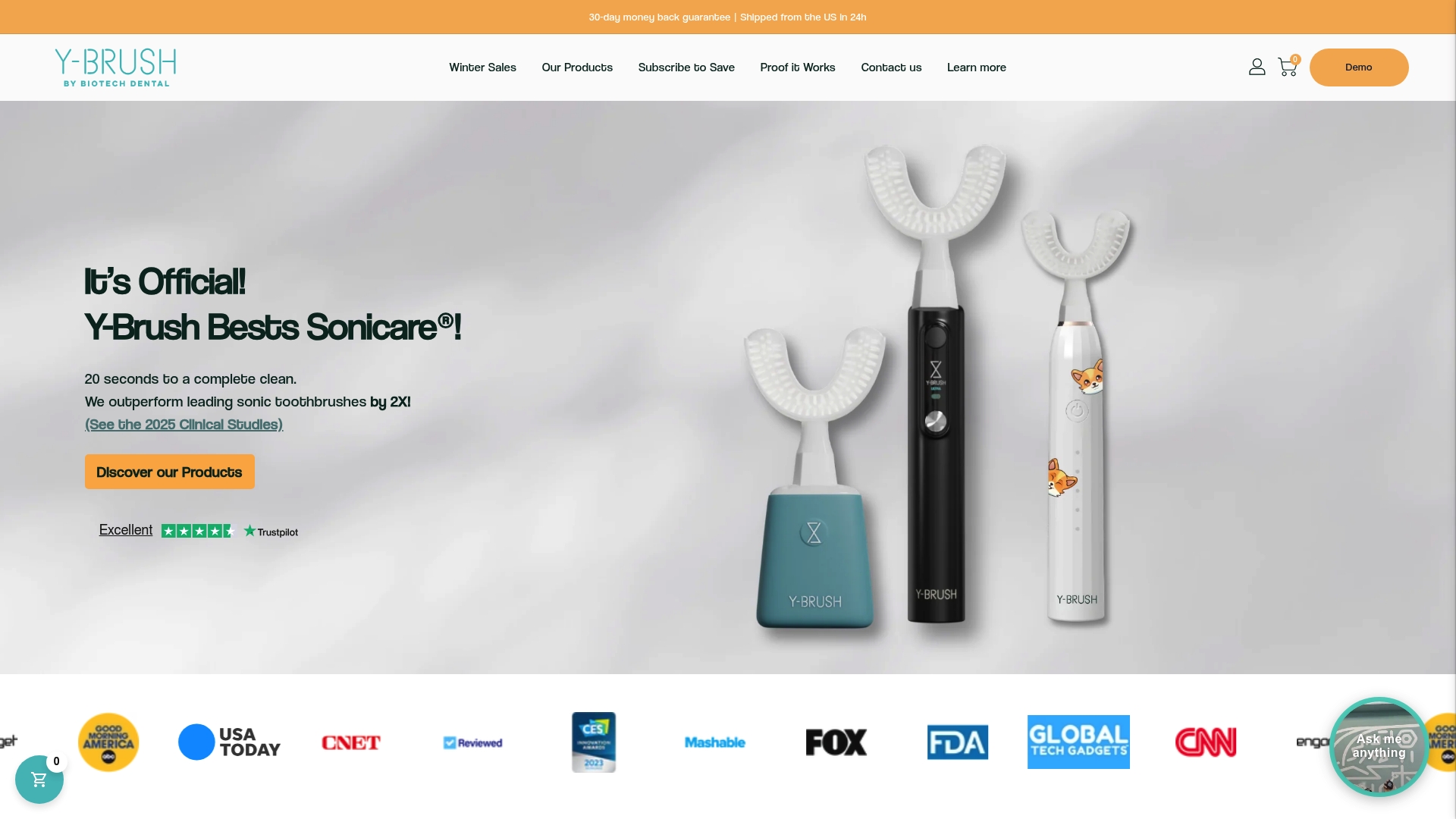
This fits people who’ve struggled to build a consistent two-minute habit, parents managing brushing time for kids, or anyone with limited dexterity who finds guiding a brush around each tooth tiring. Y-Brush also offers membership plans that include recurring brush head replacements to help maintain effective brushing.
- Browse the Y-Brush toothbrush collection and plans to compare options.
- Check replacement brush heads and other products if you already own a Y-Brush handle.
Sources
For readers who want to dig into the underlying evidence, a few sources stand out. The Cochrane systematic review on powered versus manual brushing remains the most rigorous look at plaque and gingivitis outcomes. The ADA’s toothbrush guidance covers timing and replacement schedules, while Cleveland Clinic and Consumer Reports offer consumer-facing summaries of what actually matters when buying and using one. Readers interested in broader clinical protocols can also see this dentist-oriented resource on whitening for related oral care context.
FAQ
Is it worth switching to an electric toothbrush?
For most people, yes: electric brushes tend to remove more plaque than manual brushing and include features like timers that make the full two minutes easier to reach. The Cochrane review found moderate-quality evidence of reduced plaque and gingivitis with powered brushing over both short and long-term use.
What is the 3-3-3 rule for teeth?
This isn’t an official dental guideline, and definitions of it vary online. The consistent, professionally backed standard is the ADA’s recommendation to brush for two minutes, twice a day, with a soft-bristled brush and fluoride toothpaste.
What are the downsides of electric toothbrushes?
The main downsides are upfront cost and the ongoing expense of replacement heads, along with a short adjustment period as you learn to guide rather than scrub. Some people also find the vibration or buzzing sensation uncomfortable at first, though this usually fades within a couple of weeks.
Do dentists actually recommend electric toothbrushes?
Dental guidance generally treats both manual and electric brushes as effective when used correctly for two minutes twice daily, according to the ADA. Clinical sources like Cleveland Clinic note that electric brushes often provide a meaningful practical advantage for people with limited dexterity or fixed orthodontic appliances.


