


Most electric toothbrushes do not damage enamel when used correctly. When patients report enamel loss or new sensitivity after switching to a powered brush, the real cause is almost always excessive pressure, an abrasive toothpaste, worn-out bristles, or enamel that was already weakened before the brush ever touched it. The fix is simple: soft bristles, a light hand, and a fluoride toothpaste matched to your enamel’s condition.
TL;DR:
- Excessive pressure, abrasive toothpaste, and worn-out bristle heads are the main causes of enamel wear for electric toothbrush users.
- Lab studies often show more abrasion from powered brushes than manual ones, but these results rarely reflect real-world use conditions.
- Using stiff or frayed brush heads, pressing too hard, or brushing with high-RDA toothpaste significantly increases enamel risk, especially if enamel is already weakened.
- A soft-bristle brush, gentle technique, regular head replacement, and low-RDA fluoride toothpaste are the best strategies to protect enamel over time.
- Signs like new sensitivity or visible enamel thinning should prompt a dental consultation beyond routine brushing adjustments.
Table of Contents
- How Enamel Wears: Erosion vs. Abrasion
- What the Research Actually Shows: Electric vs. Manual Brushes
- The Real Causes: Pressure, Technique, and Worn Heads
- Toothpaste Matters More Than People Realize
- How to Brush Without Wearing Down Your Enamel
- When Enamel Loss Needs a Dentist, Not Just a New Routine
- Why the ADA Seal Is the Benchmark That Actually Matters
- A Brush Built Around the Habits That Actually Protect Enamel
- A Final Word on Enamel Anxiety
- Sources
How Enamel Wears: Erosion vs. Abrasion
Enamel is the hard, translucent outer layer covering each tooth, and it sits over a softer layer called dentin. Once enamel wears away, it does not grow back. The Cleveland Clinic explains that the body has no biological mechanism to regenerate it; this is why prevention matters more than repair.
Enamel loss happens through two distinct processes, and confusing them leads to the wrong fix:
- Erosion is chemical: acids from soda, citrus, wine, or acid reflux soften enamel until it dissolves.
- Abrasion is mechanical: physical friction from brushing, especially with a gritty toothpaste or stiff bristles, wears the surface down.
If your enamel was already thinned by erosion, even normal brushing pressure can make the damage look worse or expose sensitive dentin sooner than it would on healthy enamel.
What the Research Actually Shows: Electric vs. Manual Brushes
Systematic reviews looking at oscillating-rotating powered brushes generally find them safe for gums and enamel in real-world use, with adverse effects showing up mainly in laboratory models rather than in patients’ mouths. That distinction matters because lab testing and daily brushing don’t always measure the same thing.
Some in vitro studies complicate the picture. A comparative evaluation of enamel abrasivity found rotary and oscillatory brush modes caused more enamel abrasion than other power-driven types under controlled lab conditions, particularly on surfaces that were already eroded. Consumer Reports has summarized similar simulated long-term testing, finding that some electric brushes produced more dentin abrasion than manual brushes, while intact enamel showed comparable wear across both types.
The key statistic to remember: these abrasion differences show up primarily in lab rigs using fixed force settings and abrasive slurry, not in typical home use. A narrative review of powered toothbrush safety points out that force, slurry composition, and the specimen’s starting condition frequently explain why lab results diverge from clinical outcomes.
Here’s the practical takeaway:
- Device type (sonic, oscillating, manual) is rarely the deciding factor in enamel wear.
- Applied force and toothpaste abrasiveness matter far more than brush technology.
- Pre-existing erosion or demineralization makes any brushing method riskier.
The Real Causes: Pressure, Technique, and Worn Heads
Enamel and dentin wear from brushing almost always trace back to one of a few fixable habits or hardware problems.
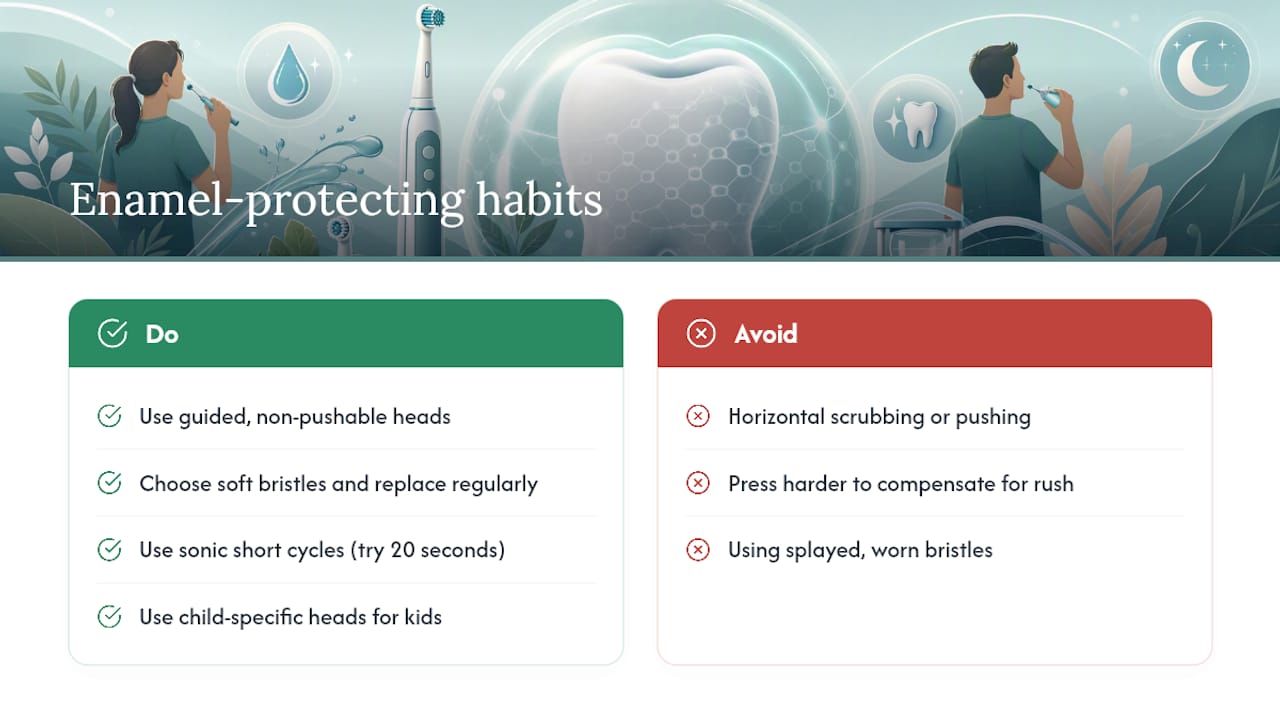
- Pressing too hard. Even a sonic or oscillating brush relies on light contact. Pushing the head into your teeth and scrubbing horizontally, the way many people brush with a manual toothbrush, defeats the technology and increases abrasion.
- Stiff or overdue brush heads. Medium and hard bristles are more abrasive than soft ones, and any bristle type turns rigid and frayed past its useful life. A comparison of electrical brushing systems found notably higher wear on teeth with existing white-spot lesions, which shows how much a compromised surface amplifies mechanical stress.
- Loose or defective brush heads. Mechanical failure is uncommon, but the narrative review on powered toothbrush safety documents cases where a head separated during use and injured soft tissue. Supervise young children using powered brushes, and check heads for wobble before each use.
Pro Tip: If your brush has a pressure sensor that pulses or stops when you push too hard, treat that pulse as a real warning, not an annoyance to brush through.
Toothpaste Matters More Than People Realize
Toothpaste abrasiveness is measured by RDA (Relative Dentin Abrasivity), a scale dentists use to compare how much wear a formula causes. Low-RDA pastes sit under roughly 70, while whitening and tartar-control formulas often run much higher. Pair a high-RDA paste with heavy brushing force, and you get the fastest route to visible wear.
- Choose a fluoride toothpaste with a moderate or low RDA if you already have any enamel sensitivity.
- A network meta-analysis of fluoride concentration found a clear dose-response relationship: higher fluoride levels in toothpaste promoted enamel remineralization and reduced demineralization in in-situ testing.
- Watch for polyphosphates and certain metal ions in some formulas, which can interfere with how well fluoride binds to enamel.
The data point worth remembering: fluoride’s benefit scales with concentration, so switching to a fluoride-free or “natural” paste to protect enamel often backfires. For a deeper look at matching paste to your brush, see this guide on choosing low-RDA toothpaste for sonic toothbrushes.
How to Brush Without Wearing Down Your Enamel
Protecting enamel with an electric toothbrush comes down to a short list of habits, not an expensive new device.
- Pick a soft-bristle head with the ADA Seal. It signals the head has passed testing for tuft retention and safety on oral tissue.
- Replace the head every three months, sooner if bristles splay. Splayed bristles brush like a stiff manual head, wiping out the benefit of sonic technology. This guide to toothbrush replacement timing breaks down the signs to watch for.
- Guide, don’t scrub. Let the brush’s vibration do the work; your hand just moves the head slowly across each surface. Avoid horizontal scrubbing, which is the motion most associated with abrasion.
- Let the built-in timer run its full cycle instead of stopping early or dropping to a higher intensity setting than you need.
- Choose a lower-RDA, fluoride toothpaste if you have any sensitivity, and ask your dentist before using whitening or tartar-control pastes daily.
Pro Tip: Rinse with a fluoride mouthwash after brushing instead of water. Research on fluoride’s dose-dependent effect suggests it gives enamel a modest extra remineralization boost.
For more on avoiding common mistakes, this breakdown of electric toothbrush risks and proper use covers technique errors beyond pressure alone.
When Enamel Loss Needs a Dentist, Not Just a New Routine
Some signs point past a brushing fix and toward a clinical visit.
- New or worsening sensitivity to hot, cold, or sweet foods
- Visible yellowing where enamel has thinned and dentin shows through
- A notch or groove forming right at the gumline
- Any chip, crack, or fracture on a tooth’s edge
A dental exam for suspected enamel loss typically starts with a review of your brushing habits and diet, followed by a clinical exam and, if needed, radiographs to check for deeper damage. Treatment options range from fluoride varnish and resin bonding to sealants, and an occlusal guard if grinding is contributing to the wear.
Why the ADA Seal Is the Benchmark That Actually Matters
Powered toothbrushes carrying the ADA Seal have passed testing for tuft retention, mechanical strength, and clinical evidence of safety on both hard and soft oral tissue. That combination is what separates a brush worth trusting from one that just claims to be gentle.
Lab abrasion studies raise legitimate questions, but they use fixed forces and abrasive slurries that don’t map cleanly onto how most people actually brush. Reading those results alongside clinical trial data, rather than in isolation, gives a far more honest picture of real-world risk.
A Brush Built Around the Habits That Actually Protect Enamel
Some electric toothbrush heads are designed to be guided, not pushed, to help reduce horizontal scrubbing that drives abrasion complaints. Sonic vibrations can clean all surfaces in a short cycle, which may reduce the temptation to compensate for a rushed brush by pressing harder or scrubbing longer.
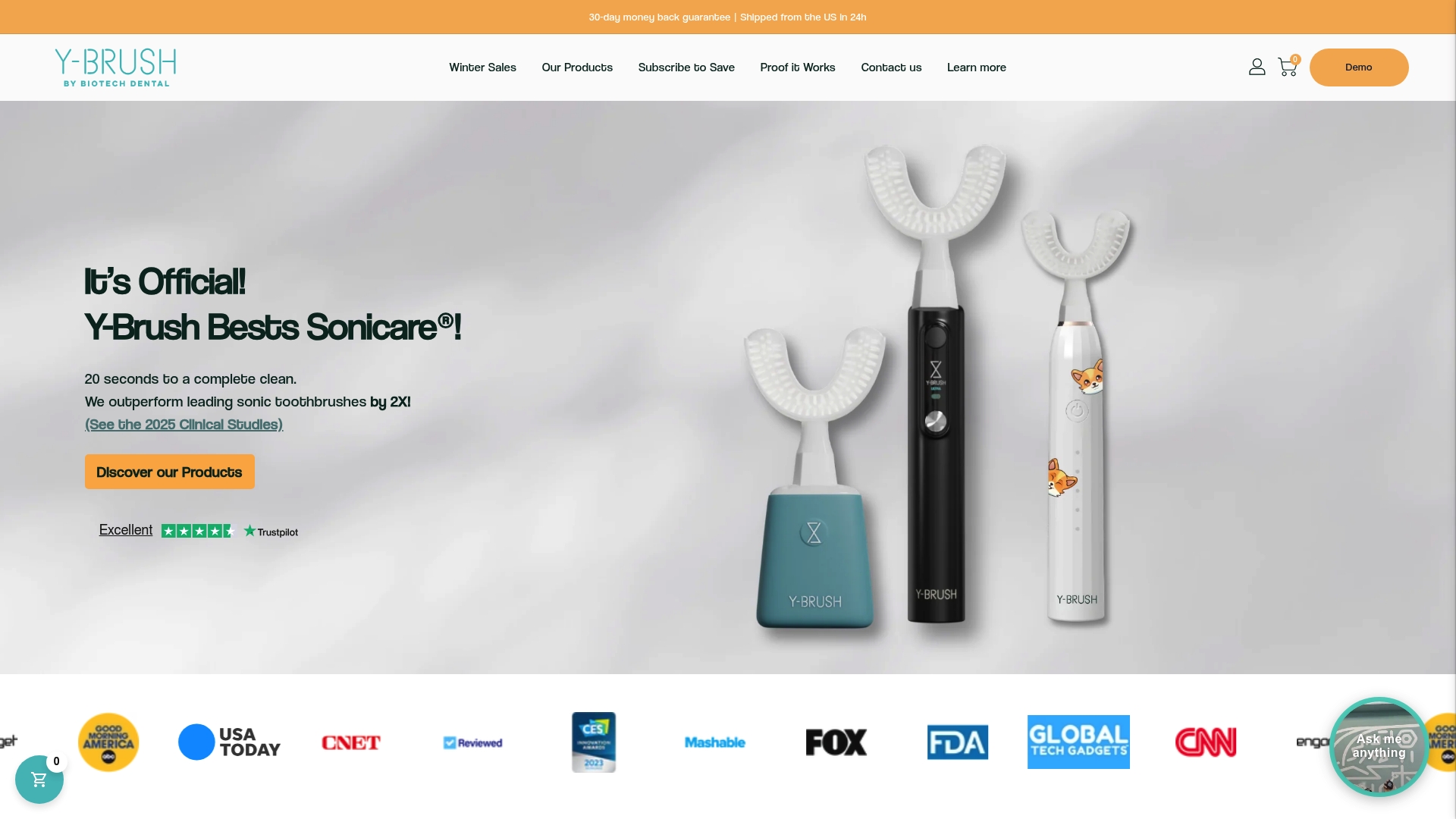
Many electric toothbrush heads use soft bristles, and some membership plans ship replacement heads regularly to prevent bristles from splaying and becoming abrasive, as discussed in detail in this article comparing electric vs manual toothbrushes. That matters more for enamel safety than almost any other single habit on this list. Parents managing a child’s brushing routine can find an equivalent setup with the Y-brush KidsBrush, built for ages four to twelve.
If you’re ready to swap in a brush designed around light contact and consistent head replacement, start with the Y-brush Essential Sonic Toothbrush and see how a 20-second routine fits your day.
A Final Word on Enamel Anxiety
Enamel worry is common, but it’s rarely about the brush itself. Do three things tonight: switch to a soft head, lighten your grip, and check your toothpaste’s RDA. If sensitivity or visible wear persists, see your dentist before assuming your brush is the problem.
— Joris
This article is general information, not a substitute for advice from a qualified doctor. Consult a qualified healthcare professional about your own circumstances before acting on anything here.
Sources
- Toothbrushes | American Dental Association
- Safety and design aspects of powered toothbrush—A narrative review
- Should you use an electric toothbrush or a manual toothbrush? - Consumer Reports
- Comparative evaluation of enamel abrasivity by different power-driven toothbrushes (PubMed record)


