


Yes, use toothpaste with a sonic toothbrush. Choose a low-abrasion, low-foaming fluoride formula rather than whatever whitening paste happens to be in the cabinet. Look for a low RDA (relative dentin abrasivity) rating, minimal SLS foaming, and fluoride on the label. If you have sensitivity, heavy gum recession, or exposed root surfaces, check with your dentist before picking a formula.
TL;DR:
- Use a fluoride toothpaste with an RDA below 70, no SLS, and a gel or cream consistency to minimize dentin wear during sonic brushing.
- Avoid high-abrasion formulas like charcoal, baking soda, or heavy whitening pastes, especially if you have gum recession or exposed roots.
- Apply a pea-sized amount of toothpaste, wet the brush slightly, and let the sonic device run without pressure for optimal safety and effectiveness.
- For sensitive teeth, choose formulations with potassium nitrate or stannous fluoride and give them several weeks to show results before switching.
- Pair a low-abrasion toothpaste with a gentle sonic brush, such as Y-brush, to protect enamel and facilitate quick, thorough cleaning.
Table of Contents
- What Toothpaste Features Matter for Sonic Brushes
- What to Avoid: Abrasive and Heavy-Foaming Toothpastes
- How to Use Toothpaste With a Sonic Toothbrush: Step by Step
- Special Cases: Sensitive Teeth, Children, and Whitening
- How to Read the Label: RDA, Fluoride, and Hidden Abrasives
- What the Research Says About Abrasion and Dosing
- Our Take: One Habit Worth Adopting
- A Sonic Brush That Works Well With Gentle Toothpaste
- Sources
What Toothpaste Features Matter for Sonic Brushes
RDA measures how much a toothpaste wears down dentin during brushing, on a scale where lower means gentler on tooth structure. It matters more with a sonic brush than a manual one because rapid vibration moves abrasive particles across the enamel surface far faster than a hand ever could. Consistency plays a role too: gels tend to flow into the vibrating bristles and spread more evenly, while thick pastes can sit in one spot and foam up before they ever reach the gumline.
Fluoride remains the ingredient doing the actual cavity-fighting work, and it belongs in nearly every adult’s and child’s toothpaste regardless of brush type. For people managing sensitivity, stannous fluoride offers both cavity protection and desensitizing benefits, while potassium nitrate is the common desensitizing agent found in most “sensitive teeth” formulas.
Pro Tip: Check the box or tube for an RDA number before assuming a paste is gentle. “Whitening” and “natural” labels say nothing about abrasivity on their own.
When shopping, scan for these cues:
- A stated RDA value under roughly 70, or a manufacturer note describing the paste as “low abrasion”
- Fluoride content listed in parts per million (ppm), typically 1,000 to 1,500 ppm for adults
- Gel or cream consistency rather than a heavy paste
- No SLS, or a note saying “SLS-free” if you’re prone to foaming sensitivity or mouth dryness
What to Avoid: Abrasive and Heavy-Foaming Toothpastes
High-RDA toothpastes are the biggest risk factor here. Lab research on dentifrice abrasivity and powered brushes found that pairing a sonic brush with a higher-abrasion paste caused meaningfully more dentin wear than the same paste used with a manual brush. The vibration amplifies what the grit was already doing.
Charcoal and baking-soda formulas fall into the same trap. They’re marketed as natural whitening solutions, but many carry abrasive particles that scrub away enamel over repeated use rather than lifting stains safely. Heavy SLS foaming causes a separate problem: it can dry out soft tissue and irritate gums, and it actually works against the sonic brush’s cleaning action by creating a foam barrier before the bristles finish their pass.
Skip or limit:
- Whitening pastes advertising “deep stain removal” or visible grit
- Charcoal and baking-soda blends used daily
- Any paste that foams heavily within seconds of application
How to Use Toothpaste With a Sonic Toothbrush: Step by Step
Getting the dose and timing right protects both your enamel and your brush head. Here’s the sequence that dental guidance and manufacturer instructions consistently recommend:
- Wet the brush head slightly before applying paste, so it spreads instead of clumping.
- Apply a pea-sized amount for adults, or a light smear for young children, directly onto the bristles.
- Place the brush in your mouth before switching it on. This prevents splatter and lets the vibration distribute the paste evenly rather than flinging it across the sink.
- Let the device run its built-in timer without pressing hard. Sonic brushes are designed to do the mechanical work; heavy pressure just adds unnecessary wear.
- Rinse the head under running water for 10 to 15 seconds afterward to clear residue before it dries in the bristles.
Pro Tip: If your toothpaste feels thick, let it thin slightly with saliva for a few seconds before switching the brush on. A thinner consistency moves through the bristles more efficiently.
Special Cases: Sensitive Teeth, Children, and Whitening
Sensitivity formulas built around potassium nitrate or stannous fluoride typically need two to four weeks of consistent use before you notice real relief, so give a product time before switching. Children’s fluoride concentration should stay lower than the adult range, generally guided by age on the packaging, and a supervising adult should manage the amount squeezed onto the brush.
Daily abrasive whitening pastes are a poor match if you already have gum recession or exposed root surfaces. That combination, paired with sonic vibration, is exactly the scenario lab studies flag for excess wear. A safer path for whitening goals is a dentist-supervised treatment or an occasional low-abrasion whitening formula, not a daily scrub.
- Sensitivity: choose stannous fluoride or potassium nitrate formulas, and expect gradual improvement
- Children: use age-appropriate fluoride concentration and a thin smear, not a full pea size, for kids under three
- Whitening with recession: favor dentist-led options over daily abrasive pastes
How to Read the Label: RDA, Fluoride, and Hidden Abrasives
Most tubes don’t print an RDA number directly, so you may need to check the manufacturer’s website or a product data sheet to find it. What you can always check on the tube itself is the ingredient list and the fluoride content.
- Fluoride content is typically listed in parts per million (ppm) for adult formulas, often within a standard recommended range.
- Sodium lauryl sulfate appears by name if the paste is a heavy foamer
- “Hydrated silica,” “calcium carbonate,” and “baking soda” are common abrasive ingredients worth noting if they appear high on the list
- Endorsements from recognized dental associations carry more weight than vague marketing terms like “natural” or “clinically tested” with no study cited
What the Research Says About Abrasion and Dosing
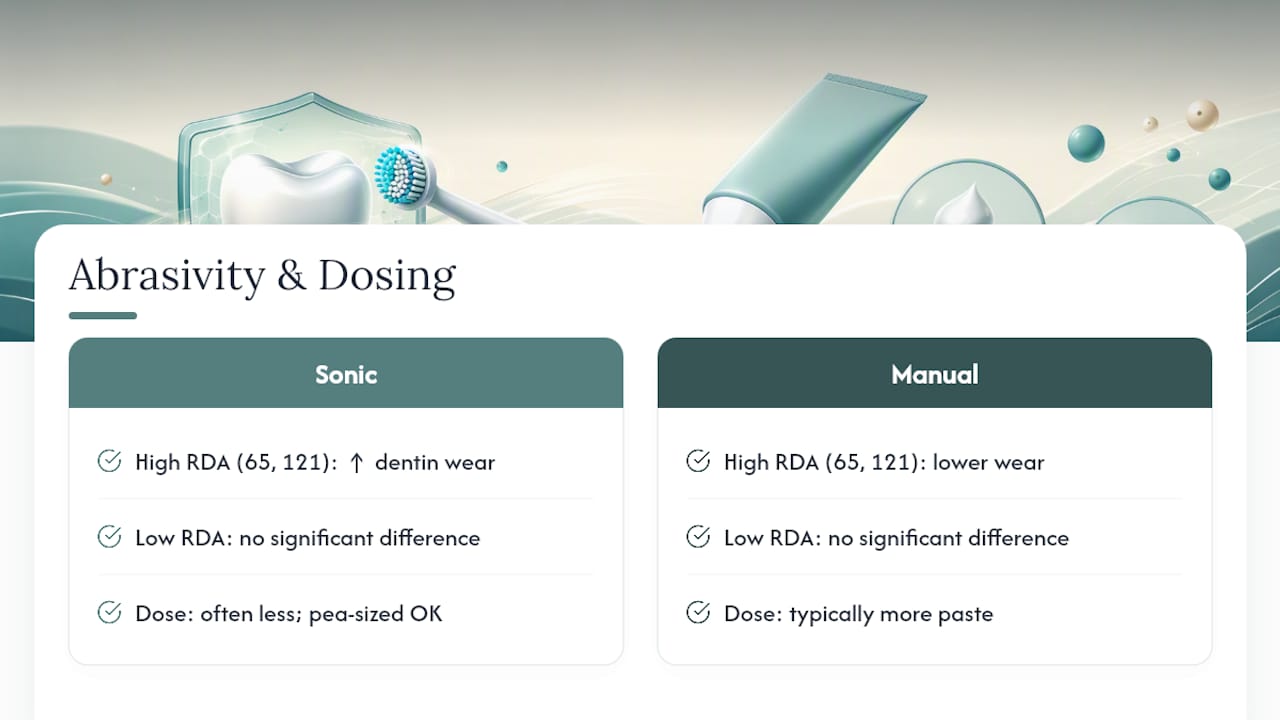
Sonic brushes paired with toothpastes rated RDA 65 and RDA 121 produced statistically significant increases in abrasive dentin wear compared with manual brushing using the same pastes. Toothpaste with low abrasivity showed no significant difference between brush types.
That finding, from an in vitro comparison of sonic and manual brushing across different abrasivity values, is the clearest evidence behind the low-RDA recommendation running through this whole guide. The practical takeaway: a low-abrasion paste sidesteps the extra wear that sonic vibration can cause with grittier formulas.
On dosing, research on dentifrice quantity and fluoride delivery found that electric toothbrush users often apply less toothpaste per brushing session than manual brushers do, while still getting effective fluoride exposure from a pea-sized amount. Less paste, applied correctly, does the job.
Our Take: One Habit Worth Adopting
Pick a low-RDA, fluoride-based paste and pair it with a pea-sized dose and a quick head rinse after every use. That one habit, more than any specific brand, is what actually protects your enamel over years of sonic brushing. Replace brush heads on the manufacturer’s schedule to avoid trapped residue.
— Joris
A Sonic Brush That Works Well With Gentle Toothpaste
Choosing the right paste solves half the equation. The other half is a device that does its job in less time, so you’re not tempted to scrub harder or longer to compensate for a rushed routine. That’s the gap Y-brush was built to close: a patented Y-shaped head that delivers a full clean in 20 seconds using sonic vibrations, paired with whatever low-abrasion, fluoride paste you’ve already picked based on this guide.
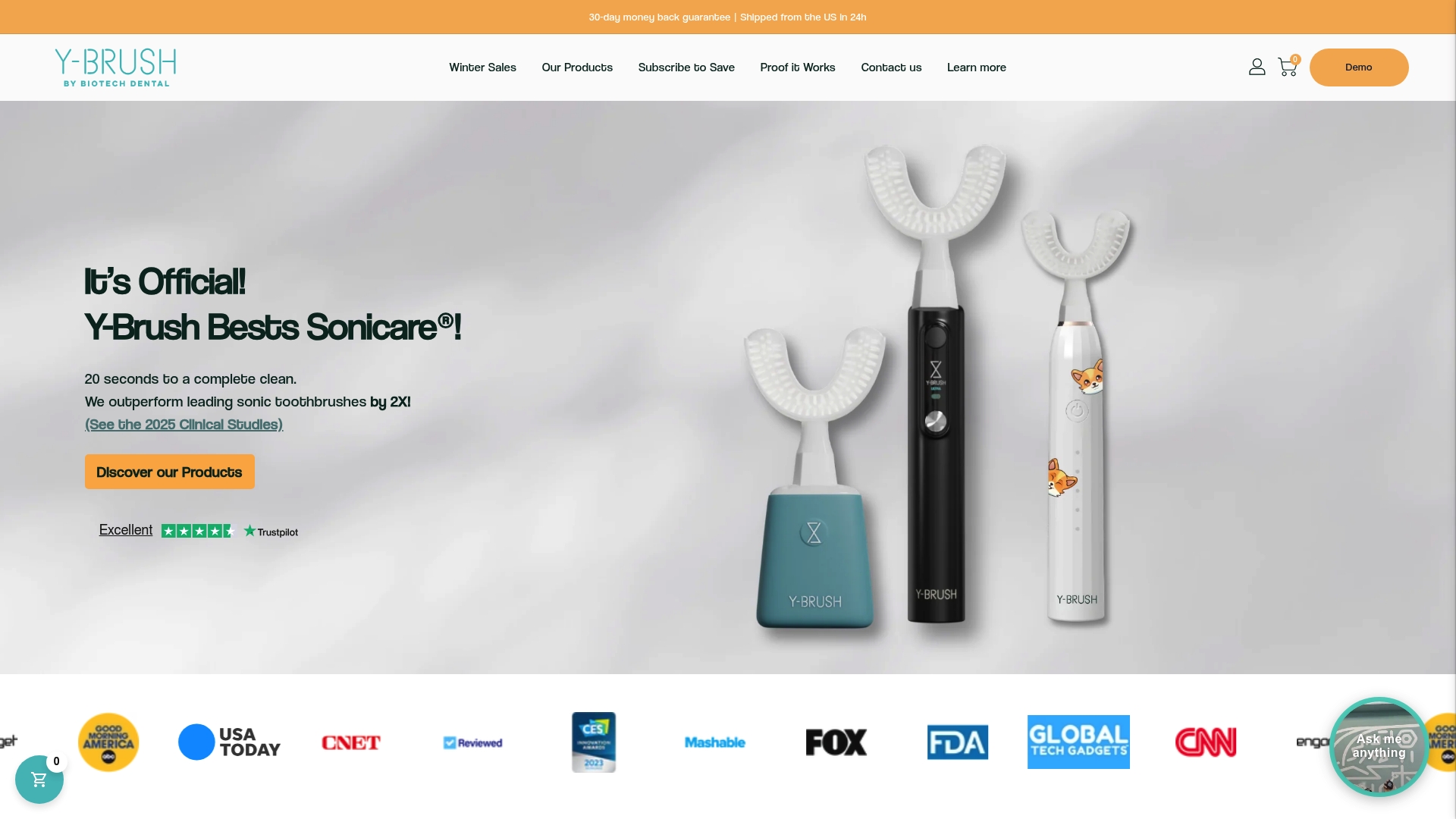
The design isn’t a claim to outperform every other sonic brush on the market. It’s a straightforward option for anyone who wants a fast, gentle clean without babysitting a two-minute timer. Families juggling different needs can start with the Essential Sonic Toothbrush for adults or the KidsBrush for children ages four to twelve, and a membership plan keeps replacement heads arriving on schedule so residue buildup never becomes an issue. Check the product pages to see which model fits your routine.
This article is general information, not a substitute for advice from a qualified doctor. Consult a qualified healthcare professional about your own circumstances before acting on anything here.
Sources
- PubMed: study summary on dentifrice abrasivity and powered brushes
- Effect of a sonic toothbrush on the abrasive dentine wear using toothpastes with different abrasivity values
- Cochrane/related reviews and studies on fluoride, dentifrice dosing, and delivery


