


Most loud electric toothbrushes are fixable at home in under five minutes. The usual culprits are a loose or missing brush head, dried toothpaste debris around the drive shaft, or a rattling battery compartment. Power off, remove the head, and re-seat it firmly before powering back on. If the grinding or buzzing continues, run the diagnostic no-head test below. If none of that quiets things down, you’re likely looking at a warranty claim or a replacement.
TL;DR:
- Most loud electric toothbrush issues are caused by debris, loose or worn heads, or a rattling battery compartment, which can often be fixed in minutes.
- Running a no-head test helps identify whether the noise originates from the head, shaft, or handle, guiding appropriate action.
- Regularly cleaning and replacing worn heads every three months prevents most noise complaints before they start.
- Persistent metal-on-metal grinding, burning smells, or intermittent power loss indicate internal damage requiring manufacturer support rather than DIY fixes.
- The design type—sonic versus oscillating-rotating—significantly influences noise levels, with quieter models generally measuring around 48 decibels.
Table of Contents
- Quick Fixes to Try Before You Do Anything Else
- Is the Noise Coming From the Head, the Shaft, or the Handle?
- How to Clean, Replace, and Safely Fix a Loud Toothbrush
- When to Contact Support Instead of Fixing It Yourself
- What Makes a Quiet Electric Toothbrush Actually Quiet
- A Word on Noise, Habits, and What Actually Matters
- Try Y-Brush if the Noise Isn’t the Only Problem
- Sources
Quick Fixes to Try Before You Do Anything Else
Work through these in order. Most people solve the problem in step one or two.
- Power off and remove the brush head. Inspect the connector for cracks, buildup, or misalignment before reattaching.
- Check for visible debris. Dried toothpaste around the neck of the handle acts like sand in a gear. Wipe it clean.
- Clean the head-to-handle connection and the drive shaft. A damp cloth and a few seconds of drying time make a bigger difference than most people expect.
- Run a brief no-head test. Power the handle on for two or three seconds without the head attached. This isolates whether the noise lives in the head or the handle.
- Swap in a genuine replacement head. Worn bristles and warped necks, especially from off-brand heads, are a common noise source. Manufacturer troubleshooting guidance recommends this as an early step for exactly this reason.
- Check the battery cover and any removable battery. A loose cover or a battery that’s not seated flush will rattle every time the motor spins up. Tighten any visible screws.
Pro Tip: Run the no-head test over a towel, not the sink. If the handle sounds fine without the head, the fix is almost always a $6 replacement head, not a $60 new toothbrush.
Is the Noise Coming From the Head, the Shaft, or the Handle?
Where the sound originates tells you what’s actually wrong. A few quick checks will narrow it down fast.
- Hand-feel test: Hold the handle while it runs. Uneven or off-center vibration usually points to the head or a bent shaft rather than the motor itself.
- No-head listening test: Run the handle alone, then with the head attached. If the sound only appears with the head on, the head is the problem.
- Sound character matters. A steady hum or whine is the normal signature of a sonic motor. Grinding or grating usually means debris or damaged internal gearing. A rattle almost always means a loose part or a poorly seated battery.
- Your bathroom is working against you. Tile, glass, and hard countertops bounce sound around and make a normal motor feel far louder than it actually is. Try running the brush over a towel or near a softer surface to hear the true baseline noise.
How to Clean, Replace, and Safely Fix a Loud Toothbrush
Start with cleaning, not replacement. Remove the brush head completely and rinse the exposed shaft under warm water. Use an interdental brush or a cotton swab to work dried paste out of the grooves where the head clips on. Dry every part fully before reattaching. Skipping this step is the most common reason a “fixed” brush starts buzzing again within a week.
Replacing the head on a regular schedule prevents most noise complaints before they start. Reviewers and manufacturers generally recommend swapping heads about every three months, since worn bristles change the balance of the head and put uneven strain on the motor. A head that’s flared, frayed, or loose at the base will vibrate against the handle in ways a fresh head simply won’t.
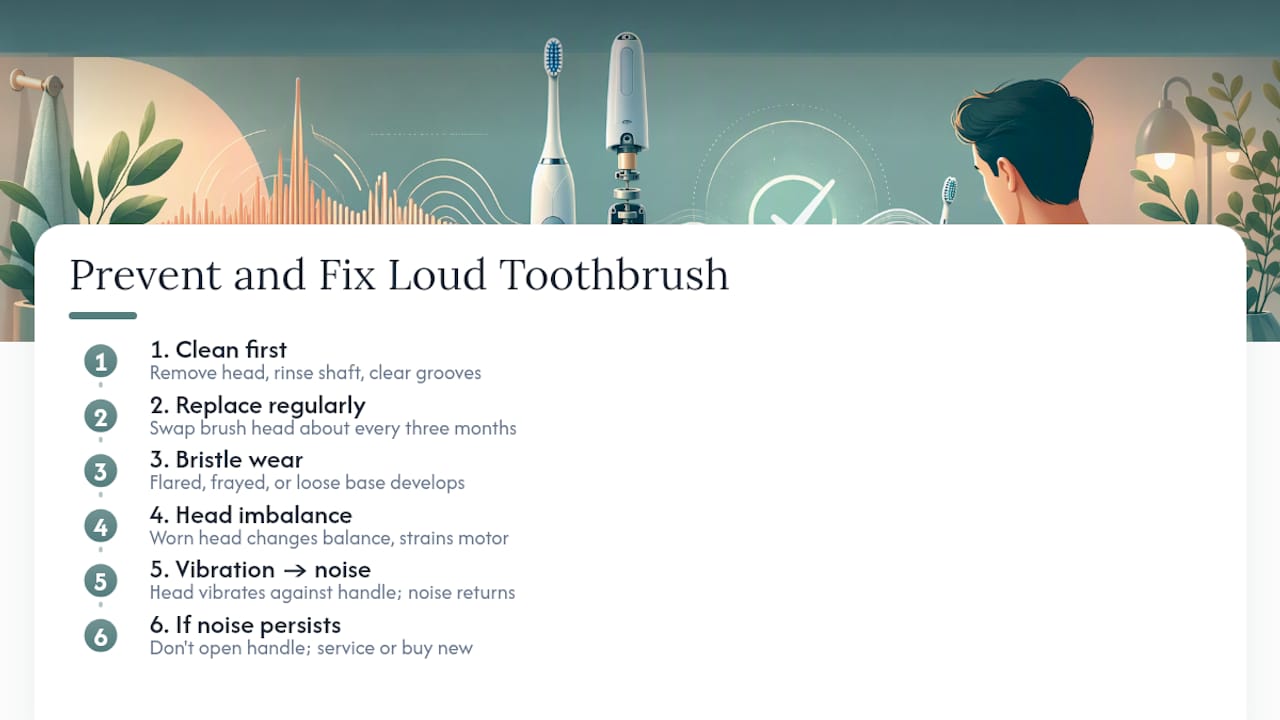
If cleaning and a new head don’t help, you’re likely dealing with worn internal bearings or motor damage. This is where DIY stops. Opening the handle yourself almost always voids any warranty coverage and risks damaging the waterproof seal, which then creates a second problem on top of the noise. Don’t attempt internal repairs.
Before you buy a whole new handle, run the numbers. A replacement head typically costs a small fraction of a new unit, so it’s always worth ruling that out first. But if your current toothbrush is several years old, or if this is the second or third noise issue you’ve chased down, a new handle often ends up cheaper than the time spent troubleshooting an aging motor.
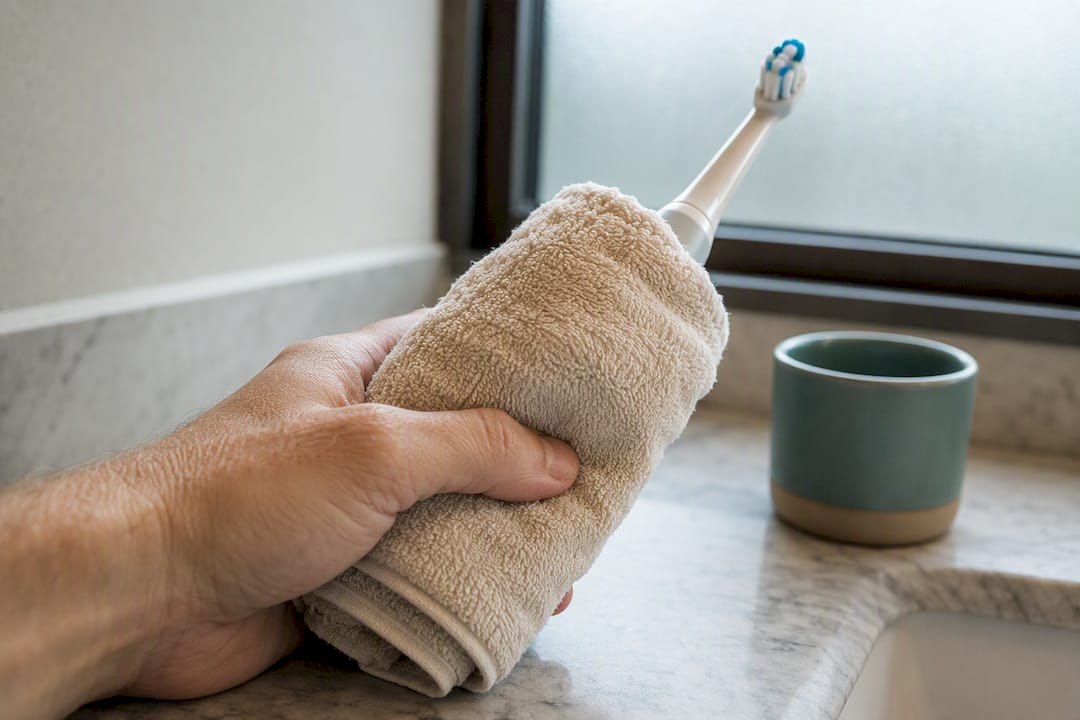
Pro Tip: Don’t try to muffle the noise with a towel wrap while brushing. Field tests on this trick found it only cuts sound by about 3 to 5 decibels, and it makes the brush harder to grip and control.
When to Contact Support Instead of Fixing It Yourself
Some noises are a signal to stop using the brush, not a project to tackle at the sink.
- Metal-on-metal grinding that persists after a clean, properly seated head is a sign of internal wear, not debris.
- Any burning smell means stop immediately and unplug the charger. This is a safety issue, not a noise issue.
- Intermittent power paired with noise, where the motor cuts in and out, usually points to a failing internal connection.
If you hit any of these, contact the manufacturer rather than continuing to use the brush. Support teams typically ask for the same information: a short video of the noise, the model and serial number, and confirmation that you’ve already tried a fresh head. If the unit is still under warranty, replacement is usually straightforward. Out-of-warranty units come down to a simple math problem: repair cost and wait time versus the price of a new handle.
What Makes a Quiet Electric Toothbrush Actually Quiet
Sonic toothbrushes tend to produce a steady, low hum, while oscillating-rotating brushes often sound more mechanical because of the moving gear assembly inside the head. That’s a design difference, not a manufacturing flaw in either type. If ongoing motor noise bothers you regardless of how well-maintained your current brush is, it may be worth comparing sonic and rotary designs before your next purchase.
Independent decibel testing found that quiet electric toothbrushes measure around 48 decibels, roughly the volume of a quiet conversation, while some oscillating models exceed 70 decibels, closer to a running vacuum cleaner.
Price is a poor guide here. Testing has repeatedly shown that a premium price tag doesn’t guarantee a quieter motor. Motor design and head fit matter far more than the number on the box. A few features worth checking before you buy:
- Multiple intensity or vibration settings, so you can drop to a gentler mode when noise or sensitivity is an issue.
- Manufacturer claims about motor dampening or sonic vibration technology, which tend to correlate with a softer hum.
- Genuine replacement heads that are easy to find and afford, since a worn head is the single biggest driver of added noise over time.
- A pressure sensor and a built-in two-minute timer. Reviewers consistently flag these as the features that most improve comfort and reduce harsh brushing, noise aside.
If you’re sensitive to buzzing or vibration in general, it’s worth reading up on how sensitivity settings actually work before assuming the loudest-feeling brush is broken. And when comparing motor and head technology across models, background on how these mechanisms differ can help you separate real quietness claims from marketing language.
A Word on Noise, Habits, and What Actually Matters
Chasing the single quietest motor on the market is often the wrong goal. What matters more is whether the noise, or the brush itself, makes you skip the full two minutes. A toothbrush you use consistently for the full cycle beats a marginally quieter one you avoid. If the noise genuinely can’t be fixed, the smarter move is switching to a format built around comfort and speed rather than hunting for the last few decibels. Some companies approach that problem differently, with designs built for a quick, comfortable clean instead of a longer motor cycle.
— Joris
Try Y-Brush if the Noise Isn’t the Only Problem
If you’ve worked through every fix here and you’re still dreading the sound, or the length, of brushing twice a day, it might be time to try a different format entirely. The Y-Brush Essential Sonic Toothbrush uses a patented Y-shaped head with sonic vibrations to clean your full mouth in about 20 seconds, built for comfort rather than a long, buzzing cycle.
Some toothbrush purchases come with a 30-day money-back guarantee, so noise-sensitive brushers can test them without any real risk. Families can outfit kids with the Y-Brush KidsBrush Sonic Electric Toothbrush, and anyone who wants ongoing replacement heads without reordering manually can set up a membership plan for automatic refills. Start with the Essential model and see if a faster, quieter routine sticks better than the one you’ve been fighting with.
Sources
- The quietest electric toothbrush (decibel readings included)
- Best electric toothbrush 2026: Every top model we’ve tested | TechRadar


