


Yes, an electric toothbrush can clean wisdom teeth effectively, but only with the right approach. Hold the brush at a 45-degree angle toward the gumline, use short strokes, and give the rear quadrants a full and equal amount of time each. A brush with a small, thin head makes that job considerably easier to get right on the first try.
TL;DR:
- The best approach for cleaning wisdom teeth with an electric toothbrush involves a 45-degree angle, small strokes, and focused time on each quadrant.
- A small, thin-headed electric toothbrush with a flexible neck and sonic oscillation significantly improves plaque removal around the rearmost molars.
- Two minutes of thorough brushing, split into 30 seconds per quadrant, with full attention and proper technique, is essential for effective cleaning.
- Rushing, pressing too hard, or brushing flat instead of at an angle are common mistakes that reduce cleaning effectiveness on rear molars.
- Using a toothbrush with a Y-shaped head or a specialized model can substantially simplify reaching and cleaning the most difficult-to-access areas.
Table of Contents
- How Do You Brush Wisdom Teeth With An Electric Toothbrush?
- Which Toothbrush Features Actually Reach The Back Molars?
- How Often Should You Clean Wisdom Teeth For Lasting Results?
- Common Mistakes People Make Brushing Wisdom Teeth
- Why Rear-Molar Cleaning Comes Down To Design, Not Effort
- Get A Wisdom-Tooth-Ready Brush In 20 Seconds
- Sources
How Do You Brush Wisdom Teeth With An Electric Toothbrush?
Cleaning wisdom teeth well comes down to sequence and angle, not extra scrubbing. The ADA recommends two minutes of total brushing time, split evenly across each quadrant. That math matters because most people front-load their brushing on the easy-to-reach front teeth and rush the back molars right when they need the most attention.
Here’s the sequence that actually gets the rearmost teeth clean:
- Start with a plan, not a habit. Pick one rear quadrant to brush first while your attention and the vibration timer are still fresh.
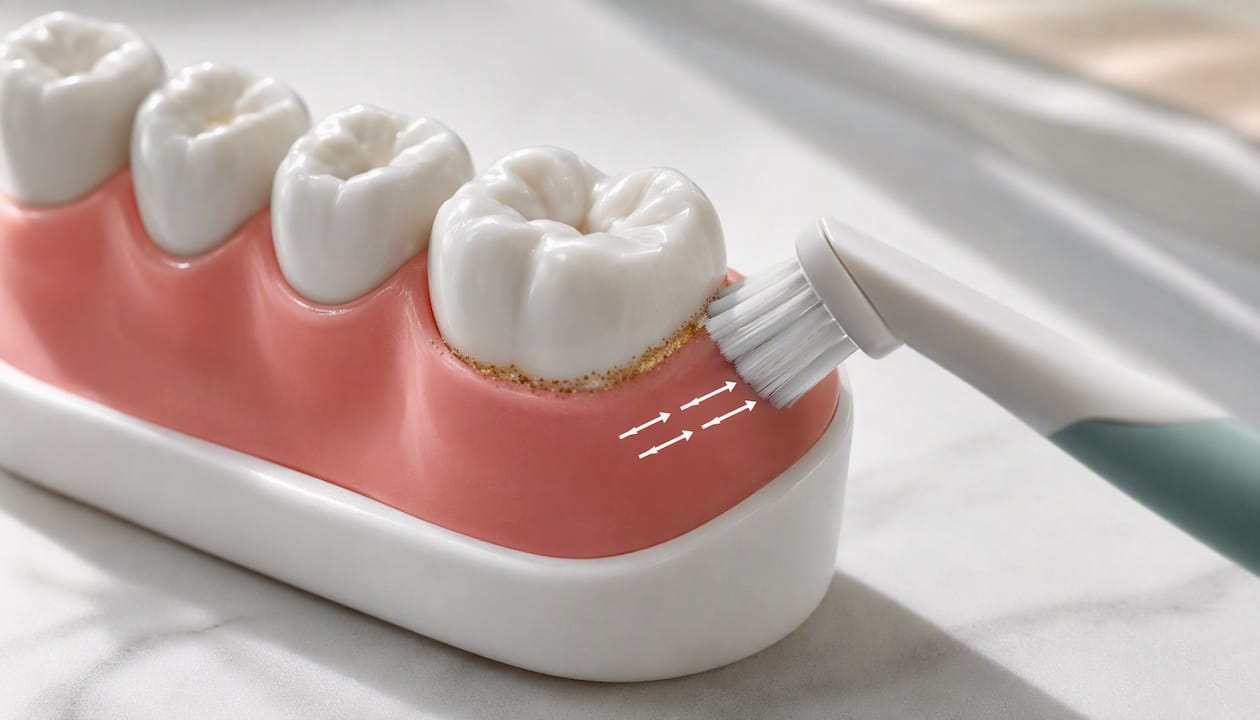
- Angle at 45 degrees toward the gumline. This is the Modified Bass positioning: bristles aimed at the seam where tooth meets gum, not flat against the chewing surface.
- Use short, tooth-width strokes. Small circular or back-and-forth motions clear plaque from the gumline far better than long sweeping passes.
- Give each rear quadrant its full 30 seconds. Resist the urge to move on early just because the brush feels awkward back there.
- Finish the last molar with a back sweep. Rotate the brush head vertically and sweep behind the tooth, downward on the upper arch and upward on the lower. This clears the pocket of debris that standard forward strokes miss entirely.
- Tilt vertically for inner surfaces. The tongue-side faces of wisdom teeth need short up-and-down strokes with the brush turned on its side, since a flat angle simply can’t reach that surface.
- Follow up with an adjunct tool. An interdental brush, floss threader, or water flosser clears the tight gaps a brush head can’t fully access, according to dental practice guidance on wisdom tooth cleaning.
Pro Tip: If your jaw feels tight by the time you reach the last molar, stop pushing the brush straight back. Turn your head slightly to the side instead, so the brush enters at an angle rather than needing your mouth to open wider.
This routine also lines up with the Modified Bass technique, which dental hygienists teach specifically because it targets the gumline where wisdom teeth accumulate the most plaque.
Which Toothbrush Features Actually Reach The Back Molars?
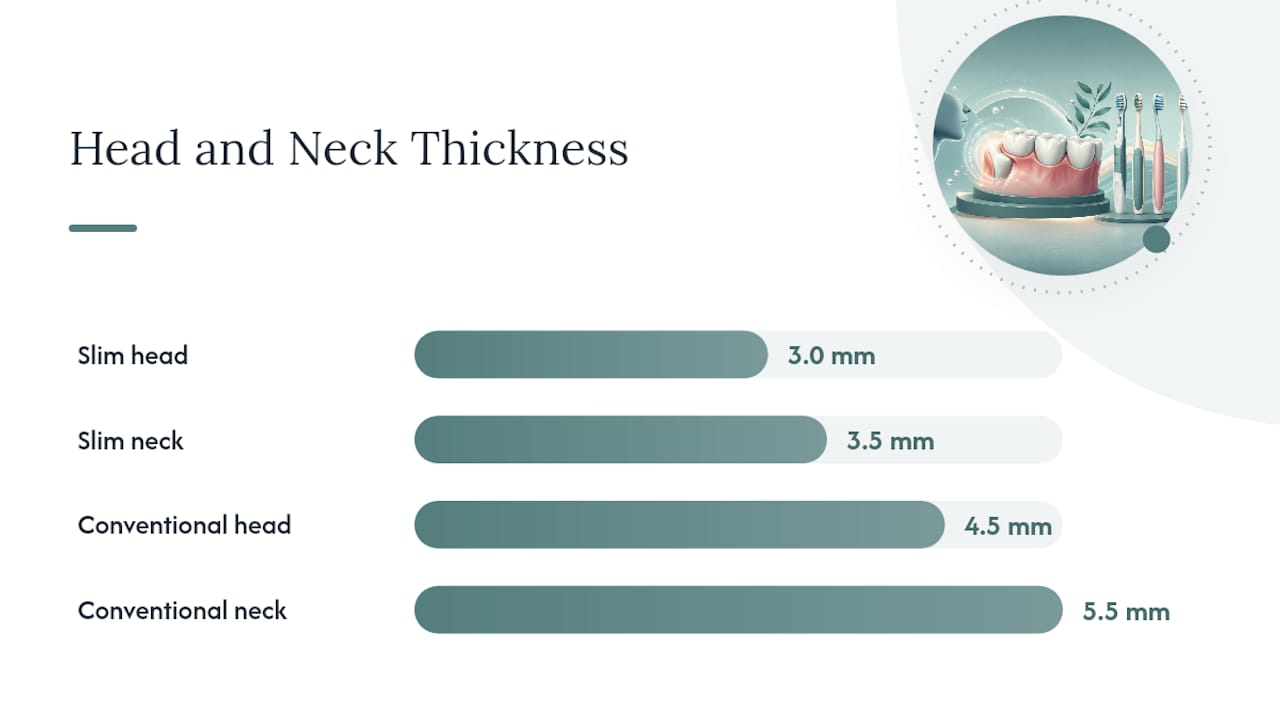
Not every electric toothbrush is built to handle the tightest corner of your mouth. A 2024 crossover trial compared a slimmed-down brush design (3.0 mm head thickness, 3.5 mm neck) against a conventional model (4.5 mm head, 5.5 mm neck) and found the thinner design produced significant reductions in plaque and gingivitis specifically around the rearmost molars.
That single data point should shape how you shop. Look for:
- A small, thin head. Anything bulky simply can’t pivot inside the limited space behind your second molars.
- A slender, flexible neck. Maneuverability matters as much as head size when you’re working around the curve of the jaw.
- Soft, tapered bristles. A narrower bristle tip slips into tight spaces without irritating the gum tissue back there.
- Powered oscillation or sonic vibration. A systematic review of powered toothbrushes found oscillating-rotating models produced a small but statistically significant plaque reduction over manual brushing, particularly in hard-to-reach posterior areas.
- A built-in timer or quadrant pacer. These features nudge you to actually spend the full 30 seconds per section instead of guessing.
- Available small replacement heads and a refill plan. A worn-out or oversized head undoes every other feature on this list.
Manual brushing can technically get the job done, but the margin for error is much smaller. A closer look at how manual and sonic brushes compare on plaque removal shows why powered motion tends to close the gap between good technique and actual results.
How Often Should You Clean Wisdom Teeth For Lasting Results?
Consistency beats intensity here. Two minutes, twice daily, with roughly 30 seconds dedicated to each quadrant, is the baseline the ADA backs and the one that actually holds up over months of daily use.
A few habits keep that routine from slipping:
- Let a built-in timer or quadpacer split your two minutes automatically, since most people lose track of time once they get to the back teeth.
- Play a short song or set a phone timer if your brush lacks a pacer feature.
- Replace your brush head every 3 to 4 months, or sooner if the bristles look frayed, per ADA guidance.
- Consider a subscription or membership plan that ships fresh heads automatically, since a worn head is one of the most common reasons rear-molar cleaning quietly gets worse over time.
- Store heads upright and check the neck for cracks or buildup every few weeks.
Common Mistakes People Make Brushing Wisdom Teeth
Most missed plaque on rear molars comes down to three habits: brushing flat instead of at an angle, cutting the back quadrant short on time, and pressing too hard out of frustration.
- Flat brushing: switch to the 45-degree gumline angle instead of scrubbing the chewing surface only.
- Rushed timing: commit to the full 30 seconds per quadrant, even when it feels tedious.
- Heavy pressure: let the vibration do the work; pressing harder just irritates gum tissue without removing more plaque.
- Limited jaw opening or a strong gag reflex: switch to a smaller brush head, shorten your strokes, and lean more on interdental brushes or a water flosser to finish the job.
Pro Tip: If you notice persistent plaque buildup, bleeding that doesn’t resolve within a week, or tenderness around a wisdom tooth, that’s a signal to see a dentist rather than adjust your technique further on your own. For more troubleshooting on technique, see common brushing mistakes and how to avoid them.
Why Rear-Molar Cleaning Comes Down To Design, Not Effort
Most advice on this topic assumes the problem is discipline. It isn’t. People with excellent brushing habits still miss their wisdom teeth because the tool in their hand wasn’t built for that geometry. A thick head and a stiff neck simply cannot execute a 45-degree angle in a space that tight, no matter how carefully someone follows instructions.
That’s the gap the clinical research on thin heads and flexible necks actually closes. It’s not a marginal comfort upgrade. It’s the difference between a brush that can physically complete the back-sweep motion and one that can’t. Some compact head geometries are designed around exactly that constraint, which is why certain designs map directly onto what the trial data shows about posterior access. Good technique still matters, but it can only work as well as the hardware allows.
— Joris
Get A Wisdom-Tooth-Ready Brush In 20 Seconds
Most electric toothbrushes ask you to master the technique above every single day, forever. Some electric toothbrushes use a Y-shaped head that surrounds all your teeth, including the rearmost molars, and deliver a full clean through sonic vibration in about 20 seconds.
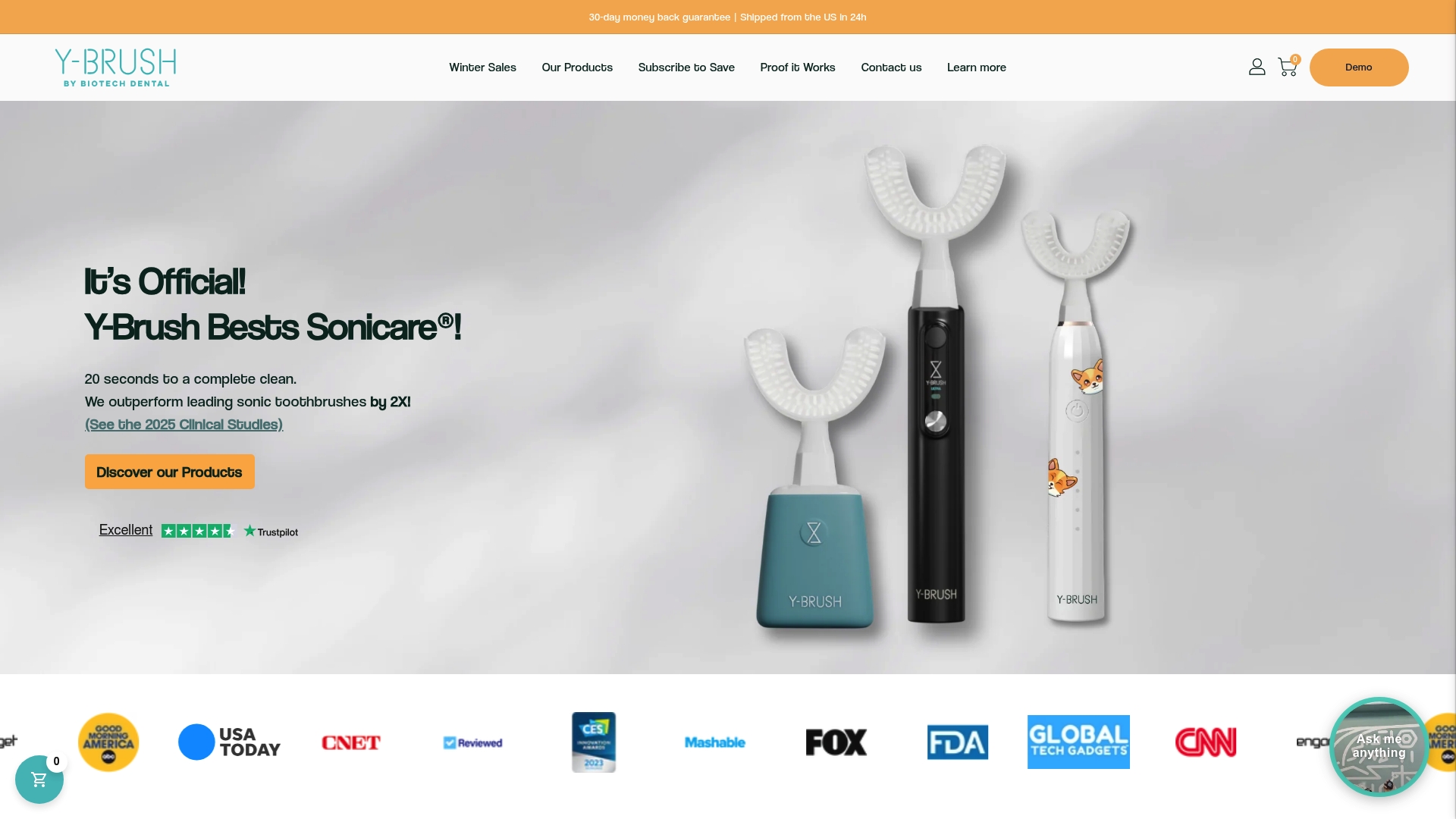
The Y-brush Essential Sonic Toothbrush covers the daily basics for adults who want reliable rear-molar coverage without relying on perfect angle work every morning. If you want a higher-tier option with additional features, the Y-brush Ultra Sonic Toothbrush is built for the same job with a more advanced feature set. Parents managing a child’s brushing routine can also look at the Y-brush KidsBrush Sonic Electric Toothbrush, sized for ages 4 to 12.
Some membership plans keep replacement heads arriving on schedule to help ensure brushes are not used with bristles too worn to reach the back of the mouth. Visit the Y-brush product lineup to compare models and find the one that fits your routine.
Sources
- ADA toothbrushes guidance
- Systematic review on powered toothbrush efficacy (2021)
- Thin-head, slender-neck toothbrush trial (2024)


