


A child who panics at the sight or sound of an electric toothbrush is reacting to a specific sensory trigger, not being difficult on purpose. The right first move is to stop forcing the brush, switch to a manual brush while you investigate what is actually upsetting them, and let them explore the device on their own terms, holding it switched off, then feeling the vibration on a hand before it ever touches their mouth. If the fear includes signs of pain, gagging that will not settle, or complete refusal of any oral care at all, that is a signal to bring in a pediatric dentist rather than keep pushing at home.
TL;DR:
- Children with sensory triggers often react to vibration, noise, taste, or acoustics, requiring personalized desensitization rather than forcing an electric toothbrush.
- Introducing an electric toothbrush around age three with supervision and gradual steps helps children adapt safely, avoiding very young children due to safety and sensory concerns.
- Using a manual brush with soft bristles and low force can effectively clean at age three or older while easing sensory overload before progressing to powered models.
- Persistent gagging, pain, or refusal signals the need for professional Pediatric Dental or Occupational Therapy assessment to address underlying sensory or developmental issues.
- Once a child tolerates brief, controlled sessions with a powered toothbrush, switching to Y-Brush’s short-clean design can be a helpful next step.
Table of Contents
- Why kids get scared: sensory and developmental causes explained
- Age and safety: when to introduce an electric toothbrush and how to supervise
- A step-by-step plan to ease your child into electric brushing
- Practical adaptations that make brushing easier right now
- When to get professional help: who to call and what they can do
- How Y-Brush’s approach lines up with gradual desensitization
- A realistic note on progress and patience
- Considering Y-Brush once your child tolerates short contact
- Sources
- FAQ
Why kids get scared: sensory and developmental causes explained
Fear of an electric toothbrush almost always traces back to one or more sensory inputs rather than the toothbrush itself. The buzzing sensation on the teeth and gums, the motor noise, the taste or foam of toothpaste, and the general mouth-feel of a foreign object can each overwhelm a young child on their own, and combined they add up quickly. Occupational therapy guidance lists taste, texture, vibration, and visual input as the most common triggers behind brushing resistance, and recommends identifying the specific culprit rather than assuming vibration is always to blame.
Developmental factors play a role too. Younger children have limited fine motor control and no real way to signal “that’s too much” except crying or pulling away, and a gag reflex that is still maturing can make any brush feel threatening, electric or not. A previous bad experience, a dental visit that went poorly, or even an older sibling’s loud reaction can leave a lasting association.
- Vibration and noise can feel intense against sensitive gums and ears.
- Taste, foam, or flavor intensity can trigger gagging or refusal.
- Echo and acoustics in a tiled bathroom can amplify the sound.
- Limited motor control makes holding still difficult and increases anxiety.
- A past negative experience can color every future brushing attempt.
The same vibration that calms one child, the way a weighted blanket might, can feel unbearable to another. That variability is exactly why a flexible, graded approach works better than a one-size-fits-all rule.
Age and safety: when to introduce an electric toothbrush and how to supervise
The ADA’s toothbrush guidance states plainly that either a manual or a powered toothbrush can clean teeth effectively, so there is no medical requirement to rush into an electric model. Many families introduce a powered brush around age three with full adult supervision, continuing hands-on assistance until the child can reliably spit out toothpaste and manage the brush, which is commonly closer to age seven or eight.
Before handing over any electric brush, run through a short safety check:
- Confirm the bristles are soft and the head is sized for a small mouth.
- Use the lowest or gentlest vibration setting available.
- Avoid powered brushes for very young children, such as toddlers, due to safety and sensory considerations.
- Stay in the room for the entire brushing session at this age.
A quick parent checklist covering these points can make the first few tries far less stressful for both of you.
A step-by-step plan to ease your child into electric brushing
Gradual exposure works better than a single dramatic attempt, and it mirrors the tell-show-do approach AAPD behavior guidance recommends for anxious dental patients. The sequence below moves in small, repeatable steps so your child stays in control at every stage.
- Let your child hold the brush while it is switched off and explore the buttons.
- Turn it on away from their face so they hear the sound without any contact.
- Press the vibrating head gently against their palm or forearm for a few seconds.
- Once that feels normal, rest the brush lightly on their closed lips for just a second or two.
- Move to very short trials inside the mouth, starting at five to fifteen seconds, with an agreed stop-signal like a raised hand.
- Add a few seconds each session only after the previous length felt comfortable, never all at once.
- Brush alongside your child so they can copy you, narrating each step before you do it.
Keep the sequence predictable. Saying exactly what happens next, “now I’m going to count to ten while we brush the top teeth,” gives a child the sense of control that AAPD’s evidence review ties to better cooperation, even though the research behind these techniques is often rated as low or conditional quality. A visible timer, a favorite short song, or a sticker chart for small wins can reinforce the routine without turning it into a bribe negotiation.
Pro Tip: Ask, tell, ask works well mid-session: ask if they’re ready, tell them what comes next in one short sentence, then ask again before you start.
Stop immediately if your child gags repeatedly, shows signs of pain, or becomes distressed beyond normal protest. Forcing the issue tends to set the process back further than a pause does, and documenting what triggered the reaction gives a clinician a useful starting point if you end up needing one.
Practical adaptations that make brushing easier right now
While desensitization is underway, a few adjustments can lower the sensory load immediately. A manual brush with a small, soft-bristled head is a perfectly reasonable stand-in, and with an adult guiding two full minutes of brushing, it cleans just as effectively as a powered one according to the ADA. If you want to keep using an electric brush, try the lowest power setting, a smaller brush head, and toothpaste with less foam or a milder flavor.
- Wrap a thin cloth around the handle to muffle vibration noise slightly.
- Switch to a low-foam or mild-flavor toothpaste if taste is the trigger.
- Use a visual schedule or picture sequence so your child knows what’s coming.
- Play a favorite two-minute song to add predictability and distraction.
- Brush in a carpeted room instead of an echoey tiled bathroom if acoustics seem to be the issue.
Occupational therapy guidance on sensory strategies supports starting with a manual brush when noise or vibration overwhelms a child, then reintroducing an electric brush gradually once tolerance builds, per the WSH NHS resource. Small environmental tweaks like these often matter more than the brush itself.
When to get professional help: who to call and what they can do
Persistent refusal that blocks all oral care, gagging severe enough to cause real distress, or any sign of pain are reasons to loop in a professional rather than keep troubleshooting alone. The same applies if your child has a diagnosed sensory or special healthcare need, since AAPD’s guidance on special healthcare needs treats ongoing refusal as a signal to assess, not a behavior problem to punish.
- A pediatric dentist can offer in-clinic desensitization, behavior guidance, and preventive planning, with nitrous oxide available only in a clinical setting.
- An occupational therapist can run a sensory assessment and build a tailored desensitization plan around your child’s specific triggers.
- A dentist familiar with fear-free, stress-reduced dental visits can also help build the trust that makes future appointments easier.
Bring notes or a short video of a typical brushing attempt to the appointment. Specifics about what triggers the reaction and what you have already tried help the clinician tailor a plan faster than a general description can.
How Y-Brush’s approach lines up with gradual desensitization
Y-Brush builds its toothbrushes around a short, consistent cleaning time, and that structure happens to pair naturally with the micro-exposure steps outlined above. The Y-Brush KidsBrush is sized for children ages four to twelve, and the brand’s own guidance recommends introducing a powered brush around age three with full supervision, matching the timeline most parents already use.
- A kid-sized head and gentler sonic mode may lower sensory intensity for some children compared with adult-style brushes.
- A short, predictable clean duration can make each exposure step feel more contained and easier to tolerate.
- The brand publishes how an electric brush works for children for parents who want the mechanics explained plainly before trying it.
None of this replaces a clinician’s judgment for a child with significant sensory needs, but for a family working through ordinary brushing resistance, a kid-focused design is worth knowing about as one option among several.
A realistic note on progress and patience
Fear around brushing rarely disappears in a week, and that is normal, not a sign you are doing something wrong. Track small wins, tolerating the switched-off brush, then the sound, then a five-second trial, because those micro-goals add up faster than they feel like they do in the moment. If progress stalls or your gut tells you something more is going on, a pediatric dentist or occupational therapist is there for exactly that reason.
— Joris
Considering Y-Brush once your child tolerates short contact
Once your child can handle a few short, calm sessions with a powered brush, Y-Brush’s short-clean design is worth a look. The KidsBrush is built for ages four to twelve, and plans are available through the toothbrush and plan collection.
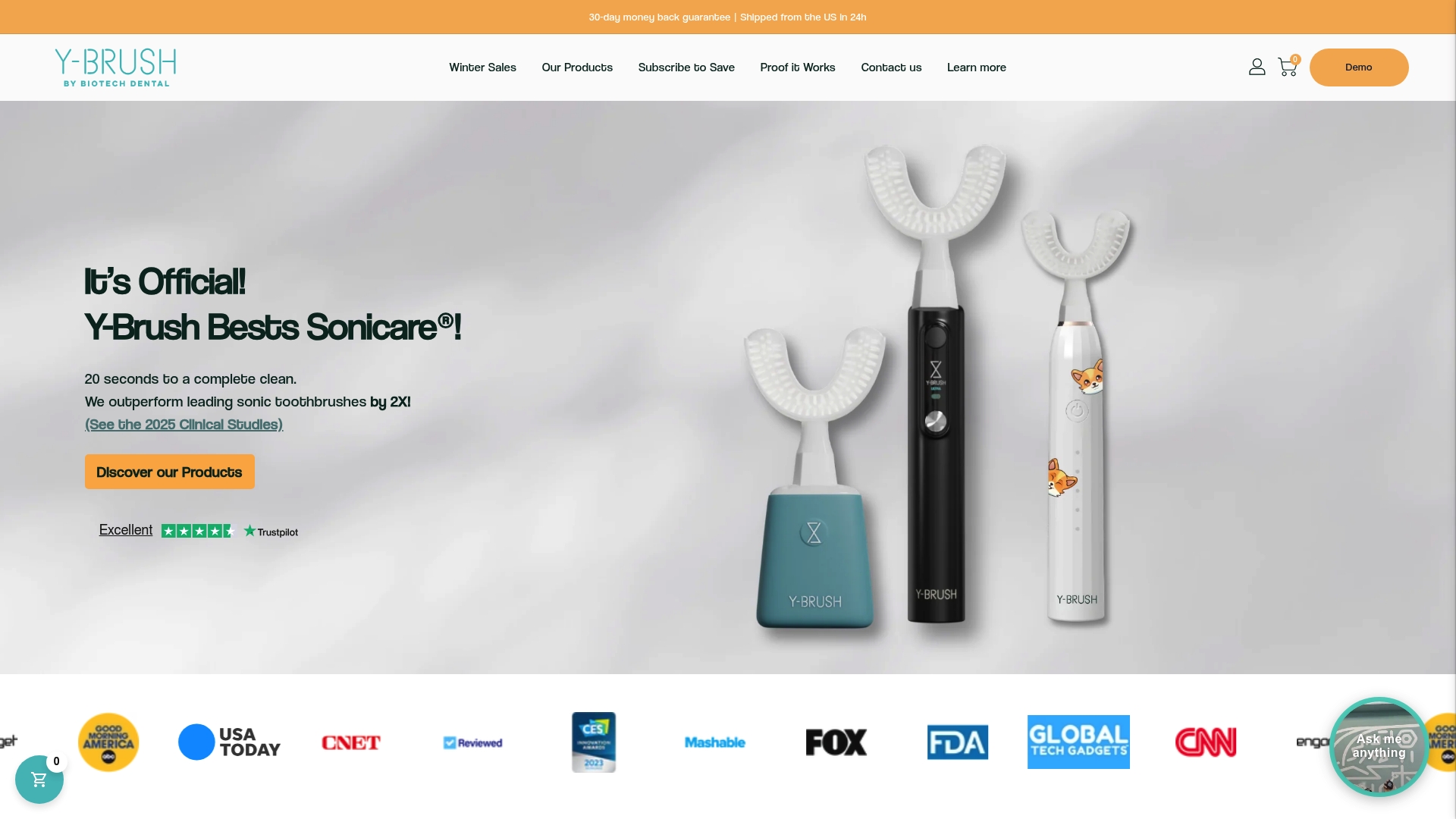 Introduce it only after your child tolerates the brief, hands-on steps above, not as the first thing they encounter.

This article is general information, not a substitute for advice from a qualified doctor. Consult a qualified healthcare professional about your own circumstances before acting on anything here.
Sources
- Behavior guidance for the pediatric dental patient | AAPD
- Toothbrushes | American Dental Association
- Teeth brushing (occupational therapy guidance) | WSH NHS
FAQ
Can a 7 year old use a normal electric toothbrush?
Yes, a seven-year-old can generally use a standard electric toothbrush, with adult supervision continuing until they can spit reliably and brush thoroughly on their own. The ADA treats manual and powered brushes as equally effective, so the choice comes down to comfort and consistency rather than age alone.
What is an ADHD toothbrush?
There is no single medical category called an “ADHD toothbrush.” The phrase usually refers to sensory-friendly electric toothbrushes with features like timers, music, or gentler vibration modes that some families use to build a more predictable routine for children with attention or sensory differences, often alongside strategies from an occupational therapist.
Do dentists recommend electric toothbrushes for kids?
Dentists generally consider both manual and electric toothbrushes acceptable for children, as the ADA states either can clean effectively when used correctly. The deciding factor is usually supervision and technique rather than which type of brush a child uses.
Is it okay for a 2 year old to use an electric toothbrush?
Most guidance advises against powered toothbrushes for children under three, recommending a manual brush with adult assistance instead. Some ADA-accepted kids’ models explicitly state they are not intended for children under that age.


