


Most pediatric dental guidance points to around age 3 as the earliest reasonable starting point for an electric toothbrush, and only with adult supervision. Younger children still need a parent doing most or all of the brushing. Clinical trials back this up, showing meaningful plaque reduction in preschoolers when an electric brush replaces a manual one, but the device is a tool, not a substitute for a grown-up’s hands and attention.
TL;DR:
- Most children should start using electric toothbrushes around age 3 with adult supervision, as early brushing requires guided parental control.
- Safety guidelines emphasize choosing small-headed, soft-bristled, and gentle mode toothbrushes, with parental guidance below age 6.
- Research shows electric brushes lead to 55.7% to 94.5% greater plaque reduction in preschool and early elementary children compared to manual brushing.
- Child-specific electric toothbrushes with small heads and calibrated sonic vibration better support developing motor skills from age 4 to 12.
- Consistent parental involvement and supervision remain critical for long-term oral health benefits, not just the device features.
Table of Contents
- What Age Should a Child Start Using an Electric Toothbrush?
- How Do You Keep Electric Brushing Safe for Kids?
- What Does the Research Actually Show?
- How Do You Pick an Electric Toothbrush for a Child?
- How Do You Introduce an Electric Toothbrush Without a Meltdown?
- Can Kids Use an Adult Electric Toothbrush?
- Which Electric Toothbrush Models Work Best for Different Ages?
- Are There Myths About Kids and Electric Toothbrushes?
- Does Starting Early Actually Improve Long-Term Dental Health?
- What Actually Moves the Needle for Parents
- A Kid’s Toothbrush Built Around This Exact Checklist
- Sources
What Age Should a Child Start Using an Electric Toothbrush?
The right approach changes a lot between a toddler’s first tooth and a teenager’s independent routine. Age alone isn’t the whole story, but it’s a useful starting frame for what to expect at each stage.
- Infants (before teeth or very early teeth): No electric brush yet. A soft washcloth or silicone finger brush wiped gently over the gums and any emerging teeth is enough.
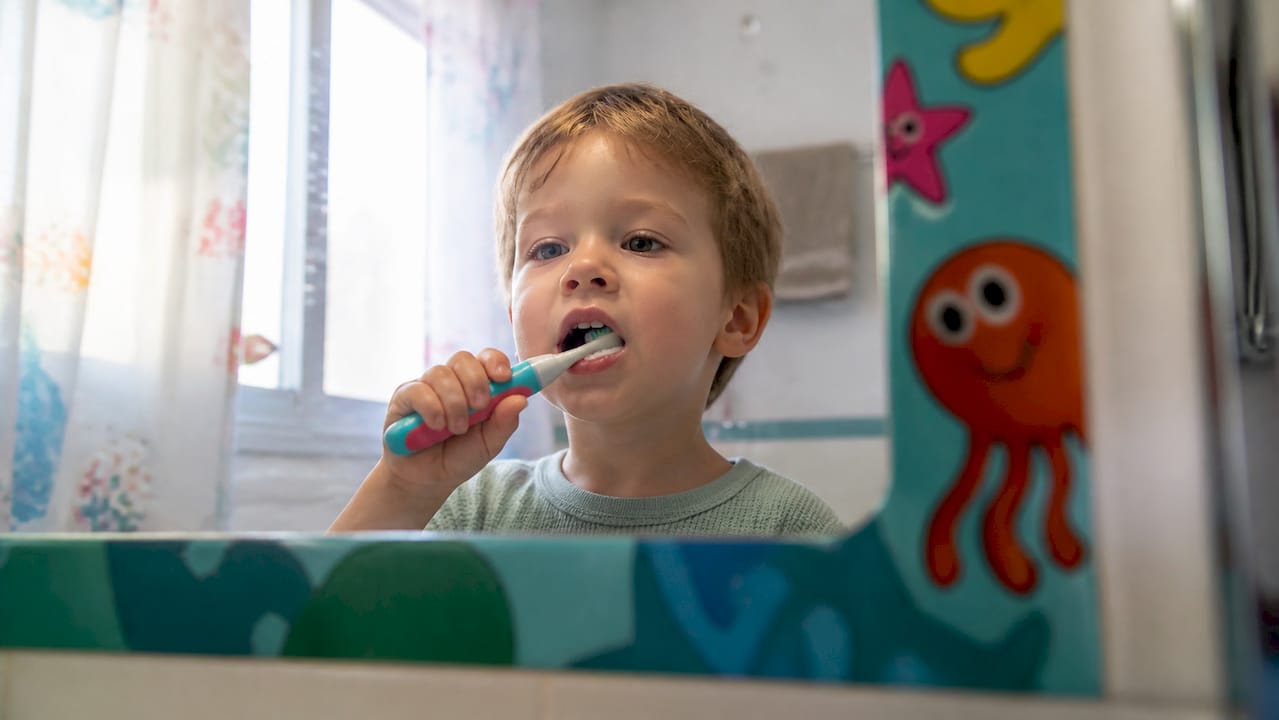
- Toddlers and preschoolers (3–6 years): This is when most pediatric dentists say an electric brush becomes appropriate, and the clinical evidence supports it too. At this stage, parents typically hold the brush and do the actual brushing, letting the child watch, touch the (turned off) handle, and get used to the sensation before taking any control.
- Early school age (6–9 years): Kids are losing baby teeth and growing in permanent ones, a messy transitional stage called mixed dentition. Independence grows, but most children still need supervision or a parent finishing the job, since motor skills for reaching molars lag behind confidence.
- Older kids (9–12 years): Dexterity usually catches up enough to let kids brush solo, though a parent should still spot-check technique, especially around the back teeth and gumline.
- Teens (12 and up): By this age, most kids can safely use adult electric brushes, assuming the handle fits their grip and hand strength comfortably. Periodic parental check-ins on habits (like actually brushing for two minutes) still help.
Every child moves through these stages differently, so watch for readiness signs like steady hand control and patience for a two-minute routine rather than sticking rigidly to a birthday.
How Do You Keep Electric Brushing Safe for Kids?
Safety comes down to matching the brush to the child, not the child to the brush. A few concrete rules make the difference between a smooth experience and a scared kid who refuses to brush at all.
- For children under about 6, a parent holds and guides the brush; older kids can hold it themselves once they’ve shown steady control.
- Confirm the brush head is sized for a child’s mouth and the bristles are soft, not the stiffer bristles found on adult heads.
- Use pediatric or gentle vibration modes only. Adult high-power settings can startle young kids or feel uncomfortable on developing gums.
- Check that no small, detachable parts (caps, spare heads) are within reach of toddlers who might put them in their mouths.
- Introduce vibration gradually. Let the child feel the buzzing on a fingertip first, then briefly against a cheek, before it goes near teeth.
- Stop and call a pediatric dentist if you notice bleeding, persistent pain, or unusual sensitivity that doesn’t ease up after a few days of use.
Pro Tip: If a child gags or flinches the first time, don’t push through it. Turn the brush off, let them hold the still handle for a day or two, then try again with just a few seconds of vibration.
What Does the Research Actually Show?
The plaque-reduction numbers behind electric brushes for kids are more convincing than most parents realize. A randomized, examiner-blind trial found that an oscillating-rotating electric toothbrush produced 55.7% greater whole-mouth plaque reduction in 3 to 6-year-olds and 94.5% greater reduction in 7 to 10-year-olds compared with a manual brush after four weeks.
A separate crossover study measuring a single brushing session found 32.3% more plaque removed in 3 to 6-year-olds and 51.9% more in 7 to 9-year-olds using an electric brush versus a manual one.
A systematic review and meta-analysis pooling multiple pediatric studies confirmed the benefit holds up across different study designs, with average relative improvements in the 13 to 17 percent range. Two caveats matter here:
- In the younger cohorts, parents did most of the brushing in these trials, so the advantage reflects the electric device’s consistent mechanical action combined with a caregiver’s control, not a child brushing unsupervised.
- The CDC’s guidance for children’s oral health still centers on twice-daily brushing and direct supervision for young kids, regardless of which brush type is in hand.
How Do You Pick an Electric Toothbrush for a Child?
Shopping for a kid’s electric brush comes down to a short list of non-negotiables, plus a few extras that help with compliance but aren’t essential.
Must-haves:
- A small brush head sized for a child’s mouth, not a scaled-down adult head
- Very soft bristles rated safe for developing gums and enamel
- A gentle or dedicated pediatric vibration mode, never adult-strength intensity
- A built-in two-minute timer, since that’s the duration CDC recommends for effective brushing
- A lightweight handle a small hand can hold without strain
Nice-to-haves: interval timers with quadrant buzzes, bright colors or characters kids pick themselves, and app-based reward systems. These help motivation but won’t make or break the brushing outcome on their own. Replaceable heads and a subscription refill plan also save you from forgetting to swap out a worn head every three months.
What to skip: adult-sized heads or power settings for anyone under 12, stiff bristles, and any model with small, easily detached parts if you have a toddler prone to putting things in their mouth. For a closer look at features worth prioritizing, this guide to choosing a child’s electric toothbrush breaks down the tradeoffs further.
How Do You Introduce an Electric Toothbrush Without a Meltdown?
Switching from manual to electric goes smoother with a slow runway rather than a surprise on day one.
- Show the brush off first. Let your child hold the powered-down handle, press buttons, and get curious about it with zero pressure to actually brush.
- Turn it on briefly away from the face, then let them feel the vibration on a finger or the back of a hand.
- Move to short supervised sessions where you do the brushing with the electric head while narrating what you’re doing.
- Add motivation once the basics feel normal: a visual timer, a sticker chart, or letting them choose the brush’s color or design.
Pro Tip: Two minutes feels endless to a 4-year-old. Split it into four 30-second songs or quadrant buzzes so the timer becomes a game instead of a countdown to boredom.
If a child resists at any step, back off to the previous one for a few days rather than forcing progress. For more on building this into a lasting routine, see this guide on helping kids brush independently.
Can Kids Use an Adult Electric Toothbrush?
Adult brushes usually aren’t a good fit for young kids. The head is too large for a small mouth, the vibration intensity is tuned for adult enamel and gum tissue, and heavier handles are harder for small hands to control.
- Most kids are ready for an adult electric brush around age 12, once hand strength and dexterity are proven, not just assumed by birthday.
- If a family only has an adult brush available earlier, use the softest head option, the lowest speed setting, and stay hands-on the entire time.
- Watch for gagging or discomfort, since mouth size and gag reflex matter more than the calendar date on a birth certificate.
Which Electric Toothbrush Models Work Best for Different Ages?
Brush selection should track a child’s stage, not just their age in years. For toddlers and preschoolers just starting out, look for the smallest available head paired with the gentlest vibration setting, since intensity matters more than features at this stage. This is the exact gap the Y-Brush KidsBrush is built to fill, with a kid-sized head and sonic vibration calibrated for ages 4 through 12 rather than adapted down from an adult product.
Early elementary kids benefit from models with visual or musical timers that break the two-minute session into manageable chunks, since sustained attention is still developing. Look for brushes marketed specifically as “kids” or “junior” lines rather than “compact” adult models, since compact usually just means a smaller adult head on the same power settings, not a gentler mechanism.
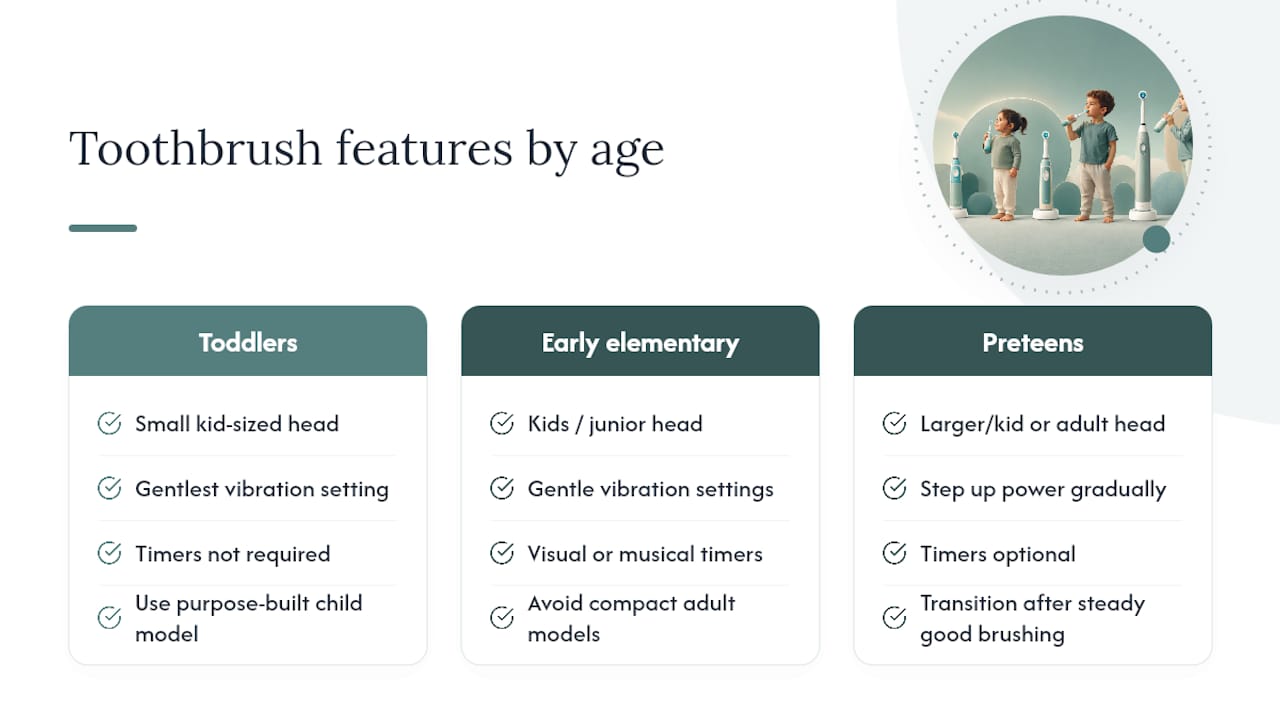
By preteen and early teen years, kids can often handle a step up in power, but the transition should still happen gradually. Many families find success moving to a mainstream sonic model, like the Essential Sonic Toothbrush, once a child has a full set of permanent molars and has demonstrated consistent, careful brushing habits for several months. The goal at every age is matching the tool to actual demonstrated skill, not rushing a child into adult gear because they’ve hit a certain birthday.
Are There Myths About Kids and Electric Toothbrushes?
A few misconceptions keep parents from making good choices here. The biggest one: that electric brushes are somehow harsh or risky for young teeth. Trial data says the opposite. Properly sized, soft-bristled electric heads on gentle settings consistently outperform manual brushing on plaque removal in preschool and early-elementary cohorts, without extra gum irritation when used correctly.
Another myth: that electric brushes make kids lazy or dependent, unable to ever brush “properly” without one. There’s no evidence for this. Brushing technique (angle, coverage, duration) is a learned skill regardless of brush type, and a timer-equipped electric brush arguably teaches duration discipline better than a manual brush, where kids often stop after 30 seconds.
Parents also sometimes assume any electric brush is fine as long as it’s “for kids,” without checking bristle softness or head size specifically. A poorly matched head, even one marketed for children, can still feel uncomfortable or ineffective if it’s sized wrong for a particular child’s mouth.
Finally, some worry an electric brush will scare a child who’s sensitive to noise or texture. In practice, gradual introduction, letting a child feel the vibration on a hand first, resolves most of this within a week or two. Outright refusal that persists despite a slow, patient approach is the exception, not the rule.
Does Starting Early Actually Improve Long-Term Dental Health?
The plaque-reduction advantage documented in trials for 3 to 10-year-olds isn’t just a short-term lab result. Plaque control during the years when baby teeth and permanent teeth overlap matters directly for cavity prevention, since that mixed-dentition period is when new molars are most vulnerable to decay before enamel fully matures.
Consistent, well-supervised brushing habits established early tend to carry forward. Kids who get comfortable with a two-minute routine and a timer at age 4 or 5 are more likely to keep that habit at age 10 without a fight, according to consumer and pediatric guidance that consistently flags supervision and habit consistency as the real long-term driver, more so than any single device feature.
That said, the research is clear that the device alone isn’t what produces these outcomes. In the trials showing the biggest plaque reductions for younger kids, parents were doing the brushing. The electric brush’s consistent mechanical action combined with hands-on parental technique explains much of the benefit. That means the long-term payoff of starting early comes from pairing the right tool with real supervision, not from handing a toddler a buzzing handle and walking away.
What Actually Moves the Needle for Parents
The clinical numbers are genuinely persuasive, but the part most articles skip is that the device is doing less work than the marketing suggests, and the parent is doing more. Every trial showing dramatic plaque reduction in preschoolers had an adult’s hands on the brush. That’s not a knock on electric brushes. It’s a reason to pick one that makes supervised brushing easier rather than one loaded with features aimed at eventual independence a 4-year-old doesn’t have yet.
I’d also push back gently on the idea that timers and reward apps are the main lever for compliance. They help, but the bigger factor is whether the brush itself is comfortable enough that a child doesn’t fight the sensation in the first place. Get the size and intensity right first. Everything else is a bonus.
— Joris
A Kid’s Toothbrush Built Around This Exact Checklist
Everything in the safety and buying sections above points to the same short list: small head, soft bristles, gentle intensity, a built-in timer, and a size that fits a child’s hand and mouth without adult-strength power behind it.
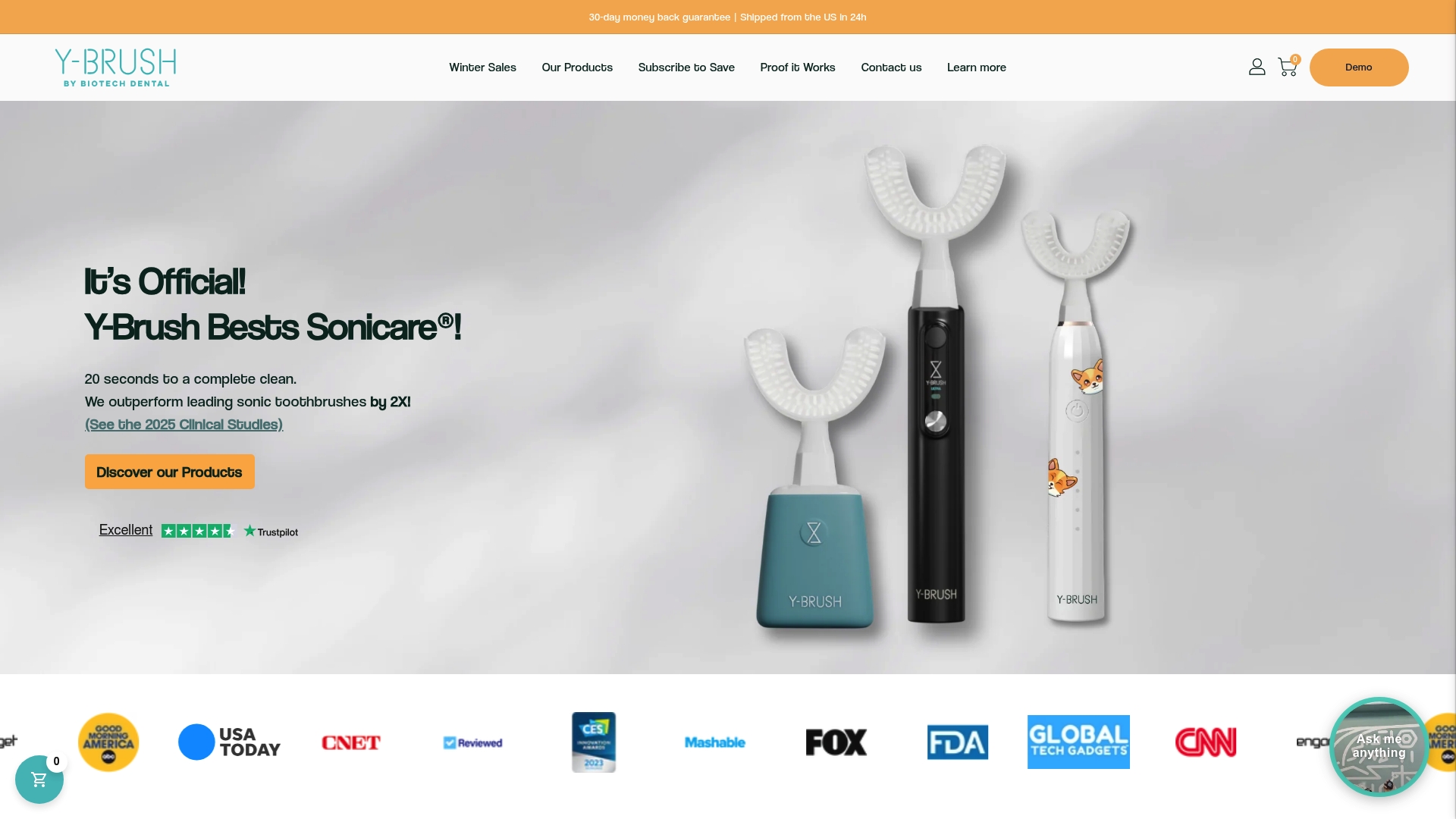
The Y-Brush KidsBrush was designed around that exact list rather than shrinking an adult product down. It has a kid-sized head, sonic vibration calibrated for ages 4 through 12, and a lightweight handle small hands can actually control. Replacement heads and membership refill plans mean you’re not stuck remembering to buy a new head every few months, and a fresh head is one of the simplest ways to keep supervised brushing effective as your child’s mouth grows. If your child is ready to start based on the age and readiness signs above, the KidsBrush product page is the place to check sizing and get started.
Sources
- Pediatric oral-health guidance and reviews — PMC
- Randomised clinical study of plaque removal efficacy of an electric toothbrush in primary and mixed dentition — International Journal of Paediatric Dentistry (2023)
- Plaque removal efficacy of an electric toothbrush in children (crossover study) — PubMed
- Oral health tips for children — CDC


