


Send your electric toothbrush heads to a brand-agnostic mail-in program like a TerraCycle oral-care brigade, since curbside bins won’t take them. Handles with lithium-ion batteries need a separate trip to e-waste, through a retailer drop-off or a Call2Recycle bin. Neither path costs much beyond a little effort, and both keep mixed plastics and batteries out of the landfill.
TL;DR:
- Most mail-in recycling programs accept toothbrush heads from any brand, but handles with batteries must go through e-waste routes, not regular recycling.
- Preparing toothbrushes involves separating the head from the handle, rinsing and drying them, and safely handling batteries before shipping or disposal.
- Toothbrush heads are recyclable through dedicated brigades that mechanically separate nylon bristles from plastic bases, with acceptance lists that may change over time.
- Lithium-ion battery handles should be taken to retailer or municipal e-waste centers, with safety precautions like fully discharging and taping terminals.
- Curbside recycling facilities cannot process toothbrush heads due to material bonding, so always use specialized programs or e-waste channels to avoid contamination.
Table of Contents
- How to Recycle Toothbrush Heads: The Fastest Options
- Prepping Your Toothbrush for Recycling: A Quick Checklist
- How Mail-in Toothbrush Recycling Programs Actually Work
- Recycling Toothbrush Handles: Why They’re E-Waste, Not Trash
- Finding a Recycling Program Near You
- Why Curbside Bins Won’t Take Toothbrush Heads
- A Publisher’s Take: Design Your Way Out of the Problem
- Where to Go Next for Program Details
- Sources
How to Recycle Toothbrush Heads: The Fastest Options
Not every route fits every situation, so it helps to rank them by how quickly you can actually act.
- Mail-in brigades (TerraCycle-style): These brand-agnostic programs accept used toothbrush heads from any manufacturer. Sign up on the program page, collect your heads in a bag or box, and print a free shipping label when one’s available.
- Manufacturer or retailer takeback programs: Some oral-care brands run their own mail-back systems, often through a partnership with a recycler. Check enrollment caps first. Many pause registration once they hit capacity for the year.
- Retailer e-waste counters and municipal household hazardous waste (HHW) centers: These handle what mail-in brigades won’t, mainly battery-containing handles and anything with electronic components.
- Donation or reuse: Only for handles or full units that still work and can be sanitized. A toothbrush head with worn bristles isn’t a candidate. Neither is anything you wouldn’t hand to a family member.
Start with the mail-in brigade. It’s the option built specifically for toothbrush heads, and it’s free.
Prepping Your Toothbrush for Recycling: A Quick Checklist
A little prep keeps your shipment from getting rejected and keeps you safe from a battery hazard.
- Separate the head from the handle. Most electric toothbrush heads snap off by hand. If yours doesn’t budge, don’t force it. A stuck head usually means a design that wasn’t meant for tool-free disassembly.
- Rinse and air-dry each head. Wet bristles invite mold in a shipping box, and a damp package can get flagged during sorting.
- Bag the heads separately from anything else you’re recycling, so loose bristles don’t tangle with other materials.
- Handle the battery with care. If your handle has a removable or user-accessible battery, run it down fully and tape the terminals before setting it aside for e-waste. If you can’t safely access the battery, don’t try to force it. Hand the intact handle to an e-waste processor instead.
- Pack for mail-in shipping using a small padded envelope or box. Include only the accepted items, and skip anything with a battery or metal contact.
Pro Tip: Keep a small jar by your bathroom sink for spent brush heads. Once it’s full, you’ll have enough for a proper mail-in batch instead of shipping one head at a time.
If you want a head start on keeping bristles contained before shipping, a quick read on toothbrush hygiene practices covers why drying and containment matter beyond just recycling.
How Mail-in Toothbrush Recycling Programs Actually Work
Signing up is usually a two-minute process, but knowing what happens next helps you avoid a wasted shipment.
- Enrollment: You register on the program’s site, and many offer a free prepaid shipping label once you hit a minimum quantity or join a public collection point.
- What’s accepted: Toothbrush heads, floss containers, and other small oral-care plastics typically make the list. Battery-containing handles almost never do; TerraCycle’s oral-care brigade pages spell out exactly what qualifies before you mail anything.
- What happens at the recycler: Facilities sterilize incoming material, then mechanically separate the nylon bristles from the plastic base. The recovered plastic often gets pelletized and remolded into new products, from park benches to storage bins.
- Limitations to expect: Brigades sometimes pause enrollment or hit shipping caps mid-year. If a program shows as closed, look for a public drop-off bin instead. Those tend to stay open even when mail-in slots fill up.
Confirm accepted items on the program’s own page before you mail anything. Acceptance lists shift, and a rejected shipment just means more shipping waste.
Recycling Toothbrush Handles: Why They’re E-Waste, Not Trash
A toothbrush handle isn’t like the head. It runs on a rechargeable lithium-ion battery, which makes it electronic waste under U.S. handling guidelines, not household recycling.
- Retailer drop-off: Best Buy, Home Depot, and Staples all commonly host e-waste or battery collection points tied to Call2Recycle, and most locations take small electronics like toothbrush handles at no charge.
- Safety steps before drop-off: Run the battery down as far as possible, tape over any exposed metal terminals, and store the handle somewhere it won’t get crushed on the way to the store.
- When to skip DIY removal: If the battery isn’t user-accessible, leave it alone. Prying open a sealed handle risks a punctured cell, and that’s a fire hazard, not a savings.
When in doubt, the handle goes to e-waste intact. That’s always the safer call.
Finding a Recycling Program Near You
The fastest way to locate an active program is to start with TerraCycle’s brigade directory, then check manufacturer or retailer pages for mail-back labels tied to specific brands.
- Search brigade pages first. They list current enrollment status, so you’ll know immediately if a program is accepting new participants.
- Watch for waitlists. A paused brigade usually redirects you to a public drop-off point instead. Those often stay open year-round.
- Use retailer or municipal locators for e-waste. Most big-box retailers and city solid-waste departments run searchable tools where you plug in a zip code and get the nearest drop-off site.
A short search beats guessing. Confirm the program is live before you box anything up.
Why Curbside Bins Won’t Take Toothbrush Heads
Municipal recycling facilities sort by material, and a toothbrush head defeats that system by design. It’s a fused assembly, a hard plastic base bonded to nylon bristles, and most materials recovery facilities have no way to separate the two on a sorting line built for single-material items like bottles and cardboard.
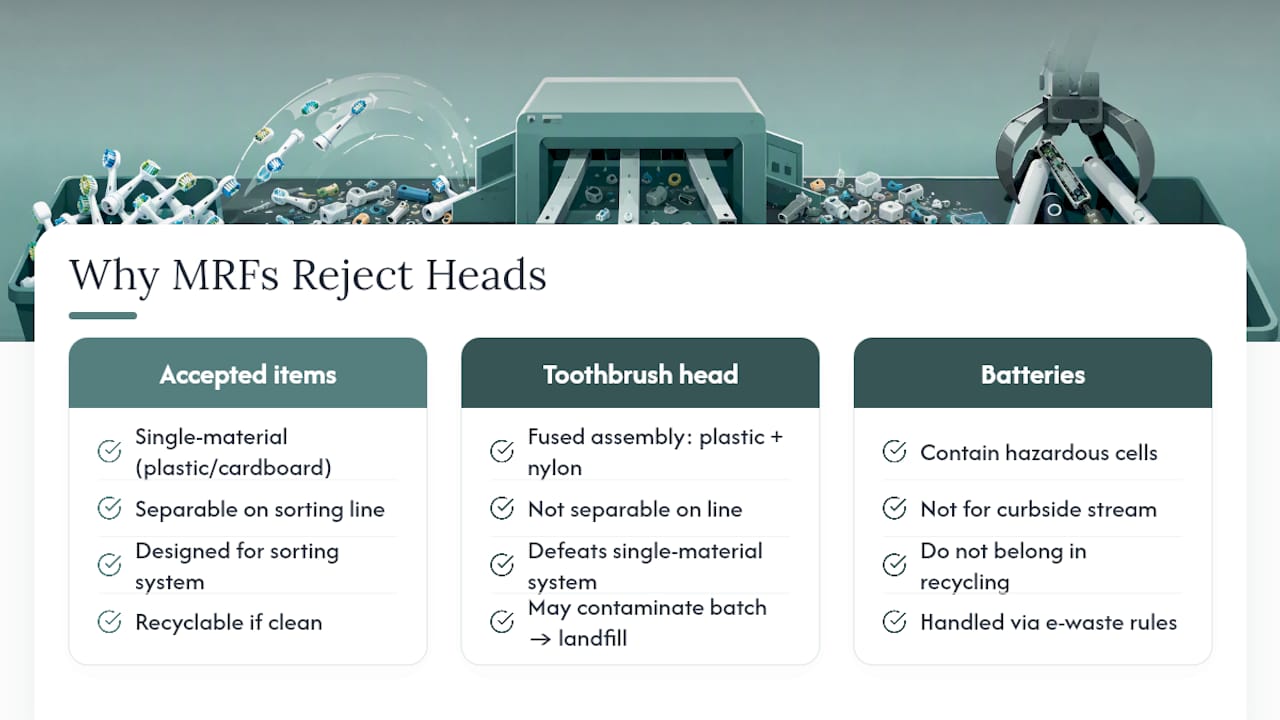
Toss one in your curbside bin anyway, and you risk contaminating an entire batch of otherwise recyclable material, sending more of it to landfill than if you’d left the toothbrush head out entirely. Batteries compound the problem. They don’t belong in any curbside stream, which is exactly why e-waste rules exist as a separate track from standard household recycling.
A Publisher’s Take: Design Your Way Out of the Problem
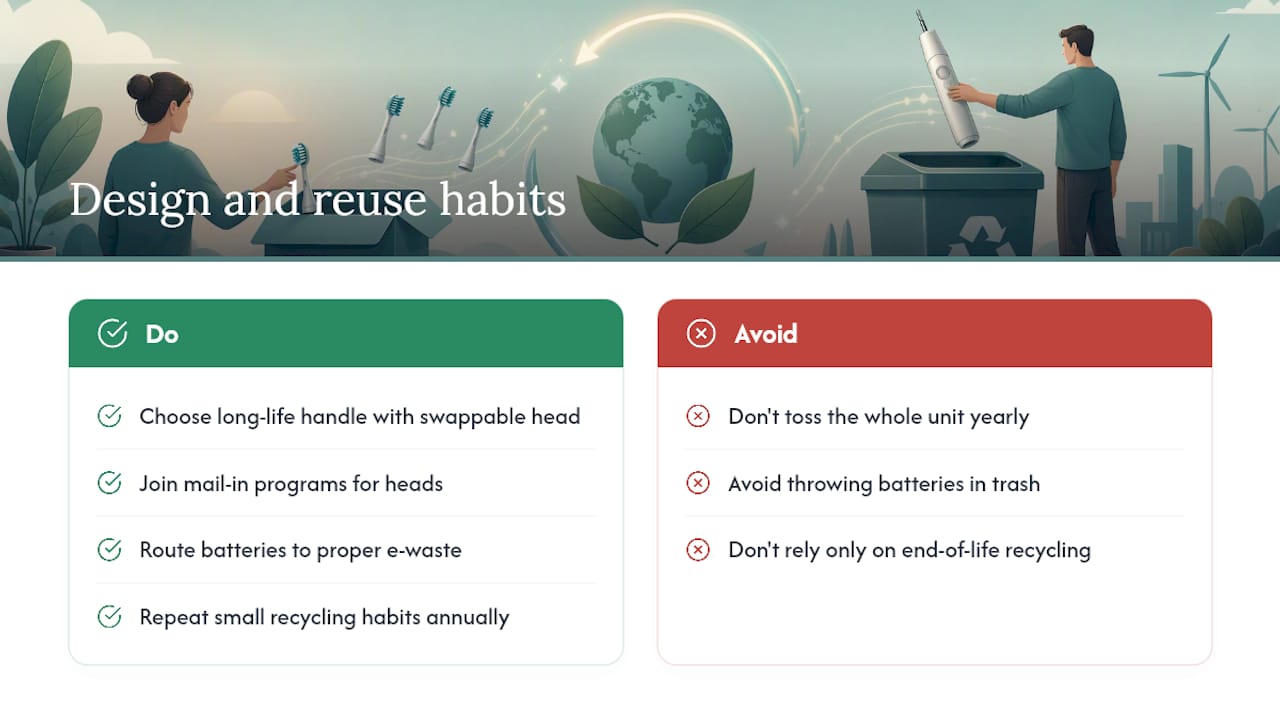
Recycling programs matter, but they’re a workaround for products designed to be replaced piece by piece. The more durable fix is buying into a system built around a long-life handle and a swappable head, so you’re mailing in small plastic parts instead of tossing a whole unit every year or two. That’s the thinking behind designing for less plastic waste from the start.
Participate in a mail-in program when you can, and always route batteries to proper e-waste instead of the trash. Small habits, repeated for years, add up faster than any single recycling trip.
— Joris
Where to Go Next for Program Details
For accepted-items lists and shipping instructions, start with Earth911’s recycling guidance and TerraCycle’s brigade pages. Always confirm a program’s current status before mailing anything.


