


Yes, you can bring an electric toothbrush on a plane, and the TSA allows it in both carry-on and checked bags. Devices with a built-in lithium battery should still travel in your carry-on, since that’s the one clear preference the TSA states outright for lithium-powered gear. Spare lithium batteries follow a stricter rule: carry-on only, no exceptions. A compact model like Y-Brush makes that carry-on decision easy since it takes up almost no space in a dopp kit.
TL;DR:
- Lithium-ion powered electric toothbrushes should always be packed in carry-on luggage, and batteries must be removed or taped off before checking the bag.
- Most rechargeable models contain lithium batteries, which pose a fire risk and are best kept in-flight by TSA and FAA guidelines.
- Removing the brush head and taping the power button helps prevent accidental activation and battery drain during travel.
- TSA officers have final discretion, so keep the device accessible and be ready to demonstrate it powers on if asked.
- Using travel-designed brushes like the Y-Brush Essential simplifies packing and reduces hassle, but lithium battery rules remain universal.
Table of Contents
- What Do the TSA and FAA Say About Electric Toothbrush TSA Rules?
- Does Your Toothbrush Have a Lithium Battery?
- How Do You Pack an Electric Toothbrush for a Flight?
- What Happens at the Checkpoint?
- Your Copy-Paste Packing Checklist
- Why Travel-Ready Design Matters More Than People Think
- Pack the Y-Brush Essential and Skip the Battery Guesswork
- Where This Guidance Comes From
- Sources
What Do the TSA and FAA Say About Electric Toothbrush TSA Rules?
The federal guidance here is short and specific, which is a relief if you’ve ever tried to parse airline baggage policy. The TSA’s own page on electronic toothbrushes confirms the device is allowed in both carry-on and checked luggage. The catch is the power source, not the toothbrush itself.
- Electric toothbrushes are permitted in carry-on and checked bags under standard TSA screening.
- Devices containing lithium metal or lithium-ion batteries should be carried in carry-on baggage whenever possible.
- The FAA’s PackSafe guidance explains why: lithium batteries can catch fire, and a fire in the cabin can be spotted and handled by the crew far faster than one buried in checked cargo.
- Even with a device that technically qualifies for checked baggage, the final call at the checkpoint belongs to the TSA officer working that lane, not the printed rule.
That last point trips people up. The rules give you a strong default, but an officer can ask for a device to be moved, opened, or set aside if something about it looks unusual on the X-ray.
Does Your Toothbrush Have a Lithium Battery?
Most travel confusion traces back to one question: what’s actually powering the brush? Older or budget electric toothbrushes sometimes run on standard alkaline AA or AAA batteries, which carry no special air travel restriction. The rechargeable models most people own today, including sonic and Y-shaped brush styles, run on lithium-ion cells built into the handle.
- Alkaline battery models: no special carry-on requirement; pack them wherever convenient.
- Installed lithium battery models: TSA recommends carry-on, though checked baggage is technically allowed with precautions.
- Spare or uninstalled lithium batteries: carry-on only, never in a checked bag, under any circumstance.
- Check the barrel of the handle, the charging base, or the manual. Most manufacturers print “lithium-ion” or a battery capacity in milliamp-hours somewhere on the device or its box.
If you genuinely can’t tell what’s inside your toothbrush, treat it as lithium and pack it in your carry-on. That single habit solves nearly every edge case without requiring a battery chemistry lesson at 5 a.m. before a flight.
How Do You Pack an Electric Toothbrush for a Flight?
Packing takes about two minutes once you know the sequence. Follow these steps whether you’re headed through a domestic TSA checkpoint or connecting internationally.
- Decide carry-on or checked based on the battery. Lithium and unsure cases go in your carry-on; alkaline models can go either place.
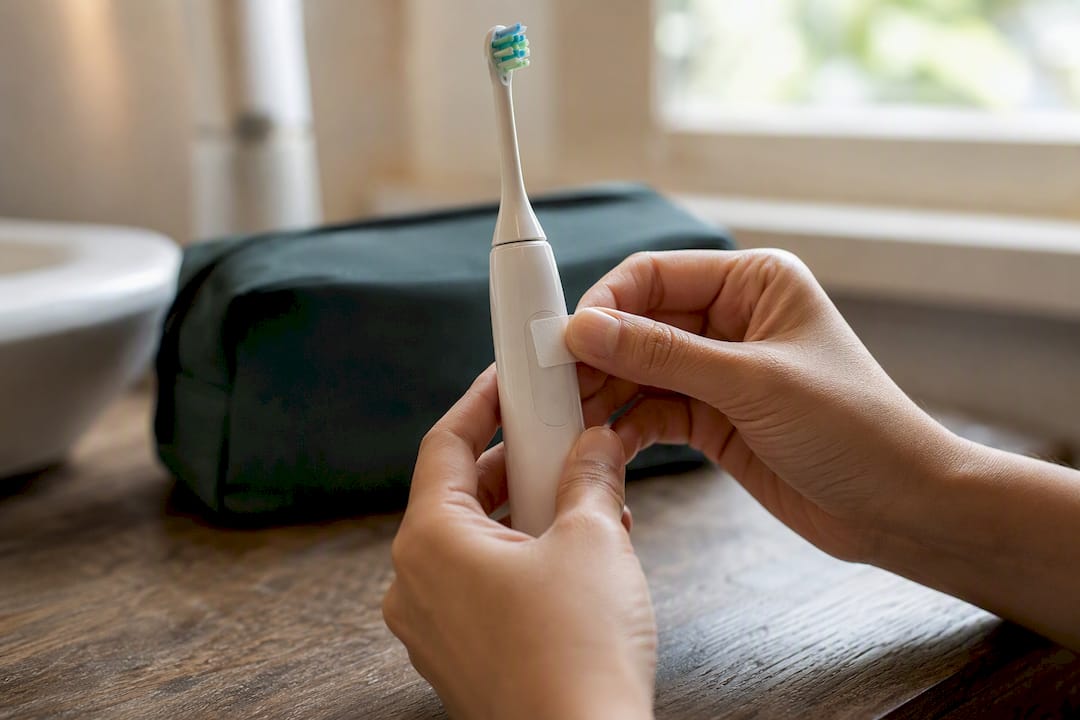
- If carrying on, slide the brush into a hard protective case, and tape over the power button or lock it if the model has a travel lock. This stops it from switching on and draining the battery, or worse, buzzing loudly mid-flight in your bag.
- Remove the brush head if your case doesn’t fit it attached. It’s a small step that prevents cracked bristles or a case that won’t zip.
- If checking it anyway, power the device fully off, remove batteries if the design allows, and pack those separately in your carry-on.
- Pack chargers and charging bases in either bag. They don’t contain batteries themselves and carry no special restriction.
Pro Tip: Keep a small piece of gaffer tape or a rubber band in your dopp kit specifically for the power button. It weighs nothing and prevents the single most common travel mishap with electric toothbrushes: a brush that turns itself on inside a packed bag.
What Happens at the Checkpoint?
Screening an electric toothbrush is usually uneventful. The device shows up clearly on X-ray, and officers see thousands of them a day. Still, a few things help the process move faster.
- Keep the toothbrush somewhere easy to reach in your bag rather than buried at the bottom, in case an officer wants a closer look.
- Have the manual or a photo of the battery label ready on your phone if you’re unsure of the battery type yourself.
- If asked to remove it or demonstrate that it powers on, do so calmly. This is standard secondary screening for battery-powered items, not a sign of a problem.
- Remember that officer discretion is final. A brush that would normally pass without a second glance can still get flagged for a closer inspection, and that’s within the rules.
If a battery issue ever does occur mid-flight (unusual heat, smoke, or swelling), notify a flight attendant immediately rather than trying to handle it yourself. Crews train specifically for this scenario, which is the exact reason the FAA prefers lithium devices in the cabin.
Your Copy-Paste Packing Checklist
Save this list in your phone’s notes app before your next trip.
- Confirm battery type: lithium goes in carry-on, alkaline is flexible.
- Tape or lock the power button before packing.
- Use a hard protective case to prevent pressure activation.
- Pack any spare lithium batteries in your carry-on, never checked.
- Keep the manual or a battery-label photo accessible at security.
One line to remember: TSA sets the baseline rule, but the officer at the checkpoint has the final say, and the FAA’s fire-safety reasoning is why carry-on is always the safer bet.
Why Travel-Ready Design Matters More Than People Think
Most packing advice treats every electric toothbrush like it’s equally hassle-prone, and that’s not quite fair. A bulky brush with a fragile UV case and a battery that never seems to hold a charge past day two makes every one of these TSA steps feel like a chore. A toothbrush built around a fast, simple routine removes half the friction before you even get to the airport.

Y-Brush’s 20-second brushing cycle addresses a real problem: most people brush for under a minute despite knowing the two-minute standard, and travel schedules make that gap worse, not better. A brush that finishes fast and packs small is one less thing to negotiate with a cramped carry-on or a rushed morning in a hotel room. Longer battery life between charges also means one less charging cable competing for outlet space at a gate or hostel bunk.
None of that changes the federal rules. Whatever brush you own, the lithium battery inside it still determines where it belongs in your bag.
— Joris
Pack the Y-Brush Essential and Skip the Battery Guesswork
Choosing a toothbrush built for travel starts with the Y-Brush Essential Sonic Toothbrush, a compact model designed to slide into a carry-on without adding bulk or a second thing to charge.
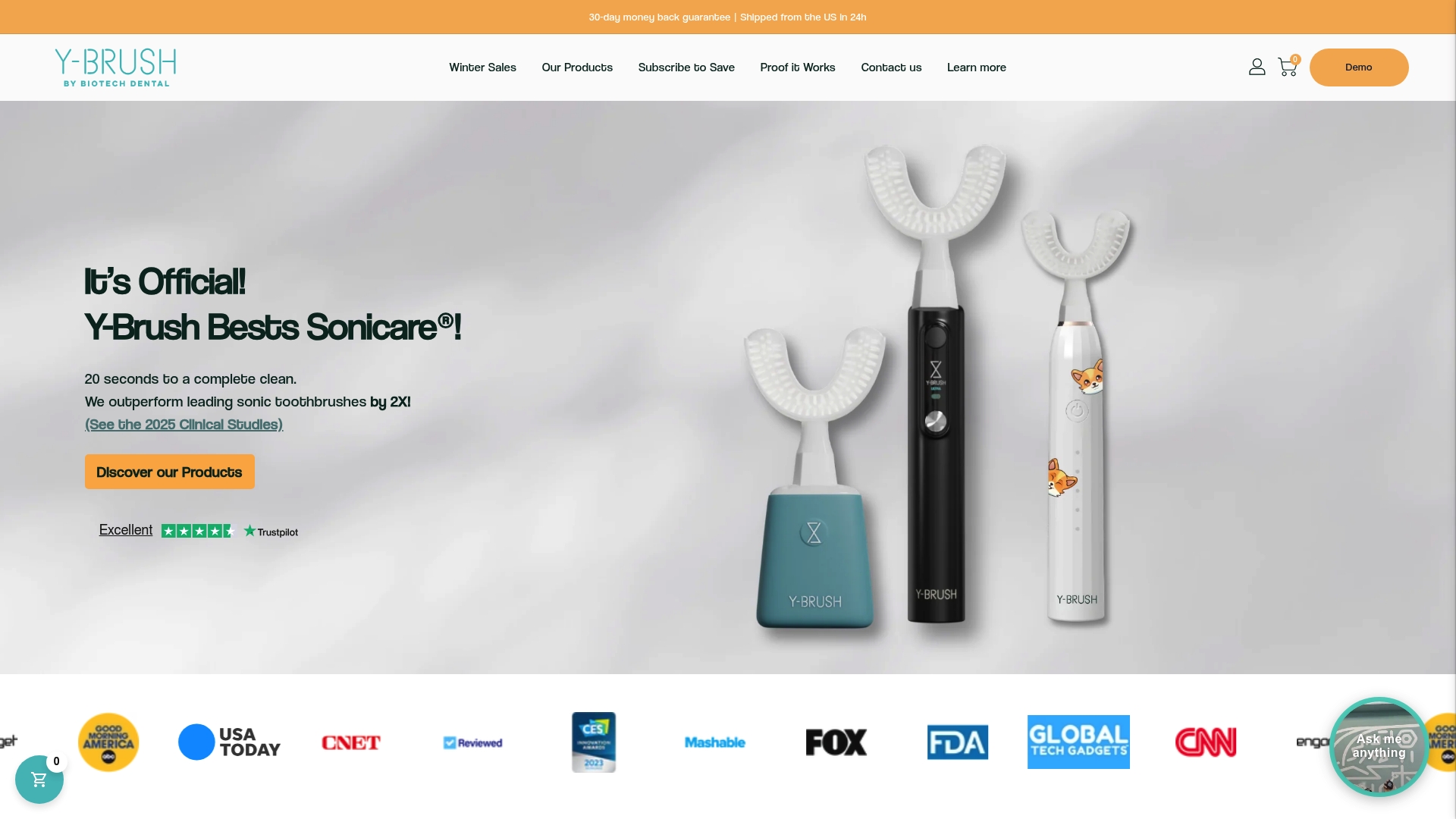
Its shape and battery life were built with exactly this kind of trip in mind, and its Y-shaped head clears a full mouth in 20 seconds, which matters when you’re brushing in an airport bathroom between connections. Families flying with kids can look at the Y-Brush KidsBrush, sized for ages four to twelve and just as easy to pack. Frequent flyers who go through brush heads fast can set up a membership plan so replacement heads show up automatically instead of becoming a last-minute drugstore run before a trip.
Whichever model you pack, the TSA rule stays the same: check your battery type, tape the power button, and keep it in your carry-on when in doubt. Order the Y-Brush Essential today and have it ready before your next flight.
Where This Guidance Comes From
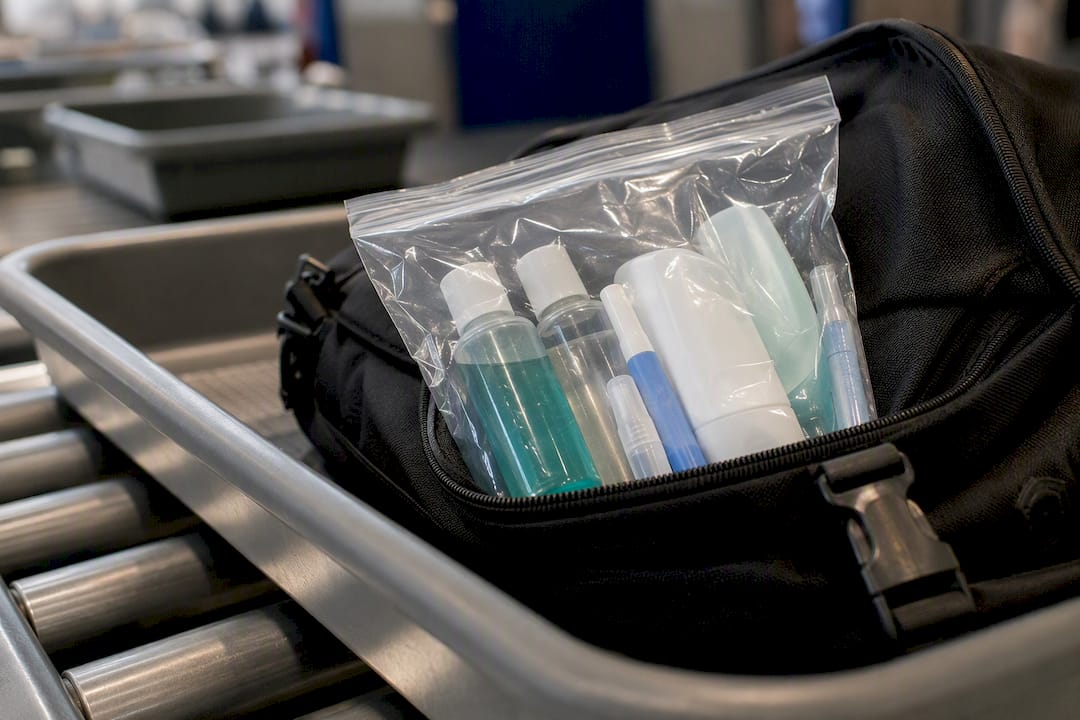
This article draws directly on the TSA’s electronic toothbrush page, FAA PackSafe battery guidance, and reporting from People and USA Today confirming these are existing rules, not new restrictions.
Sources
- Electronic Toothbrush | Transportation Security Administration
- Portable electronic devices with batteries | FAA PackSafe
- TSA explains how to pack electric toothbrushes and other items that buzz | People
- If you have this type of toothbrush, TSA recommends you don’t check it | USA TODAY
Recommended
- Navigate The World With Confidence - Electric Toothbrushes For Travele – Y-Brush USA
- Step-by-Step Oral-Care Routine for Travelers – Y-Brush USA
- What Benefits Do Portable Sonic Toothbrushes Offer For Frequent Travel – Y-Brush USA
- Electric Toothbrush for Children / What you Should Know ? – Y-Brush USA


