


TL;DR:
- A complete travel oral-care routine can be done in under two minutes by anchoring simple steps to daily cues. Using a Y-Brush, floss, and rinse regularly helps maintain oral hygiene even when exhausted or in unfamiliar settings. Preparing a dedicated kit and attaching routines to known triggers ensures consistency and effectiveness on the go.
Your complete travel oral-care routine fits in under two minutes: a 20-second Y-Brush clean (10 seconds on the upper arch, 10 seconds on the lower), one quick floss or floss pick pass, and a water swish or travel mouthwash rinse. Anchor those three steps to existing daily cues, and you’ll maintain a consistent clean regardless of time zone, hotel room, or campsite. When you’re exhausted, the 20-second clean alone is far better than skipping entirely.
Your core kit:
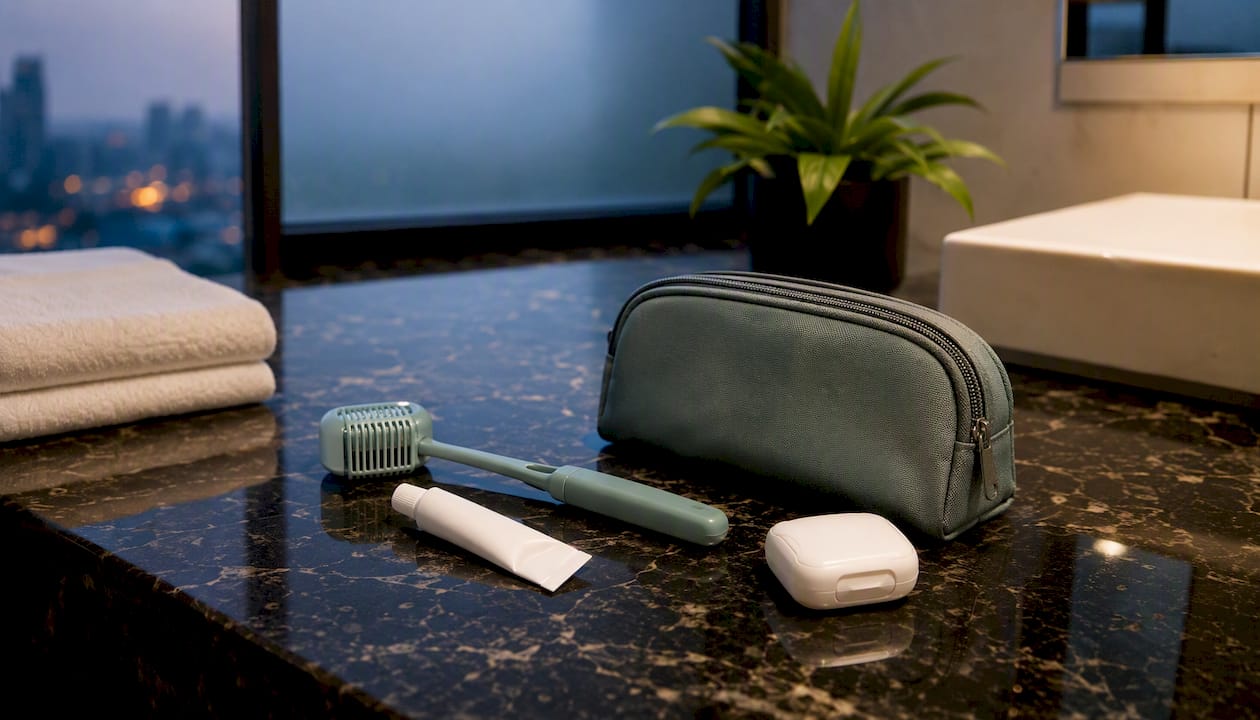
- Y-Brush (Essential, Ultra, or KidsBrush size) with a ventilated cover
- Travel-size fluoride toothpaste (3.4 oz or less)
- Floss or floss picks
- Travel mouthwash or dissolvable mouthwash tablets
- Spare brush head (or active subscription)
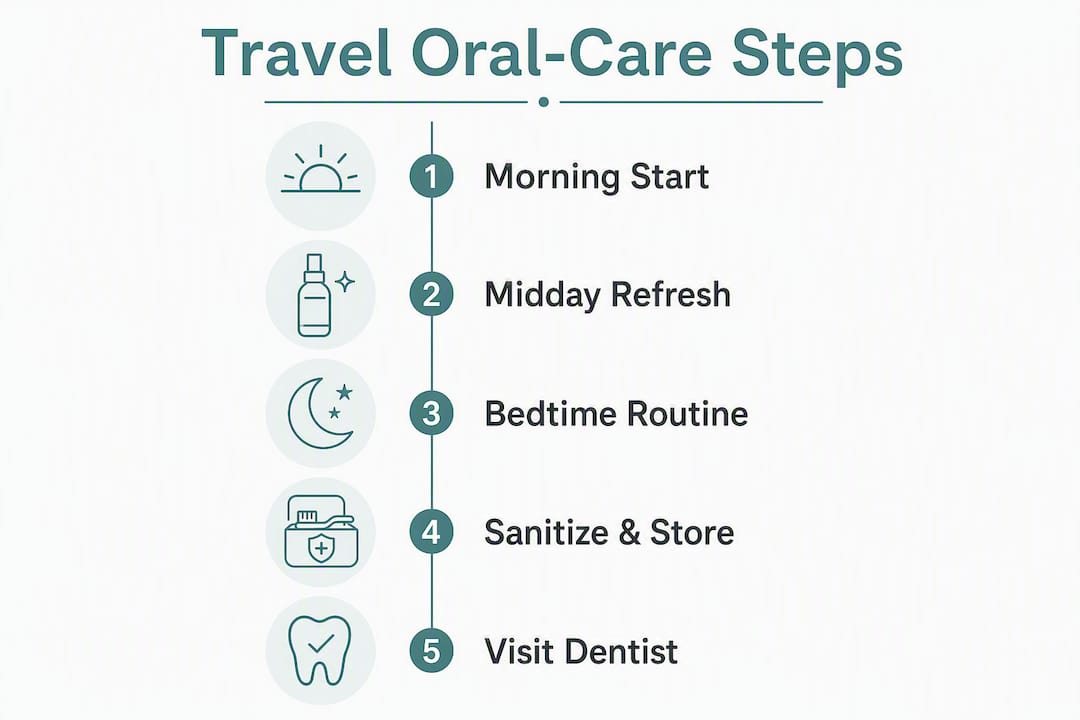
Timing anchors: first coffee (morning), after your main meal (midday refresh), closing the curtains or starting a shower (bedtime). Even on your most exhausted night, the 20-second Y-Brush session takes less time than unlocking your phone.
Table of Contents
- What goes in a compact travel oral-care kit?
- What does the step-by-step routine for travelers look like?
- How do parents adapt this routine for kids on the road?
- How do you store, charge, and sanitize your toothbrush while traveling?
- When should you see a dentist while traveling?
- Key Takeaways
- Why this routine works — and what most travelers get wrong
- Y-Brush is built for exactly this kind of travel
- Useful sources
What goes in a compact travel oral-care kit?
Dentists consistently recommend keeping a dedicated, pre-packed oral-care kit ready to grab before any trip. The logic is simple: a kit that lives in your travel bag removes the decision fatigue of assembling supplies at 6 AM. Here’s exactly what belongs in it.
Core items:
- Y-Brush (adult Essential or Ultra, or KidsBrush for children ages 4–12) with its ventilated carrying cover
- Travel-size fluoride toothpaste, 3.4 oz or less to comply with TSA’s 3-1-1 liquids rule for carry-on bags
- Floss or floss picks (picks take up almost no space and work in airplane lavatories)
- Travel mouthwash (single-use packets) or dissolvable mouthwash tablets for low-water situations
- Spare brush head packed in carry-on, not checked luggage, since delayed bags are a real risk
- Small mirror and a zippered pouch to keep everything together
The ventilated cover deserves a specific note. Sealing a wet brush head in an airtight case accelerates bacterial growth. A cover with ventilation slots lets moisture escape between uses, which is the single most important storage habit on the road.
TSA and packing notes: Toothpaste goes in your quart-size liquids bag. Battery-powered and rechargeable electric toothbrushes are permitted in carry-on bags; the TSA recommends carry-on for lithium-ion devices specifically. Pack your charger or spare batteries in carry-on as well. If you’re traveling internationally, add a plug adapter for the charger.
Quick kit variants by trip type:
- Day hike or short domestic flight: floss picks, mini toothpaste, Y-Brush with a charged battery
- Long-haul flight: add mouthwash tablets and a second floss pick for the mid-flight refresh
- Family trip: one kit per child, plus orthodontic extras if needed (see the kids section below)
- Camping or low-water conditions: swap liquid mouthwash for tablets, add xylitol chewing gum as a between-brush option, and use a waterless rinse
For a ready-made travel kit option, the SmileFam Premium Travel Kit covers the core items in a single pouch.
Pro Tip: Pack your oral-care kit in the outermost pocket of your carry-on or day bag. When it’s the first thing you reach, you’re far more likely to use it.
What does the step-by-step routine for travelers look like?
The core travel challenge isn’t a lack of time; it’s the loss of routine structure. Attach each brushing session to a cue that already exists in your travel day, and the habit follows automatically.
Morning full routine (approximately 3 minutes)
- Rinse or drink water to hydrate and loosen overnight debris.
- Apply a pea-sized amount of fluoride toothpaste to the Y-Brush head.
- Y-Brush 20-second clean: place the Y-shaped head over the upper arch for 10 seconds, then switch to the lower arch for 10 seconds. Sonic vibrations generate hydrodynamic forces that disrupt plaque beyond direct bristle contact, which is why a short, high-frequency session can deliver a clinically meaningful clean.
- Floss or use a floss pick to clear interproximal debris.
- Rinse with travel mouthwash or water.
- Optional tongue sweep with the back of the brush or a travel tongue scraper.
Total: roughly 2.5–3 minutes.
Quick midday refresh (approximately 1 minute)
- Use a floss pick to clear food from between teeth.
- Run a 20-second Y-Brush session if you have access to water and a mirror. If brushing isn’t possible, chew a piece of xylitol gum for 5 minutes as a temporary biofilm disruptor.
- Swish with water or dissolve a mouthwash tablet for a 30-second rinse.
This sequence works in an airplane lavatory, a roadside rest-stop bathroom, or a campsite with a water bottle.
Bedtime routine (approximately 2–3 minutes)
Attach this to your shower or the moment you close the curtains. Floss first, then brush — flossing before the Y-Brush session lets the fluoride from toothpaste reach the spaces between teeth more effectively. If you’re genuinely too tired for the full sequence, the 20-second Y-Brush clean is the one step you should not skip.
When is the 20-second option enough? For a quick refresh between meals or a late-night clean when exhaustion is real, the Y-Brush’s simultaneous full-arch contact means you’re covering every surface in one placement per arch. For the morning session when plaque has built up overnight, adding floss and a rinse takes the clean from good to thorough.
Pro Tip: For consistent brushing habits on the road, set a single phone reminder labeled with your anchor cue (“coffee time = brush time”) rather than a generic alarm. The label reinforces the habit loop.
How do parents adapt this routine for kids on the road?
Keeping children’s oral care consistent while traveling comes down to two things: a dedicated kit per child and a ritual that feels familiar rather than disruptive.
What to pack for each child:
- Y-Brush KidsBrush (designed for ages 4–12) with its own ventilated cover
- Child-friendly toothpaste flavor they already use at home
- Floss picks sized for smaller mouths
- A small sticker chart for travel nights (one sticker per completed routine)
- For children with braces: orthodontic wax, floss threaders, and interdental brushes
Letting children choose their kit colors or toothpaste flavor meaningfully increases compliance. When a child feels ownership over the kit, the routine shifts from a parental demand to a personal ritual.
A simple kid routine (approximately 2 minutes):
- Wet the KidsBrush head and apply a child-sized toothpaste amount.
- Y-Brush 20-second clean, upper then lower arch.
- Floss pick pass (parent-assisted for children under 8).
- Water rinse.
Anchor this to post-breakfast or pre-storytime, whichever already exists in your travel day. Consistency of timing matters more than perfection of technique when you’re away from home. For more age-specific guidance, the Y-Brush children’s oral health guide covers routines from toddler through teen.
Pro Tip: Sing a 20-second song or count aloud during the KidsBrush session. It signals when the clean is done and turns the routine into a small shared moment rather than a chore.
How do you store, charge, and sanitize your toothbrush while traveling?
Proper storage keeps your brush hygienic; proper charging keeps it functional. Both are straightforward with a few consistent habits.
Storage and drying:
- Always let the brush head air-dry for at least a few minutes before closing the ventilated cover. A wet head sealed even in a ventilated case dries more slowly and accumulates more microbial growth than one given time to air out first.
- Never pack the brush head in an airtight bag or toiletry pouch without the ventilated cover in place.
- At the hotel, stand the brush upright on the bathroom counter with the cover off to dry fully between uses.
Sanitizing on the road:
- Rinsing thoroughly under running water after each use is the baseline, and for most travelers it’s sufficient.
- A quick wipe of the handle (not the head) with an alcohol wipe is optional but useful after shared-surface contact.
- UV travel sanitizer cases are available if you prefer an extra layer of assurance; they’re not required for a clean, well-dried brush.
Charging and batteries:
- Pack the charger or spare batteries in your carry-on. The TSA permits battery-powered toothbrushes in both carry-on and checked bags, but lithium-ion devices are safer in the cabin.
- For international travel, include a universal plug adapter so the charger works in any outlet.
- Carry at least one spare brush head in your carry-on. If you use Y-Brush’s subscription plan, schedule a refill shipment to arrive before departure so you leave with a fresh head already packed.
When should you see a dentist while traveling?
Most oral discomfort while traveling can wait until you’re home. A few situations cannot.
Red flags that require prompt local care:
- Severe pain that OTC pain relief (ibuprofen or acetaminophen) does not control within a few hours
- Swelling in the jaw, neck, or floor of the mouth that affects breathing or swallowing
- Persistent bleeding that doesn’t stop with gentle pressure and sterile gauze
- Fever alongside dental pain, which may signal a spreading infection
Short-term stabilization measures:
- Temporary filling material (available at most U.S. pharmacies under brands like Dentemp) can protect an exposed cavity or lost filling until you reach a dentist.
- Sterile gauze controls bleeding; OTC pain relievers manage discomfort.
- Keep your home dentist’s phone number saved. Many practices offer triage calls and can advise whether a symptom needs same-day local care or can wait.
Before any trip, schedule a dental checkup one to two weeks before departure. A pre-travel exam catches small issues — a loose filling, early decay — before they become emergencies in an unfamiliar city. If you’re traveling internationally, ask your dentist for destination-specific advice and carry a written summary of any ongoing treatment.
For international travel, the U.S. Embassy or consulate in your destination country can provide a list of vetted local dental providers if urgent care becomes necessary.
Key Takeaways
A complete travel oral-care routine requires a pre-packed kit, three daily timing anchors, and a Y-Brush 20-second clean as the reliable minimum when time or energy runs short.
| Point | Details |
|---|---|
| Pre-pack your kit | Keep a dedicated pouch with Y-Brush, travel toothpaste (≤3.4 oz), floss picks, and mouthwash tablets always ready to grab. |
| Anchor to daily cues | Attach brushing to first coffee, after your main meal, and closing the curtains at night to remove decision fatigue. |
| 20-second Y-Brush as your floor | When exhausted or short on time, the 20-second sonic clean is far better than skipping; add floss and rinse when you can. |
| Floss daily without exception | One floss or floss pick pass per day clears interproximal debris that brushing alone cannot reach. |
| Y-Brush for the whole family | The Essential and Ultra serve adults; the KidsBrush handles ages 4–12; spare heads and subscription refills keep everyone covered on longer trips. |
Why this routine works — and what most travelers get wrong
Most travel oral-care advice focuses on what to pack. The harder problem is behavioral: travelers lose their routine structure, not their toothbrush. The insight that anchoring brushing to an existing cue (coffee, shower, storytime) outperforms any strict schedule is backed by how habit formation actually works. A schedule requires you to remember and decide; a cue triggers the behavior automatically.
The 20-second Y-Brush approach addresses the second failure point: the all-or-nothing mindset. Travelers who can’t do a full two-minute manual brush often skip entirely. A 20-second sonic session with simultaneous full-arch contact is a genuinely effective clean, not a compromise. Research on sonic vibration confirms that hydrodynamic forces disrupt biofilm beyond direct bristle contact, which is why shorter, high-frequency sessions can maintain oral hygiene quality even when travel conditions are imperfect.
The one thing most guides understate: the ventilated cover is not optional. It’s the difference between a hygienic brush and a bacterial petri dish by day three of a trip.
Y-Brush is built for exactly this kind of travel
Twenty seconds for a full-mouth clean is not a marketing shortcut. It’s the result of a Y-shaped brush head that contacts every surface of an arch simultaneously, driven by sonic vibrations that do the mechanical work your wrist normally would. For travelers, that means a clinically effective clean in the time it takes to rinse a coffee cup.
Y-Brush offers three sizes to cover every traveler in the family. The Y-Brush Essential Sonic Toothbrush is the compact, travel-ready adult option. The Y-Brush Ultra Sonic Toothbrush adds premium features for travelers who want the highest-performance clean. For children ages 4–12, the Y-Brush KidsBrush brings the same 20-second method to a smaller arch. A spare head subscription means replacement heads arrive on schedule, so you never leave home with a worn brush. Browse the full lineup and start your subscription at y-brush.co.
Useful sources
- Nature: Sonic toothbrush biofilm disruption study — Peer-reviewed evidence on how sonic vibrations create hydrodynamic forces that remove plaque beyond direct bristle contact.
- Spring Travel and Dental Health — Family travel checklist including orthodontic kit essentials for children with braces.
- Efficacy of a Sonic Toothbrush on Plaque Removal — PLOS One — Clinical trial examining sonic toothbrush plaque removal efficacy and the role of correct usage technique.
This article provides general oral-care information for travelers and is not a substitute for personalized advice from a licensed dentist. Consult your dental provider for guidance specific to your oral health needs.


