


Yes, overbrushing teeth damages enamel and gums, and the fix starts today. Lighten your grip, switch to a soft or ultra-soft brush head, and set a two-minute timer instead of scrubbing longer or harder. If you notice bleeding, notches near the gumline, or sharp sensitivity to cold that doesn’t fade within a couple of weeks, book a dental visit.
TL;DR:
- Overbrushing involves excessive pressure, frequency, and abrasive toothpaste, primarily damaging the gumline and the thin cervical enamel.
- Signs of overbrushing include notches at the gumline, frayed bristles before three months, and increased tooth sensitivity to cold.
- Long-term damage can cause enamel erosion, dentin exposure, and gum recession, which often require restorative or surgical treatment.
- Proper brushing technique includes holding the brush lightly, angling at 45 degrees, and limiting sessions to two minutes twice daily.
- Using soft or ultra-soft brushes with pressure sensors and timing aids helps prevent damage and promotes healthy habits in two weeks.
Table of Contents
- What Overbrushing Teeth Actually Means
- Signs Your Brushing Routine Is Too Aggressive
- The Long-Term Damage Chronic Overbrushing Causes
- How Dentists Diagnose and Treat Overbrushing Damage
- How to Brush Your Teeth Properly and Stop Overbrushing
- When to See a Dentist About Overbrushing Symptoms
- Retraining Your Brushing Habits Over Two Weeks
- An Editorial Take on Fixing Overbrushing Habits
- Sources
What Overbrushing Teeth Actually Means
Overbrushing isn’t one bad habit. It’s usually a combination of four: pressing too hard, brushing too often, brushing too long, and pairing that force with a gritty, high-abrasion toothpaste. Each factor multiplies the others. A soft-bristled brush used with a heavy hand can do as much damage as a firm-bristled brush used gently.
The gumline and the necks of your teeth (the cervical area, right where enamel is thinnest) take the brunt of it. That’s why lesions and recession almost always show up there first, not on the flatter, thicker enamel of the chewing surface.
The “more is better” belief is the root cause behind most of this. Brushing harder or longer doesn’t remove more plaque. It just wears tissue faster. Common overbrushing habits include:
- Scrubbing side to side with heavy downward pressure
- Brushing more than twice a day “just to be safe”
- Sessions that last longer than a couple of minutes
- Using whitening or “deep clean” pastes with abrasive formulas daily
Signs Your Brushing Routine Is Too Aggressive
Your mouth gives warnings before real damage sets in, and catching them early matters. Watch for wedge-shaped notches at the gumline, gums that look pale or blanched right after brushing, or a jolt of sensitivity when you drink something cold.
Your toothbrush itself is a diagnostic tool. If the bristles splay outward within a few weeks of a fresh head, you’re pressing too hard. The American Dental Association notes that quickly frayed bristles and pressure-sensor alerts on electric models are reliable, low-effort signals that force is excessive, and it recommends replacing heads roughly every three months regardless.
Run a quick self-check:
- Does your gumline look thinner or more “notched” than a year ago?
- Do teeth ache with cold air or ice water?
- Are bristles flattened or fanned out before the three-month mark?
- Do you chase a “squeaky clean” feeling, associating that sensation with a good brush?
Pro Tip: If your bristles look frayed at six weeks instead of twelve, that’s not a brush quality problem. It’s a pressure problem.
The Long-Term Damage Chronic Overbrushing Causes
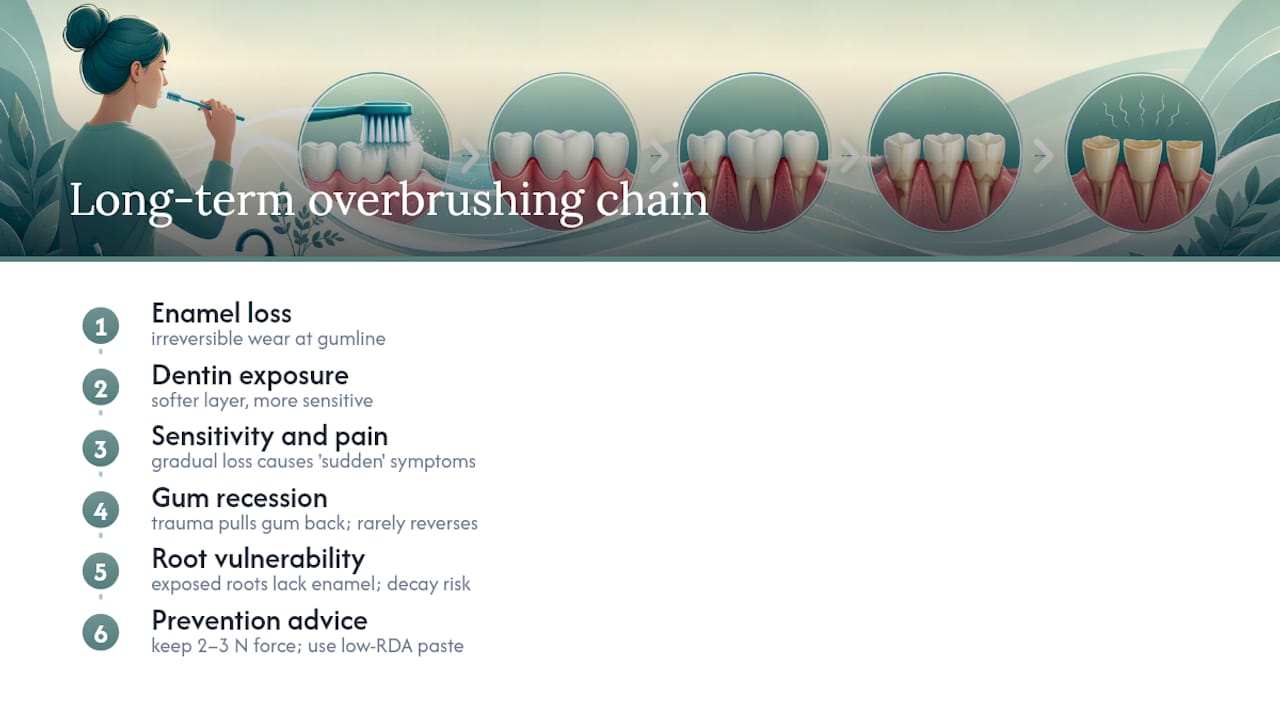
Enamel doesn’t grow back. Once brushing wears it thin near the gumline, the softer dentin layer underneath gets exposed, and dentin is far more sensitive to temperature and touch. That’s the mechanical chain behind most “sudden” sensitivity complaints: gradual enamel loss, then dentin exposure, then pain.
Gum recession follows a similar arc. Aggressive brushing traumatizes the gum tissue, it pulls back from the tooth, and once it recedes it typically doesn’t reverse without a graft. Left alone, exposed roots are also more vulnerable to decay because root surfaces lack the hard enamel coating found on the crown.
A narrative review covering 118 studies found that toothpaste abrasivity combined with brushing force is a major driver of cervical abrasion and recession, and recommended keeping brushing forces around 2 to 3 newtons alongside low-RDA (relative dentin abrasivity) toothpaste to limit harm.
Worth noting: the evidence isn’t uniform across every outcome. A systematic review of manual versus powered toothbrushes found no statistically significant difference in gingival recession at 6 to 12 months between the two, and evidence on abrasion specifically was rated low certainty. Force and technique matter more than which type of brush you hold.
How Dentists Diagnose and Treat Overbrushing Damage
A dentist checks for the same cues you can spot at home, just with better tools: probing depths, visible dentin exposure, and the shape of any notching at the gumline. From there, treatment generally escalates based on severity.
- Conservative care first. For early sensitivity or mild abrasion, dentists often recommend desensitizing toothpastes (typically containing potassium nitrate or stannous fluoride) and a technique adjustment, sometimes coached in the chair.
- Restorative work for structural loss. Deeper notches or grooves may need a tooth-colored composite filling to protect the exposed dentin and rebuild the contour.
- Gum grafting for advanced recession. When gum tissue has pulled back significantly, exposing roots or affecting appearance, a periodontist may recommend a soft tissue graft to cover the root surface.
Mild irritation and tenderness often ease within days to weeks once pressure and technique improve, according to clinician-authored guidance on electric toothbrush damage. Structural damage like deep recession, though, generally needs restorative or surgical correction. It doesn’t resolve on its own.
How to Brush Your Teeth Properly and Stop Overbrushing
Correct technique is simpler than most people think, and it takes less effort than the aggressive scrubbing habit it replaces.
- Hold the brush like a pen, not a fist. A pen-like grip naturally limits how much force you can apply.
- Angle the bristles at 45 degrees toward the gumline, not straight into the tooth surface.
- Use small circular or guided strokes, never a hard back-and-forth scrub.
- Work in quadrants (upper left, upper right, lower left, lower right), spending about 30 seconds each to fill a full two minutes.
- Brush twice daily, not more. Extra sessions don’t add protection; they add wear.
Contact should feel light, almost like you’re polishing rather than scrubbing. If bristles splay outward during a session, ease up immediately. A systematic review comparing brush types suggests the real advantage of powered brushes isn’t the motor, it’s that many models include timers and pressure sensors that physically stop you from overdoing it. If your gums run sensitive, a sonic toothbrush designed for sensitive gums paired with a soft or ultra-soft head reduces trauma while still clearing plaque.
Toothpaste matters too. Look for low-RDA, fluoride formulas rather than gritty whitening pastes for daily use, especially if you already show signs of abrasion.
Pro Tip: Just had soda, wine, or citrus? Wait 30 to 60 minutes before brushing. Acid temporarily softens enamel, and brushing too soon after acidic food or drink can scrub away weakened surface layers you’d otherwise reharden with saliva alone.
When to See a Dentist About Overbrushing Symptoms
Most mild sensitivity settles down once you correct your technique. But certain signs deserve a professional look rather than a wait-and-see approach.
- Sensitivity to cold or sweets that persists more than two to three weeks after adjusting technique
- Visible notches, grooves, or a “step” at the gumline
- Gums that are receding, bleeding regularly, or look inflamed
- Any tooth pain that’s sharp, sudden, or worsening
Bring up your brushing habits specifically. A dentist can confirm whether damage is stable or progressing, and scheduling routine cleanings on a consistent biannual basis makes it easier to catch these issues before they need restorative work.
Retraining Your Brushing Habits Over Two Weeks
Habits built over years don’t reset overnight, but two weeks is usually enough to notice a real difference. Spend the first few days simply watching your grip and pressure, without changing your brush yet. Then introduce the tools that make gentle technique automatic.
- Week 1: Switch to a soft or ultra-soft head, hold it like a pen, and use a visible timer for the full two minutes.
- Week 2: Add a pressure-sensor brush if you have one, and track whether bristles still splay by day 10 (they shouldn’t, if force has actually dropped).
Tool features do real work here. Soft bristles are simply less abrasive against the gumline, pressure sensors interrupt overenthusiastic brushing in real time, and built-in timers remove the guesswork about duration. For readers who want a more structured setup, brush head membership plans can help keep replacements on a three-month cycle, since a worn-out head is itself a common cause of unconscious over-scrubbing.
An Editorial Take on Fixing Overbrushing Habits
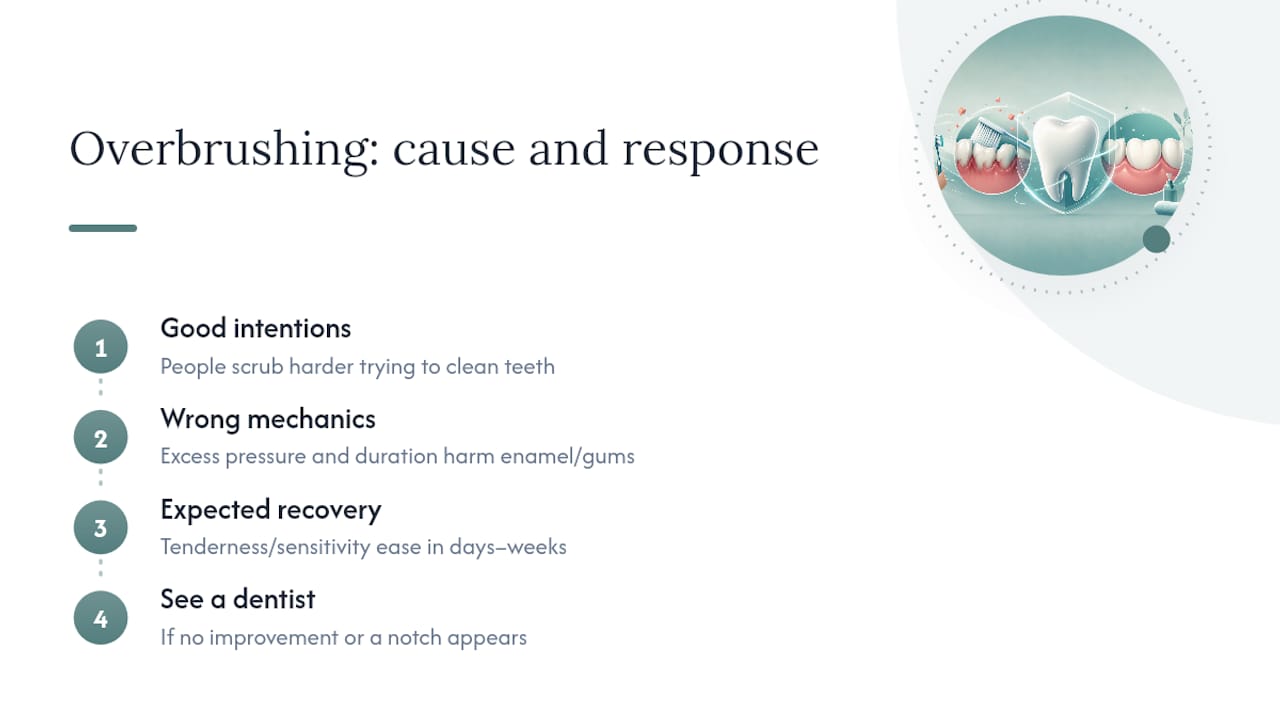
Most overbrushing comes from good intentions, not carelessness. People scrub harder because they genuinely want cleaner teeth, and nobody warns them that force and duration work against that goal instead of for it. That gap between intention and outcome is the real story here, more than any single statistic about enamel wear.
The reassuring part: tenderness and mild sensitivity from overbrushing tend to ease within days or weeks once pressure and technique change. If something doesn’t improve, or a notch has already formed, that’s not a sign to push harder. It’s a sign to get a dentist’s opinion alongside whatever you fix at home.
— Joris
Sources
- The Impact of Toothbrushing on Oral Health, Gingival Recession, and Tooth Wear—A Narrative Review
- Systematic review of manual vs powered toothbrushes (doi reference provided)
- Brushing mistakes (MouthHealthy/ADA)
This article is general information, not a substitute for advice from a qualified doctor. Consult a qualified healthcare professional about your own circumstances before acting on anything here.


