


Replace your toothbrush right away if you had strep throat, thrush, or a serious oral infection, or if you’re immunocompromised. For a typical cold or flu, wait until you’re fever-free for 24 to 48 hours before swapping it out. Otherwise, the American Dental Association’s standard three to four month replacement cycle still applies. Disinfecting is an option in a pinch, but a new brush head costs a few dollars and removes the guesswork entirely.
TL;DR:
- Replace your toothbrush immediately after illnesses like strep throat, thrush, or if you are immunocompromised to prevent household transmission and visible mold or fraying.
- For mild cold or flu, wait until you are fever-free and symptom-free for 24 to 48 hours before replacing your toothbrush.
- Disinfecting methods such as rinsing with hot water or soaking in antiseptic mouthwash can reduce pathogens but do not guarantee sterilization, making replacement preferred after serious infections.
- Avoid sharing toothbrushes, toothpaste, or closed storage containers during illness to minimize the risk of cross-contamination within your household.
- Replacing only the brush head on electric toothbrushes and following a regular replacement cycle of three to four months maintains oral hygiene while reducing infection risk.
Table of Contents
- Why Your Toothbrush Can Harbor Germs After You’re Sick
- When to Replace Your Toothbrush: Timing Rules by Situation
- Disinfecting vs. Replacing: What Actually Works
- Protecting Your Household From Reinfection
- Other Oral Care Items That Need Attention After Illness
- Your Post-Illness Toothbrush Checklist
- Why We Recommend Keeping This Simple
- Making Toothbrush Replacement Effortless With Y-Brush
- Sources
Why Your Toothbrush Can Harbor Germs After You’re Sick
Your toothbrush sits in a warm, damp bathroom, gets coated in saliva multiple times a day, and rarely dries all the way between uses. That combination is exactly what pathogens need to stick around longer than most people assume.
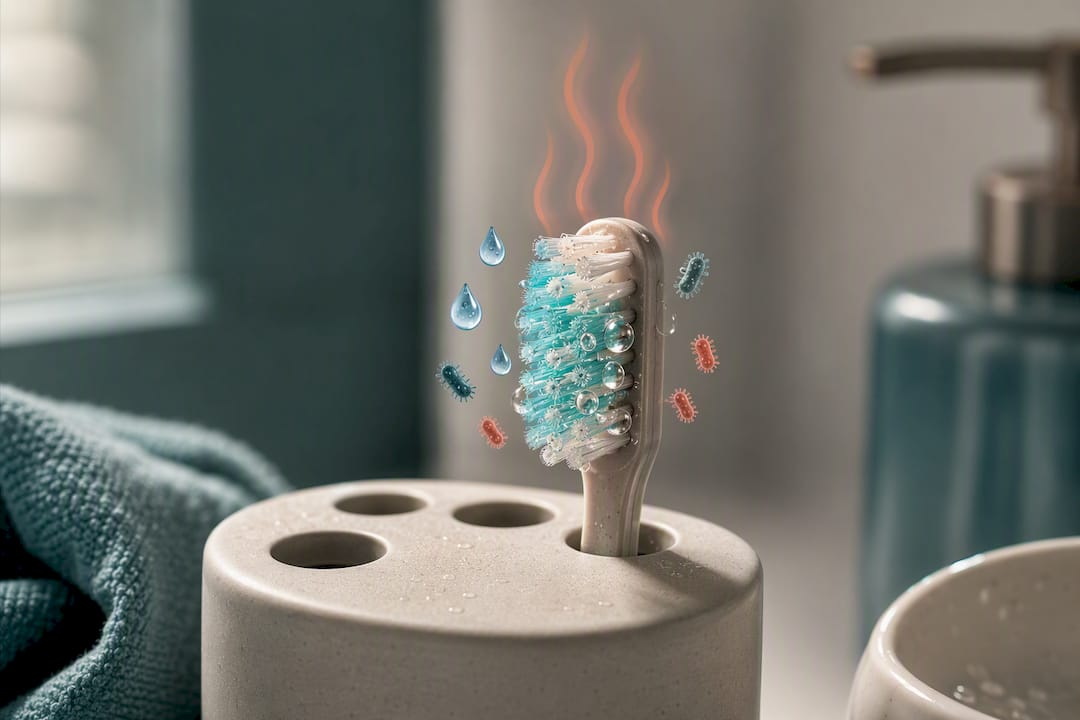
The CDC’s surface transmission summary notes that some viruses, including SARS-CoV-2, can persist on nonporous surfaces for up to three days. A toothbrush handle is plastic, which counts as nonporous, though the bristles themselves behave differently since they trap moisture and organic material longer than a smooth countertop would.
Contamination reaches your brush through a few predictable paths:
- Direct saliva contact every time you brush
- Cough or sneeze droplets landing on the brush head or bristles
- Shared holders where bristles from different brushes touch
- Closed containers or travel cases that trap moisture and block airflow
Here’s the nuance most articles skip: a contaminated brush doesn’t automatically mean you’ll reinfect yourself. Cleveland Clinic points out that healthy immune systems handle low-level reexposure to your own germs fairly well. The bigger concern is household spread and immunocompromised individuals, not the average person brushing with their own slightly germy brush the day after a cold.
When to Replace Your Toothbrush: Timing Rules by Situation
Not every illness calls for the same response, and treating a mild cold the same way you’d treat strep throat wastes money without adding real protection. The timing depends heavily on what you had and how your immune system is functioning.
Replace your toothbrush immediately, without waiting, if any of these apply:
- You had strep throat, thrush, or another confirmed oral or throat infection
- You are immunocompromised, undergoing chemotherapy, or otherwise have a weakened immune response
- Your bristles show visible mold, discoloration, or fraying
- You shared a brush or holder with someone who was sick
For everyday respiratory illness like a cold or the flu, wait until you’ve been fever-free and symptom-free for 24 to 48 hours, then swap the brush. That window gives your body time to clear the acute infection before you introduce a fresh brush into your routine.
| Situation | Replacement timing |
|---|---|
| Common cold or flu | About a day or two after fever-free |
| Strep throat, thrush, oral infection | Immediately |
| Immunocompromised individual | Immediately |
| — | Around 10 days post-positive test, per epidemiologist guidance |
| No recent illness | Every 3–4 months per ADA guidance, or sooner if frayed |
If you use an electric toothbrush, the same rules apply to the head, not the handle. You only need to swap the brush head itself, which is a smaller, cheaper habit to maintain than replacing an entire device every few months.
Disinfecting vs. Replacing: What Actually Works
Replacing a toothbrush isn’t always necessary, and if you’re mid illness with a mild cold and want to hold onto your brush a bit longer, a few disinfection methods have real backing.
- Rinse thoroughly under hot running water after every use and let it air dry completely, bristles up.
- Soak the bristle head in antiseptic mouthwash for about one minute, which studies referenced in the Thieme clinical review suggest reduces microbial load on bristles.
- Use a chlorhexidine rinse soak if recommended by your dentist, since it shows stronger antimicrobial activity than water alone in the same review.
- Wipe down the handle with a disinfectant wipe, since hands touch it constantly and it’s often ignored in favor of the bristles.
The catch: none of these methods guarantee full decontamination. The Thieme review is clear that disinfecting protocols show partial inactivation of pathogens, not sterilization. That’s a meaningfully different claim than “kills all germs,” and it’s why dentists often default to replacement after anything more serious than a mild cold.
Pro Tip: Skip disinfecting and go straight to replacement if you had a fever above 101°F, tested positive for a contagious illness, or live with someone who’s immunocompromised. The few dollars a new brush head costs is cheaper than guessing wrong.
Protecting Your Household From Reinfection
One sick person in the house creates a chain reaction if you’re not careful about shared items. The brush itself is only part of the exposure risk.
Skip the shared toothpaste tube during active illness. Squeezing from a communal tube lets saliva-covered bristles touch the opening, which then transfers to the next person’s brush. Give the sick household member a dedicated tube, or designate one end of the tube for their exclusive use.
A few more habits go a long way:
- Store toothbrushes upright and spaced apart, never bristles touching in a shared cup
- Let brushes air dry completely before capping them or using a travel case
- Avoid closed containers until the brush is fully dry, since trapped moisture extends how long pathogens survive
- Wash hand towels, pillowcases, and sink surfaces more frequently while anyone in the house is sick
Epidemiologists cited in the Thieme review emphasize that household-level controls like these often matter more than obsessing over any single brush, because they cut off multiple transmission paths at once.
Other Oral Care Items That Need Attention After Illness
Your toothbrush isn’t the only item that picked up germs during your illness. A few other pieces of your routine deserve the same scrutiny.
- Electric toothbrush heads: replace after illness just like a manual brush; a subscription refill plan makes this an automatic habit instead of something you have to remember
- Floss: discard the open container or pick if it was stored near your sick-day toothbrush
- Tongue scrapers: sanitize with hot water and antiseptic rinse, or replace if it’s inexpensive
- Retainers and mouthguards: clean per the manufacturer’s instructions, and check with your dentist if you had a throat or oral infection
- Single-use items: anything disposable that touched your mouth during illness goes in the trash, no exceptions
Your Post-Illness Toothbrush Checklist
Once you’re on the mend, a short, ordered routine keeps you from second-guessing every step.
- Day 0–3: Inspect your brush for fraying or discoloration, separate it from other household brushes, and decide whether to replace or disinfect based on what illness you had.
- Day 7–14: If your illness was severe or spread through the household, swap the brush head again, replace your floss, and check that everyone exposed has done the same.
- Ongoing: Mark your calendar for the ADA’s three to four month replacement cycle, independent of illness, so you’re not relying on memory alone.
Some clinical protocols referenced in the Thieme review even suggest monthly replacement for household members living with someone who tested PCR-positive, which is worth considering if illness keeps circulating through your home.
Why We Recommend Keeping This Simple
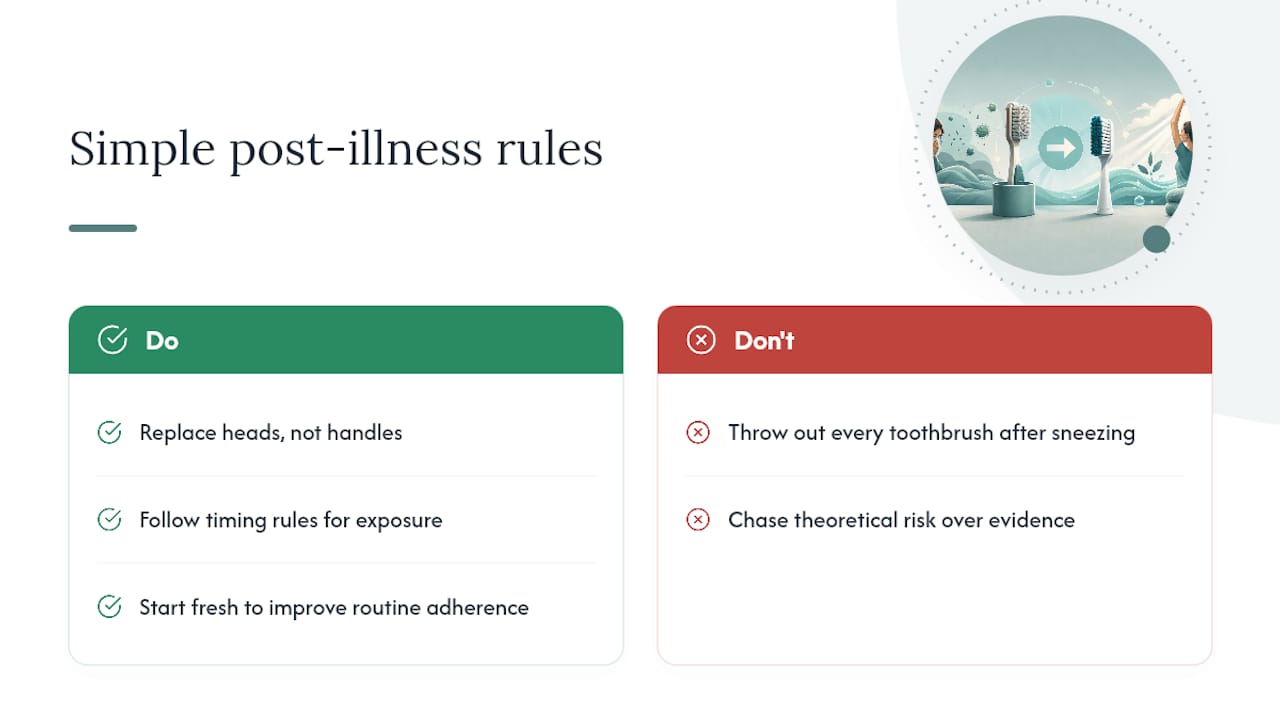
Fear-driven headlines love to tell you to throw out every toothbrush in the house the moment anyone sneezes. That’s wasteful and not what the evidence supports. The smarter approach: replace heads, not entire handles, whenever you can, and follow the timing rules based on what you actually had.
There’s also a real, if underrated, psychological benefit to starting fresh. Clinicians have noted that the comfort of a new brush improves how consistently people stick to post-illness hygiene routines, which matters more than chasing theoretical risk.
— Joris
Making Toothbrush Replacement Effortless With Y-Brush
Following every rule in this article is only realistic if replacing your brush doesn’t feel like a chore. That’s the gap Y-brush closes: instead of hunting for a new handle every time you’re sick, you swap a head in seconds and keep the base you already own.
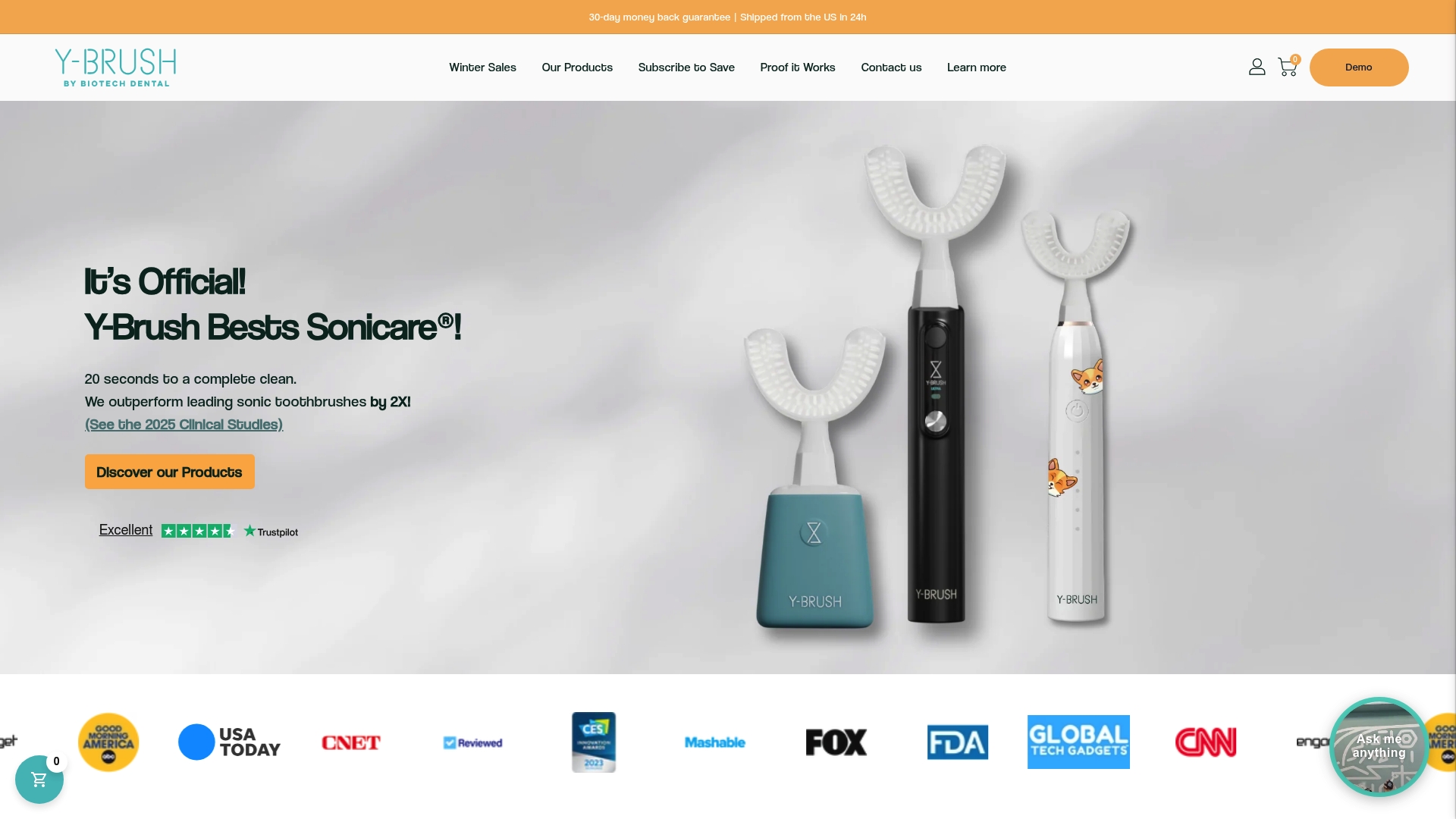
The Y-Brush Essential Sonic Toothbrush delivers a full clean in 20 seconds using sonic vibrations and a patented Y-shaped head, so a post-illness swap doesn’t cost you a longer brushing routine on top of a new brush. Families juggling a sick kid’s oral care can turn to the Y-Brush KidsBrush Sonic Electric Toothbrush, built for ages 4 to 12, while anyone wanting a higher-tier option can check the Y-Brush Ultra Sonic Toothbrush. Every model works with replacement heads and refill plans, so following the 24 to 48 hour rule or the ADA’s three to four month cycle becomes a habit you barely have to think about. Browse the Y-Brush lineup and set up a head subscription before the next cold season hits your house.
This article is general information, not a substitute for advice from a qualified doctor. Consult a qualified healthcare professional about your own circumstances before acting on anything here.
Sources
- Why you Should you Toss your Toothbrush after Being Sick
- CDC surface transmission summary (archived)


