


TL;DR:
- Most brushing mistakes relate to technique, pressure, and timing, which can damage enamel and gums. Using soft bristles, holding the brush lightly, and following proper angles and motions prevent harm. Adopting correct habits and considering powered brushes can significantly improve oral health.
Most brushing problems come down to technique, pressure, and timing. Fix those three things and you protect your enamel, reduce gum damage, and get a genuinely clean mouth every time. About 72% of Americans make at least one critical brushing mistake; excessive pressure is repeatedly named the top harmful habit. The American Dental Association recommends brushing for two full minutes twice daily and replacing your brush every three to four months. Y-Brush is a publisher-backed powered option for anyone who consistently struggles with manual technique.
Quick fixes at a glance:
- Use soft bristles only — medium and hard damage enamel and gums
- Hold your brush like a pen, not a fist, to limit pressure automatically
- Angle the bristles 45° toward the gum line and use small circular motions
- Brush for two full minutes — divide your mouth into four quadrants, 30 seconds each
- Wait at least 30 minutes after acidic foods or drinks before brushing
- Floss or use an interdental brush daily, ideally before brushing
- Replace your brush head every three months, or sooner if bristles fray
- Store your brush upright in open air — never in a closed, wet container
Table of Contents
- What are the most common brushing mistakes to avoid?
- How to brush correctly: a step-by-step two-minute routine
- How should you care for and replace your toothbrush?
- When does a powered toothbrush actually help?
- When should you see a dentist instead of adjusting technique?
- Key Takeaways
- Y-Brush makes correct technique the default, not the goal
What are the most common brushing mistakes to avoid?
These are the errors that cause the most damage, ranked by how often they appear and how much harm they do.
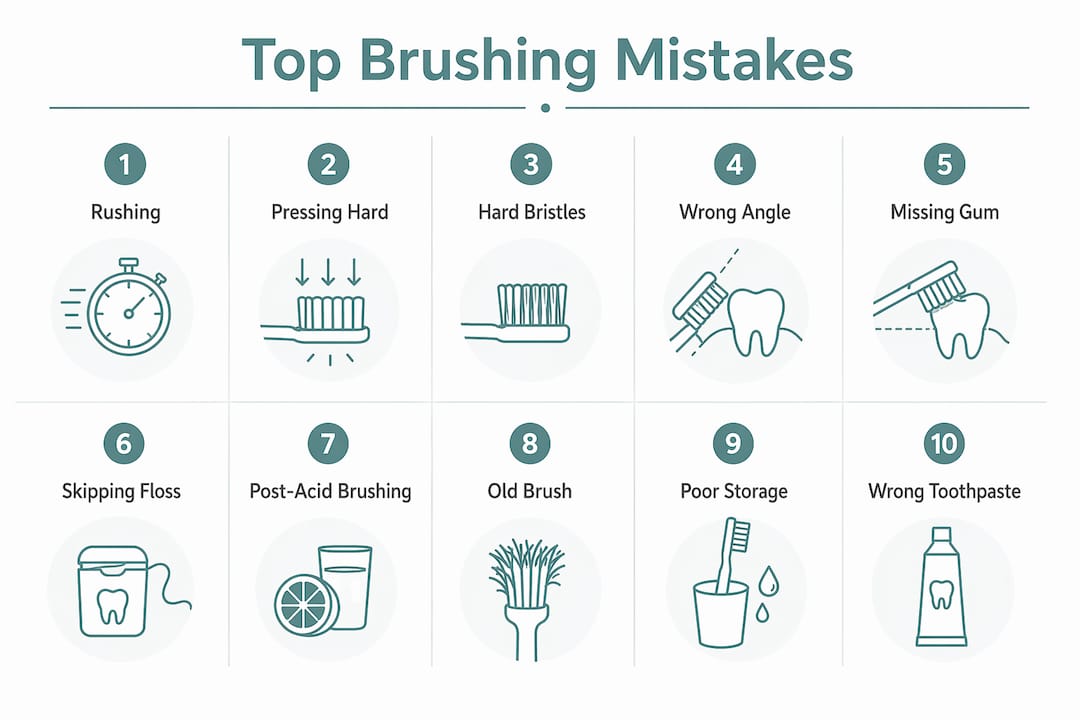
1. Rushing through your brushing session
Most people brush for under a minute. Brushing less than 90 seconds leaves roughly 30% of tooth surfaces inadequately cleaned. Set a two-minute timer or use a brush with a built-in timer. Divide your mouth into four quadrants and spend 30 seconds on each.
2. Pressing too hard
Plaque is a soft film. It does not require force to remove. Dental professionals consistently report that what patients call “thorough scrubbing” is actually causing irreversible enamel wear and gum recession. If your bristles splay outward within weeks, you are pressing too hard.
Pro Tip: Switch to a pen grip. Hold the brush between your thumb and first two fingers instead of wrapping your whole hand around it. This grip mechanically limits how much pressure you can apply and is one of the fastest ways to protect your gums.
3. Using medium or hard bristles
Hard bristles feel like they clean better. They do not. They abrade enamel and push gum tissue back over time. The American Dental Association recommends soft bristles for most adults. If you have sensitive gums or enamel erosion, extra-soft bristles are worth considering.
4. Wrong angle and motion

Horizontal scrubbing back and forth across the teeth is the most common technique error. Clinical guidance recommends angling the brush at about 45 degrees toward the gum line and using small circular or Bass-style motions. This accesses the sulcus — the narrow gap between tooth and gum — where plaque accumulates and causes the most damage.
5. Missing the gum line and tongue
The gum line is where plaque does its worst work. Many people brush the visible tooth surface and skip the junction where gum meets tooth. Finish every session by brushing your tongue from back to front to remove bacteria that cause bad breath.
6. Skipping interdental cleaning
Approximately one-third of total tooth surface area sits between teeth — surfaces no toothbrush can reach. Floss, interdental brushes, or a water flosser are required to clean these areas. Skipping them raises your risk of decay and gum disease regardless of how well you brush.
7. Brushing immediately after acidic foods or drinks
Acidic foods and drinks temporarily soften enamel. Brushing immediately after acidic exposure causes three to four times more enamel loss than waiting about 30 minutes. After coffee, citrus, soda, or sports drinks, rinse with water and wait before brushing.
8. Not replacing your brush head
Frayed bristles lose their shape and clean less effectively. The American Dental Association recommends replacing your toothbrush or brush head every three to four months. Replace it sooner after an illness or if the bristles visibly splay.
9. Poor brush storage
Storing a wet brush in a closed container promotes bacterial and fungal growth on the bristles. Store your brush upright in open air so it dries between uses. Avoid sharing brushes, and let travel brushes dry completely before capping them.
10. Wrong toothpaste or over-rinsing
Use a fluoride toothpaste appropriate for your needs — high-abrasivity whitening pastes used daily can wear enamel over time, especially if you already brush with pressure; for gentler options, consider gentler oral care approaches. After brushing, spit out excess toothpaste but do not rinse immediately. Rinsing right away washes away the concentrated fluoride still on your teeth and reduces its protective effect. If you use a fluoride mouthwash, use it at a different time, such as after lunch, not right after brushing.
How to brush correctly: a step-by-step two-minute routine
Think of the two-minute recommendation less as a clock target and more as a systematic cleaning of all surfaces — gum line, interdental spaces, and tongue included. Here is a repeatable routine you can follow starting tonight.
- Floss first. Flossing before brushing clears interdental plaque so your toothpaste fluoride can reach between teeth. Use 12–18 inches of floss, curve it into a C-shape around each tooth, and slide gently up and down.
- Apply a pea-sized amount of fluoride toothpaste.
- Adopt the pen grip. Hold the brush between your thumb and first two fingers. Light pressure only.
- Angle at 45 degrees toward the gum line. Use small circular or Bass-style motions — not horizontal scrubbing. For best brushing practices, keep the motion gentle and deliberate.
- Work through four quadrants, 30 seconds each. See the table below.
- Brush chewing surfaces with a gentle back-and-forth motion.
- Brush your tongue from back to front, two to three strokes.
- Spit, do not rinse. Let the fluoride remain on your teeth.
| Quadrant | Surfaces to cover | Time |
|---|---|---|
| Upper right | Outer, inner, chewing surfaces | 30 seconds |
| Upper left | Outer, inner, chewing surfaces | 30 seconds |
| Lower right | Outer, inner, chewing surfaces | 30 seconds |
| Lower left | Outer, inner, chewing surfaces | 30 seconds |
Brush twice daily — once in the morning and once before bed. Nighttime brushing matters most because saliva flow decreases during sleep, leaving teeth more vulnerable to acid.
How should you care for and replace your toothbrush?
Proper storage and timely replacement are two of the most overlooked parts of a good oral hygiene routine. A worn or contaminated brush undermines everything else you do correctly.
Replacement schedule:
- Replace every three to four months under normal use
- Replace sooner if bristles visibly fray, splay, or no longer stand straight
- Replace immediately after a cold, flu, strep throat, or mouth infection
- For children, check bristles monthly — kids often wear them faster than adults
Storage best practices:
- Store upright in a holder so the head is exposed to open air
- Never store in a closed container while wet — this creates conditions for microbial growth
- Keep brushes at least six inches from the toilet to reduce airborne contamination
- Do not share brushes, even within a family
Daily handling:
- Rinse the brush head thoroughly under running water after each use
- Shake off excess water and let it air-dry
- Wipe the handle if it becomes sticky or discolored
- Electric brush heads follow the same three-to-four-month replacement schedule as manual brushes
Replace now if: bristles are splayed, the brush is more than four months old, you have recently been ill, or you notice your teeth do not feel as clean after brushing.
For families managing multiple brushes, the Y-Brush Family Smile Pack includes brush heads for adults and children and simplifies keeping everyone on a consistent replacement schedule.
When does a powered toothbrush actually help?
A powered toothbrush is not automatically better than a manual one. It becomes the stronger choice when specific technique problems keep recurring.
Experts recommend powered brushes for people who lack dexterity or consistency because they are less technique-dependent and tend to deliver more consistent plaque removal. After 12 weeks of electric toothbrush use, clinical studies showed measurable reductions in both plaque and gum bleeding for a high share of participants.
A powered brush is worth considering if you:
- Consistently brush for less than two minutes despite trying
- Tend to press too hard and cannot break the habit with a manual brush
- Have limited hand or wrist mobility (arthritis, injury, or similar conditions)
- Repeatedly miss the same surfaces, such as the inner lower front teeth
- Want a built-in timer and pressure sensor to guide your technique
Practical pros:
- Built-in two-minute timers remove the guesswork
- Pressure sensors alert you before damage occurs
- Consistent oscillating or sonic motion compensates for poor manual technique
Worth knowing:
- Replacement heads still need to follow the three-to-four-month schedule
- There is a short adjustment period as you learn not to scrub manually
- Cost is higher upfront than a manual brush
Pro Tip: If you are switching to a powered brush, practice the 45-degree angle and light pressure for one week before turning it on. Letting the brush do the work is a habit that takes a few sessions to build.
Y-Brush’s patented Y-shaped brush head covers all tooth surfaces simultaneously using sonic vibrations, delivering a complete clean in 20 seconds. For anyone who struggles to maintain correct technique consistently, that kind of built-in consistency is a real advantage. Learn more about brushing smarter, not longer.
When should you see a dentist instead of adjusting technique?
Better brushing technique fixes most routine problems. Some symptoms, though, signal conditions that require professional evaluation, not just a new routine.
Book a dental appointment if you notice:
- Bleeding gums that persist after two weeks of gentle brushing
- Visible gum recession or exposed root surfaces
- Increasing tooth sensitivity to cold, heat, or sweet foods
- Persistent bad breath despite consistent brushing and flossing
- Loose teeth or teeth that feel like they have shifted
- Mouth sores or lesions that have not healed within two weeks
- Pain when chewing or biting
These symptoms can indicate gum disease, enamel loss, or infection. A dentist or hygienist can perform a professional cleaning to remove tartar buildup that brushing cannot address, assess recession, and recommend treatments such as fluoride varnish, scaling, or a referral to a periodontist if needed.
Gum disease is largely preventable with correct technique, but once it progresses beyond gingivitis, professional intervention is required. Delaying that appointment does not slow the progression.
Key Takeaways
The single most impactful change most people can make is switching from a fist grip and horizontal scrubbing to a pen grip, 45-degree angle, and small circular motions — that one shift addresses pressure, angle, and motion errors simultaneously.
| Point | Details |
|---|---|
| Brush for two full minutes | Brushing less than 90 seconds leaves roughly 30% of tooth surfaces inadequately cleaned. |
| Use soft bristles and light pressure | Hard bristles and aggressive scrubbing cause irreversible enamel wear and gum recession. |
| Wait after acidic foods | Brushing immediately after acidic exposure causes three to four times more enamel loss than waiting 30 minutes. |
| Replace every three to four months | Replace sooner if bristles fray or after any illness; children may need more frequent replacement. |
| Y-brush for technique consistency | Y-Brush’s sonic Y-shaped brush head delivers a complete clean in 20 seconds for those who struggle with manual technique. |
The technique gap most guides ignore
Most brushing guides focus on what to do. The harder problem is the gap between knowing the right technique and actually executing it twice a day, every day, under time pressure. That gap is where most dental damage happens — not from ignorance, but from rushed, automatic habits that never get corrected.
What strikes me about the research here is that the most damaging mistake, excessive pressure, is also the one people are most convinced is helping them. The feeling of scrubbing hard reads as “thorough.” It is not. Plaque is soft. It yields to gentle, targeted motion. The irreversible part — enamel wear, gum recession — comes from the pressure, not from any failure to remove plaque.
Y-Brush was built around exactly this problem: most people know the two-minute rule and still brush for under a minute, because the routine does not fit how they actually live. A brush that delivers a complete clean in 20 seconds does not ask you to change your schedule. It asks you to show up. That is a more honest solution to the time-and-technique gap than telling people to try harder with a manual brush.
Try the fixes in this guide for two weeks. Check your bristles. Notice whether your gums bleed less. Small, consistent changes in technique compound quickly into measurably better oral health.
Y-Brush makes correct technique the default, not the goal
If you have read this far and recognized two or three of your own habits in the mistakes list, you are not alone. Most people need a tool that compensates for rushed mornings and ingrained pressure habits — not just better instructions.
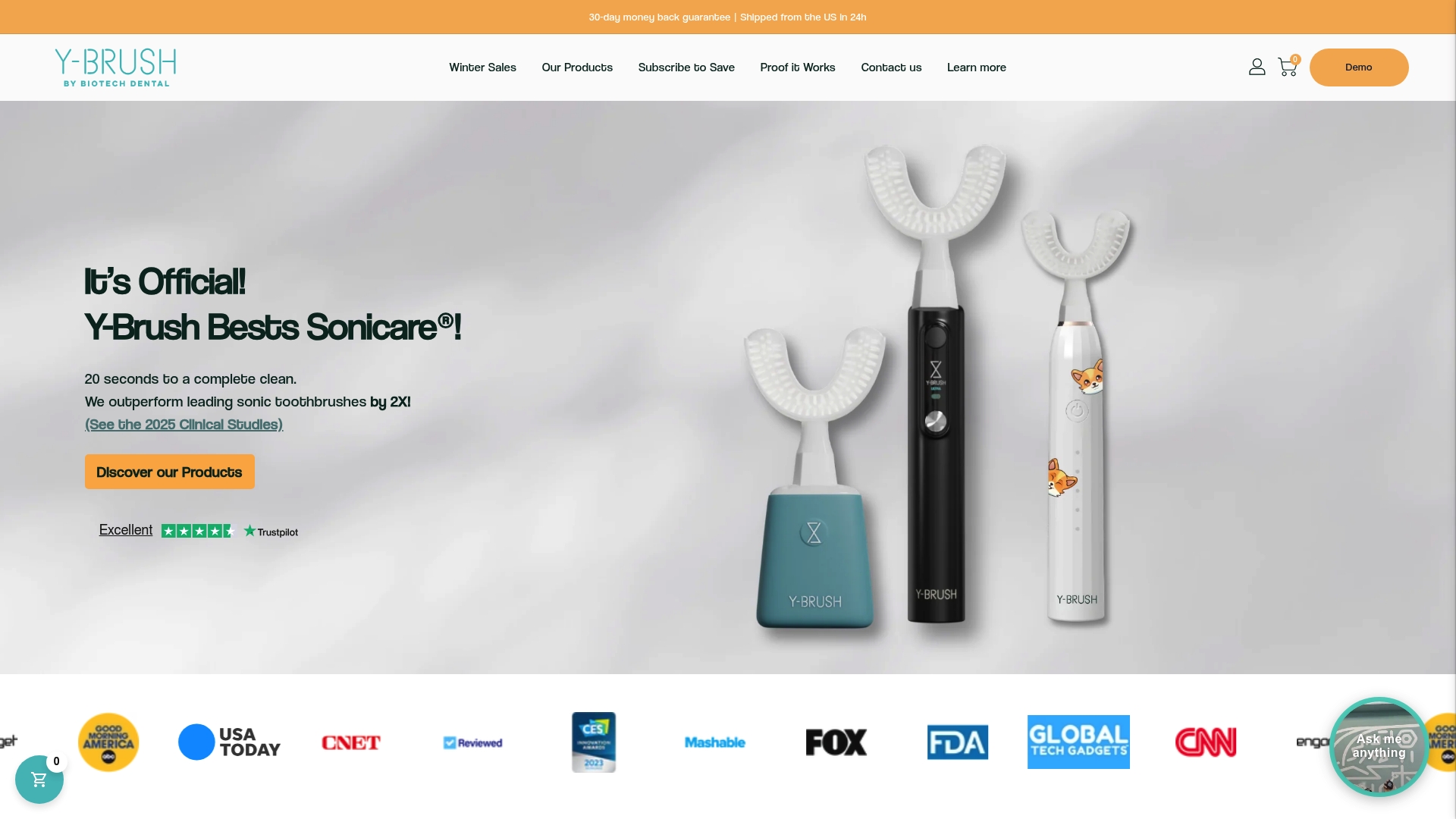
The Y-Brush Essential Sonic Toothbrush uses a patented Y-shaped brush head and sonic vibrations to clean all surfaces at once in 20 seconds. No manual scrubbing, no guessing about angle or pressure. For parents, the Y-Brush KidsBrush brings the same consistency to children’s routines.
- Complete clean in 20 seconds via sonic vibrations and full-arch coverage
- Consistent technique every session without relying on perfect manual form
- Membership plans that deliver replacement heads on schedule so you never brush with frayed bristles
Visit Y-Brush to find the right brush for your routine and start your first session today.
Useful sources
- Harvard Health: What’s the right way to brush your teeth? — Clinical guidance on correct angle, motion, and technique for plaque removal at the gum line.
- Cleveland Clinic: How to properly brush your teeth — Evidence-based overview of brushing technique, powered brush benefits, and timer use.
- Newsweek: Probably brushing your teeth all wrong — why — Feature on missed surfaces, brushing duration, and interdental cleaning.
- Everyday Health: Dental myths — 10 ways you’re brushing your teeth wrong — Practitioner-sourced breakdown of pressure damage and pen-grip technique.
- Dentist Decoded: 12 brushing mistakes that are ruining your teeth — Clinical summary covering acidic food timing, storage errors, and prevalence data.
- Mayo Clinic: Brushing your teeth — how often and when? — ADA-aligned guidance on brushing frequency, fluoride toothpaste, and replacement schedule.


