


TL;DR:
- Modern dental technology enables faster, more personalized cleaning and improves plaque removal compared to manual brushing. The Y-brush sonic system offers a complete 20-second clean with 21% better results by covering all tooth surfaces simultaneously, addressing common behavioral gaps. Personalization features like adaptive modes and app feedback enhance daily oral health, supported by clinical evidence of better outcomes and reduced chair time.
Modern dental technology delivers faster, more consistent, and more personalized cleaning than manual brushing — and for shoppers choosing an electric toothbrush, understanding those advantages directly shapes which product is worth buying. Clinical reviews consistently link digital dental tools to improved plaque removal, better patient outcomes, and more predictable daily results. At the consumer level, those same principles translate into five practical gains:
- Cleaning performance: Sonic and automated systems remove plaque more efficiently than manual technique alone
- Time savings: Guided devices address the reality that most people under-brush, often spending less than a minute when two are recommended
- Personalization: Adaptive modes, shaped heads, and timed programs fit individual anatomy and habits
- Connected feedback: App coaching and tracking improve consistency over time
- Clinical-style outcomes: Better prevention, reduced chair time, and improved comfort
Y-brush’s internal data shows users achieve 21% better oral care results with its sonic system, with a full clean completed in about 20 seconds.
Table of Contents
- How does dental technology improve your daily cleaning?
- Why does personalization matter when you choose a toothbrush?
- What clinical and user benefits does dental tech actually deliver?
- How do connected features and app feedback change your brushing habits?
- What should you look for when buying an electric toothbrush?
- How Y-brush puts these advantages into practice
- What dental tech can’t do, and when to see a dentist
- How do different tech generations compare?
- What does the science say about long-term oral health benefits?
- Key Takeaways
- The case for tech-led brushing is stronger than most people realize
- Y-brush: a fast, science-backed clean for people with real schedules
How does dental technology improve your daily cleaning?
The core advantage of dental technology at the consumer level is predictability. Sonic vibrations operating at high frequency break up plaque mechanically and through fluid dynamics, reaching areas that manual strokes routinely miss. Digital methods are consistently more efficient and produce more predictable clinical outcomes than conventional brushing.
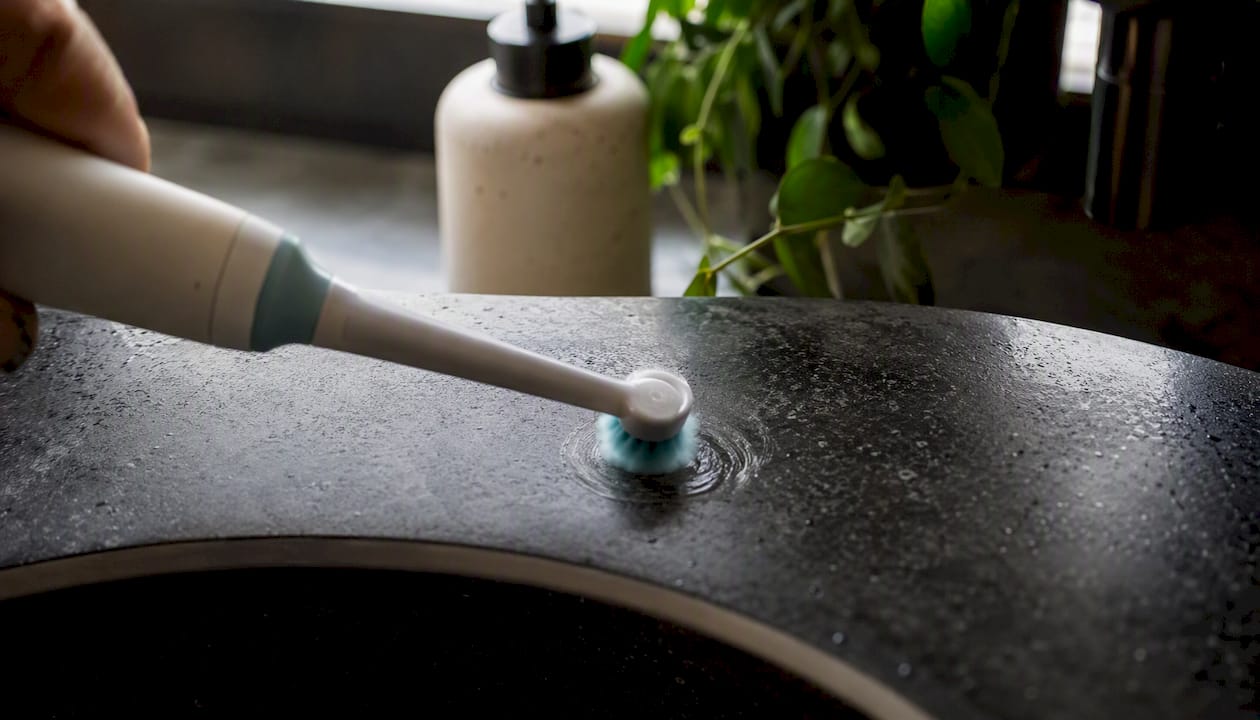
Automated timing removes one of the biggest variables in manual brushing: most people simply stop too soon. Engineered brush head shapes enforce consistent coverage across all tooth surfaces simultaneously, reducing the human error that undermines even motivated brushers.
| Benefit | Manual Brushing | Sonic/Automated Tech |
|---|---|---|
| Average brush time | Under 1 minute (typical) | Guided to full recommended duration |
| Plaque removal consistency | Varies by technique | Automated, uniform coverage |
| Human error factor | High | Significantly reduced |
| Clinical outcome predictability | Low to moderate | Higher, per clinical reviews |
Statistic callout: Y-brush users report 21% better results compared to conventional brushing, with a complete clean in approximately 20 seconds. For a shopper, that figure represents the gap between what most people actually do and what a well-designed device makes automatic.
Why does personalization matter when you choose a toothbrush?
Personalization reduces the mismatch between a brush’s action and your specific anatomy, habits, and sensitivity level. A one-size-fits-all approach ignores the fact that mouth shapes, gum sensitivity, and brushing pressure vary significantly from person to person. Dentistry’s shift toward mass customization — driven by AI, 3D printing, and advanced visualization at the clinical level — has a direct consumer equivalent in brushes with adaptive modes, pressure sensors, and shaped heads.
Key personalization features worth evaluating:
- Adaptive cleaning modes (sensitive, whitening, gum care) that adjust intensity
- Pressure sensors that alert you when you’re brushing too hard
- Custom or anatomically shaped brush heads that fit the curve of your teeth
- Timed programs that guide duration without requiring you to watch a clock
- Replacement-head options tailored to different needs (soft bristles, kids’ sizes)
Explore how personalized oral care routines translate into measurable daily improvements.
Pro Tip: When unboxing a new brush, run it on your lower front teeth for 10 seconds before committing to a mode. If you feel vibration but no discomfort, the default mode likely suits your sensitivity. If it feels sharp, switch to the sensitive setting immediately — don’t wait for your gums to tell you.
What clinical and user benefits does dental tech actually deliver?
Technology contributes to prevention and can reduce the time you spend in the dental chair for certain treatments. Digital tools increase patient comfort, reduce chair time, and improve treatment acceptance compared to conventional methods, according to multiple patient-reported outcome studies. At home, those same principles apply: a brush that cleans thoroughly every day reduces the buildup that leads to more intensive interventions.
Specific user benefits include:
- Reduced plaque accumulation between professional cleanings
- Less discomfort from gum inflammation caused by inconsistent brushing
- Better patient-reported satisfaction with daily routines
- Fewer surprises at checkups when daily hygiene is consistent
“After periodontal treatment, mobile applications and intelligent power-driven toothbrushes can track periodontal parameters, deliver hygiene instructions, and improve plaque control.” — PMC Digital Dentistry Scoping Review
For patients managing gum health or post-treatment maintenance, a technology-led brush is not just a convenience. It is part of the clinical recommendation. Aesthetic and wellness-focused practices increasingly emphasize this patient-journey benefit as part of whole-health care.
How do connected features and app feedback change your brushing habits?
Connected tools transform a passive brush into an active coaching partner. Feedback and monitoring increase user compliance and habit formation, according to industry and academic sources. For most people, the gap between knowing they should brush better and actually doing it consistently is a behavioral one, and real-time feedback closes that gap.
Common connected features and what they do for you:
- Brush tracking: logs duration and coverage so you can see patterns over time
- Coaching alerts: vibration or app signals when you miss a zone or press too hard
- Progress reports: weekly summaries that show improvement or flag gaps
- Replacement reminders: alerts when bristle wear reduces cleaning effectiveness
- Reminders: scheduled nudges that build the habit without relying on memory
One privacy consideration worth noting: check whether the app processes data locally on your device or uploads it to a cloud server. Look for a clear privacy policy, an option to delete your data, and transparency about what is shared with third parties before you connect any brush to an account.
What should you look for when buying an electric toothbrush?
Prioritize proven cleaning mechanism, head fit, replacement-head cost, battery life, and warranty — in that order. The motor and head design determine cleaning performance; everything else affects long-term ownership cost and convenience.
- Cleaning technology: Sonic vibration is well-supported by clinical evidence for plaque removal efficiency
- Head shape and fit: Does the head cover your tooth surfaces without requiring precise manual positioning?
- Timed programs: Built-in timers or app-guided sessions that enforce the full recommended duration
- Pressure sensors: Protects gums from overbrushing, especially for sensitive users
- App ecosystem: Coaching and tracking features that improve consistency (check privacy policy)
- Battery and runtime: Rechargeable models reduce waste; check charge cycle length
- Replacement-head pricing: Calculate the annual cost of heads, not just the handle price
- Warranty and service: A minimum one-year warranty signals manufacturer confidence
For long-term cost, weigh replacement-head pricing and membership subscription plans more heavily than the upfront handle price. A low-cost handle with expensive heads can cost more over three years than a pricier all-in-one plan.
Pro Tip: At unboxing, hold the brush against the back of your hand and run it for 20 seconds. You should feel consistent vibration across the full head surface. Uneven buzzing or a head that wobbles under light pressure is a quality signal worth noting before your first real use.
How Y-brush puts these advantages into practice
Y-brush applies sonic vibrations through a patented Y-shaped brush head to deliver a complete, uniform clean in approximately 20 seconds. The head shape is the key differentiator: it covers all tooth surfaces simultaneously rather than requiring the user to move a standard round head from tooth to tooth. That design directly applies the professional principle of consistent coverage and minimized human error to a daily home routine.
Features that map to the advantages covered above:
- Sonic frequency: High-frequency vibrations for efficient plaque removal
- Y-shaped head: Engineered coverage that removes the technique variable from brushing
- 20-second clean: Addresses the under-brushing behavioral gap without requiring behavior change
- Replacement-head program: Regular refills via membership plans keep bristle effectiveness consistent
- Kids model available: The Y-brush KidsBrush applies the same coverage principle for ages 4–12
Y-brush’s internal testing shows 21% better oral care results with the sonic system. The product fits busy adults who want a clinically grounded clean without a two-minute commitment, and parents who want consistent results for children who resist long brushing sessions.
What dental tech can’t do, and when to see a dentist
Dental technology improves daily care but does not replace professional diagnosis or clinical procedures. A well-designed brush reduces plaque and supports prevention; it does not repair cavities, diagnose infections, or treat gum disease.
Key limitations to keep in mind:
- Electric toothbrushes do not replace professional cleanings or X-ray diagnostics
- Worn or infrequently replaced brush heads lose effectiveness quickly
- No brush compensates for incorrect technique if the head design requires manual positioning
- Connected apps provide behavioral coaching, not clinical diagnosis
See a dentist promptly if you notice bleeding that persists beyond the first week of a new brush, persistent pain, swelling, or any dramatic change in your oral health. Technology supports prevention; a dentist addresses what has already developed.
On sustainability: rechargeable handles and refill-based replacement-head programs produce significantly less waste than disposable brushes. Choosing a brush with a durable handle and a subscription refill model is both a cost and an environmental consideration.
How do different tech generations compare?
The gap between brushing generations is meaningful, not just marginal. Manual brushing depends entirely on user technique, duration, and consistency — all of which vary widely. First-generation electric brushes added motor action but retained round heads that still required methodical manual movement across each tooth surface.
Sonic technology, introduced more broadly in the 2000s, added high-frequency fluid dynamics to mechanical action, improving reach between teeth and along the gumline. The current generation adds engineered head shapes, timed programs, pressure sensors, and app connectivity. Digital dentistry innovations at the clinical level — intraoral scanning, AI diagnostics, CAD/CAM — are now influencing consumer product design through the same underlying principle: reduce human error, increase consistency, and personalize the outcome.
For shoppers, the practical takeaway is that a sonic brush with an anatomically shaped head represents a meaningful step up from both manual brushing and earlier oscillating models, not just a marginal one.
What does the science say about long-term oral health benefits?
Long-term studies consistently link better daily plaque control to lower rates of cavities, gum disease, and tooth loss. Systematic reviews of digital and AI-driven tools find improved diagnostic accuracy, better patient-reported outcomes, and higher satisfaction compared to conventional methods. At the consumer level, that evidence chain runs from consistent daily brushing to reduced bacterial load to fewer clinical interventions over time.
The future of dental technology points toward fully integrated ecosystems where home devices, clinical tools, and patient data work together. For buyers today, choosing a brush that already participates in that ecosystem — through app connectivity, replacement programs, and evidence-backed design — positions them ahead of the curve rather than catching up to it. Oral care trends in 2026 reflect exactly this shift toward connected, personalized prevention.
This article provides general information about dental technology and oral care products. It is not a substitute for professional dental advice. Consult a licensed dentist for guidance specific to your oral health situation.
Key Takeaways
Modern dental technology’s primary advantage is consistent, personalized cleaning that removes the human-error variable from daily brushing — and Y-brush’s 20-second sonic system is a direct consumer application of that principle.
| Point | Details |
|---|---|
| Sonic tech outperforms manual | High-frequency vibrations remove plaque more efficiently and predictably than manual technique. |
| Time savings are behavioral | Guided devices close the gap for the majority of people who brush under the recommended duration. |
| Personalization improves fit | Adaptive modes, pressure sensors, and shaped heads reduce mismatch with individual anatomy. |
| Connected coaching builds habits | App feedback and tracking improve consistency over time, per industry and academic sources. |
| Y-brush delivers 20-second cleans | Y-brush’s Y-shaped sonic head covers all surfaces simultaneously, with internal testing showing 21% better oral care results compared to conventional brushing. |
The case for tech-led brushing is stronger than most people realize
The conventional wisdom on electric toothbrushes tends to focus on motor speed and bristle count. That framing misses the more important variable: whether the brush design removes the technique requirement from the user entirely. Most people will never brush with perfect manual technique for two full minutes, twice a day, every day. That is not a motivation problem; it is a design problem.
Technology-led brushes, particularly those with engineered head shapes and automated timing, solve the design problem rather than asking users to solve the behavior problem. The clinical evidence for digital dentistry’s advantages is robust at the professional level, and the same principles — consistent coverage, reduced human error, personalized fit — translate directly to consumer devices when the engineering is done well. Shoppers who evaluate brushes on those criteria, rather than on price alone, tend to get results that actually match what the research promises.
Y-brush: a fast, science-backed clean for people with real schedules
Twenty seconds for a complete clean is not a marketing shortcut. It is what happens when a brush head is engineered to cover all tooth surfaces simultaneously rather than requiring you to move it tooth by tooth. The Y-brush Essential Sonic Toothbrush applies sonic vibrations through a Y-shaped head that wraps around your teeth, delivering the consistent coverage that clinical research identifies as the primary driver of better outcomes.
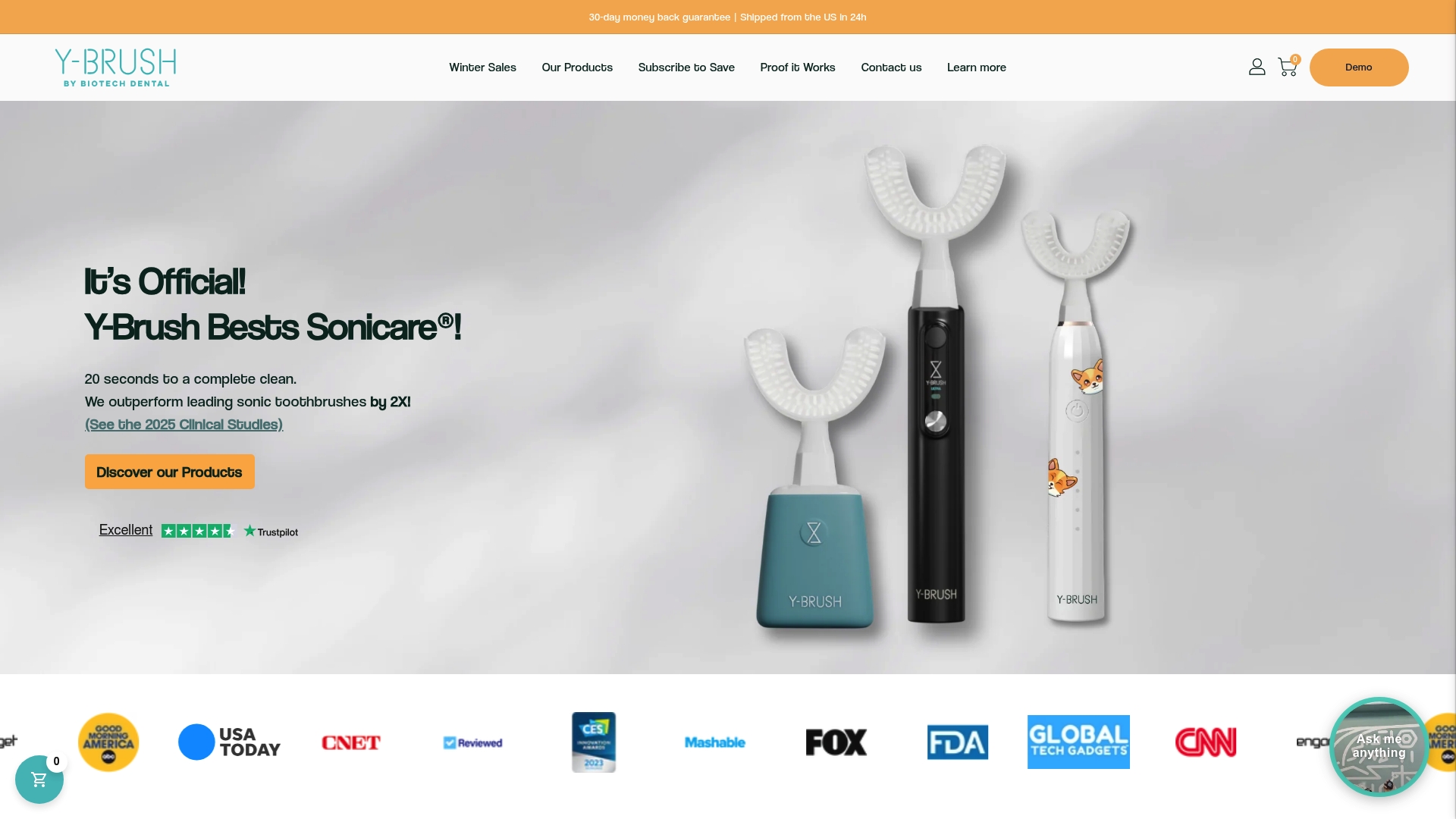
For busy adults and parents, the membership model means replacement heads arrive on schedule, so bristle effectiveness never quietly degrades between orders. Internal testing shows 21% better oral care results compared to conventional brushing. If you want a brush that applies the advantages of dental technology to a routine that fits how you actually live, the Y-brush Essential is the place to start. See the full product and membership options and find the plan that fits your household.


