


Most gum pain after brushing comes down to two things: technique or plaque buildup, and both usually respond well to gentler care within a few days. Switch to a soft-bristled brush, ease up on pressure, and rinse with warm salt water. If bleeding, swelling, pus, or pain lasts longer than 7 to 14 days, or you notice loose teeth or fever, call your dentist rather than waiting it out.
TL;DR:
- Using a soft-bristled brush and gentle circular motions helps reduce gum pain caused by mechanical trauma and prevents further tissue damage.
- Plaque buildup and gingivitis are common causes of gum inflammation, especially if symptoms spread across multiple teeth or persist beyond two weeks.
- In cases of persistent or severe symptoms like pus, fever, loose teeth, or pain lasting over 14 days, seeking professional dental care is crucial for early intervention.
- Avoiding aggressive brushing immediately after consuming acidic foods and using SLS-free toothpaste can prevent sensitivity and gum irritation.
- Most gum pain from brushing improves within a few days with proper technique, but ongoing discomfort warrants a dental exam to address underlying issues.
Table of Contents
- What Causes Gum Pain After Brushing?
- Is Your Gum Pain Mild or a Warning Sign?
- What Helps Gum Pain Right After Brushing?
- How Do You Prevent Gum Pain From Brushing?
- When Should You See a Dentist for Gum Pain?
- My Take on Gum Pain and What Actually Fixes It
- Where This Advice Comes From
- Sources
- FAQ
What Causes Gum Pain After Brushing?
Gum tissue is soft and full of small blood vessels, which is exactly why brushing errors show up so fast. The most common culprit is simple mechanical trauma. If you scrub side to side with force, or your brush head is flared and worn, you’re essentially sanding your gumline instead of cleaning it.
Plaque buildup is the other major driver. When plaque sits along the gumline too long, it triggers gingivitis, an early and reversible form of gum disease that makes tissue red, puffy, and prone to bleeding the moment a brush touches it. Nearly [50% of U.S. adults](https://www.nidcr.nih.gov/research/data-statistics/periodontal-disease/adults) deal with some form of gum disease, so tender, bleeding gums after brushing are far from rare.
A few other triggers are worth ruling out:
- Harsh toothpaste ingredients like sodium lauryl sulfate (SLS) or peroxide-based whiteners can sting sensitive gums on contact.
- Alcohol-based mouthwash can compound the burning sensation right after brushing.
- Resuming flossing after a break, recent dental work, or a mouth ulcer can all cause temporary tenderness.
- Dry mouth, hormonal shifts, certain medications, and low vitamin C or vitamin K can make gums more fragile and quicker to bleed.
Identifying which of these applies to you is the fastest way to pick the right fix instead of guessing.
Is Your Gum Pain Mild or a Warning Sign?
Location tells you a lot. Pain that lines up exactly with where you brushed hardest, usually along one section of the gumline, points to mechanical trauma from pressure or a worn brush. Redness and bleeding spread across most of your gums, especially near the base of several teeth, suggests inflammation from plaque rather than a one-time scrubbing mistake.
Nearly half of U.S. adults have some degree of gum disease, and gingivitis specifically causes exactly this pattern: red, swollen, tender gums that bleed easily but respond quickly to better brushing habits.
Watch for signs that go beyond simple irritation:
- Pus or a foul taste near the gumline
- Facial swelling or fever
- Teeth that feel loose or shifted
- Pain severe enough to affect eating or sleeping
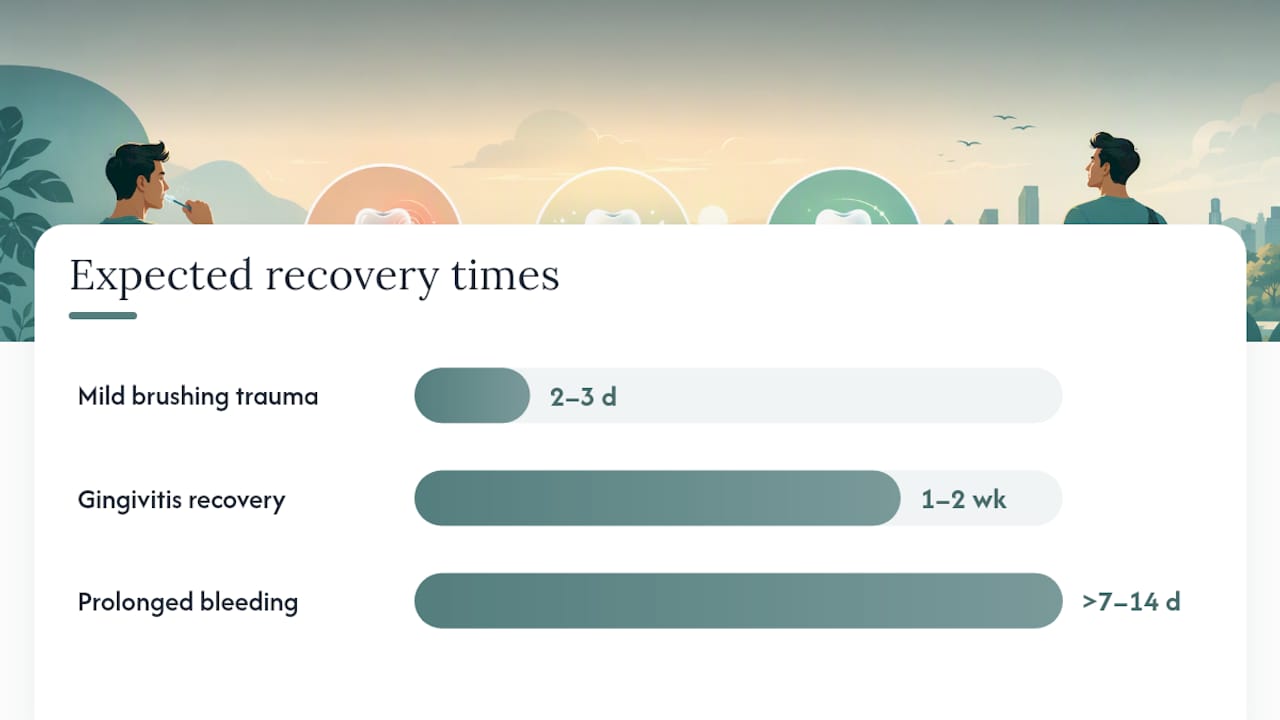
- Bleeding or soreness that lasts more than 7 to 14 days
Mild trauma from brushing typically eases within two to three days once you soften your technique. Gingivitis-related tenderness can also improve within one to two weeks of consistent, gentle brushing and flossing, but ignoring it lets plaque harden into tartar, which pushes inflammation deeper and harder to reverse.
What Helps Gum Pain Right After Brushing?
Relief starts with removing whatever is aggravating the tissue, not with skipping brushing altogether. Backing off entirely lets plaque rebuild, which only feeds the inflammation causing the pain in the first place.
- Switch to a soft-bristled brush and use small circular motions instead of horizontal scrubbing, holding it at roughly a 45-degree angle to the gumline.
- Replace your brush head every three months, or sooner if the bristles look splayed or flattened.
- Rinse with lukewarm salt water (about half a teaspoon of salt in a cup of water) to calm irritated tissue.
- Skip alcohol-based mouthwash for now if it stings, and try an SLS-free or desensitizing toothpaste instead of whitening formulas until gums settle.
- Use an over-the-counter oral gel or a standard pain reliever if soreness is disrupting your day, while still brushing gently twice daily to keep plaque from accumulating.
Pro Tip: If your gums sting the moment toothpaste touches them, try brushing with just water for a day or two, then reintroduce a gentle, SLS-free formula once the stinging settles.
Most people notice a real difference within 48 to 72 hours of making these changes. If nothing improves in that window, treat it as a signal to look closer rather than push through the pain.
How Do You Prevent Gum Pain From Brushing?
Prevention is mostly about pressure, timing, and product choice. Gums that get irritated over and over usually aren’t dealing with a one-time accident. They’re absorbing a repeated habit.
- Use a soft-bristled brush and let the bristles do the work; pressing harder does not clean better, it just abrades tissue.
- Electric brushes with soft heads and pressure sensors tend to protect sensitive gums better than manual brushing, since they regulate force automatically instead of relying on your grip. A sonic toothbrush built with gum safety in mind removes the guesswork from pressure control.
- Wait 30 to 60 minutes after eating or drinking anything acidic, like citrus, soda, or wine, before brushing. Acid temporarily softens enamel, and brushing too soon can wear it down further and leave gums more reactive.
- Choose toothpaste without SLS or peroxide whiteners if you already notice sensitivity, and swap your brush or brush head roughly every three months.
- Stay hydrated, get enough vitamin C, and address dry mouth, since all three affect how resilient gum tissue is day to day. If you smoke, cutting back measurably improves gum healing over time.
Pro Tip: Keep a spare brush head on a visible shelf, not buried in a drawer. People delay replacing worn bristles mostly because they forget, not because they’re avoiding it.
Good technique paired with the right timing does more for gum comfort than any single product change. For a closer look at rebuilding better habits after months of heavy-handed brushing, this guide on correcting overbrushing walks through a practical two-week reset.
When Should You See a Dentist for Gum Pain?
Book an appointment if pain, bleeding, or swelling persists beyond 7 to 14 days despite gentler brushing, or immediately if you notice pus, facial swelling, fever, or teeth that feel loose.
A typical visit for gum pain includes:
- A visual exam and periodontal probing to measure gum pocket depth around each tooth
- X-rays if your dentist suspects bone loss or an abscess beneath the surface
- Professional cleaning or scaling to remove hardened plaque a toothbrush can’t reach
If gingivitis has progressed further, treatment may include scaling and root planing to clean below the gumline, a prescription antimicrobial rinse, or a referral to a periodontist for more advanced cases. Catching it early almost always means a simpler, shorter treatment path.
My Take on Gum Pain and What Actually Fixes It
Most people treat gum pain like a mystery when it’s usually a pattern. Someone brushes too hard for months, gums start protesting, and instead of easing pressure, they either ignore the pain or switch toothpaste five times looking for a fix that was never about the paste. Technique is almost always the first place to look, not the last.
It’s also worth acknowledging why plaque-related pain is so common in the first place: most people simply don’t brush long enough or consistently enough for it to matter, and close to 90% brush under two minutes rather than the full recommended time. A brush that removes plaque efficiently in a short session, paired with a genuinely gentle grip, solves more gum pain than any specialty toothpaste on the shelf. If your gums are still sore or bleeding past the two-week mark, don’t wait it out. That’s your body telling you it needs more than a rinse.
— Joris
Where This Advice Comes From
This guide draws on the NIDCR’s data on gum disease prevalence, Mayo Clinic’s clinical overview of gingivitis, and Health.com’s breakdown of gum pain causes and treatment, each covering prevalence, clinical signs, or self-care recommendations respectively.
This article is general information, not a substitute for advice from a qualified doctor. Consult a qualified healthcare professional about your own circumstances before acting on anything here.
Sources
- Periodontal (Gum) Disease | NIDCR
- Gingivitis - Symptoms and causes | Mayo Clinic
- Dental erosion - Better Health Channel
FAQ
Will Sore Gums Heal on Their Own?
Mild soreness from brushing too hard typically heals on its own within two to three days once you switch to gentler technique and a soft-bristled brush. Gingivitis-related tenderness usually improves within one to two weeks of consistent, careful brushing and flossing, since gingivitis is reversible with prompt care.
What Does Gingivitis Feel Like?
Gingivitis feels like puffy, tender gums that bleed easily when you brush or floss, often without much pain at first. Nearly half of U.S. adults](https://www.nidcr.nih.gov/research/data-statistics/periodontal-disease/adults) have some form of gum disease.
How Do I Know if My Gum Pain Is Serious?
Gum pain becomes a concern when it comes with pus, facial swelling, fever, loose teeth, or bleeding that won’t stop, or when soreness lasts longer than 7 to 14 days despite gentler brushing. Localized pain that matches exactly where you brushed hardest is usually just trauma, not infection.
How Long Does It Take for Gums to Heal After Brushing Too Hard?
Gums irritated by aggressive brushing typically heal within two to three days once pressure eases and a soft-bristled brush replaces a worn or stiff one. If soreness or bleeding continues beyond that window, plaque buildup or another underlying cause is more likely than simple brushing trauma.


