


TL;DR:
- A 360-degree toothbrush cleans multiple tooth surfaces simultaneously using a U-shaped mouthpiece or a multi-sided brush. It offers faster, more consistent cleaning but requires active movement for effective plaque removal, especially along the gumline. Proper fit, technique, and regular mouthpiece replacement are essential for optimal results.
A toothbrush 360 is an oral care device that cleans multiple tooth surfaces at the same time, using either a U-shaped mouthpiece or a 360-degree bristle arrangement around the brush head. The industry term for this category is “simultaneous multi-surface brushing,” and it covers two distinct device types that work very differently. Y-brush builds its entire product line around this principle, delivering a full-mouth clean in just 20 seconds. Reducing brushing time from the traditional 2 minutes to 20–45 seconds with 360-degree technology may increase daily compliance and improve overall oral hygiene consistency. That gap between what people know they should do and what they actually do is exactly the problem these devices are built to solve.
How does a toothbrush 360 work to clean teeth?
The mechanics behind a 360 degree toothbrush depend on which of the two main categories you are using. There are two distinct types: traditional multi-sided electric brushes with bristles on multiple sides of the head, and U-shaped mouthpiece devices designed for simultaneous multi-tooth cleaning. Each type has specific use cases, and choosing between them depends on your dental needs and daily habits.
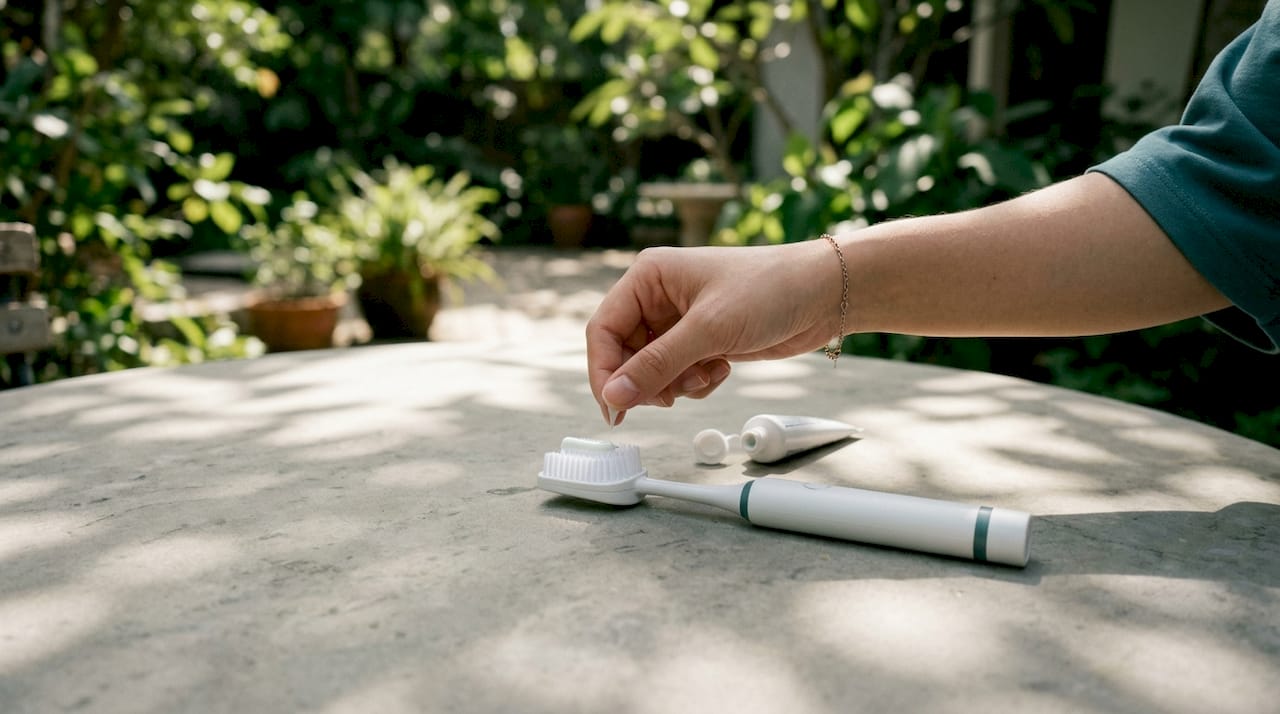
U-shaped mouthpiece devices fit over the entire upper or lower arch at once. The bristles or fins line the inside of the mouthpiece, pressing against the outer, inner, and chewing surfaces of every tooth simultaneously. Multi-sided electric brushes, by contrast, use a modified brush head with bristles on two or three sides, cleaning a small group of teeth at a time rather than the full arch.
The motor matters. Sonic motors in advanced models produce rapid vibrations that help loosen plaque without requiring heavy manual pressure. Some devices, like the Vpro360, reach 48,000 sonic strokes per minute and include a smart timer to guide brushing duration. That stroke rate is comparable to high-end single-head electric brushes, which typically range from 31,000 to 40,000 strokes per minute.
Key design features that define how well a 360 toothbrush performs:
- U-shaped mouthpiece: Covers the full arch in one placement, reducing the number of repositioning steps needed.
- Bristle material: Nylon bristles flex and reach into crevices. Silicone fins are gentler but less effective at plaque removal.
- Motor type: Sonic motors outperform basic vibrating motors for loosening plaque at the gumline.
- Smart timer: Signals when each arch has been brushed long enough, preventing under-brushing.
- Mouthpiece sizing: Multiple size options allow a closer fit, which directly affects cleaning coverage.
Pro Tip: Apply a small dot of toothpaste to each section of the mouthpiece rather than squeezing a strip along the center. This distributes foam more evenly across all tooth surfaces during brushing.
Despite marketing language suggesting otherwise, U-shaped brushes require active movement to clean effectively. A gentle side-to-side or figure-eight motion during brushing is not optional. It is what moves the bristles across the gumline and into the spaces between teeth.
What are the benefits and limitations of a 360-degree toothbrush?
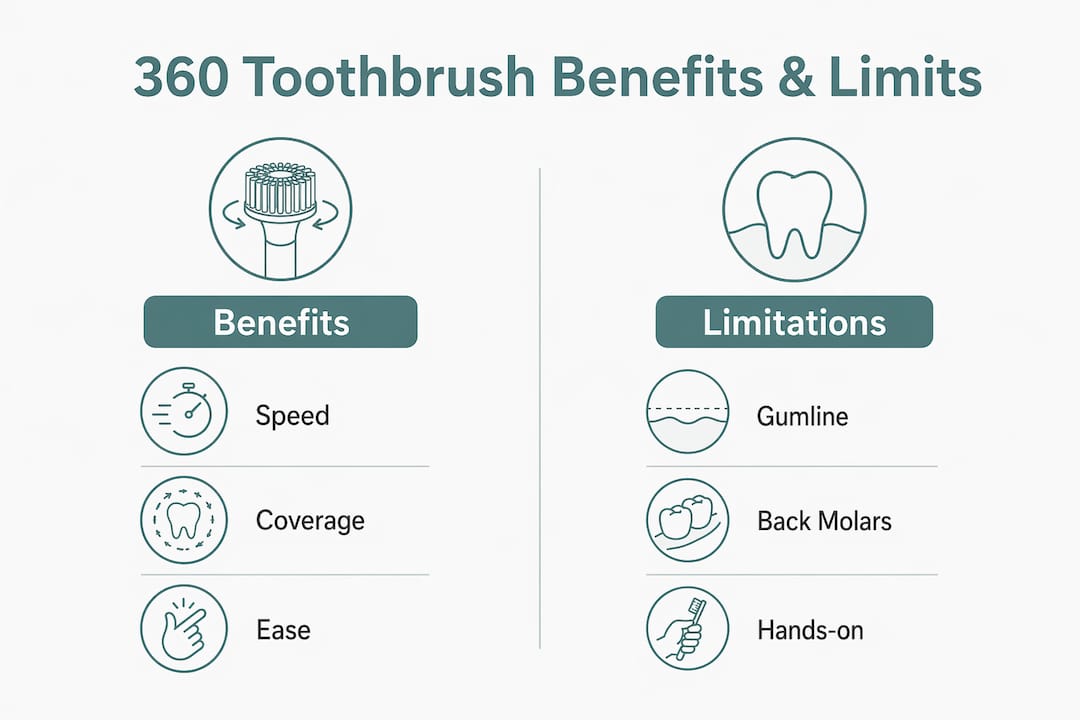
The primary benefit of a 360-degree toothbrush is speed combined with consistent coverage. Automatic toothbrush systems reduce manual effort and complexity, which improves brushing consistency during times of low energy or limited time. For people who rush their routine or skip brushing entirely on busy mornings, that consistency advantage is real and measurable.
U-shaped devices excel at cleaning the flat outer and inner surfaces of teeth. The mouthpiece presses bristles against those surfaces simultaneously, which is genuinely faster than moving a single brush head tooth by tooth. The ease of use also lowers the skill barrier, making these devices practical for children, older adults, and people with limited hand mobility.
The limitations are equally real. U-shaped brushes underperform at the gumline and on back molars compared to guided electric toothbrushes. The gumline requires angled bristle contact, which a fixed mouthpiece cannot always deliver without deliberate user movement. Back molars present a fit challenge because the arch curves sharply, and a mouthpiece that does not match that curve leaves gaps in coverage.
| Feature category | U-shaped mouthpiece device | Multi-sided electric brush |
|---|---|---|
| Full-arch coverage | Simultaneous on all teeth | Sequential, section by section |
| Gumline cleaning | Requires active user motion | Guided head targets gumline directly |
| Back molar access | Depends on mouthpiece fit | Better with angled head |
| Ease of use | High, minimal technique needed | Moderate, some technique required |
| Brushing time | 20–45 seconds per arch | 2 minutes recommended |
| Best suited for | Busy routines, compliance issues | Targeted plaque removal needs |
Pro Tip: If you have crowded teeth or deep gum pockets, pair a 360-degree device with a single-head electric brush two to three times per week. The combination covers both speed and precision.
A common misconception is that these devices are fully hands-free. Many people overestimate the hands-free nature of U-shaped toothbrushes. Active movement remains necessary to reach the gumline effectively. Treating the device as a passive tool produces noticeably weaker results.
How to choose the best toothbrush 360 device for your dental needs
Selecting the right 360 toothbrush starts with understanding your own dental situation. Choosing the wrong type given your dental needs reduces plaque removal effectiveness, so a few minutes of honest self-assessment saves money and frustration.
-
Identify your primary concern. If your goal is speed and daily compliance, a U-shaped mouthpiece device fits that need directly. If you have active gum disease or significant tartar buildup, a guided electric toothbrush with a specialized head delivers more targeted cleaning.
-
Check for multiple mouthpiece sizes. A mouthpiece that is too large or too small reduces brush contact with molars and the gumline, lowering cleaning effectiveness. Look for brands that offer at least small, medium, and large sizes, and confirm that replacement mouthpieces are easy to find and affordable.
-
Prioritize nylon bristles over silicone fins. Nylon bristles remove plaque more effectively than silicone fins. Silicone is gentler and may suit people with extreme sensitivity, but for most adults, nylon is the better choice for daily plaque control.
-
Evaluate brushing modes and battery life. Multiple brushing modes (standard, sensitive, whitening) add flexibility for people with varying gum sensitivity. Battery life matters more than it seems. A device that needs daily charging is more likely to be left on the counter.
-
Confirm water resistance. A toothbrush used near water should carry an IPX7 waterproof rating at minimum. This protects the motor and allows rinsing the device under the faucet after each use.
-
Decide whether to combine device types. For most people with healthy gums and no crowding, a 360-degree device alone handles daily maintenance well. People with orthodontic work, implants, or gum sensitivity benefit from dentist-recommended guidance on combining device types for complete coverage.
The real value of a 360-degree brush lies in maintaining brushing consistency through ease and speed rather than matching traditional brushes in every cleaning dimension. Knowing that going in helps you set realistic expectations and use the device correctly.
How to properly use a 360-degree toothbrush for effective results
Correct technique determines whether a 360 toothbrush delivers on its promise. The step-by-step process is straightforward, but a few details separate a thorough clean from a superficial rinse.
Follow these steps for best results:
- Apply toothpaste correctly. Place small dots of toothpaste at several points inside the mouthpiece rather than one large squeeze. This distributes foam evenly across all surfaces once the motor activates.
- Fit the mouthpiece to the lower arch first. Bite down gently so the mouthpiece seats fully against your teeth. A loose fit means the bristles are not making full contact.
- Activate the motor before closing your mouth fully. Starting the vibration before seating the mouthpiece helps distribute toothpaste and reduces the chance of foam escaping.
- Move the device in a gentle side-to-side or figure-eight motion. Hold this motion for the full recommended duration, typically 10–20 seconds per arch depending on the device.
- Repeat for the upper arch. Reposition, reapply toothpaste if needed, and repeat the same motion sequence.
- Rinse the mouthpiece thoroughly after each use. Remove the mouthpiece from the handle and rinse under running water. Allow it to air dry before storing to prevent bacterial buildup.
Pro Tip: Brush your tongue and the roof of your mouth after completing both arches. Most 360-degree devices do not cover these surfaces, and skipping them leaves odor-causing bacteria behind.
Common mistakes include pressing too hard, which flattens the bristles and reduces their reach into crevices, and rushing through the motion, which defeats the purpose of the active movement requirement. The effectiveness evidence consistently shows that technique matters as much as the device itself.
Key Takeaways
A 360-degree toothbrush delivers its strongest results when you match the device type to your dental needs, use correct technique, and choose nylon bristles with a properly fitted mouthpiece.
| Point | Details |
|---|---|
| Two device categories exist | U-shaped mouthpieces and multi-sided electric brushes serve different dental needs. |
| Active motion is required | Side-to-side or figure-eight movement is necessary for effective gumline cleaning. |
| Nylon beats silicone | Nylon bristles remove plaque more effectively than silicone fins for most adults. |
| Fit determines coverage | A mouthpiece that does not match your arch size leaves molars and gumline under-cleaned. |
| Speed supports compliance | Brushing in 20–45 seconds increases the likelihood of brushing consistently every day. |
Why I think most people are using their 360 toothbrush wrong
After spending years watching how people actually interact with oral care technology, the pattern I see most often is this: someone buys a 360-degree device expecting it to do all the work, uses it passively for two weeks, notices their teeth do not feel as clean as expected, and concludes the technology does not work. The technology works. The expectation was wrong.
The honest truth is that a 360-degree toothbrush is a compliance tool first and a cleaning tool second. Its greatest strength is getting you to brush every single day, even when you are exhausted, rushed, or traveling. That consistency compounds over months in ways that a perfect two-minute brush three times a week simply cannot match.
Where I have seen these devices fall short is with people who have significant gum recession or crowded lower front teeth. The mouthpiece geometry does not adapt to unusual arch shapes, and no amount of correct technique fully compensates for a poor fit. For those people, I always recommend combining the 360 device for daily speed with a single-head brush for targeted sessions twice a week.
The other thing most articles will not tell you: the mouthpiece replacement schedule matters more than the brushing mode settings. A worn mouthpiece with flattened bristles cleans no better than a manual brush. Replace it on schedule, and the device performs as advertised.
— Joris
Y-brush: a faster way to experience 360-degree cleaning
Y-brush builds its products around the same principle this article covers: consistent, full-mouth cleaning that fits into real life rather than demanding a perfect routine.
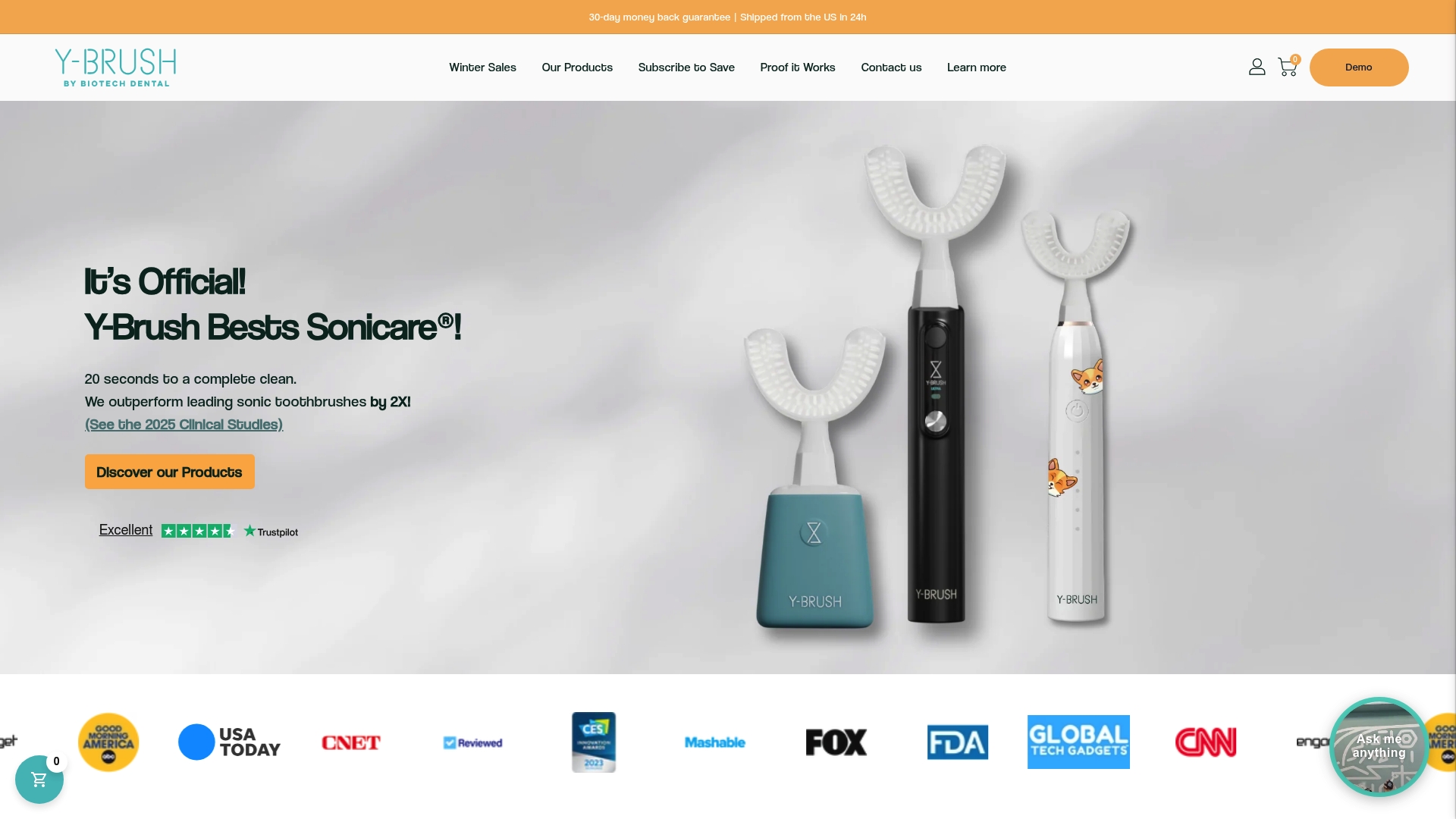
The Y-brush Essential Sonic Toothbrush delivers a complete clean in 20 seconds using sonic technology and a U-shaped mouthpiece designed for adults. For families, the Y-brush KidsBrush applies the same approach with a mouthpiece sized for children ages 4–12. Both models come with multiple mouthpiece sizes to match different arch shapes, and replacement heads are available directly through the Y-brush site. If you want to see the full range of current models, the new products page lists every available option with specifications.
FAQ
What is a toothbrush 360?
A toothbrush 360 is an oral care device that cleans multiple tooth surfaces simultaneously, using either a U-shaped mouthpiece or a 360-degree bristle arrangement. It is designed to reduce brushing time while maintaining consistent plaque removal across the full arch.
How long should you brush with a 360-degree toothbrush?
Most 360-degree toothbrush devices recommend 10–20 seconds per arch, for a total brushing time of 20–45 seconds. Built-in smart timers on many models signal when each arch is complete.
Are 360-degree toothbrushes actually hands-free?
No. U-shaped 360-degree toothbrushes require a gentle side-to-side or figure-eight motion to clean the gumline effectively. Passive use without active movement produces noticeably weaker plaque removal results.
Do nylon or silicone bristles clean better in a 360 toothbrush?
Nylon bristles remove plaque more effectively than silicone fins for most adults. Silicone fins are gentler and may suit people with extreme sensitivity, but nylon is the better choice for daily plaque control.
Can a 360-degree toothbrush replace a regular electric toothbrush?
For most people with healthy gums, a 360-degree device handles daily maintenance well on its own. People with gum disease, crowded teeth, or orthodontic work benefit from combining a 360-degree device with a guided single-head electric brush for complete coverage.


