


TL;DR:
- A mouthpiece toothbrush for adults is an electric device that cleans all teeth simultaneously using a U-shaped tray with bristles or fins. Its effectiveness hinges on proper fit, bristle quality, and supplemental care, while speed benefits are clear. The device works best when used with multiple short cycles and regular replacement of mouthpieces.
A mouthpiece toothbrush for adults is an electric dental device that cleans all teeth simultaneously using a U-shaped tray lined with bristles or silicone fins. The industry term for this category is “automated mouthpiece brush” or “U-shaped sonic toothbrush.” These devices appeal to adults who know they should brush for two full minutes but rarely do. Research confirms that 90% of adults brush for under one minute, making the case for faster, more consistent tools genuinely compelling. Effectiveness, however, depends on fit, bristle type, and how you use the device, not just the technology itself.
How do mouthpiece toothbrushes work for adults?
A U-shaped mouthpiece toothbrush wraps around all teeth at once, with bristles or silicone fins lining both the inner and outer surfaces of the tray. When activated, the device delivers vibrations across every tooth surface simultaneously. The best models use sonic vibration technology, with some reaching 20,000 vibrations per minute, completing a full brushing cycle in about 20 seconds. That speed is not a gimmick. It reflects a real engineering achievement when the device is properly designed and correctly fitted.
The primary advantages that draw adults to this format are clear:
- Time savings. A full cleaning cycle takes 20–30 seconds instead of two minutes, which matters for busy mornings or evening fatigue.
- Hands-free operation. Adults with limited hand mobility, arthritis, or conditions like ADHD find the passive brushing format significantly easier to maintain consistently.
- Simultaneous coverage. All tooth surfaces receive vibration at the same time, removing the need to manually move a brush head from tooth to tooth.
- Ease of habit formation. The short cycle length lowers the barrier to brushing twice daily, which is the single most important factor in long-term oral health.
- Compact design. Most models are travel-friendly and charge via USB, making them practical for people who travel frequently.
Experts recommend running two to three cleaning cycles per session, each lasting around 30 seconds, to maximize plaque disruption. A single short cycle is rarely sufficient on its own. Pairing the device with a proper mouthpiece usage routine produces measurably better results than casual, one-and-done use.
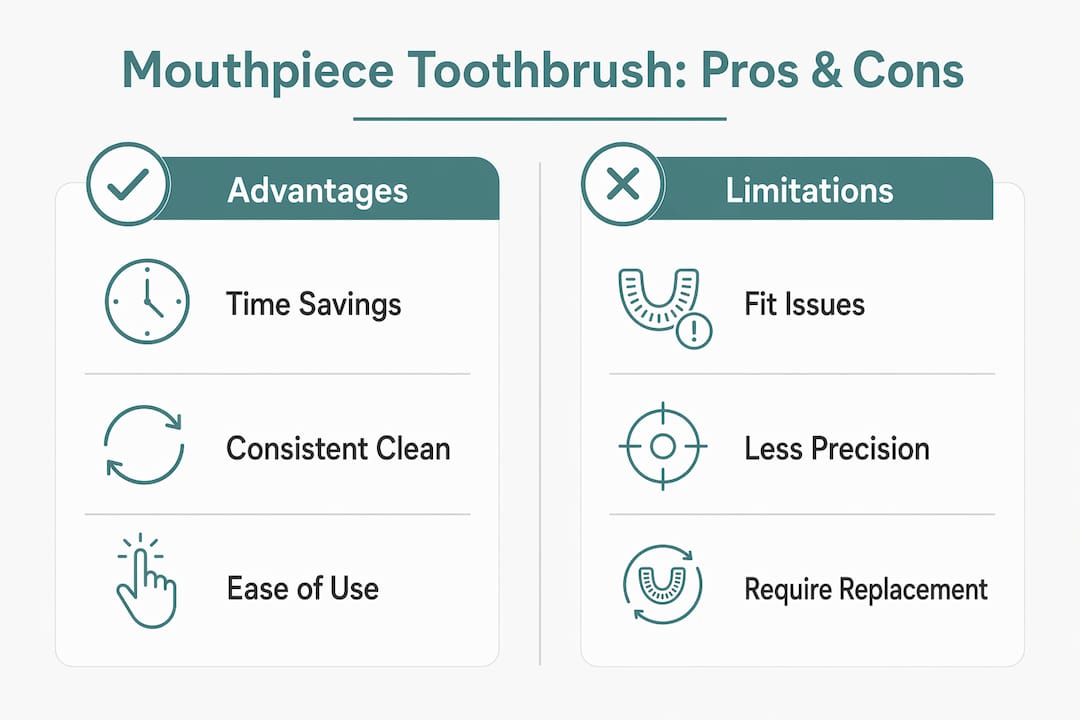
What are the limitations of mouthpiece toothbrushes for adults?

The critical question for any automated mouthpiece brush is not speed. It is efficacy. Clinical evidence shows that standard electric toothbrushes with pressure sensors and timers remain the gold standard for gum health because they deliver precise, tooth-by-tooth mechanical cleaning. Mouthpiece devices face real structural limitations that adults should understand before relying on them exclusively.
Fit and coverage gaps
Inconsistent mouthpiece fit is the most common and consequential problem. Adults often assume the device covers all teeth simply because it is in their mouth. Back molars and the gumline are the areas most frequently missed, and those are exactly where plaque causes the most damage. Practitioners specifically warn users to physically verify that the mouthpiece reaches the rear molars before turning the device on.
Vibration without mechanical precision
Traditional brushing outperforms U-shaped mouthpiece brushes in clinical comparisons because effective plaque removal at the gingival margin requires mechanical precision, not just vibration. Dr. Joel H. Berg’s clinical analysis confirms that speed and vibration alone do not replicate the targeted scrubbing action of a well-used electric brush head. Vibration helps, but it does not substitute for direct bristle-to-surface contact at the right angle.
Common user mistakes
- Using too much toothpaste, which creates foam that masks whether bristles are actually contacting teeth
- Running only one cycle and assuming the job is done
- Skipping supplemental flossing or manual brushing at the gumline
- Failing to check that the mouthpiece seats correctly over back molars
Pro Tip: Use only a pea-sized amount of toothpaste. Excess foam reduces bristle-to-tooth contact and gives a false sense of cleanliness.
Hygiene and replacement
Mouthpiece hygiene is non-negotiable. Failing to rinse and air-dry the tray immediately after use allows biofilm to develop. Replacement every 3–6 months is the standard recommendation. Using a worn or contaminated mouthpiece can be worse for oral health than skipping a brushing session entirely.
Experts consistently position mouthpiece toothbrushes as supplemental tools, not standalone replacements for traditional brushing. Adults who treat them as a complete solution often develop a false sense of security about their oral hygiene.
How to use a mouthpiece toothbrush effectively
Proper technique closes the gap between what these devices promise and what they actually deliver. Follow this sequence for best results:
- Apply a pea-sized amount of toothpaste to the inner bristles of the mouthpiece. Do not coat the entire tray.
- Seat the mouthpiece fully. Press it back until it contacts your rear molars. Confirm contact before activating the device.
- Run two to three cycles. Each cycle should last 20–30 seconds. Running multiple cycles is the single most effective way to improve plaque removal with this format.
- Spit and rinse. Remove the mouthpiece, spit out excess toothpaste, and rinse your mouth thoroughly.
- Supplement with flossing or an interdental brush. Mouthpiece devices do not clean between teeth or precisely along the gumline. This step is not optional if you want complete oral hygiene.
- Clean the mouthpiece immediately. Rinse it under running water, shake off excess moisture, and let it air-dry completely before storing.
Pro Tip: Check the bristle material before buying. Real nylon bristles remove plaque more effectively than silicone fins, which primarily massage rather than scrub.
Selecting a model with multiple mouthpiece sizes is equally important. A tray that fits your arch correctly delivers dramatically better cleaning than a universal size that leaves gaps at the molars or sits loosely on smaller teeth.
How to choose the best mouthpiece toothbrush for adult users
Not all automated mouthpiece brushes perform equally. The buying guide criteria that matter most are bristle type, fit options, vibration quality, and replacement availability.
| Feature | What to look for |
|---|---|
| Bristle type | Real nylon bristles, not silicone fins only |
| Mouthpiece sizing | Multiple sizes or custom-fit options available |
| Vibration technology | Sonic vibration at high frequency for effective plaque disruption |
| Replacement availability | Replacement mouthpieces easy to order, replaced every 3–6 months |
| Dental endorsement | Look for clinical testing data or dental professional approval |
Nylon bristles outperform silicone in every clinical comparison because they physically disrupt plaque rather than simply vibrating the tooth surface. Silicone fins have their place in gentle gum massage, but they do not substitute for bristle-based cleaning. Adults with sensitive gums can look for hybrid designs that combine both materials.
Dental endorsement or clinical testing data is a meaningful differentiator. Devices backed by published plaque-removal data give you a factual basis for comparison rather than marketing claims alone.
Key Takeaways
A mouthpiece toothbrush for adults delivers real time savings and consistency benefits, but its effectiveness depends entirely on fit, bristle quality, and supplemental care.
| Point | Details |
|---|---|
| Efficacy depends on fit | Verify the mouthpiece contacts back molars before activating the device. |
| Nylon beats silicone | Choose models with real nylon bristles for effective plaque removal. |
| Multiple cycles required | Run two to three cycles per session, not just one, for adequate cleaning. |
| Supplement with flossing | Mouthpiece devices do not clean between teeth or precisely at the gumline. |
| Replace every 3–6 months | Worn or contaminated mouthpieces increase bacterial risk rather than reducing it. |
The honest case for mouthpiece brushes (and their real ceiling)
I have followed the mouthpiece toothbrush category closely, and my honest assessment is this: the convenience argument is real, but the efficacy ceiling is lower than most marketing suggests.
The adults who benefit most from these devices are not people replacing a solid brushing routine. They are people who were barely brushing at all. For someone who rushes through 30 seconds of half-hearted manual brushing every morning, a well-fitted mouthpiece brush with real nylon bristles is a genuine upgrade. Consistency beats perfection in oral hygiene, and if a 20-second automated cycle means someone actually brushes twice a day, that matters clinically.
Where I see the real problem is with adults who buy a mouthpiece brush, feel the vibration, taste the mint, and conclude their teeth are clean. The gumline is where periodontal disease starts, and vibration alone does not reliably clean it. The “fit illusion” is the term practitioners use for this. You feel the device working, so you assume it is working everywhere. It often is not.
My practical advice: use a mouthpiece brush as your primary tool if it means you will actually brush consistently. But add 60 seconds of flossing or an interdental brush at least once a day. That combination beats two minutes of manual brushing that most adults never complete anyway.
— Joris
Y-brush: built for adults who need a faster, better clean
Y-brush was designed specifically for adults who know the two-minute standard and consistently fall short of it. The Y-brush Essential Sonic Toothbrush uses real nylon bristles, sonic vibration technology, and multiple mouthpiece sizes to address the fit and bristle-quality problems that undermine most mouthpiece devices. A full cleaning cycle takes 20 seconds, which means the barrier to brushing twice daily drops to almost nothing.
Y-brush offers replacement mouthpieces on a straightforward schedule, so maintenance stays simple. For adults who want the speed of a mouthpiece brush without sacrificing the cleaning quality that real bristles provide, the Y-brush Ultra Sonic Toothbrush adds enhanced vibration modes for a deeper clean. Both models are built around the same principle: a plaque-free smile should fit into real life, not compete with it.
FAQ
What is a mouthpiece toothbrush for adults?
A mouthpiece toothbrush is a U-shaped electric dental device that cleans all teeth simultaneously using bristles or silicone fins and sonic vibration. It is designed to reduce brushing time while maintaining plaque removal across all tooth surfaces.
How do I use a mouthpiece toothbrush correctly?
Apply a pea-sized amount of toothpaste, seat the mouthpiece fully against your back molars, and run two to three 20–30 second cycles. Always supplement with flossing to clean between teeth and along the gumline.
Are mouthpiece toothbrushes as effective as regular electric toothbrushes?
Clinical evidence shows standard electric toothbrushes with pressure sensors remain more effective for gum health due to precise mechanical cleaning. Mouthpiece brushes are best used as a consistent daily tool, ideally supplemented with flossing.
How often should I replace the mouthpiece?
Replace the mouthpiece every 3–6 months, or sooner if bristles show wear. Failing to replace it on schedule allows bacterial biofilm to develop, which increases oral health risk rather than reducing it.
What features matter most when choosing an automatic mouthpiece toothbrush?
Prioritize real nylon bristles over silicone fins, multiple mouthpiece sizes for correct fit, and readily available replacement trays. Dental endorsement or published clinical testing data is a reliable indicator of actual cleaning performance.


