


TL;DR:
- A 360 toothbrush cleans multiple tooth surfaces simultaneously and aims to reduce brushing time. Its effectiveness varies by design, with manual triple-headed models performing comparably to traditional brushes, while U-shaped electric models have limited independent validation. Proper fit and routine use are essential for maximizing the benefits of these devices.
A 360 toothbrush is defined as any toothbrush designed to clean multiple tooth surfaces simultaneously, either through a U-shaped mouthpiece, a triple-headed manual design, or a sonic-powered arch brush. The core promise of 360 toothbrush effectiveness is faster, more consistent plaque removal with less technique required from the person brushing. Manufacturer claims for some models include up to 40% more interproximal plaque reduction and 72% less gingival bleeding compared to leading manual brushes. Those numbers are compelling, but the full picture depends heavily on which type of 360 design you choose and how you use it.
What clinical evidence supports 360 toothbrush effectiveness?
The clinical record on 360 toothbrush cleaning capability is more nuanced than most marketing suggests. The term “360 toothbrush” actually covers two very different product categories, and the research treats them separately.
Manual and triple-headed 360 designs
Triple-headed manual toothbrushes have been studied in randomized controlled trials against conventional manual brushes. The result: plaque removal efficacy is statistically comparable between the two designs in healthy adults with normal dexterity. That finding carries a p-value below 0.001, meaning the similarity is not a coincidence. The practical implication is that a triple-headed 360 brush does not clean significantly better than a well-used standard brush, but it does clean just as well with less precise technique.
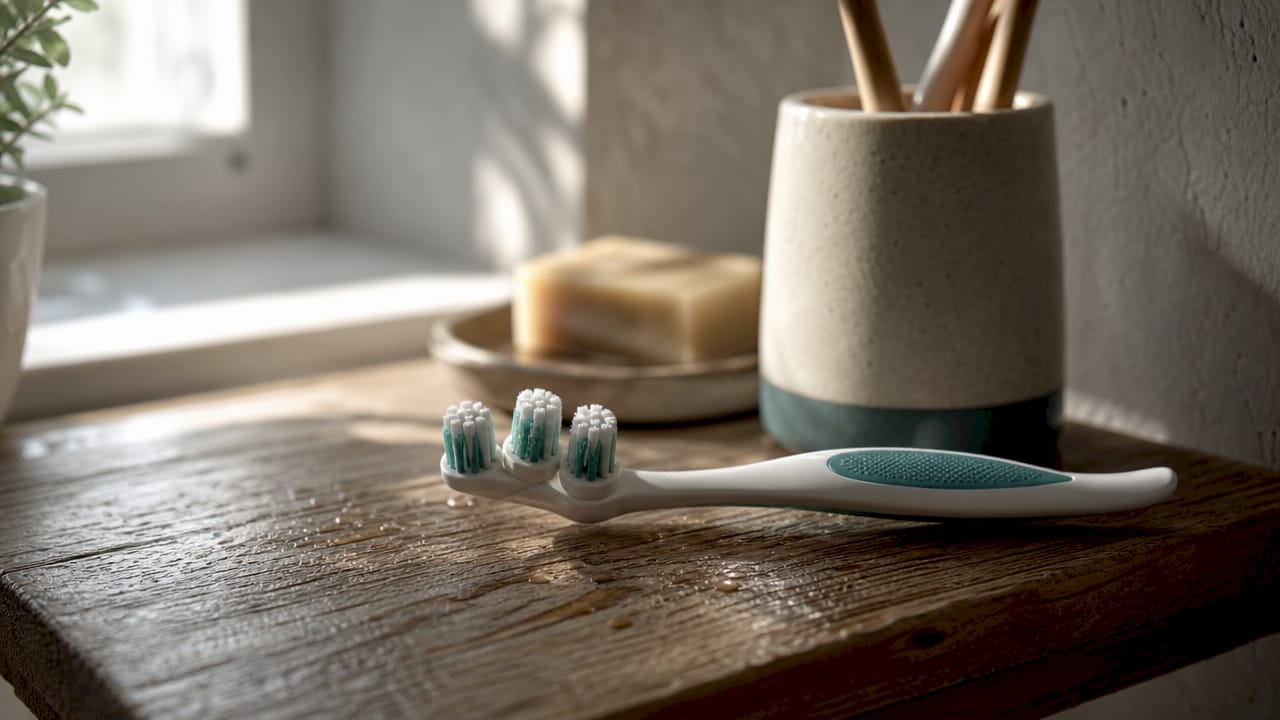
Manufacturer data for some manual-style 360 models goes further. Claims of removing up to 96% more odor-causing bacteria and delivering up to 10 hours of fresher breath appear in product documentation. These figures come from manufacturer-sponsored testing, so independent replication matters before treating them as universal benchmarks.
U-shaped electric 360 designs
U-shaped electric 360 toothbrushes operate on a different principle entirely. Instead of a brush head you guide around your mouth, you bite down on a mouthpiece that vibrates against all teeth at once. These devices reduce brushing time to 30–45 seconds compared to the standard two-minute recommendation. That speed advantage is real, but the cleaning quality depends entirely on correct tray alignment.
The research gap here is notable. Robust independent clinical trials on U-shaped electric models are limited compared to the evidence base for manual and sonic brushes. Dental professionals generally treat these devices as complements rather than replacements, particularly for people managing gum disease or complex orthodontic cases.
- Triple-headed manual 360 brushes: clinically comparable to conventional manual brushes in plaque removal
- U-shaped electric models: faster brushing cycles but limited independent clinical validation
- Manufacturer efficacy claims: apply to specific models under controlled conditions, not all 360 designs
- Gum disease care: dental guidance consistently recommends traditional methods as the primary approach
How do different 360 toothbrush designs work?
Consumer confusion about 360 toothbrushes is widespread because the label covers fundamentally different technologies. Understanding how each design works helps you match the right tool to your actual oral health needs.
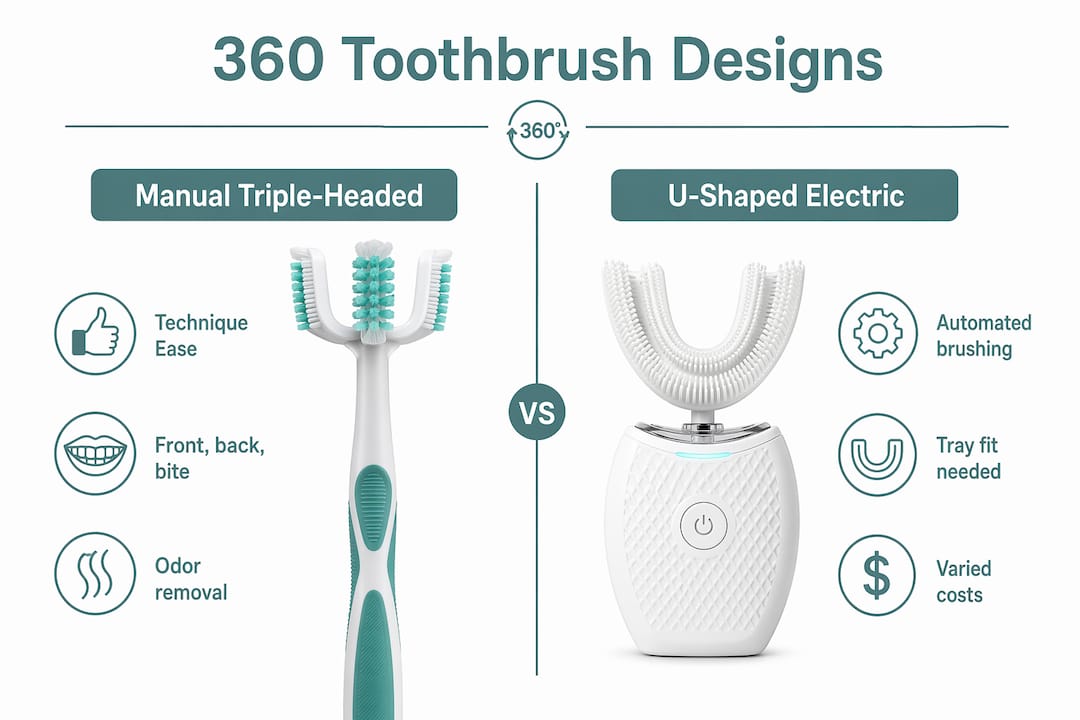
| Design type | Brushing time | Surface coverage | Technique required | Best for |
|---|---|---|---|---|
| Manual triple-headed | 2 minutes | Front, back, top simultaneously | Moderate | Standard plaque control |
| Sonic 360 arch brush | 20 seconds | Full arch per cycle | Low | Busy schedules, consistent clean |
| U-shaped electric mouthpiece | 30–45 seconds | All teeth at once | Low, but alignment critical | Limited dexterity users |
| Standard electric brush | 2 minutes | One surface at a time | High | Precision cleaning |
Manual triple-headed brushes
A manual triple-headed 360 brush places bristles on three sides of the head, cleaning the front, back, and biting surface of each tooth in a single stroke. The design reduces the number of passes needed but still requires the person to move the brush through the mouth systematically. For people who already brush well, the benefit is modest. For people who rush or skip surfaces, the simultaneous coverage is a real advantage.
Sonic arch brushes
Sonic 360 arch brushes, like those made by Y-brush, use high-frequency vibrations across a full-arch mouthpiece. The person bites down, the sonic motor activates, and the entire upper or lower arch is cleaned in seconds. Y-brush’s design delivers a complete clean in 20 seconds, addressing the documented reality that 90% of people brush for under one minute. Sonic vibrations disrupt plaque at the gum line more effectively than manual scrubbing alone.
U-shaped electric mouthpieces
U-shaped mouthpiece brushes automate the entire process but introduce a new variable: fit. The tray must align correctly with your teeth and jaw. Poor alignment during the brushing cycle results in uneven cleaning despite the automation. People with narrow arches, crowded teeth, or significant size differences between upper and lower jaws often find these devices less reliable.
Pro Tip: Before buying any U-shaped electric model, check whether the manufacturer offers multiple tray sizes. A single-size tray that does not fit your arch will underperform regardless of its motor quality.
What are the practical advantages and limitations of 360 toothbrushes?
The strongest case for a 360 toothbrush is consistency. Most people do not brush long enough or cover all surfaces reliably. A design that reduces technique demands directly addresses that gap.
Who benefits most
- People with limited manual dexterity, including older adults and those with arthritis
- Children and parents managing brushing routines for kids ages 4 and up
- Busy adults who consistently cut brushing time short
- Anyone who struggles to reach back molars or clean lingual (tongue-side) surfaces
Research on children with ADHD found that powered and manual brushes produce similar plaque removal in the 8–10 age range. Long-term outcomes depend more on consistent habits than on brush type. That finding applies broadly: the best toothbrush is the one a person actually uses correctly every day.
Limitations to consider
Bristle softness is not standardized across 360 models. Soft bristle labels vary widely between manufacturers, and individual anatomy affects how bristles contact the gum line. A brush labeled “soft” by one brand may feel noticeably firmer than another. People with sensitive gums should test carefully before committing.
Cost is a second consideration. U-shaped direct-to-consumer models typically retail between $40 and $80. If the device does not fit or perform as expected, return shipping fees of $20–$40 can significantly raise the total cost of ownership. That hidden expense catches many buyers off guard.
Pro Tip: For 360 toothbrushes with replaceable mouthpieces or brush heads, factor in the annual replacement cost before purchase. A $50 device with $30 annual head replacements costs more over two years than a $90 device with $10 replacements.
How do 360 toothbrushes fit into a complete oral hygiene routine?
A 360 toothbrush handles tooth surface cleaning efficiently, but it does not replace every element of a complete oral hygiene routine. Plaque control requires more than brushing alone.
- Brush twice daily. Morning and evening brushing removes plaque before it mineralizes into tartar. A 360 design makes this easier to do consistently.
- Floss or use an interdental cleaner daily. No toothbrush, regardless of design, cleans fully between teeth. Flossing remains the standard recommendation for interproximal plaque.
- Use fluoride toothpaste. Fluoride strengthens enamel and reduces cavity risk. The brush type does not change this requirement.
- Schedule regular dental checkups. Professional cleanings remove tartar that brushing cannot. Twice-yearly visits are the standard recommendation for most adults.
- Follow technique guidance for your specific device. For U-shaped models, correct tray placement matters. For sonic arch brushes, proper bite position activates full coverage. Read the instructions for your specific model.
Dental guidance consistently positions 360 brushes as complements to traditional oral hygiene practices, not standalone solutions. For people managing active gum disease or wearing orthodontic appliances, a dentist’s specific recommendations take priority over any general guidance. A 360 brush can fit within those recommendations, but the routine needs professional input. You can find a practical starting point in this oral hygiene checklist for daily cleaning.
Key Takeaways
A 360 toothbrush delivers clinically comparable plaque removal to traditional brushes while reducing technique demands, but effectiveness depends on design type, correct usage, and integration with a complete oral hygiene routine.
| Point | Details |
|---|---|
| Design type determines results | Manual triple-headed, sonic arch, and U-shaped electric models each work differently and suit different users. |
| Clinical evidence is design-specific | Triple-headed manual brushes match conventional brushes in trials; U-shaped models have limited independent validation. |
| Technique still matters | U-shaped mouthpieces require correct tray alignment; poor fit reduces cleaning quality despite automation. |
| Hidden costs add up | Return shipping and replacement heads can significantly raise total ownership cost for D2C models. |
| Routine integration is required | Flossing, fluoride toothpaste, and regular dental visits remain necessary alongside any 360 toothbrush. |
My take on 360 toothbrushes after years of watching the category
The 360 toothbrush category has matured, but the marketing has not always kept pace with the science. After following the clinical literature and watching how real people actually use these devices, I have a clear view: the technology works, but the category label is doing too much heavy lifting.
The honest distinction is between devices that reduce technique demands and devices that claim to eliminate them entirely. Triple-headed manual brushes and sonic arch designs like Y-brush genuinely reduce the skill required for a thorough clean. That matters enormously for the 90% of people who do not brush for a full two minutes. A device that delivers a reliable clean in 20 seconds is not a shortcut. It is a realistic solution for how people actually live.
U-shaped mouthpiece brushes are a different story. The concept is appealing, but the fit problem is real and underreported. I have seen too many people buy a $60 device, find it does not align with their jaw, and then face a $30 return shipping fee. The total cost of a failed purchase in this category is higher than most buyers expect.
My practical recommendation: match the device to your actual behavior, not your ideal behavior. If you consistently rush brushing, a sonic arch brush that completes the job in 20 seconds will serve you better than a manual triple-headed brush that still requires two minutes of effort. If you have gum disease or orthodontic hardware, talk to your dentist before switching. The research supports 360 designs as effective tools. The key is choosing the right one for your mouth, your schedule, and your budget.
— Joris
Y-brush: a 360 sonic toothbrush built for real life
Y-brush was built around a straightforward observation: most people know they should brush for two full minutes, but 90% fall short. The Y-brush Essential Sonic Toothbrush delivers a complete clean in 20 seconds using a full-arch sonic mouthpiece that covers every tooth surface simultaneously. No technique required. No timer needed.
For families, the Y-brush KidsBrush brings the same sonic arch technology to children ages 4 through 12, making consistent brushing easier for kids and parents alike. Both models are designed to fit naturally into a daily routine without adding complexity. If you are ready to see the full Y-brush lineup, the new products page has the latest options available.
FAQ
How effective is a 360 toothbrush for plaque removal?
Triple-headed manual 360 brushes show plaque removal comparable to conventional manual brushes in randomized controlled trials. Sonic arch designs add high-frequency vibration that disrupts plaque at the gum line more effectively than manual scrubbing.
Is a 360 toothbrush worth it for sensitive teeth?
Bristle softness varies significantly between 360 models, so people with sensitive gums should check bristle specifications carefully before buying. A well-fitted sonic arch brush with soft bristles generally causes less gum irritation than aggressive manual scrubbing.
What is the difference between a U-shaped and a sonic 360 toothbrush?
A U-shaped electric brush uses a mouthpiece tray that vibrates against all teeth at once, while a sonic 360 arch brush uses high-frequency sonic waves through a fitted mouthpiece. Sonic designs typically have stronger independent clinical support and more consistent fit across users.
Do 360 toothbrushes replace flossing?
No toothbrush design replaces flossing. Dental guidance consistently recommends daily interdental cleaning alongside brushing, regardless of brush type, to remove plaque from between teeth.
Are 360 toothbrushes suitable for children?
Research shows powered and manual brushes produce similar plaque removal in children ages 8–10. Long-term results depend more on consistent daily habits than on brush type. Sonic arch designs made for children, like the Y-brush KidsBrush, simplify the routine and support habit formation.
Recommended
- Sonic Toothbrush Effectiveness: Unveiling Its Positive Impact on Oral Health Introduction – Y-Brush USA
- Automatic Toothbrush Effectiveness: What the Science Says – Y-Brush USA
- What Is The Real Effectiveness Of An Automatic Toothbrush Compared To – Y-Brush USA
- What Is The Real Effectiveness Of An Automatic Toothbrush Compared To – Y-Brush USA


