


TL;DR:
- A 360 degrees electric toothbrush cleans all tooth surfaces at once, reducing cleaning time and improving oral hygiene. There are two main types: U-shaped models that operate hands-free and sonic guided heads that require manual guidance, each suited for different user needs. Proper technique and consistent use are essential for maximizing their benefits and maintaining healthy teeth and gums.
A 360 degrees electric toothbrush is a device designed to clean all tooth surfaces simultaneously, delivering faster and more thorough oral hygiene than standard brushing. The category includes two main designs: U-shaped hands-free models that you bite down on, and sonic vibrating heads that you guide manually around your mouth. Both approaches address a real problem. Most adults brush for under a minute, far short of the dentist-recommended two minutes. Y-brush was built specifically to close that gap, offering a full mouth clean in just 20 seconds through its patented U-shaped sonic technology.
What technologies define 360 degrees electric toothbrushes?
The full mouth electric toothbrush category splits into two distinct technology types, and understanding the difference shapes your buying decision.
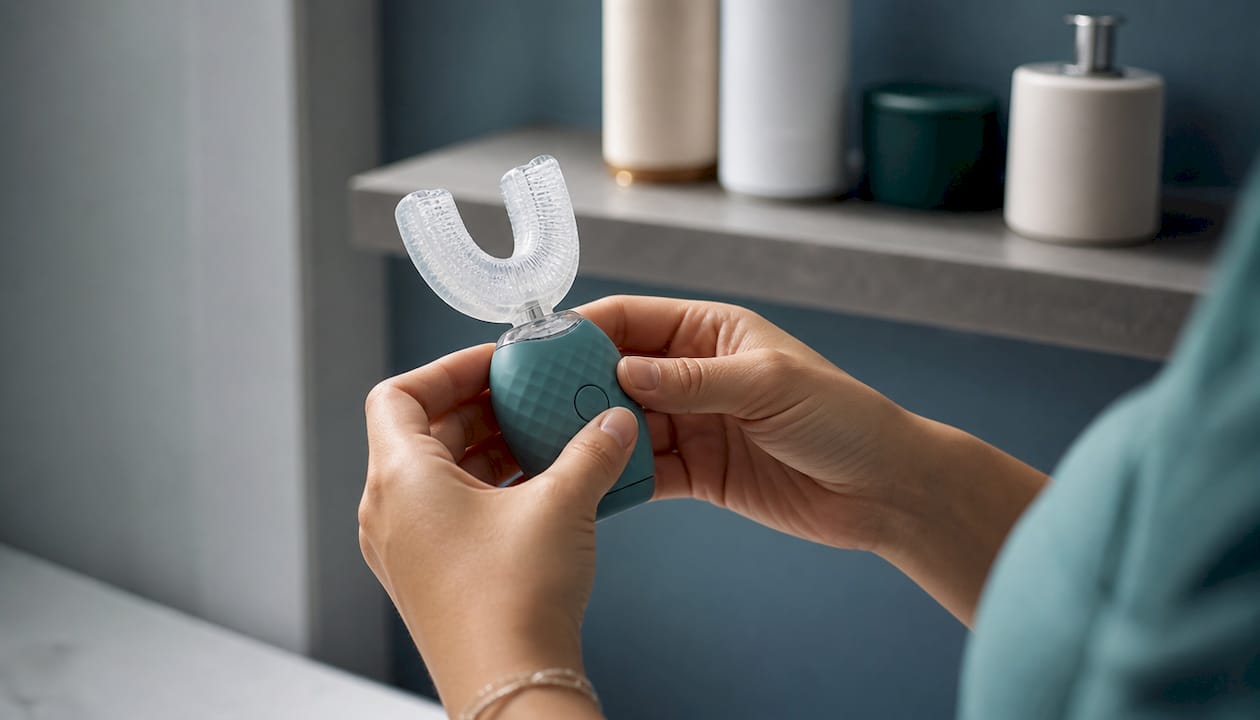
U-shaped models use a silicone mouthpiece fitted with bristles on all sides. You bite down, activate the device, and the motor delivers ultrasonic vibrations through the entire arch at once. Some U-shaped brushes operate at approximately 48,000 sonic strokes per minute, a rate that rivals professional cleaning tools. The appeal is speed. The tradeoff is that clinical validation for U-shaped designs remains limited compared to oscillating-rotating brushes documented in systematic reviews.
Sonic vibrating heads work more like a traditional electric toothbrush but with a wider, contoured head. You guide the brush manually at a 45-degree angle to the gumline, and the motor handles the actual cleaning motion. These models benefit from a longer research track record and are the type most dentists reference when citing plaque and gingivitis data.
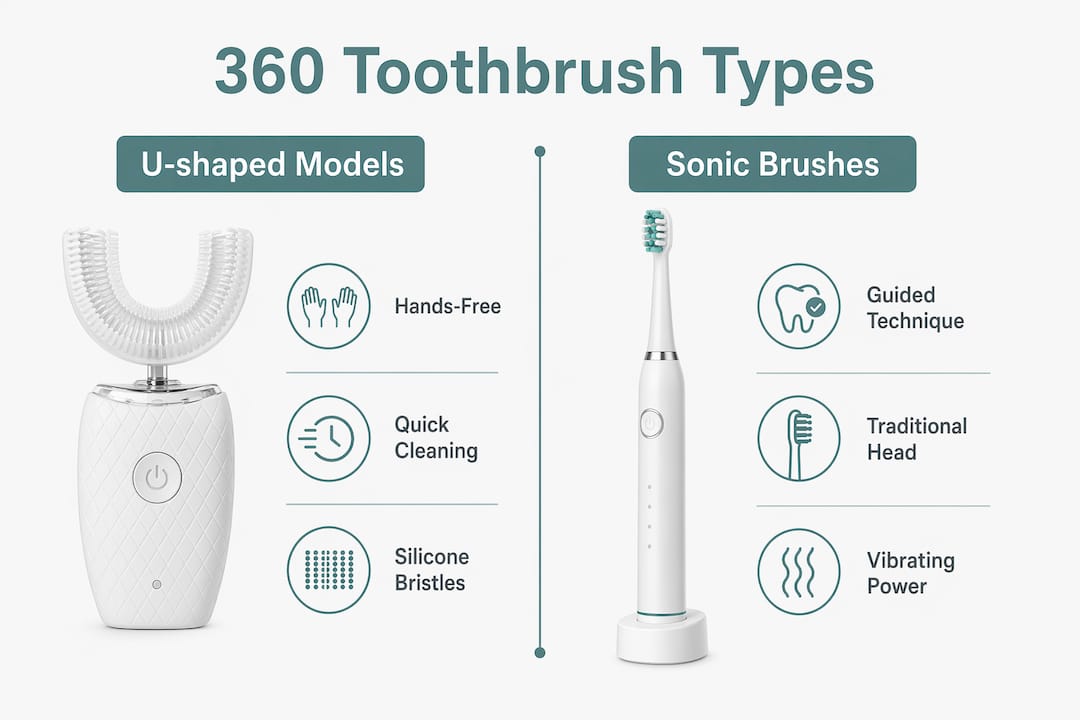
Both types commonly include built-in timers, pressure sensors, and whitening lights. Pricing across the category ranges from $20 to $70 depending on brand, materials, and feature set.
| Feature | U-shaped model | Sonic guided model |
|---|---|---|
| Brushing motion | Hands-free, bite-down | Manual guidance required |
| Cleaning coverage | Full arch at once | Section by section |
| Clinical evidence | Limited | Extensive |
| Typical price range | $20–$70 | $20–$70 |
| Best for | Speed-focused users | Technique-focused users |
- U-shaped models suit people who struggle with consistent technique or have limited hand mobility.
- Sonic guided models suit people who want the most clinically validated cleaning method.
- Both types benefit from built-in timers to hit the two-minute target.
- Pressure sensors protect gums in either design.
Pro Tip: If you are new to 360 electric brushes, start with a sonic guided model to build good technique. Once you understand the motion, a U-shaped model can complement your routine for speed on busy mornings.
How to properly use a 360 degrees electric toothbrush
Correct technique determines whether you get the full benefit of your brush. The mechanics differ between the two main designs, so the approach below covers both.
Using a sonic guided model
- Apply a pea-sized amount of fluoride toothpaste to the brush head.
- Position the head at a 45-degree angle to the gumline, as recommended for electric brushes.
- Turn on the brush before placing it in your mouth to avoid splatter.
- Guide the brush slowly from tooth to tooth. Let the motor do the work. Do not scrub.
- Spend roughly 30 seconds per quadrant. Most models with quadrant pacers will signal when to move.
- Brush for the full two minutes. Most people average only 45 seconds without a timer to guide them.
Using a U-shaped model
- Apply toothpaste evenly inside the silicone mouthpiece.
- Bite down gently so the bristles contact all surfaces of both arches.
- Activate the device and add a slight side-to-side motion to reach all teeth properly. The hands-free design does not guarantee full coverage without this movement.
- Run the full cleaning cycle, typically 20–45 seconds depending on the model.
Pro Tip: Applying manual pressure reduces brush efficiency and risks gum recession. The motor performs the cleaning. Your job is to guide, not scrub.
Replace brush heads every three months, or sooner if the bristles show visible wear. Worn bristles lose contact with tooth surfaces and reduce cleaning effectiveness significantly.
What dental health benefits does research support?
The evidence for electric toothbrushes over manual brushing is clear and consistent. Electric brushes produce a 21% greater reduction in plaque and an 11% greater reduction in gingivitis after three months of use. Long-term users retain roughly 20% more teeth and experience slower progression of both cavities and attachment loss compared to manual brush users. That is a meaningful clinical difference over a lifetime of oral care.
The mechanism behind these results is consistency. Electric toothbrush technology removes human error through consistent vibration or oscillation, which is especially valuable for people with limited hand mobility, gum disease, or conditions like arthritis. A person who struggles to maintain a steady manual brushing motion gets a far more reliable clean from a powered device.
Devices with integrated pressure sensors and timers eliminate the two most common brushing errors: pressing too hard and stopping too soon. Both errors damage enamel and gum tissue over time. A brush that corrects these habits automatically produces better long-term outcomes than technique reminders alone.
“The most effective toothbrush is the one a person will use correctly and consistently. Electric brushes with built-in guidance features reduce the skill gap between ideal technique and real-world brushing behavior, making good oral hygiene more achievable for more people.”
For children and elderly people, the benefits of a full mouth electric toothbrush are especially pronounced. Kids often lack the fine motor control for thorough manual brushing. Older adults may have dexterity limitations that make consistent technique difficult. A 360-degree brush with gentle vibration and a timer addresses both challenges without requiring perfect technique from the user.
One important nuance: U-shaped models that claim ultra-fast cleaning in 30–45 seconds still require side-to-side movement for comprehensive coverage. The speed claim is real, but passive use alone does not guarantee that every surface receives adequate contact. Technique still matters, even with the most automated designs.
You can read a deeper breakdown of the clinical evidence in this 360 toothbrush effectiveness review from Y-brush.
How to integrate a 360 electric toothbrush into your daily routine
Building a consistent oral care routine around a 360 brush requires more than buying the right device. The habits surrounding the tool determine the outcome.
- Brush twice daily. Dental hygiene guidelines recommend brushing morning and night. Daily use with timers and quadrant pacers improves brushing duration and overall oral hygiene outcomes. Skipping the evening brush allows plaque to harden overnight.
- Pair with flossing. A 360 brush cleans tooth surfaces effectively, but it does not replace interdental cleaning. Floss or an interdental brush reaches the contact points between teeth that no toothbrush head can access.
- Use fluoride toothpaste. Fluoride strengthens enamel and reduces cavity risk. The toothpaste you use with your electric brush matters as much as the brush itself.
- Replace brush heads on schedule. Brush heads wear out faster than most people expect. A three-month replacement cycle maintains cleaning performance. Y-brush offers replacement brush heads to keep your device performing at its best.
- Charge consistently. A low battery reduces motor speed and cleaning effectiveness. Keep your brush charged between uses.
For parents considering a 360 toothbrush for kids, the key factors are brush head size, vibration intensity, and timer length. A brush designed for adults delivers too much force and covers too large an area for a child’s smaller mouth. Purpose-built children’s models address both concerns. The 360 toothbrush for kids from Y-brush is sized and calibrated specifically for ages 4–12, making it a practical choice for parents who want the same efficiency benefits for their children.
For elderly people or anyone with limited mobility, electric brushes that reduce the physical demand of brushing are worth considering. Assistive care resources on comfort-focused personal care devices highlight how powered tools can support independence in daily hygiene routines.
Key Takeaways
A 360 degrees electric toothbrush delivers clinically meaningful improvements in plaque removal and gum health, provided users apply correct technique and brush consistently for the full recommended duration.
| Point | Details |
|---|---|
| Two main designs | U-shaped hands-free models and sonic guided heads serve different user needs and technique levels. |
| Clinical evidence | Electric brushes reduce plaque by 21% and gingivitis by 11% more than manual brushing after three months. |
| Technique still matters | U-shaped models require slight side-to-side movement to clean all surfaces, even with hands-free operation. |
| Built-in features help | Pressure sensors and timers correct the two most common brushing errors: pressing too hard and stopping too soon. |
| Routine beats technology | Twice-daily use, flossing, fluoride toothpaste, and regular brush head replacement determine long-term outcomes. |
The real value of 360 brushes is simpler than the marketing suggests
I have followed the electric toothbrush category for years, and the honest truth is this: the technology is not magic. What it does is remove the two biggest variables in oral hygiene, which are inconsistent technique and insufficient time. Most people do not brush badly on purpose. They brush quickly because life is busy, and they apply pressure because it feels like they are doing more. A 360 brush with a timer and a pressure sensor corrects both of those habits automatically.
Where I see people go wrong is in expecting a U-shaped model to do everything passively. The hands-free design is genuinely useful, especially for kids and anyone with dexterity challenges. But passive biting without any movement leaves gaps. The brush needs a small guiding motion to earn its results.
The best 360 toothbrush is not the one with the most features. It is the one you will actually use twice a day, every day. A device that fits your morning routine, charges reliably, and replaces heads affordably will outperform a premium model that sits on the shelf because it is too complicated. Choose based on your real life, not the ideal version of it.
— Joris
Y-brush: a full mouth clean in 20 seconds
Y-brush built its patented U-shaped sonic technology around one insight: most people will not brush for two minutes, but almost everyone can manage 20 seconds.
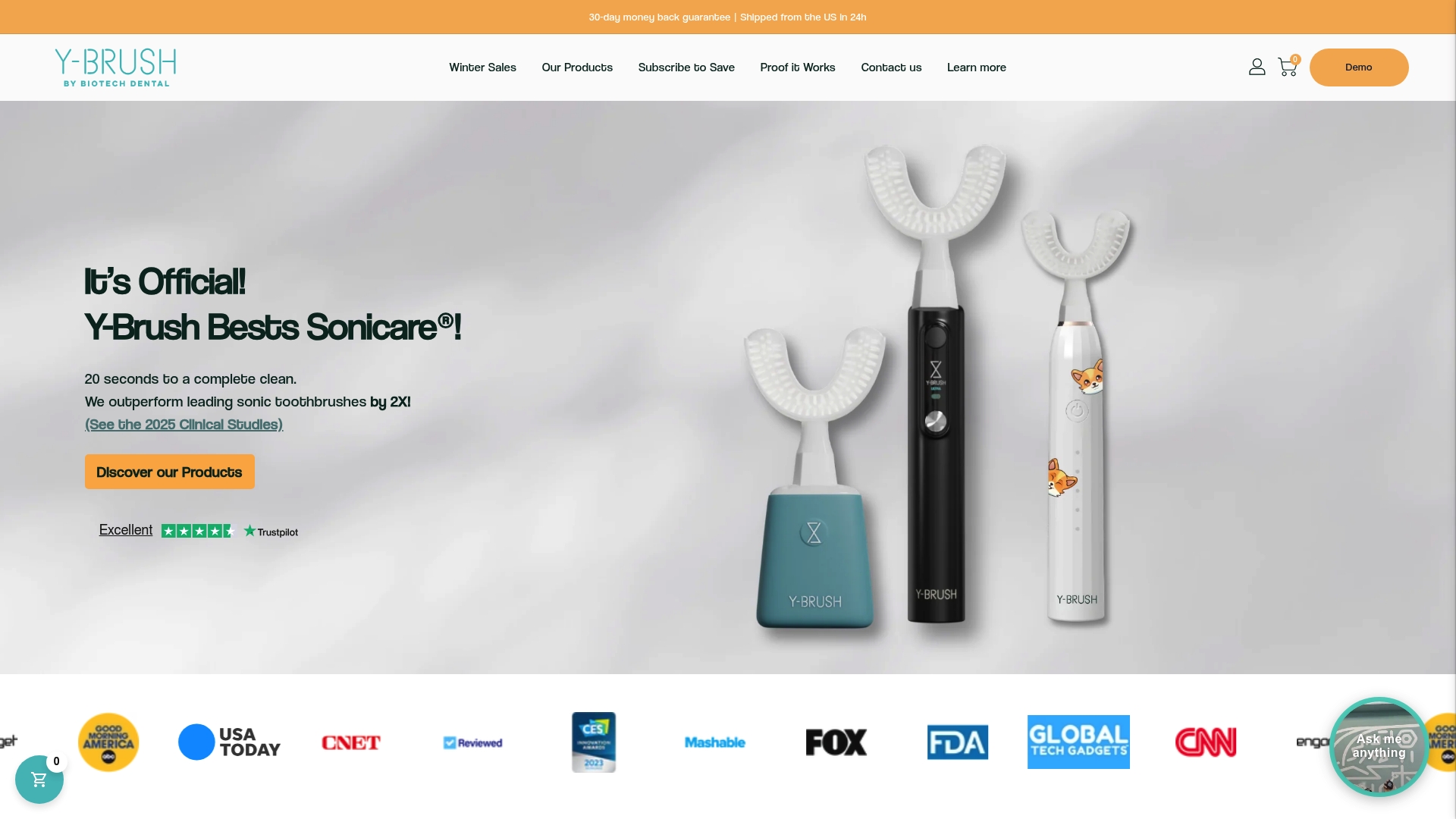
The Y-brush Essential Sonic Toothbrush delivers a complete 360-degree clean across all tooth surfaces in a single cycle, with no complicated technique required. For families, the Y-brush KidsBrush brings the same efficiency to children ages 4–12 with a head sized for smaller mouths and gentler vibration. Both models include built-in timers and are designed for easy daily maintenance. If you want a faster, more consistent clean that fits into real life, Y-brush is worth a close look.
FAQ
What is a 360 degrees electric toothbrush?
A 360 degrees electric toothbrush is a powered device that cleans all tooth surfaces simultaneously using either a U-shaped mouthpiece or a contoured sonic head. The design reduces brushing time while maintaining or improving cleaning effectiveness compared to manual brushing.
How long should you brush with a 360 electric toothbrush?
Dental guidelines recommend two minutes of brushing twice daily. U-shaped models can complete a full clean in 20–45 seconds, but sonic guided models still benefit from the full two-minute cycle using a built-in quadrant pacer.
Are 360 electric toothbrushes better than regular electric toothbrushes?
Electric toothbrushes as a category reduce plaque by 21% and gingivitis by 11% more than manual brushing. Whether a 360-degree design outperforms a standard electric model depends on the specific technology and how consistently the user applies correct technique.
Is a 360 toothbrush safe for kids?
Yes, provided the model is designed for children. Adult-sized brush heads and vibration levels are too strong for smaller mouths. Purpose-built models like the Y-brush KidsBrush are calibrated for ages 4–12 and deliver gentle, effective cleaning without the risks of an adult device.
How often should you replace the brush head on a 360 electric toothbrush?
Replace the brush head every three months, or sooner if the bristles show visible wear. Worn bristles lose surface contact and reduce plaque removal effectiveness regardless of the motor’s power output.


