


TL;DR:
- Research confirms that 360-degree toothbrushes can reduce plaque and bacterial load effectively.
- Their full-mouth cleaning design improves soft tissue and surface hygiene but requires proper technique and adequate brushing time.
360-degree toothbrushes are defined as brush designs that clean teeth, cheeks, and tongue surfaces simultaneously, using a round or U-shaped head to deliver whole-mouth coverage in a single pass. Research confirms they do work. A clinical trial found that a round-head 360 design produced significantly greater plaque reduction in children compared to conventional manual toothbrushes over just four weeks. The question is not whether they clean, but how well they clean relative to other technologies, and whether you are using them correctly.
Do 360 toothbrushes work? What the research shows
The clinical evidence is clear and growing. A randomized controlled trial involving 76 children measured Plaque Index and OHI-S scores before and after four weeks of brushing. The group using a 360-degree round-head brush showed statistically significant improvements (p < 0.05) in both scores compared to the conventional manual brush group. That result matters because it was measured under controlled conditions, not just reported by consumers.

Manual 360 toothbrushes with cheek and tongue cleaners also show measurable benefits beyond tooth surfaces. A clinical trial measured salivary bacterial load in LOG CFU/mL at 30 minutes and 2 hours after brushing. The 360-degree mouth cleaner design reduced bacterial load significantly more than a standard flat-trim brush. Reducing bacteria across the whole mouth, not just on teeth, lowers the risk of bad breath and gum irritation.
Reading clinical results requires one important distinction: statistical significance and clinical significance are not the same thing. A result can be statistically significant (p < 0.05) while the actual difference in plaque scores is small enough that most people would not notice it day to day. The studies on 360 brushes show both types of significance, which makes the findings more meaningful.
| Study focus | Design tested | Key outcome | Duration |
|---|---|---|---|
| Plaque and OHI-S scores | Round-head 360 manual brush | Significant reduction vs. conventional brush | 4 weeks |
| Salivary bacterial load | 360 brush with cheek/tongue cleaner | Greater LOG CFU/mL reduction vs. flat-trim brush | 30 min and 2 hours post-brush |
Pro Tip: When reading 360 toothbrush reviews, look for studies that report both Plaque Index scores and Gingival Index (GI) scores. A brush that improves both gives you a fuller picture of oral health benefit than one that only reports plaque data.
How do 360 toothbrushes compare with other brush types?
Not all electric toothbrush technologies perform equally. A network meta-analysis of 19 randomized controlled trials ranked brush technologies by SUCRA score, a statistical measure of how likely a treatment is to be the best option. Oscillating-rotating electric toothbrushes ranked highest for both plaque and gingivitis reduction, with a SUCRA score of 89.2%. That is the clearest head-to-head ranking available in the current literature.
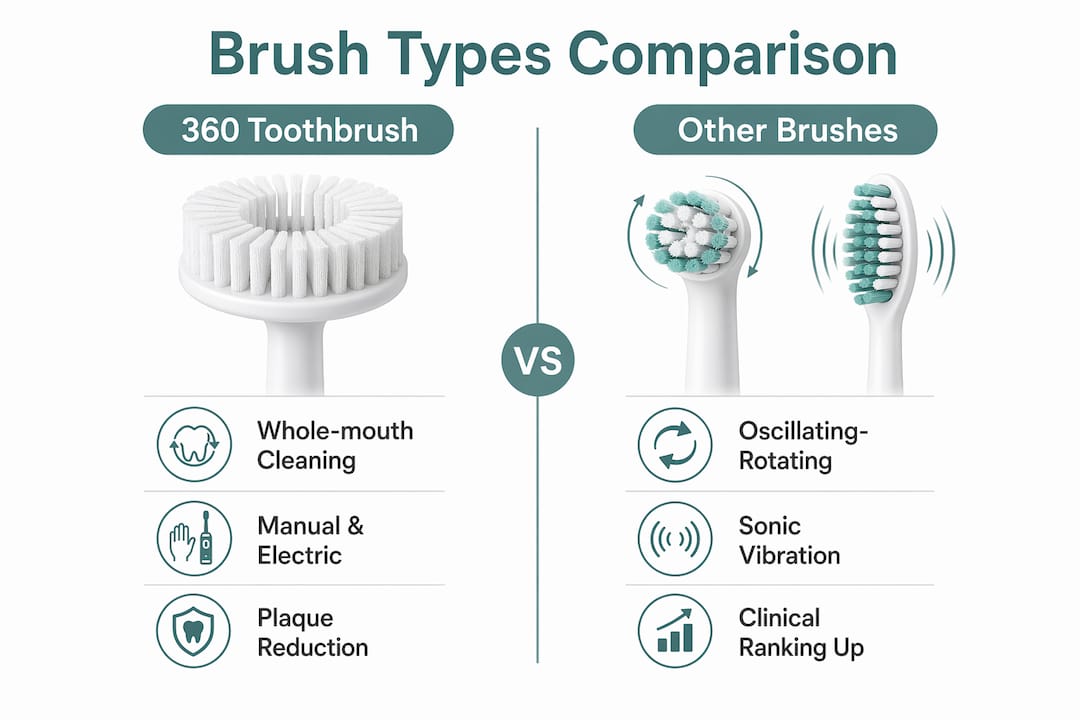
360-degree brushes, particularly manual versions, sit below oscillating-rotating electric models in clinical rankings. That does not make them ineffective. It means they outperform standard manual brushes while falling short of the top-performing electric technology. For people who prefer a manual brush or want a lower-cost option, a 360 design is a meaningful upgrade over a flat-trim brush.
Sonic toothbrushes use high-frequency vibration to disrupt plaque beyond the bristle tips. Oscillating-rotating brushes use a small round head that spins back and forth. Both outperform manual brushes in most studies. The 360 design is a category that cuts across both manual and electric formats, which is why a direct 360 toothbrush comparison requires knowing which type of 360 brush you are evaluating.
| Brush type | Mechanism | Clinical ranking | Best for |
|---|---|---|---|
| Oscillating-rotating electric | Rotating round head | Highest (SUCRA 89.2%) | Maximum plaque and gingivitis reduction |
| Sonic electric 360 | High-frequency vibration, multi-surface head | High | Speed, whole-mouth coverage |
| Manual 360 with tongue/cheek cleaner | Multi-surface bristles, manual motion | Moderate | Budget-conscious users, travel |
| Standard manual brush | Flat-trim bristles | Baseline | Basic cleaning only |
What are the main types of 360 toothbrush designs?
The term “360 toothbrush” covers two distinct product categories, and confusing them leads to mismatched expectations. Understanding the difference helps you choose the right tool for your needs.
The two main design categories are:
- Manual 360 brushes with cheek and tongue cleaners. These look like a standard toothbrush but add rubber or bristle pads on the back and sides of the head. They clean tooth surfaces, cheeks, and the tongue in one pass. The Colgate 360 is the most widely recognized example of this category. They are affordable, portable, and require no charging.
- Electric 360 brushes with U-shaped or fully circular heads. These fit over the entire arch of teeth and use sonic vibration or oscillation to clean all tooth surfaces at once. Y-brush builds its products around this design. The head covers upper and lower teeth simultaneously, which is why Y-brush can deliver a complete clean in 20 seconds.
Each design has real trade-offs. Manual 360 brushes give you more control over pressure and angle, which some people with gum sensitivity prefer. Electric 360 brushes with arch-shaped heads are faster and more consistent, but they require charging and cost more upfront.
360-degree bristles do not fully penetrate tight interdental spaces regardless of design type. Flossing or using an interdental brush remains necessary for complete oral hygiene. A 360 brush improves surface and soft-tissue cleaning. It does not replace the cleaning that happens between teeth.
Pro Tip: If you have sensitive gums, look for an electric 360 model with adjustable vibration intensity. People with sensitive gums benefit more from gentle oscillation settings than from brush head shape alone.
How to use a 360 toothbrush for the best results
Getting the most from a 360 toothbrush depends on technique and consistency, not just the brush itself. Proper brushing duration and angulation are as important as the brush design. Even the most advanced 360 head underperforms when used with poor technique or excessive pressure.
Follow these steps to maximize effectiveness:
- Brush for at least two minutes. The American Dental Association recommends two minutes per session. Most people brush for under one minute. Setting a timer or using a brush with a built-in timer closes that gap immediately.
- Use the correct angle. Hold the brush at a 45-degree angle to the gumline. This directs bristles under the gum margin where plaque accumulates most aggressively.
- Apply light pressure. Heavy pressure does not remove more plaque. It damages enamel and irritates gum tissue. Let the brush do the work, especially with electric models.
- Replace the brush head every three months. Regular brush head replacement maintains bristle effectiveness. Worn bristles lose their shape and clean less efficiently, regardless of how advanced the brush design is.
- Clean your tongue and cheeks. If you use a manual 360 brush with a tongue cleaner, use that feature deliberately. Bacteria on the tongue and cheeks recolonize tooth surfaces within minutes of brushing.
Pro Tip: Budget-friendly manual 360 brushes range from $9 to $55. High-tech rechargeable models with multiple modes and tracking features run $70 to $105. Start with a mid-range 360 option if you are new to the category, then upgrade once you know which features you actually use.
People with sensitive gums should prioritize models with a gentle or sensitive mode. The vibration intensity matters more than the head shape for gum comfort. If you experience bleeding or soreness after switching to a 360 brush, reduce pressure and switch to the lowest vibration setting before assuming the brush is wrong for you.
Key Takeaways
360-degree toothbrushes work by delivering clinically proven plaque reduction and whole-mouth bacterial control, but their full benefit depends on consistent technique, two-minute brushing sessions, and pairing them with flossing.
| Point | Details |
|---|---|
| Clinical evidence is solid | RCT data shows significant Plaque Index and OHI-S improvements over conventional manual brushes in four weeks. |
| Oscillating-rotating leads in rankings | Electric oscillating-rotating brushes score highest (SUCRA 89.2%) for plaque and gingivitis reduction across technologies. |
| Two design categories exist | Manual 360 brushes add tongue/cheek cleaners; electric 360 brushes use arch-shaped heads for simultaneous full-arch cleaning. |
| Technique matters as much as design | Brushing for two minutes at a 45-degree angle with light pressure determines how much any 360 brush actually delivers. |
| Flossing remains non-negotiable | 360 bristles do not penetrate interdental spaces; flossing or interdental brushes are still required for complete oral hygiene. |
Why I think most people miss the point with 360 toothbrushes
After reviewing the clinical literature and watching how people actually brush, the biggest problem is not the brush. It is the assumption that a better tool automatically produces better results without changing behavior.
The research on 360 toothbrushes is genuinely encouraging. The plaque reduction data is statistically and clinically significant. The bacterial load findings are real. But those results come from controlled studies where participants brush correctly and for the right amount of time. In real life, 90% of people brush for under a minute. A 360 brush used for 45 seconds will not outperform a standard brush used for two minutes.
The design advantage of a 360 brush is that it makes correct technique easier, not automatic. The multi-surface head reduces the number of passes needed to cover cheeks and tongue. The arch-shaped electric designs, like those Y-brush builds, remove the need to manually angle the brush across every surface. That is a real reduction in user error. But you still have to use it long enough and consistently enough for it to matter.
My honest recommendation: do not buy a 360 toothbrush expecting it to fix poor brushing habits on its own. Buy one because you want to make good habits easier to maintain. Pair it with a timer, replace the head every three months, and keep flossing. That combination produces the oral health outcomes the research actually supports.
— Joris
Y-brush: a 360 sonic toothbrush built for real life
Y-brush designs its 360 sonic toothbrushes around one core insight: most people will not brush for two minutes, no matter how good their intentions are. The Y-brush arch-shaped head covers all tooth surfaces simultaneously, delivering a clinically effective clean in 20 seconds.
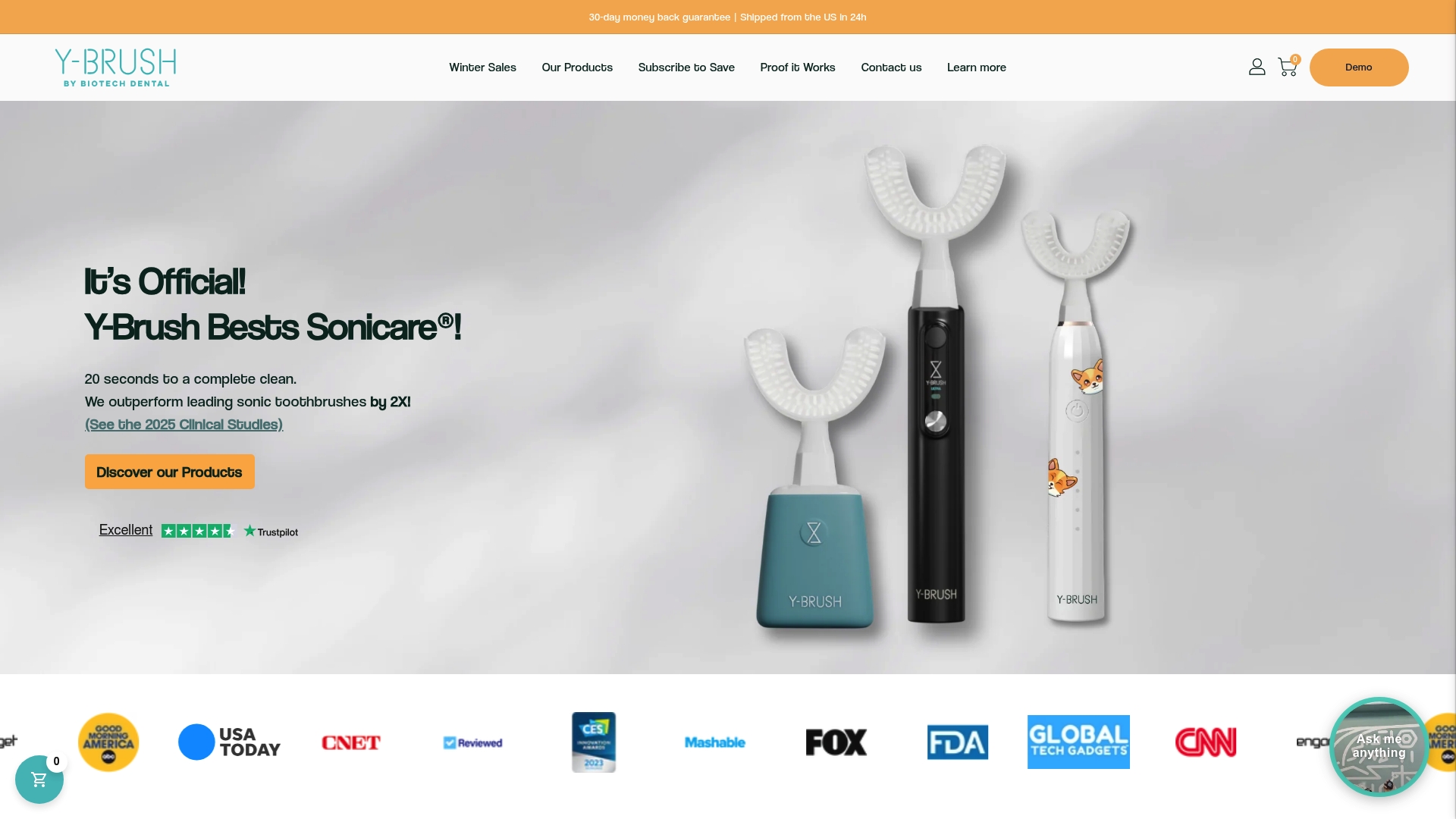
The Y-brush Essential Sonic Toothbrush uses sonic vibration through a full-arch 360 head to clean upper and lower teeth at once. For families, the Y-brush KidsBrush brings the same whole-mouth coverage to children ages 4 through 12. Both products are built to fit into real routines, not ideal ones. If you want a 360 toothbrush that works with your schedule rather than against it, Y-brush is worth a close look.
FAQ
Do 360 toothbrushes actually remove more plaque?
Yes. A randomized controlled trial showed that a 360-degree round-head brush produced significantly greater Plaque Index reductions than a conventional manual brush over four weeks (p < 0.05).
Are 360 toothbrushes worth it for adults?
360 toothbrushes are worth it for adults who want whole-mouth cleaning beyond tooth surfaces, especially models that also clean cheeks and the tongue. Electric 360 designs with sonic or oscillating-rotating technology deliver the strongest clinical results.
Do 360 brushes replace flossing?
No. 360-degree bristles do not penetrate tight interdental spaces, so flossing or interdental brushes remain necessary for complete plaque removal between teeth.
How long should you brush with a 360 toothbrush?
Brush for at least two minutes per session, regardless of brush type. Brushing duration and correct angulation affect results more than brush head shape alone.
What is the difference between a manual and electric 360 toothbrush?
Manual 360 brushes add cheek and tongue cleaners to a standard handle. Electric 360 brushes use a U-shaped or arch-shaped head with sonic or oscillating power to clean all tooth surfaces simultaneously, typically in less time.


