


TL;DR:
- Long-lasting electric toothbrushes can operate up to 70 days on a single charge, ideal for travel and busy schedules. Proper maintenance, like avoiding moisture and overcharging, significantly extends battery life, which typically lasts three to five years. Models with extended battery life reduce the need to carry chargers and enhance oral hygiene consistency during travel.
The electric toothbrush with the longest battery life delivers weeks or even months of use on a single charge, making it the top choice for travelers and busy people who cannot afford to babysit a charging stand. Battery longevity in electric toothbrushes refers to how long the device runs between charges, typically measured in days of twice-daily use. Top-rated models now reach up to 70 days between charges. That figure matters because it separates a genuinely travel-ready toothbrush from one that just looks good on a shelf. Y-brush designs its products around the reality that oral hygiene must fit real life, not the other way around.
How long do electric toothbrush batteries last?
Battery longevity in electric toothbrushes breaks down into two separate questions: how long a single charge lasts, and how many years the battery stays healthy. Both matter when you are choosing a long battery life toothbrush.
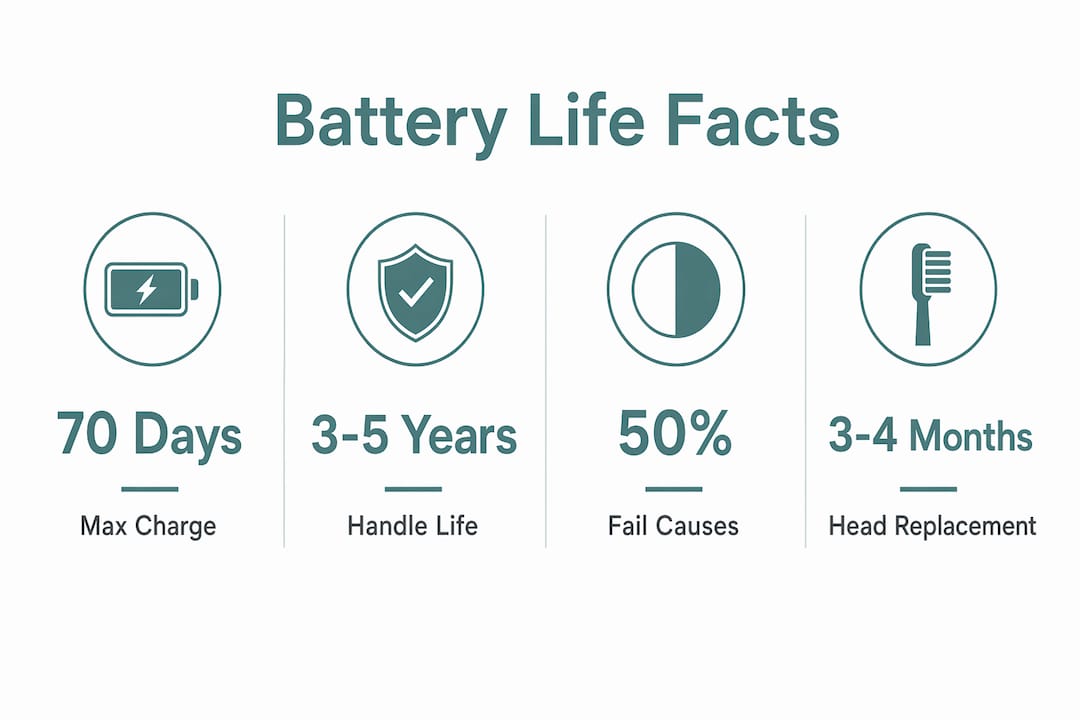
A standard electric toothbrush handle lasts 3–5 years under normal use. Handles used twice daily tend to reach the lower end of that range, around three years, while lighter use can push the handle to five years. That lifespan is not fixed. Battery capacity gradually declines with every charge cycle, even when brushing habits stay constant. A battery that once lasted 14 days between charges may drop to 5–6 days after several years of use.
Several factors determine how fast that decline happens:
- Charge cycle count. Lithium-ion batteries lose capacity with each full charge and discharge cycle. The more frequently you charge, the faster capacity drops.
- Heat exposure. High temperatures accelerate chemical breakdown inside the battery. Bathrooms with poor ventilation are a common culprit.
- Moisture intrusion. Water near the charging port causes corrosion. Most early failures trace back to moisture damage and corrosion, not motor defects.
- Constant charging. Leaving the brush on its charging base nonstop creates heat exposure that accelerates battery wear over time.
- Motor strain. Worn brush heads force the motor to work harder, which draws more power and shortens runtime per charge.
Understanding these factors gives you real control over how long your device performs at full strength.
What maintenance practices extend electric toothbrush battery life?
Good maintenance is the single biggest factor separating a toothbrush that lasts three years from one that lasts five. The habits below are straightforward and take almost no extra time.
- Charge only when needed. Avoid leaving the brush on its charging stand continuously. Periodically allowing the battery to deplete before recharging reduces heat buildup and slows capacity loss.
- Store it dry. After brushing, shake off excess water and store the handle upright in a ventilated area. Moisture near the charging port is the leading cause of premature failure.
- Replace brush heads on schedule. The American Dental Association recommends brush head replacement every 3–4 months. Fresh bristles reduce the mechanical load on the motor, which in turn reduces battery drain per session.
- Keep it away from heat. Avoid storing the brush near radiators, sunny windowsills, or in a hot car. Modern lithium-ion batteries degrade more slowly when kept at room temperature and away from heat sources.
- Clean the charging port area. Wipe the base of the handle weekly with a dry cloth to prevent mineral buildup and corrosion from tap water residue.
Pro Tip: USB-C charging models tend to deliver better long-term battery health than induction charging stands. USB-C connections allow more controlled power delivery, which generates less heat during each charge cycle. If your next toothbrush offers a choice, USB-C is the better pick for electric toothbrush longevity.
For a deeper look at optimal charging habits, the difference between charging strategies is larger than most people expect.
Over 50% of premature toothbrush failures relate to maintenance errors like moisture exposure and constant charging, not brand quality. That statistic reframes the conversation. The toothbrush you already own may outlast a more expensive replacement if you simply change a few habits.
How does a long battery life toothbrush help travelers and busy people?
Battery power duration is not just a convenience metric. For frequent travelers and people with packed schedules, it directly determines whether oral hygiene stays consistent or gets skipped.

A 30-day battery life is the baseline benchmark for a travel-worthy electric toothbrush. Anything below that threshold means packing a charger for trips longer than a few weeks, which adds bulk and creates dependency on compatible outlets. The best battery-efficient electric toothbrush models on the market now reach up to 70 days between charges. At twice-daily use, that covers a full month of travel with weeks to spare.
The practical benefits of extended power duration include:
- No charger in your carry-on. A 70-day battery means you can leave the charging stand at home for most trips, reducing bag weight and eliminating the need for voltage adapters.
- Consistent brushing on irregular schedules. Busy days often push charging to the back of the mind. A long-lasting battery removes that friction entirely.
- Compatibility with portable power. Many modern models with USB-C charging pair well with standard power banks, giving you a full charge from the same device you use for your phone.
- Fewer charging interruptions. Short-battery models may need charging mid-trip, which can disrupt routines when outlets are scarce in hotels or hostels.
Dentists note that battery life above 45 days delivers meaningful benefits for travelers and busy professionals. The key insight is that a toothbrush you actually use consistently outperforms a technically superior model that sits dead on the bathroom counter.
What warranty and replacement timelines should buyers expect?
Knowing when to replace your toothbrush handle is as important as knowing how to maintain it. The table below outlines the key lifecycle benchmarks buyers should plan around.
| Factor | Typical Benchmark |
|---|---|
| Handle lifespan (twice-daily use) | 3 years |
| Handle lifespan (lighter use) | Up to 5 years |
| Brush head replacement interval | Every 3–4 months |
| Standard warranty period | 1–2 years (varies by brand) |
| Battery runtime decline signal | Runtime drops to 5–6 days from original 14+ days |
Warranty coverage on electric toothbrushes typically spans one to two years and covers manufacturing defects, not wear from normal use. Battery degradation falls outside most warranty terms because it is considered expected performance decline. That distinction matters when you are budgeting for long-term ownership costs.
Signs that a battery is nearing the end of its useful life include noticeably weaker vibration, runtime dropping well below the original specification, and the brush requiring charging after just a few sessions. Environmental factors accelerate these signs. High humidity bathrooms, frequent travel to hot climates, and inconsistent charging habits all push a handle toward the lower end of its lifespan range.
The environmental impact of non-replaceable batteries deserves attention. Most electric toothbrush handles contain sealed lithium-ion cells that cannot be swapped out by the user. When the battery fails, the entire handle goes to waste. Choosing a model with a longer rated lifespan and practicing good maintenance reduces how often that replacement cycle happens.
Replacing brush heads every 3–4 months can add 2–3 years to handle lifespan by reducing motor strain. That single habit may be the highest-return maintenance action available to any electric toothbrush owner.
Key Takeaways
The electric toothbrush with the longest battery life combines a 70-day charge capacity, consistent maintenance habits, and timely brush head replacement to deliver reliable oral hygiene for travelers and busy people alike.
| Point | Details |
|---|---|
| Battery lifespan benchmark | Handles last 3–5 years; twice-daily use trends toward the lower end of that range. |
| Top charge duration | The best models reach up to 70 days per charge, covering most trips without a charger. |
| Maintenance impact | Over 50% of early failures come from moisture and constant charging, not hardware defects. |
| Brush head schedule | Replacing heads every 3–4 months reduces motor strain and extends handle life by years. |
| Replacement signal | Runtime dropping from 14 days to 5–6 days signals the battery is near end of life. |
Battery life matters, but it should not come at the cost of clean teeth
I have tested and reviewed oral hygiene products for years, and the battery life conversation often goes sideways in one direction. People get so focused on charge duration that they forget to ask whether the toothbrush actually cleans well. A 70-day battery on a brush with weak sonic output is not a good deal.
The buyers who get the most value from a long battery life toothbrush are those who already have a solid brushing routine and want to remove friction from it. Travelers, shift workers, and people who forget to charge devices regularly all benefit enormously from extended power duration. For everyone else, a 14-day battery is usually more than enough.
What I find underappreciated is the maintenance angle. Most people treat their electric toothbrush like a sealed appliance and do nothing until it fails. The data tells a different story. Moisture management and smarter charging habits extend device life by years. That is a real financial and environmental win that requires almost no effort.
My recommendation is to prioritize brushing effectiveness first, then look for a battery life that fits your actual travel frequency. If you travel more than twice a month or regularly forget to charge devices, target 45 days or more. If you travel rarely, focus your budget on cleaning performance instead. The best models for extended battery life in 2026 do not force you to choose between the two, but knowing your priority helps you spend wisely.
— Joris
Y-brush: built for people who cannot slow down
Y-brush was created for people who know they should brush for two full minutes but realistically brush for under one. The Y-brush sonic toothbrush delivers a complete clean in just 20 seconds, which means battery power goes further per session than it would with a conventional brush.
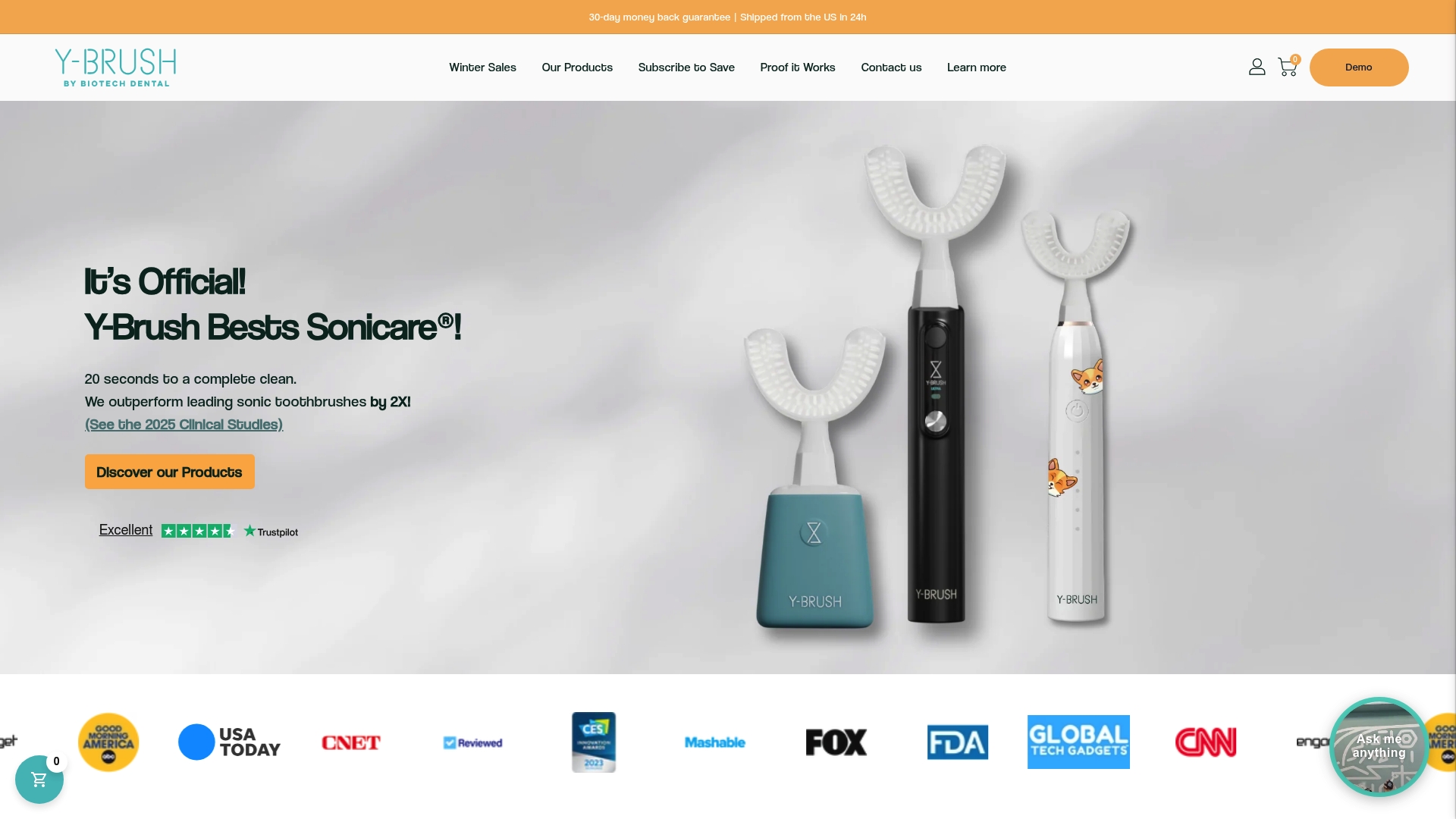
For travelers and busy people, that efficiency translates directly into longer time between charges. Less time brushing per session means fewer battery cycles per week, which extends the overall lifespan of the device. The Y-brush Essential Sonic Toothbrush is designed with exactly this user in mind: reliable battery performance, a fast and thorough clean, and a form factor that fits into real life without demanding extra time or attention. If you want a toothbrush that keeps up with your schedule, Y-brush is worth a close look.
FAQ
How long does an electric toothbrush battery last per charge?
The best battery-efficient models last up to 70 days between charges at twice-daily use. Entry-level models typically offer 14–30 days per charge.
How long do electric toothbrushes last overall?
A standard electric toothbrush handle lasts 3–5 years under normal use. Twice-daily use trends toward three years; lighter use can reach five.
What is the most common cause of early electric toothbrush failure?
Moisture intrusion and constant charging are the leading causes. Over 50% of premature failures trace back to maintenance errors, not manufacturing defects.
How often should I replace the brush head to protect battery life?
The American Dental Association recommends replacement every 3–4 months. Fresh heads reduce motor strain, which lowers battery drain per brushing session.
What battery life do I need for travel?
Dentists consider 45 days or more the threshold where battery life meaningfully benefits travelers. At that level, most trips do not require packing a charger.


