


Replace the brush head every 3 to 4 months; the handle itself typically runs 3 to 5 years with reasonable care. This split is backed by the American Dental Association’s replacement guidance and a peer-reviewed study on bristle wear. Some companies build their replacement plans around that exact timeline, so keeping pace with the science does not require guesswork.
TL;DR:
- Replacing the brush head every 3 to 4 months is essential, especially when bristles become splayed, discolored, or less effective at cleaning.
- Handle lifespan typically ranges from 3 to 5 years and depends on charging habits, impacts, and storage conditions, with lithium-ion handles lasting longer.
- Overcharging, exposure to heat, impact damage, and water ingress significantly shorten the handle’s durability, while proper daily maintenance can extend its life.
- The cost of ongoing head replacements over the handle’s life can reach 9 to 20 sets, with subscription plans offering predictable, discounted schedules.
- Checking handle runtime monthly and tracking head installation dates helps preempt handle failure, especially for users with heavy brushing or health issues.
Table of Contents
- Why “How Long Do Electric Toothbrushes Last?” Needs Two Answers
- How Long Does a Charge Actually Last?
- What Shortens or Extends Electric Toothbrush Lifespan?
- Daily and Travel Maintenance That Actually Extends Life
- Should You Replace the Head, the Handle, or Neither Yet?
- Warranty Coverage and Safe Disposal
- What Y-Brush’s Own Data Says About Charging and Replacement
- What Replacement Actually Costs Over Time
- NiMH vs. Lithium-Ion: Does Battery Type Change Lifespan?
- The Simple Rule That Actually Matters
- A Simpler Way to Stay on the 3-Month Schedule
- Sources
- FAQ
Why “How Long Do Electric Toothbrushes Last?” Needs Two Answers
The question hides two different machines wearing out at two different speeds. The bristle head is a consumable, closer to a razor blade than an appliance. The handle houses the motor, circuit board, and battery, and it behaves more like a phone or a cordless drill.
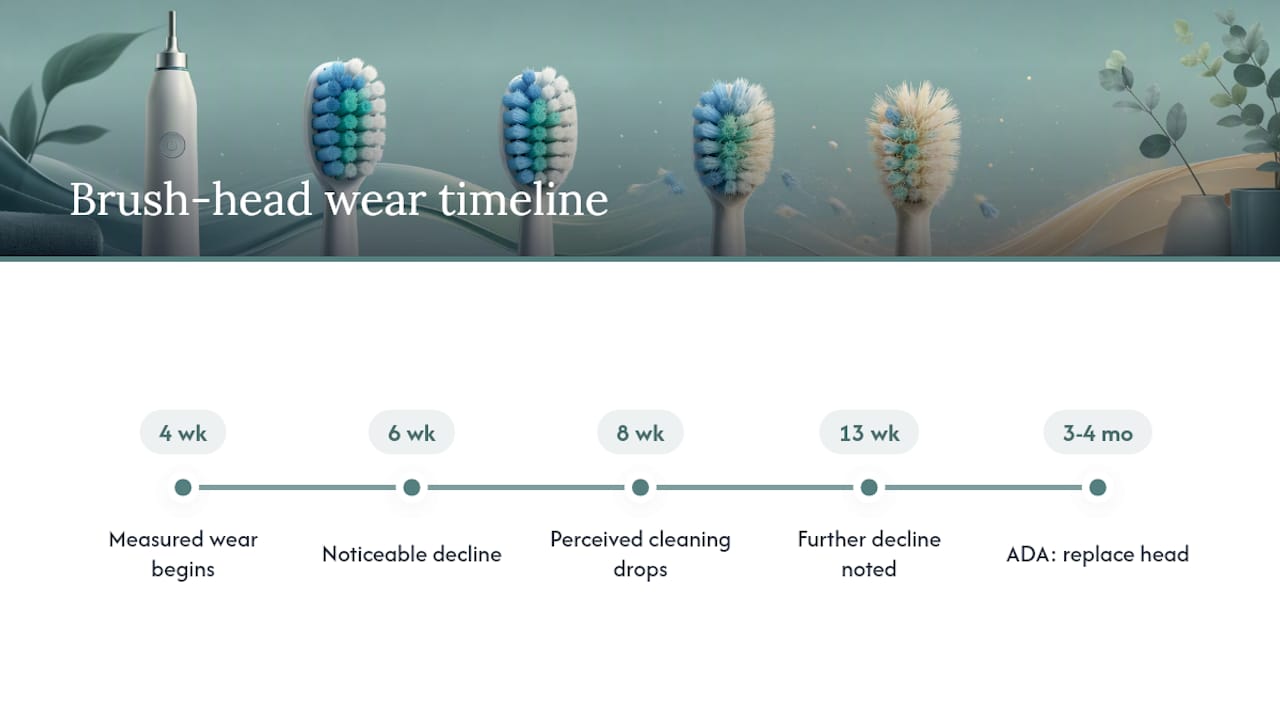
Bristles splay and stiffen from mechanical stress, not from age on a shelf. A clinical study tracking oscillating-rotating brush heads measured wear and a decline in perceived cleaning at 4, 6, 8, and 13 weeks of normal use, with the drop-off becoming noticeable well before the bristles looked obviously damaged. That is the evidence behind the ADA’s recommendation to replace heads every 3 to 4 months rather than waiting for visible fraying.
The handle ages differently. Its lithium-ion or nickel-metal-hydride cells lose capacity gradually through repeated charge cycles, the same way a laptop battery does. Most handles hold up for 3 to 5 years before that decline becomes disruptive, assuming no drops, no water damage, and no attempt to run it in a shower steam cloud daily.
Some people burn through heads faster than the calendar suggests. Anyone wearing braces, brushing with heavy hand pressure, or dealing with gum recession tends to flatten bristles ahead of schedule, and a monthly glance at the brush head catches that early. Powered brushes also outperform manual ones on plaque removal according to Mayo Clinic’s oral health guidance, which is exactly why a worn head undercuts a tool that is supposed to be doing more work for you, not less.
How Long Does a Charge Actually Last?
Manufacturer numbers vary more than most people expect, and matching the number to your model matters more than trusting a general rule. Philips reports that many Sonicare handles run about several weeks between charges under a standard two-minute, twice-daily routine. That figure assumes consistent use, not sporadic weekend brushing followed by a week of travel neglect.
AA-powered and compact travel models sit on the other end of the spectrum. Some battery-powered brushes approved under the ADA Seal of Acceptance program run up to three months on a single AA cell with twice-daily use, since they skip the rechargeable cell entirely.
A few practical patterns show up across models:
- Rechargeable Li-ion handles: roughly 1 to 3 weeks per charge, depending on brushing frequency and vibration intensity settings.
- AA and AAA battery models: weeks to months per battery, with no charger cycle to manage at all.
- Older nickel-based handles: often 5 to 7 days per charge, since NiMH cells hold less energy than lithium-ion.
- Fast-charge models: a couple of hours restores a near-full charge, versus overnight for older induction chargers.
Consumer Reports notes that runtime and charge time vary meaningfully model to model, so checking your specific manual beats relying on a brand’s general marketing claim. Y-Brush’s guide on maximizing charge time between sessions covers how brushing habits translate into real-world runtime.
What Shortens or Extends Electric Toothbrush Lifespan?
Handles rarely die of old age alone. They die of specific, avoidable habits that stack up over months.
- Leaving it on the charger constantly. Continuous trickle charging stresses lithium-ion cells over time, the same way it does with phone batteries left plugged in overnight, every night, for years.
- Heat exposure. A brush stored on a sunny windowsill or next to a radiator ages its battery chemistry faster than one kept at room temperature.
- Drops and impact. A cracked seal from a hard drop lets moisture creep into the motor housing, which corrodes contacts long before the battery would have failed on its own.
- Water ingress at the seams. Cheaper handles with looser head-to-body seals let water seep in during rinsing, which shortens both motor and battery life.
- Heavy-handed brushing. Pressing hard doesn’t clean better, and it accelerates both bristle wear and stress on the motor’s gear mechanism.
- Sharing heads across users. This is a hygiene issue more than a lifespan one, but it also means heads get replaced less predictably since nobody tracks whose turn it is.
Battery chemistry and build quality separate models more than most shoppers realize. NiMH handles fade faster and hold less charge over years than lithium-ion equivalents, and a snug, well-sealed head connection resists water ingress far better than a loose-fitting one.
Pro Tip: Write the head’s install date on a small sticker on the handle, or set a recurring phone reminder for every 3 months. Track how many days a full charge lasts, too. A steady drop in that number over several months tells you the battery, not your memory, is the problem.
Daily and Travel Maintenance That Actually Extends Life
Small habits, repeated daily, do more for lifespan than any single “big fix.” The ADA’s own care guidance centers on three simple actions.
Daily habits:
- Rinse the brush head thoroughly under running water after each use to clear paste and debris from the bristles.
- Shake off excess water and let it air-dry, upright, in an open holder rather than a closed drawer.
- Wipe the handle dry before setting it back on the charging base, since a wet base contact corrodes faster.
Weekly and monthly checks:
- Wipe down the charging base itself, since toothpaste residue and moisture build up there too and can interfere with contact.
- Inspect the head-to-handle seal for cracks or looseness, which is often the first visible sign of a handle heading toward retirement.
- Note the runtime on a full charge once a month to catch gradual battery decline early.
Travel care: Rinse the head before packing, dry it fully, and leave the travel case cracked open rather than sealed shut for the first hour. A closed, humid case is a small greenhouse for bacteria, and it accelerates the same wear the ADA warns against with everyday storage. Pack a spare head if a trip runs past your replacement date, since swapping heads is far easier at home than in a hotel bathroom.
Should You Replace the Head, the Handle, or Neither Yet?
Most replacement decisions come down to three visible signals, and they rarely require guesswork once you know what to look for.
- Replace the head now if: bristles look splayed or discolored, cleaning feels less thorough than it used to, three to four months have passed since installation, or you’ve recently recovered from a cold or illness.
- Check the handle if: runtime per charge has been dropping steadily over several months, the brush cuts out mid-session, or you notice moisture inside the battery compartment.
- Replace the handle if: the drop in runtime continues despite normal charging habits and a full charge no longer covers even a couple of days of use.
A quick monthly runtime check, timed against the last full charge, catches handle decline months before it becomes a mid-brush shutdown. And heads should never move between family members. Bristles harbor bacteria specific to one mouth, and sharing turns a hygiene tool into a hygiene risk.
Warranty Coverage and Safe Disposal
Most manufacturer warranties cover manufacturing defects and, in some cases, limited battery performance issues within the first year or two. Before assuming a sluggish handle needs replacing, check the manufacturer’s support page. A firmware issue or a known battery defect might mean a free fix instead of an out-of-pocket purchase.
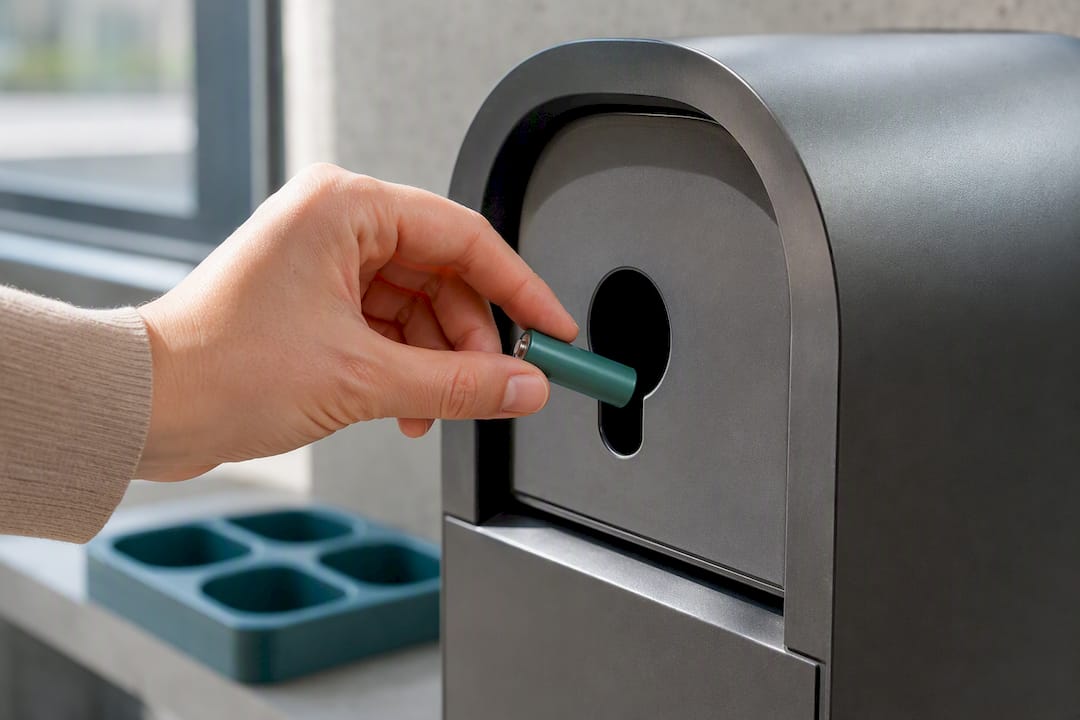
When a handle truly reaches the end of its run, its lithium battery should go to a designated battery recycling drop-off point rather than the trash, since lithium cells pose fire risk in regular waste streams. Plastic brush heads are recyclable through some municipal or brand-specific programs, though coverage varies by location, so check local guidelines before tossing one in the recycling bin blind.
What Y-Brush’s Own Data Says About Charging and Replacement
Y-Brush designs its replacement cadence around the same 3 to 4 month window the ADA recommends, not an arbitrary subscription schedule. The brand’s guide on optimal charging times breaks down how charging habits affect long-term battery health, and its breakdown of replacement timing walks through the visible and invisible signs that a head has outlived its usefulness.
A few habits apply regardless of which electric toothbrush you own: date your heads the day you install them, keep handles away from direct heat sources like car dashboards or sunny windowsills, and let heads air-dry fully between uses rather than sealing them into a travel case damp.
Some subscription plans ship replacement heads on a set cadence to turn a mental task into an automatic one, reducing the chance of stretching a head past its useful life because the handle still technically works.
What Replacement Actually Costs Over Time
The handle is a one-time cost; the heads are the recurring one, and that recurring cost adds up faster than most buyers expect at checkout. If a head needs swapping every 3 to 4 months, that’s roughly 3 to 4 replacements a year, every year, for as long as the handle survives.
Multiply that by a 3 to 5 year handle lifespan and a single toothbrush purchase turns into 9 to 20 head replacements over its lifetime. Buying heads individually, one pack at a time, tends to cost more per unit than buying through a standing plan, since one-off retail pricing rarely includes any volume discount. This is the exact gap subscription plans exist to close: predictable per-quarter costs instead of remembering to reorder and paying retail each time.
The handle itself is the bigger upfront expense, but it is also the cost you only pay once every several years. Heads are the quiet, recurring line item that determines your real cost of ownership, and skipping replacements to save money is a false economy once you factor in the wear-driven cleaning decline the PubMed study measured.
NiMH vs. Lithium-Ion: Does Battery Type Change Lifespan?
Battery chemistry is the single biggest hidden factor separating a handle that lasts 3 years from one that lasts 5 or more. Nickel-metal-hydride (NiMH) cells, common in older and budget rechargeable models, hold a charge for a shorter window per cycle and degrade faster across hundreds of charge cycles compared to lithium-ion.
Lithium-ion cells, now standard in most mid-range and premium electric toothbrushes, hold their capacity longer across repeated charging and tend to deliver more consistent runtime late into a handle’s life. That is part of why newer handles report multi-week runtimes while older NiMH designs often need charging every 5 to 7 days even when new.
The practical takeaway isn’t to obsess over cell chemistry when shopping, since most current handles have already moved to lithium-ion. It’s to recognize that a battery-powered brush behaves like any other rechargeable electronic: the charging habits covered earlier, especially avoiding constant trickle charging and heat exposure, matter more to real-world lifespan than the chemistry label on the box.
The Simple Rule That Actually Matters
Most of the anxiety around toothbrush lifespan is misplaced. The head is the part doing the cleaning, and it degrades quietly on a predictable 3 to 4 month schedule regardless of how sturdy the handle feels. Date your heads, check runtime once a month, and keep a spare on hand. If handle runtime keeps dropping despite normal charging, replace it. Chasing a “better” handle before addressing a worn head is solving the wrong problem.
— Joris
A Simpler Way to Stay on the 3-Month Schedule
Keeping up with the ADA’s 3 to 4 month replacement window is easy to know and surprisingly easy to forget in practice, which is exactly where Y-Brush’s plan structure earns its place. Instead of remembering to reorder heads every quarter, a standing plan ships replacements on that cadence automatically, so the schedule maintains itself instead of depending on your memory.
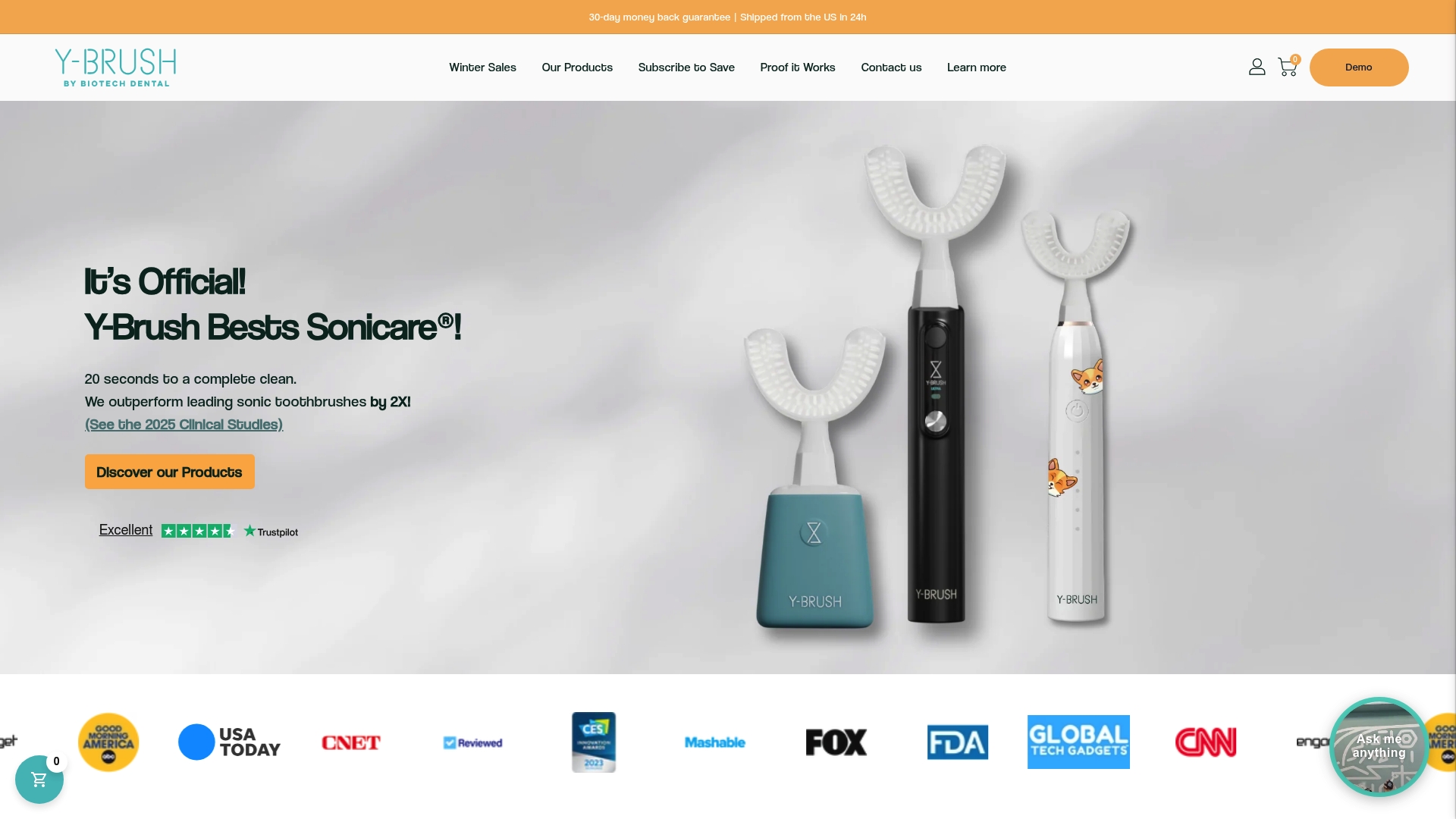
Y-Brush’s Core, Pro, and Pro+2 plans bundle a toothbrush handle with a running supply of compatible heads, priced at $29.90, $49.90, and $69.90 per quarter respectively. Each plan is built around the patented Y-shaped head that delivers a full clean in 20 seconds, so the replacement cadence stays effortless even on your busiest weeks. If you already own a compatible handle and just need fresh heads on schedule, the replacement brush head collection covers that without committing to a new handle. Pick a plan that matches your household size, and let the shipping schedule handle the part everyone tends to forget.
Sources
- Toothbrushes | American Dental Association
- Brush head wear, subject-perceived and laboratory cleaning performance of two oscillating-rotating electric toothbrush heads over 3 months
- Best electric toothbrushes of the year | Consumer Reports
FAQ
How often should you replace your electric toothbrush?
Replace the brush head every 3 to 4 months, or sooner if bristles look frayed. The handle itself usually lasts 3 to 5 years before battery decline makes replacement the practical choice.
Do electric toothbrushes eventually stop working?
Yes, though heads and handles fail differently. Heads lose cleaning effectiveness gradually from bristle wear, while handles typically fail when the rechargeable cell can no longer hold a useful charge, often after 3 to 5 years of normal use.
When should you throw away an electric toothbrush handle?
Consider replacing the handle if runtime per charge keeps dropping despite normal charging habits, if it cuts out mid-brush, or if you spot moisture inside the battery compartment. A handle that still holds a steady charge for days doesn’t need replacing just because it’s a few years old.
Should you leave your electric toothbrush on the charger all the time?
Constant trickle charging stresses lithium-ion batteries over months and years, similar to leaving a phone plugged in nonstop. Charging fully, then unplugging until the next charge is needed, tends to preserve battery health better over the handle’s lifespan.
How much does an electric toothbrush cost to maintain over time?
Heads typically need replacing 3 to 4 times a year, which adds up to the real ongoing cost of ownership beyond the initial handle purchase. Y-Brush’s subscription plans start at $29.90 per quarter and bundle replacement heads on that schedule automatically.


