


Yes: powered brushes, including sonic models, produce measurable reductions in plaque and gingivitis compared with manual brushing when used consistently, according to multiple clinical trials and systematic reviews. The gains are modest, not miraculous, and most of the benefit comes from better technique and longer brushing time rather than the vibration alone. Sonic brushing does not replace flossing. What follows breaks down what the Cochrane Review, a 6-month randomized trial, and a major meta-analysis actually found.
TL;DR:
- Powered and sonic toothbrushes reduce plaque by roughly 11% to 21% over several months, with consistent daily use being crucial for benefits.
- The primary mechanical benefits come from faster bristle contact and some fluid agitation, but the real-world impact of fluid dynamics remains limited.
- Most improvements with sonic toothbrushes include less gum bleeding, longer brushing sessions, easier plaque removal, better technique for limited dexterity, and fresher breath.
- Factors such as the quality of the brush head, built-in timers, and ease of use are more important than motor strength or vibration frequency when choosing a device.
- Sonic brushing does not replace flossing or interdental cleaning, which continue to provide benefits for cleaning between teeth.
Table of Contents
- What Sonic Toothbrush Benefits Come From, Mechanically
- What the Clinical Evidence Actually Shows
- Practical Benefits You’ll Actually Notice
- Who Gets the Most Out of a Sonic Toothbrush
- How to Use a Sonic Toothbrush the Right Way
- Where Y-Brush Fits Into These Benefits
- What Actually Matters When Choosing One
- A Faster Path to the Benefits You’re Looking For
- Sources
- FAQ
What Sonic Toothbrush Benefits Come From, Mechanically
A sonic toothbrush moves its head side to side at extremely high frequency, typically in the range of 30,000 to 40,000 movements per minute. That is far faster than a hand can move a manual brush, and it’s the basis for most sonic toothbrush benefits people report.
Two mechanisms are usually credited for the effect:
- Direct bristle contact: the bristles physically scrub plaque off the tooth surface, the same basic action as manual brushing, just faster and more consistent.
- Fluid dynamics (acoustic microstreaming): the vibration agitates saliva and toothpaste into tiny currents that may disrupt plaque biofilm slightly beyond where the bristles actually touch.
The second mechanism gets a lot of marketing attention, but the clinical picture is thinner than the lab demonstrations suggest. Non-contact biofilm disruption shows up in controlled lab settings, yet a video-controlled clinical trial found that translating that effect into consistent real-world plaque removal is far less certain. Sonic brushes differ from oscillating-rotating models mainly in motion pattern. One sweeps, the other spins and pulses. Neither has proven itself categorically superior.
What the Clinical Evidence Actually Shows
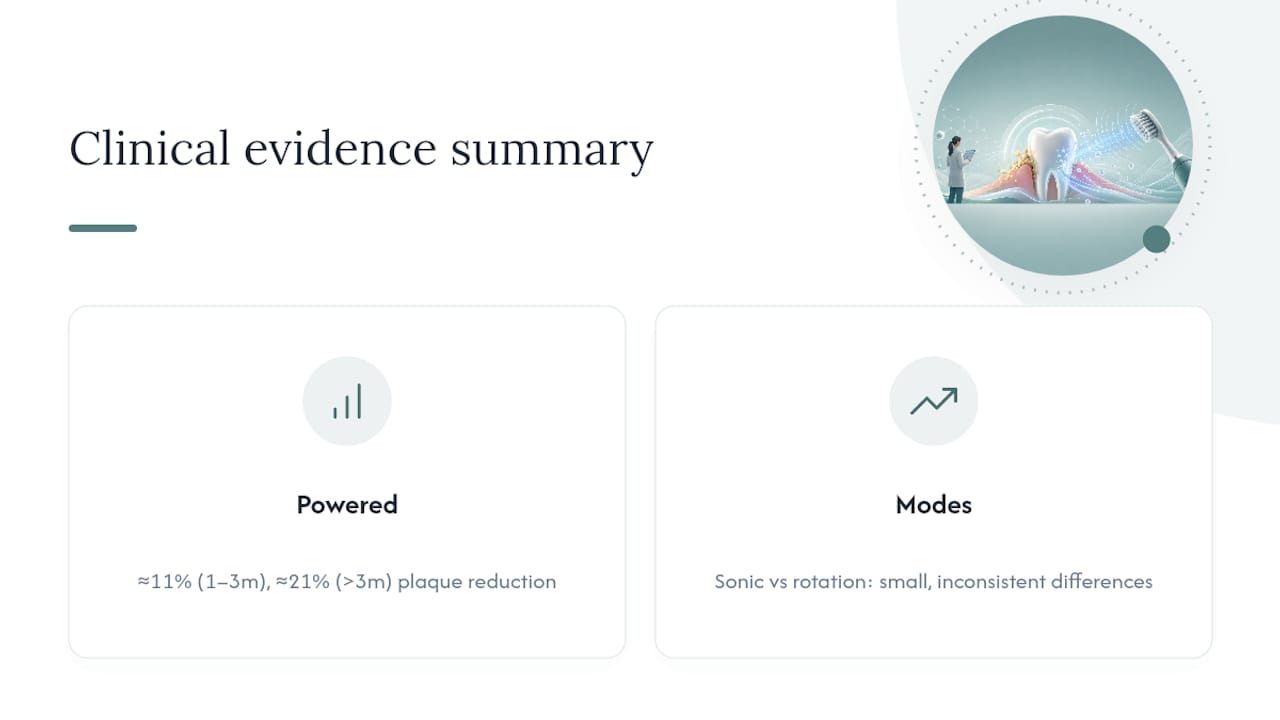
The strongest single source on this question is a Cochrane Review covering powered toothbrushes generally, sonic models included. It found moderate-quality evidence that powered brushing reduces plaque by about 11% at one to three months and by about 21% after three months, compared with manual brushing. Those numbers come with real heterogeneity across the underlying trials, meaning some studies showed bigger gains and others barely any.
Consistent daily use matters more than motor type. A brush with a comfortable head, a built-in timer, and replacement heads people actually swap out will beat a theoretically superior motor that sits unused in a drawer.
A 2017 meta-analysis focused specifically on high-frequency sonic brushes found statistically significant reductions in both plaque and gingivitis compared with manual brushing across several short-term trials, though the studies varied enough in design that the pooled effect should be read as a trend, not a fixed number. A 6-month randomized clinical trial tested something more realistic: how sonic brushing performed after a professional cleaning, over half a year of normal home use. Sonic brushing held plaque levels lower than manual brushing, with about a 10-percentage-point difference in plaque index by the follow-up visit.
The takeaway in one line: powered brushing beats manual brushing in most trials, but the sonic-versus-oscillating-rotating debate is close enough that it shouldn’t drive your buying decision. A network meta-analysis comparing powered modes found the differences between sonic and rotation-oscillation brushes to be small and inconsistent across studies.
Practical Benefits You’ll Actually Notice
The lab data is useful, but what matters day to day is simpler. Here’s what switching to sonic brushing tends to change for most people:
- Less bleeding when you brush. Reduced gingivitis shows up first as gums that don’t bleed when you floss or brush.
- You brush longer, without trying. Built-in timers and quadrant prompts push people toward the full two minutes, which most manual brushers fall short of.
- Visibly less surface staining. Coffee and tea buildup on enamel tends to lift more easily with sustained vibration than with a manual scrub.
- Easier technique for limited dexterity. Arthritis, carpal tunnel, or motor-control issues make manual brushing inconsistent; a sonic brush does more of the work.
- Fresher breath, more reliably. A byproduct of better plaque control, not a separate mechanism.
None of that touches hardened tartar, which only a dental cleaning removes, and none of it substitutes for interdental cleaning. A Cochrane review on interdental devices found floss and interdental brushes add benefit that brushing alone, powered or not, simply doesn’t reach.
Pro Tip: If you’re switching from manual to sonic, resist the urge to scrub. Let the vibration do the work while you guide the head slowly. Pressing hard defeats the design and can irritate gums.
Who Gets the Most Out of a Sonic Toothbrush
Not everyone sees the same jump in results. People who tend to brush too fast, use rough technique, or struggle with dexterity see the biggest improvement, since the device compensates for exactly what’s going wrong. Someone who already brushes for two full minutes with careful manual technique may notice a smaller gain, because there’s less room to improve.
A few realistic downsides are worth naming upfront:
- Replacement heads add an ongoing cost that manual brushing never has.
- Pressing too hard can cause gum irritation or enamel abrasion, the opposite of the intended benefit.
- The buzzing sensation and sound take some getting used to, and a few users describe it as mildly uncomfortable at first.
- For children, powered brushes show a modest plaque advantage over manual brushing, but gingival outcomes are often similar. Supervision still matters more than the device.
Interdental cleaning remains non-negotiable regardless of which category you fall into. A sonic brush cleans tooth surfaces well; it does not reach between teeth the way floss does.
How to Use a Sonic Toothbrush the Right Way
Getting the benefits requires more than switching devices. Technique still drives most of the outcome:
- Apply fluoride toothpaste and turn the brush on before it touches your teeth to avoid splatter.
- Use light pressure only. Guide the head slowly along the gumline and let the vibration do the scrubbing.
- Follow the built-in timer or quadrant beeps, covering all four sections of your mouth for the full cycle, usually two minutes.
- Replace the brush head every three months, or sooner if bristles look frayed or splayed.
- Rinse and air-dry the head after each use rather than sealing it in a closed container, which encourages bacterial growth.
- Keep flossing or using interdental brushes, and stick to your regular dental checkup schedule.
Pro Tip: A worn-out head is one of the most common reasons people stop seeing results. If the bristles look flattened or splayed outward, it’s already past the point of doing its job well.
For more on avoiding overbrushing with a powered device, see this guide on sonic toothbrush gum safety.
Where Y-Brush Fits Into These Benefits
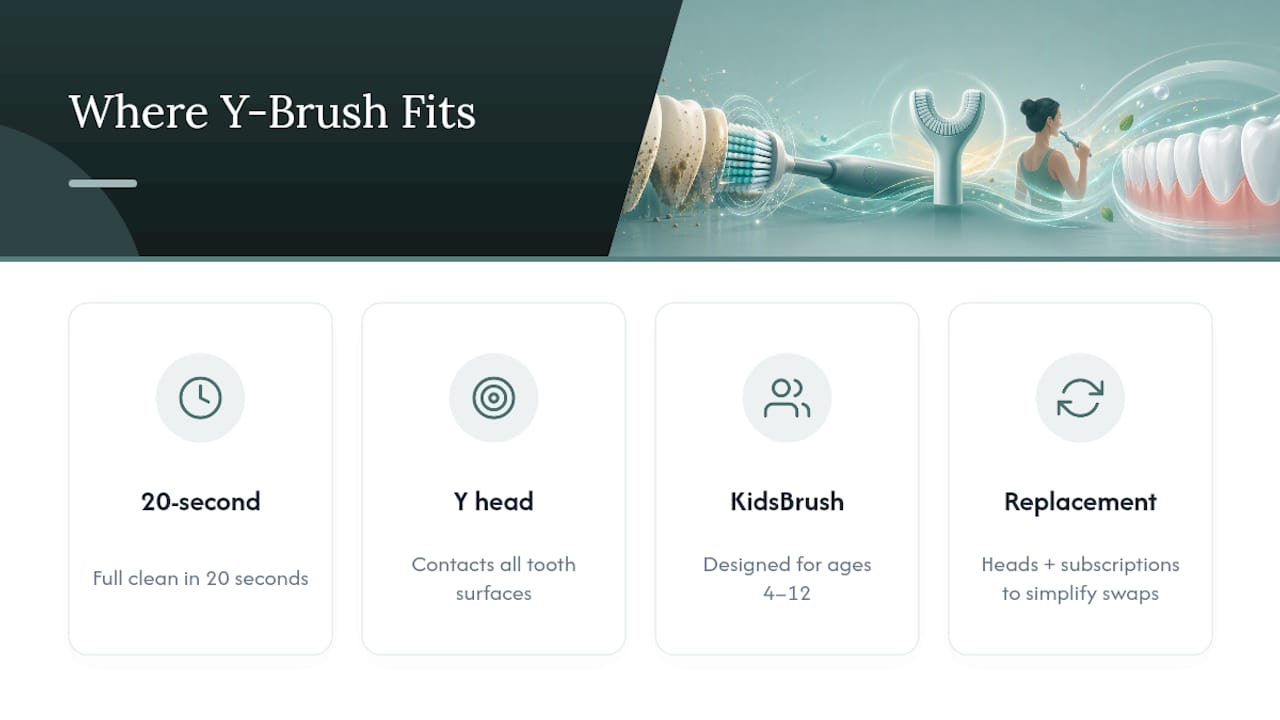
Y-Brush built its product around the same problem the Cochrane data points to: most people simply don’t brush long enough or thoroughly enough. Its patented Y-shaped head is designed to deliver a full clean in 20 seconds by contacting all tooth surfaces at once, addressing the coverage gap that drives a lot of the plaque difference between powered and manual brushing.
The Y-Brush toothbrush collection includes a KidsBrush Sonic Electric Toothbrush built for ages 4 to 12, plus a range of sonic automatic toothbrushes for adults with different feature sets. Replacement heads and subscription plans keep the head-swap habit that clinical guidance recommends from becoming a hassle.
What Actually Matters When Choosing One
Powered brushing is worth the upgrade for most people, but the vibration itself isn’t the deciding factor. A comfortable head, a working timer, and replacement heads you’ll actually buy on schedule matter more than motor specs. Check the product’s own claims before assuming clinical backing, and always follow the manufacturer’s instructions.
— Joris
A Faster Path to the Benefits You’re Looking For
If the research above convinced you that consistency and coverage matter more than any single feature, that’s exactly the gap Y-Brush designed around. Instead of relying on you to manually cover every surface for two full minutes, the Y-shaped head contacts your teeth on all sides simultaneously, aiming for a complete clean in 20 seconds.
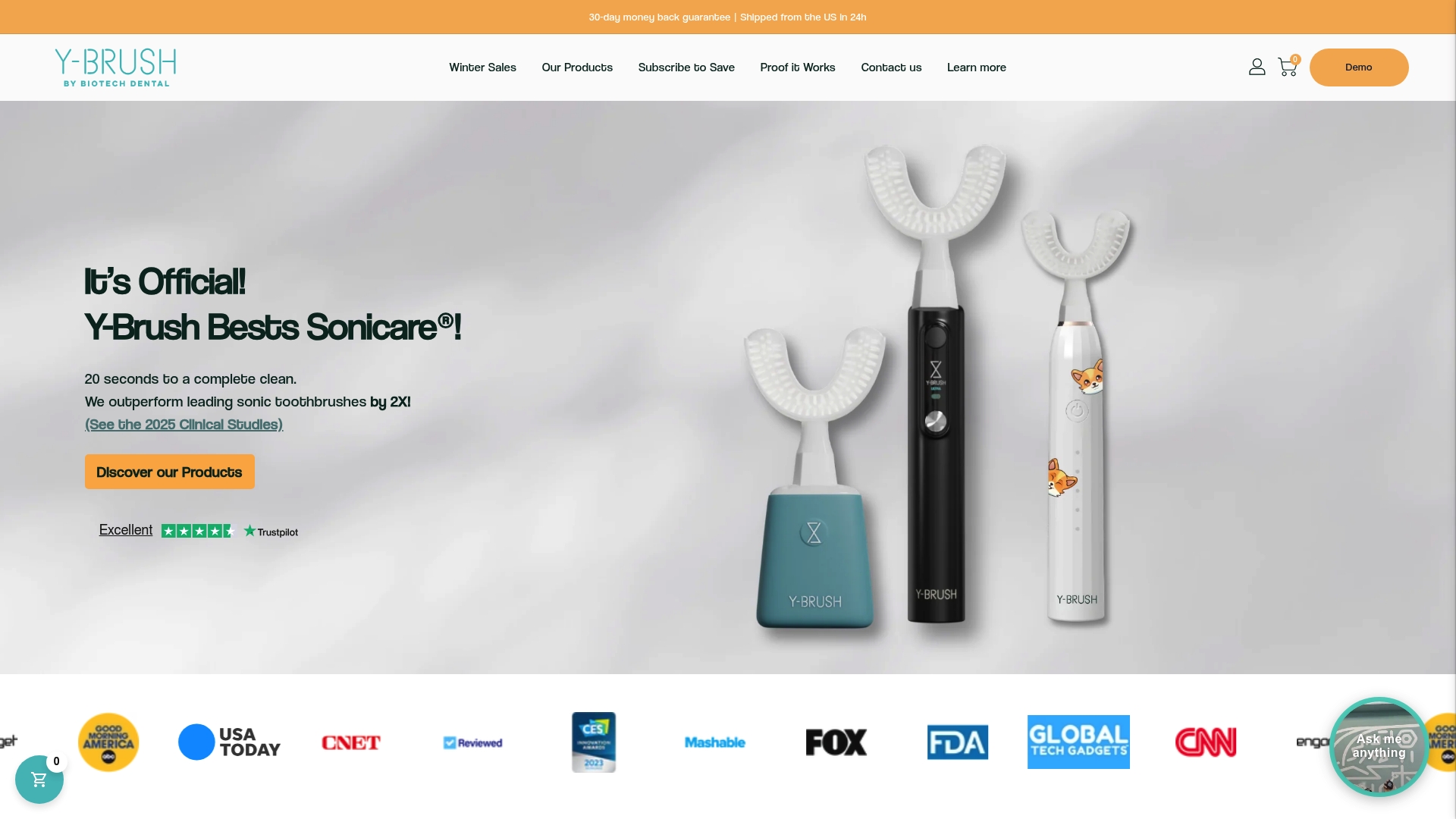
The Y-Brush toothbrush and subscription collection includes three plans: the Core Plan at $29.90 per quarter, the Pro Plan at $49.90 per quarter, and the Pro+2 Plan at $69.90 per quarter, each built around keeping replacement heads coming automatically so you’re never brushing with worn-out bristles. Families can also check the KidsBrush and full product lineup for age-appropriate options. If you’re ready to stop guessing whether you’re brushing long enough, browse the current plans and pick the one that matches your household.
This article is general information, not a substitute for advice from a qualified doctor. Consult a qualified healthcare professional about your own circumstances before acting on anything here.
Sources
- Powered versus manual toothbrushing for oral health - Cochrane Review
- Efficacy of a sonic toothbrush on plaque removal—A video-controlled explorative clinical trial | PLOS One
- The Effectiveness of Manual versus High-Frequency, High-Amplitude Sonic Powered Toothbrushes for Oral Health: A Meta-Analysis
FAQ
Are Sonic Toothbrushes Good for Your Teeth?
Yes. Clinical trials and a Cochrane Review show powered brushes, including sonic models, reduce plaque and gingivitis more than manual brushing when used consistently. The effect is real but modest, and technique still matters.
Do Dentists Recommend Sonic Brushes?
Dentists commonly recommend powered brushes for patients who struggle with brushing duration, technique, or dexterity, since the evidence favors powered brushing over manual for plaque and gum health. Product-specific acceptance claims vary, so check what a given brand’s dental partners actually state.
What Is the Downside of a Sonic Toothbrush?
The main downsides are the ongoing cost of replacement heads and the risk of gum irritation or enamel abrasion if you press too hard. Sonic brushes also won’t remove hardened tartar or replace flossing, so interdental cleaning still needs to happen separately.
What’s the Difference Between a Sonic and Ultrasonic Toothbrush?
Sonic toothbrushes vibrate in the tens of thousands of movements per minute range and rely mainly on bristle contact plus some fluid agitation. Ultrasonic brushes vibrate at frequencies beyond human hearing and lean more heavily on fluid dynamics, though clinical evidence for a meaningful real-world advantage over sonic models remains limited.
Do I Still Need to Floss With a Sonic Toothbrush?
Yes. A Cochrane review on interdental cleaning found floss and interdental brushes add benefits beyond brushing alone, powered or manual. Sonic brushing improves surface cleaning, but it doesn’t reach between teeth the way interdental tools do.


