


Plaque detection is the process of finding dental biofilm on your teeth and pinpointing exactly where your brushing routine is falling short. Plaque itself is a soft, sticky film of bacteria that forms constantly on tooth surfaces, and it’s usually the same pale color as enamel, so it hides in plain sight until something makes it visible.
Three method families cover almost every option available to you:
- At home: disclosing tablets, gels, and fluorescent plaque lights that stain or light up hidden buildup.
- In the clinic: visual exams, probing, disclosing solutions, and intraoral cameras your dentist or hygienist uses during a checkup.
- In research and specialized practices: digital 2D/3D imaging and AI-based scanning that can track plaque over time.
If you want a two-minute home check, skip to the at-home section below. If you’re prepping for a dental visit, the professional methods section explains what to expect. And if you’re curious about where dental technology is headed, the accuracy section covers the emerging science.
Key Takeaways
Plaque detection works by making an invisible bacterial film visible, through staining, fluorescence, or imaging, so you can target and correct specific brushing gaps.
| Point | Details |
|---|---|
| Definition | Plaque detection identifies sticky bacterial buildup on teeth using dyes, fluorescent light, or clinical imaging. |
| Home methods are accessible | Disclosing tablets and fluorescent plaque lights let anyone check their brushing effectiveness in minutes. |
| Professional tools add precision | Intraoral cameras and digital 2D/3D imaging let clinicians document and track plaque over multiple visits. |
| AI detection is promising but early | AutoML and YOLO-based models show high accuracy in research settings, especially for mature plaque. |
| Detection needs a follow-up | A disclosing check only helps if you re-brush the flagged areas and confirm the fix worked. |
| Y-brush complements detection | The Y-brush Essential Sonic Toothbrush’s Y-shaped head targets the gumline and back-tooth areas detection checks most often flag. |
Table of Contents
- Why Plaque Detection Matters for Oral Health
- At-Home Plaque Detection: Tablets, Rinses, and Fluorescent Light
- How Dentists and Hygienists Detect Plaque in the Clinic
- How Accurate Is Plaque Detection, and What Are the Limits?
- What to Do After You Find Plaque
- Understanding Plaque Scores and How Often to Check
- Safety Notes: Allergies, Staining, and Special Populations
- Why Teaching Plaque Detection Changes Daily Habits
- A Better Brush Closes the Loop After Detection
- Frequently Asked Questions
- Sources
Why Plaque Detection Matters for Oral Health
Plaque is a living colony of bacteria that builds a sticky matrix on your teeth within hours of brushing. Left undisturbed for a couple of days, it starts irritating your gums; left for longer, it feeds the acid production that erodes enamel and causes cavities. This is why dentists don’t just talk about brushing, they talk about removing plaque before it matures into something more destructive.
Detection matters because removal only works if you actually reach the plaque. Most people brush the same easy-to-reach surfaces every day and completely miss the same blind spots, usually along the gumline and between the back teeth. A detection check turns a guess into a fact. You see, in real color, exactly where your toothbrush isn’t doing its job, and that visual proof tends to change behavior faster than any lecture about technique ever could.
Dental researchers have long used standardized ways to measure this, including the Quigley-Hein index and the O’Leary plaque index, both of which score how much of the tooth surface near the gumline is covered in visible plaque. These scoring systems give clinicians a consistent benchmark instead of a subjective glance.
Pro Tip: Try a disclosing tablet once, right after your normal brushing routine, before you change anything. That baseline check is far more revealing than doing it after you’ve already started brushing more carefully.
At-Home Plaque Detection: Tablets, Rinses, and Fluorescent Light
You don’t need a dental office to find out where you’re missing plaque. Several consumer-friendly tools exist for exactly this, and most cost less than a tube of toothpaste.
The most common at-home options include:
- Chewable disclosing tablets that stain plaque a visible color.
- Disclosing gels applied with a cotton swab or finger for a more targeted check.
- Rinse-and-dye solutions that coat the whole mouth at once.
- Fluorescent plaque lights paired with a clear solution that glows under UV light instead of staining red.
Using a disclosing tablet:
- Brush and floss as you normally would first, so you’re testing your everyday routine, not a special effort.
- Chew the tablet thoroughly, letting the dye coat your teeth and gumline.
- Swish gently with water to rinse away loose dye without scrubbing.
- Look in a well-lit mirror. Stained patches, usually pink, red, or blue depending on the product, mark plaque you missed.
- Re-brush those specific spots, then rinse again to check your work.
Using a fluorescent plaque light:
- Swish the provided fluorescent solution around your mouth for the time listed on the package.
- Shine the handheld UV light on your teeth in a dim room.
- Look for areas that glow bright yellow-orange, which is how fluorescence-based plaque detection reveals buildup without leaving a visible stain on your lips or gums afterward.
Colgate’s plaque-disclosing tablets are a widely available example of the chewable tablet category, and they work on the same staining principle as most other consumer disclosing products. The dye temporarily colors plaque so it stands out against your natural enamel.
Pro Tip: Before using any disclosing product, check the ingredient list for dyes like erythrosine, FD&C food colorings, or iodine, especially if you have known dye or iodine sensitivities. If staining lingers on your lips or gums longer than expected, brushing with a bit of baking soda or waiting it out with water and time usually clears it. Avoid disclosing tablets right before a photo or event, since red dye can cling to lips for an hour or more.
For a full walkthrough with more detail on choosing between tablets and gels, Y-brush’s guide to plaque disclosing tablets breaks down the process step by step.
How Dentists and Hygienists Detect Plaque in the Clinic
A dental visit layers several detection methods on top of each other, because no single check tells the whole story. Your hygienist typically starts with a visual inspection under bright clinical lighting, looking for the dull, cloudy patches that indicate soft buildup versus the harder, chalky deposits of calculus. Next comes an explorer, the pointed metal tool that lets a clinician feel for plaque and tartar in spots your eyes can’t judge well, particularly just below the gumline.
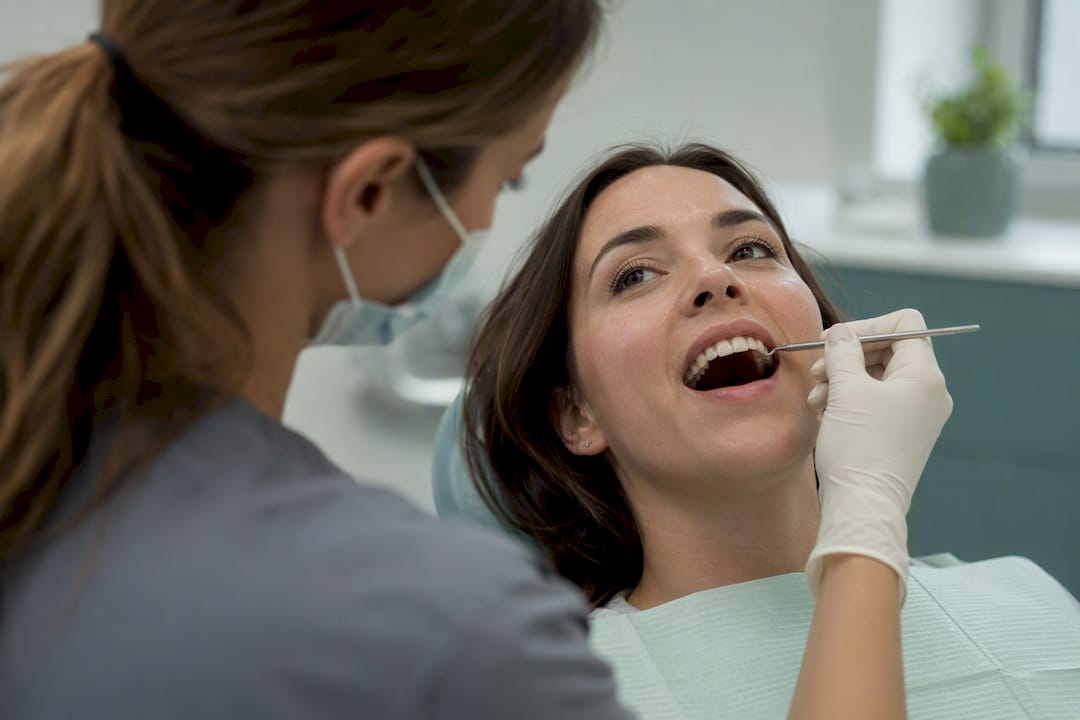
Disclosing solutions make a regular appearance in clinical settings too, especially during hygiene education visits where a hygienist wants to show you, not just tell you, where your technique needs work.
Beyond the basics, modern clinics increasingly rely on:
- Intraoral cameras, small wand-mounted cameras that project a magnified, well-lit image of your teeth onto a screen so both you and your dentist can see plaque, staining, and early decay in real time.
- Digital 2D and 3D intraoral scanners, which capture detailed surface maps of your teeth that can be compared visit over visit.
- Fluorescence-based clinical devices, similar in concept to consumer plaque lights but built for diagnostic precision.
A typical workflow looks like this: during a routine cleaning, your hygienist uses a disclosing agent if you’re due for a hygiene refresher, then relies on visual and tactile exams for the actual scaling. If you’re being monitored for gum disease progression or have had recurring plaque issues, your dentist may bring in an intraoral camera or a digital scanner instead, since those tools create a record that can be tracked across appointments rather than relying on memory alone.
A supporting clinical study found that digital 2D and 3D imaging can reliably detect and monitor plaque levels over time, making it a genuinely useful tool for documenting how well a patient’s oral hygiene is holding up between visits, not just a one-time snapshot.
Some clinics have also started experimenting with AI-assisted charting platforms, an emerging trend you can see reflected in tools like Avitra’s AI charting software, which aims to help clinicians document and track findings more consistently across a patient’s history.
How Accurate Is Plaque Detection, and What Are the Limits?
Disclosing dyes remain the most dependable low-tech option because they show you exactly where plaque physically sits, no interpretation required. Visual and manual exams by a trained clinician are useful but carry an unavoidable layer of subjectivity. Two hygienists looking at the same mouth won’t always score it identically, which is part of why researchers have pushed so hard toward automated alternatives.
AI-based image analysis is closing that gap faster than most people expect. A study using AutoML on standard smartphone photos classified plaque levels with high accuracy in a controlled setting, suggesting a phone camera could eventually double as a screening tool. Separately, research using YOLO-based deep learning models found these systems detected mature and over-mature plaque with notably higher sensitivity than newer, thinner plaque deposits, which tend to blend into enamel more easily regardless of the detection method used.
That gap between mature and new plaque isn’t a flaw exclusive to AI. It shows up with human eyes and disclosing dyes too, just less consistently documented.
Real-world limitations still separate research-stage promise from everyday reliability:
- Lighting and photo quality heavily influence what any camera-based system, human or AI, can pick up.
- Older, thicker plaque stains and photographs more reliably than plaque that’s only hours old.
- Disclosing dyes can temporarily stain lips, tongue, and dental work.
- Digital scanners and AI charting tools remain concentrated in specialized or research-focused practices rather than every neighborhood dental office.
For now, disclosing tablets and clinical exams do the heavy lifting for most people, while digital and AI tools are best understood as a fast-advancing complement rather than a replacement.
What to Do After You Find Plaque
Finding plaque is only useful if it changes what happens next. Treat a positive check as a to-do list, not a verdict.
- Re-brush the stained areas specifically, angling bristles toward the gumline where plaque tends to hide.
- Floss or use interdental brushes between teeth where a toothbrush physically can’t reach.
- Rinse with an alcohol-free, fluoride mouthwash if your dentist has recommended one for your situation.
- Repeat the disclosing check to confirm the targeted areas are actually clean.
Certain spots deserve extra attention. The area right along the gumline collects plaque faster than any other surface, and if you wear braces, the space around brackets and wires acts like a plaque trap that ordinary brushing strokes often skip entirely. Y-brush’s step-by-step brushing tutorial walks through angling and technique adjustments for exactly these problem zones.
Build detection into a routine rather than a one-off experiment.
- Do a full brushing-and-flossing session daily, no detection required.
- Run a disclosing tablet check monthly to catch technique drift before it becomes a habit.
- Book a professional cleaning and exam on your dentist’s recommended schedule, typically twice a year.
Pro Tip: Put a recurring reminder on your phone for a monthly “disclosing tablet night.” It takes two minutes and catches bad habits long before your next dental visit does.
See a dentist sooner than your next scheduled visit if you notice bleeding gums, persistent bad breath, or plaque that keeps reappearing in the same spots despite consistent, careful brushing. Those are signs plaque has likely hardened into tartar, which no home method can remove.
Understanding Plaque Scores and How Often to Check
Dental professionals often quantify plaque with standardized indices rather than a simple yes-or-no judgment. The O’Leary index calculates the percentage of tooth surfaces near the gumline that show visible plaque after disclosing, with lower percentages reflecting cleaner, healthier gum margins. The Quigley-Hein index instead scores plaque on a numeric scale based on how much of each tooth surface is covered and how far the buildup extends from the gumline. Neither score is something you need to calculate yourself. Your hygienist handles that during a cleaning, but knowing the concept helps you understand what “your plaque score improved” actually means at your next visit.
A practical check-in rhythm looks like this:
- Daily: brush and floss without a disclosing agent, since that’s the habit you’re actually building.
- Monthly: run a disclosing tablet or fluorescent light check to catch drift in your technique.
- Every six months (or as recommended): get a professional exam where plaque and gum health are scored formally.
Plaque maturity changes how seriously a score should be taken. Fresh plaque from earlier that day is far less clinically significant than plaque that’s been sitting for several days, since older deposits are more likely to mineralize into tartar and irritate gum tissue. A high score from months of neglect tells a very different story than a moderate score after one busy week of rushed brushing.
Safety Notes: Allergies, Staining, and Special Populations
Disclosing agents are generally safe, but a few ingredients deserve a second look before you use them, particularly if you or your child has known sensitivities.
- Check labels for erythrosine, FD&C food dyes, and iodine, all common in disclosing products and all potential allergy triggers for some people.
- If you have a shellfish allergy, ask a pharmacist or dentist before using iodine-based solutions specifically.
- For kids, choose age-appropriate tablets, supervise chewing closely to avoid choking risk, and check with a pediatric dentist if staining or reactions seem unusual.
- Expect temporary lip and gum staining with most tablet-based products. This fades within an hour or two and is not a sign of a problem.
Pro Tip: If you or your child wears braces, disclosing agents are especially worth using regularly. They highlight the plaque buildup that collects around brackets and wires far more clearly than a mirror alone ever will.
Why Teaching Plaque Detection Changes Daily Habits
The most underrated part of plaque detection isn’t the tool, it’s the moment of surprise. People consistently underestimate how much plaque survives their normal brushing routine until a disclosing tablet proves it in vivid color. That single visual jolt does more to change behavior than repeated verbal reminders from a dentist ever seem to.
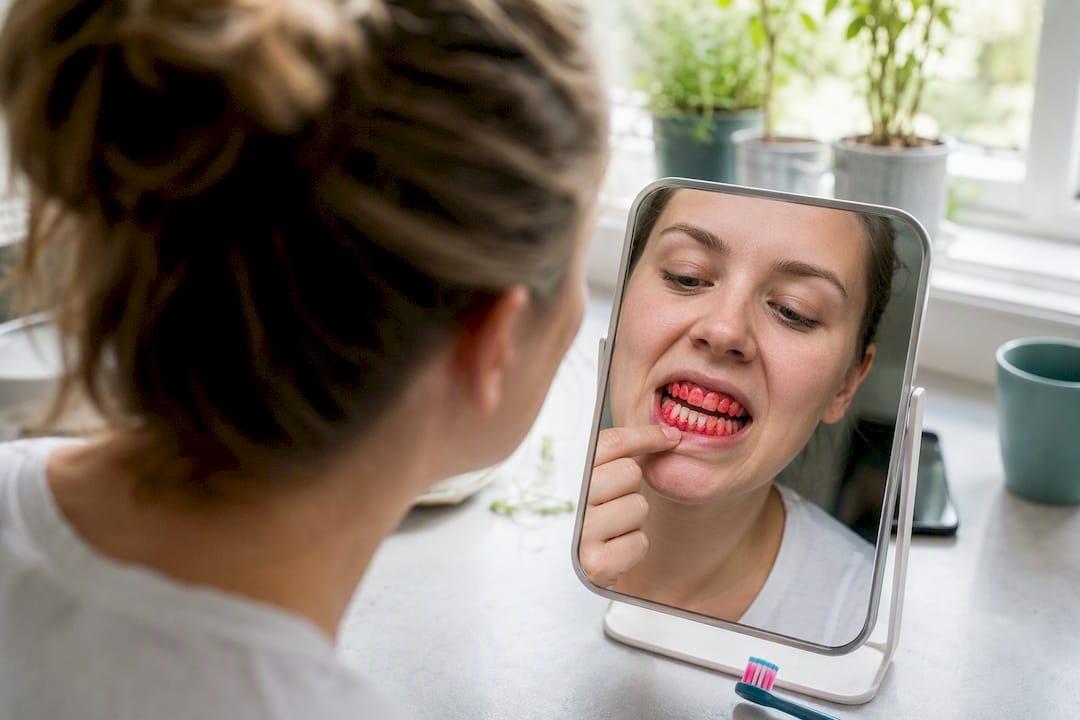
What actually works, based on the pattern I see across the research, is a simple loop: check, correct, re-check. You disclose, you find the missed spots, you fix your technique on those specific areas, and then you confirm the fix worked before moving on. Skipping the re-check is the most common mistake, since it turns detection into a one-time event instead of a feedback loop that compounds over weeks and months.
Y-brush’s own educational content leans into this same idea, treating detection as the diagnostic step and brushing technique as the fix, not the other way around.
A Better Brush Closes the Loop After Detection
Plaque detection tells you where the problem is. What happens next depends entirely on whether your toothbrush can actually reach those spots consistently, every single day, not just on the days you’re paying close attention. The Y-brush Essential Sonic Toothbrush uses a patented Y-shaped head that surrounds every tooth surface at once, including the gumline and back teeth that disclosing tablets so often expose as trouble spots, and it delivers a full clean in 20 seconds through sonic vibrations instead of the two minutes most people never actually spend.
Detection and cleaning aren’t competing steps, they’re partners. A disclosing tablet or plaque light is an educational tool, not a substitute for the brushing that comes after it. If your monthly check keeps flagging the same missed zones no matter how carefully you brush, the toothbrush itself may be the limiting factor rather than your effort. For families managing this together, the Y-brush KidsBrush applies the same design for children ages four to twelve. Head to the Y-brush shop to see which model fits your routine and put your next disclosing check to the test.
Frequently Asked Questions
How can I tell if I have plaque on my teeth?
Run your tongue along your teeth near the gumline. If it feels fuzzy or slightly rough rather than smooth, that’s likely plaque. A disclosing tablet gives a far more precise answer by staining the buildup a visible color you can actually see in a mirror.
What does a plaque score percentage mean?
Indices like the O’Leary score express plaque as a percentage of tooth surfaces showing visible buildup after disclosing.
Are there plaque indicators made for kids?
Yes. Age-appropriate disclosing tablets exist specifically for children, though an adult should always supervise chewing to prevent choking and check the ingredient list for known allergens beforehand.
How often should I check for plaque?
Brush and floss daily without a disclosing agent, run a tablet or fluorescent light check about once a month, and get a professional exam and cleaning on the schedule your dentist recommends, typically every six months.
Is dental plaque the same as artery plaque?
No. Dental plaque is a bacterial film on your teeth, while arterial plaque is a fatty buildup in blood vessels detected through entirely different methods like coronary calcium scans. They share a name and nothing else.
Sources
- Dental plaque identification at home: MedlinePlus Medical Encyclopedia
- Automated machine learning for image-based detection of dental plaque on permanent teeth (Frontiers)
- Detecting and monitoring dental plaque levels with digital 2D and 3D imaging techniques


