


Powered brushes do not automatically damage enamel, but pairing a sonic or oscillating brush with a high-RDA toothpaste can raise abrasive wear beyond what the same paste causes with manual brushing. The safest immediate move is to choose a fluoride toothpaste with a low-to-medium RDA, especially if you have sensitivity, exposed dentin, or a history of erosion, and to brush with light pressure. The ADA and ISO 11609 cap dentifrice abrasivity at an RDA of 250.
TL;DR:
- Powered brushes amplify the effects of high-RDA toothpaste, especially when combined with vigorous pressure, increasing long-term dentin wear risks.
- RDA ratings are imprecise predictors of actual wear due to lab variability, brushing technique, and differences in saliva and slurry dilution in real life.
- Long-term use of high-RDA pastes with powered brushes can cause more dentin loss than manual brushing, particularly if additional factors like acid exposure and force are uncontrolled.
- Choosing a low-to-medium RDA fluoride toothpaste (70 to 150) and gentle brushing technique significantly reduces enamel and dentin abrasion risks over time.
- Proper technique, including light pressure and timely post-acid brushing, is crucial to minimize wear, regardless of the toothbrush’s power or toothpaste abrasivity.
Table of Contents
- What RDA Means and Why It Is Not a Simple Safety Score
- How Electric Toothbrushes Change Abrasive Wear: What the Studies Show
- Dilution, Acid Exposure, and Brushing Force: Why Lab Results Do Not Map Directly to Your Bathroom
- Charcoal, Whitening, and Specialty Toothpastes: Where Abrasion Risk Rises
- Choosing a Toothpaste for an Electric Toothbrush: A Practical Checklist
- Technique That Keeps Abrasion Low Without Sacrificing Clean Teeth
- Why Evidence on Abrasivity and Effectiveness Still Matters
- Why We Prioritize Enamel Safety Over Aggressive Whitening
- A Faster, Gentler Brushing Routine Worth Considering
- FAQ
- Sources
What RDA Means and Why It Is Not a Simple Safety Score
Relative Dentin Abrasivity, or RDA, measures how much a toothpaste wears away dentin compared with a reference standard, using a standardized brushing machine and radioactive tracer method defined under ISO 11609. The ADA endorses this scale, and dentifrices carrying the ADA Seal of Acceptance must stay at or below an RDA of 250, the recognized upper limit for long-term use with normal technique.
RDA values generally fall into three practical bands:
- Low abrasivity (RDA 70 or below): suited to sensitive teeth, exposed dentin, or active erosion.
- Medium abrasivity (RDA 71 to 150): appropriate for most healthy adults with no erosion risk.
- High abrasivity (RDA above 150): reserved for short-term stain control, not daily brushing.
RDA testing can vary by as much as 20% for the same product across different labs and lots, and profilometric wear does not always track neatly with the published RDA figure, according to research on dentin wear with sonic brushing. That inconsistency means RDA is a useful screening number, not a precise prediction of how much enamel or dentin a specific brushing session will remove. A toothpaste within the ADA-approved range is not automatically risk-free for every mouth, particularly when combined with a powered brush and aggressive technique.
How Electric Toothbrushes Change Abrasive Wear: What the Studies Show
Laboratory studies consistently find that powered brushes intensify the effect of abrasive toothpaste particles, largely because they deliver far more bristle-to-tooth contacts per second than a hand performing a manual stroke. That mechanical difference matters most when the toothpaste itself carries a higher RDA.
An in-vitro profilometry study comparing manual and sonic brushing across several toothpastes found that sonic brushing produced statistically higher abrasive dentine wear than manual brushing once RDA climbed into the higher bands, according to research published on sonic toothbrush dentine wear. With a low-RDA paste rated at 28, median wear was close between methods (2.7 micrometers for manual versus 3.1 micrometers for sonic). With a high-RDA paste rated at 121, the gap widened sharply: 5.2 micrometers for manual brushing versus 9.0 micrometers for sonic brushing. The toothpaste’s abrasivity, not the brushing method alone, drove most of the difference, but the sonic mechanism amplified that effect once the paste itself was aggressive.

A separate long-term simulation modeling roughly 8.5 years of brushing found that power toothbrushes produced greater dentin loss than manual brushes when tested with a highly abrasive toothpaste rated RDA 150, under matched force and timing, according to simulation research on brushing mode and bristle arrangement. The same research pointed to bristle arrangement and filament length as contributing factors: longer filaments on some sonic heads increase shear forces and move toothpaste across cervical areas more aggressively than certain manual brush heads, which can raise abrasion risk at the gumline where enamel is thinnest.
Several factors explain why these numbers vary from one study to the next:
- Tooth substrate differences: extracted human dentin, bovine dentin, and synthetic analogs do not wear identically.
- Slurry concentration: some lab protocols use far more concentrated toothpaste mixtures than a mouth ever experiences.
- Bristle stiffness and head design: oscillating-rotating heads and sonic heads move differently across the tooth surface.
- Applied force and brushing duration: heavier pressure and longer sessions increase wear regardless of brush type.
The clinical weight of a few extra micrometers depends on repetition. Brushing happens twice a day for years, so even a modest per-session difference compounds, particularly for anyone who also deals with recurrent acid exposure or has dentin already exposed from gum recession. That cumulative effect is why dental professionals pay closer attention to toothpaste abrasivity once a patient switches from a manual brush to a sonic or oscillating-rotating model.
Dilution, Acid Exposure, and Brushing Force: Why Lab Results Do Not Map Directly to Your Bathroom
Laboratory abrasivity testing often uses toothpaste slurries far more concentrated than what actually happens during normal brushing. Saliva, water, and the simple act of spreading paste over a wet brush dilute the mixture considerably compared with the 1:1 to 1:3 slurry ratios common in some in-vitro protocols.
Dilution matters because it changes how much abrasive material actually contacts the tooth surface per stroke. A study on dilution effects in abrasive wear found that enamel and dentin wear dropped significantly as slurry dilution increased across several toothpaste types, which suggests that lab figures using concentrated slurries may overstate the wear a real brushing session produces. That gap is one reason RDA numbers should guide toothpaste choice without being treated as an exact forecast of daily wear.
Timing relative to acid exposure matters just as much as toothpaste choice. Enamel and dentin soften temporarily after contact with acidic foods, drinks, or stomach acid, and brushing immediately afterward removes more mineral than brushing on intact, unsoftened surfaces. Research on erosion and abrasion found greater enamel loss when brushing followed acid exposure directly, and that waiting, along with gentler technique, reduced the additional wear. Rinsing with water and waiting roughly 30 to 60 minutes after acidic food or drink before brushing gives softened enamel time to partially reharden.

Brushing force compounds both factors. Powered brushes are engineered to clean effectively without the extra scrubbing pressure a manual brush sometimes invites, but pressing a sonic or oscillating head into the tooth surface with the same force you would use scrubbing by hand erases that advantage and can increase wear regardless of toothpaste abrasivity.
Pro Tip: Let the brush do the work. Guide a powered brush head across each surface with barely more pressure than its own weight, and let the vibration or rotation handle the cleaning.
Charcoal, Whitening, and Specialty Toothpastes: Where Abrasion Risk Rises
Charcoal and some whitening toothpastes have drawn attention from researchers precisely because formulation, not marketing language, determines how abrasive a product actually is. Not every charcoal paste behaves the same way, but several lab studies have flagged a pattern worth knowing before reaching for one daily.
- Charcoal toothpastes can show notably higher enamel and dentin wear than standard silica-based formulas. Research on charcoal toothpaste abrasion found some charcoal products produced mean enamel removal rates clearly above control pastes when tested with electric toothbrushes.
- Formulation varies widely across charcoal products, so “charcoal” on a label does not reliably predict RDA; some formulas blend charcoal with silica or calcium carbonate abrasives at different concentrations, which changes wear potential from one brand to the next.
- Fluoride-containing, lower-to-medium RDA pastes remain the better default for everyday brushing, reserving stronger abrasive or whitening formulas for occasional use rather than a twice-daily routine, particularly for anyone with sensitivity or visible gumline recession.
For stubborn surface staining, a conversation with a dental professional about in-office options is often more effective and considerably gentler on enamel than repeated exposure to a highly abrasive paste; a dental practice’s overview of professional stain removal walks through what those in-office options typically involve.
Choosing a Toothpaste for an Electric Toothbrush: A Practical Checklist
Fluoride comes first, regardless of brush type. It remains the most consistently supported ingredient for strengthening enamel and resisting decay, and no amount of attention to RDA should come at the expense of skipping it. Once fluoride is confirmed on the label, RDA becomes the next filter, weighed against your own oral health history rather than treated as a universal cutoff.
- Choose low RDA (70 or below) if you have exposed dentin, diagnosed erosion, or ongoing sensitivity.
- Medium RDA (71 to 150) suits most healthy adults switching from manual to sonic or oscillating-rotating brushing.
- Skip high-RDA pastes for daily use with a powered brush unless a dentist has specifically recommended one for short-term stain control.
- Recheck your toothpaste choice whenever you switch brush types, since the same paste can behave differently with a sonic head than it did with a manual brush.
Our guide to selecting toothpaste for sonic toothbrushes walks through how to match abrasivity to your specific risk factors, and our broader four-criteria selection checklist covers fluoride content, flavor tolerance, and sensitivity formulas alongside abrasivity.
Pro Tip: Keep the toothpaste tube and note its RDA range (often listed by the manufacturer or dentist) the same way you would track a medication dose, especially if you have a history of enamel wear.
A few signals warrant a professional exam rather than a toothpaste swap alone: visible dentin exposure at the gumline, sharp sensitivity to cold or sweet foods that has developed recently, or any wedge-shaped notching near the gumline. Those findings point to a conversation about technique, toothpaste, and possibly a night guard or desensitizing treatment, not just a different tube of paste.
Technique That Keeps Abrasion Low Without Sacrificing Clean Teeth
- Apply light pressure only. Powered brushes are designed to clean effectively on their own; pressing harder increases abrasive wear without improving plaque removal.
- Use a soft-bristled or manufacturer-recommended head, and replace it every three months or sooner if bristles splay, since worn bristles transfer force unevenly across the tooth surface.
- Let the brush move across each tooth rather than scrubbing back and forth, since oscillating-rotating and sonic heads are built to clean through their own motion, not through added hand movement.
- Watch for whitening or blanching of the gum margin while brushing, which usually signals too much pressure; back off immediately if you notice it.
- Follow the brush’s built-in timer rather than brushing longer out of habit, since extended brushing time with the same pressure simply multiplies abrasive contacts.
Our overview of ADA-backed enamel safety steps covers these technique points in more detail, including how to adjust habits built around manual brushing when switching to a powered brush.
Why Evidence on Abrasivity and Effectiveness Still Matters
The research comparing manual and powered brushing is not simply about which brush cleans better: it is about weighing plaque removal against abrasive risk at the same time, since a brush that cleans aggressively but wears dentin faster is not actually the safer long-term choice. Our comparison of manual and sonic brushing on plaque removal looks at that trade-off directly, since cleaning efficacy and abrasive wear are both legitimate outcomes worth tracking.
A few points are worth keeping in view when reading abrasivity research:
- RDA testing methods and lab protocols vary, so figures from different studies are not always directly comparable.
- Peer-reviewed in-vitro studies using profilometry and scanning electron microscopy provide the clearest picture of mechanical wear, though they still simplify real mouths into controlled lab conditions.
- ISO 11609 and ADA guidance remain the reference points dental professionals use when evaluating whether a toothpaste is appropriate for long-term use.
For anyone managing sensitivity alongside a powered brush, our guide to electric toothbrush sensitivity covers adjustments beyond toothpaste choice, including head selection and brushing frequency. Personalized guidance from a dentist remains the right next step whenever sensitivity persists or worsens.
Why We Prioritize Enamel Safety Over Aggressive Whitening
Our editorial position is straightforward: protecting enamel and dentin matters more than chasing a slightly whiter smile through abrasive pastes, and fluoride protection against decay should never be the ingredient sacrificed in that trade-off. The evidence on powered brush abrasivity is still developing, with real gaps between lab conditions and daily brushing, so we favor conservative, well-supported choices over confident claims the research cannot fully back yet.
That caution does not mean avoiding electric toothbrushing: it means pairing a powered brush with a sensible, fluoride-first toothpaste and gentle technique rather than defaulting to whichever paste promises the fastest stain removal. If you are weighing a new brush or a new toothpaste, a conversation with your dentist about your specific enamel and dentin history will tell you more than any general guideline can.
— Joris
A Faster, Gentler Brushing Routine Worth Considering
Most of the abrasion risk discussed above comes down to time, pressure, and repetition: the longer and harder you brush, the more those variables compound. We take a different approach, using a unique Y-shaped head design and sonic vibrations to clean teeth quickly, which shortens the window where pressure and technique mistakes can add up.
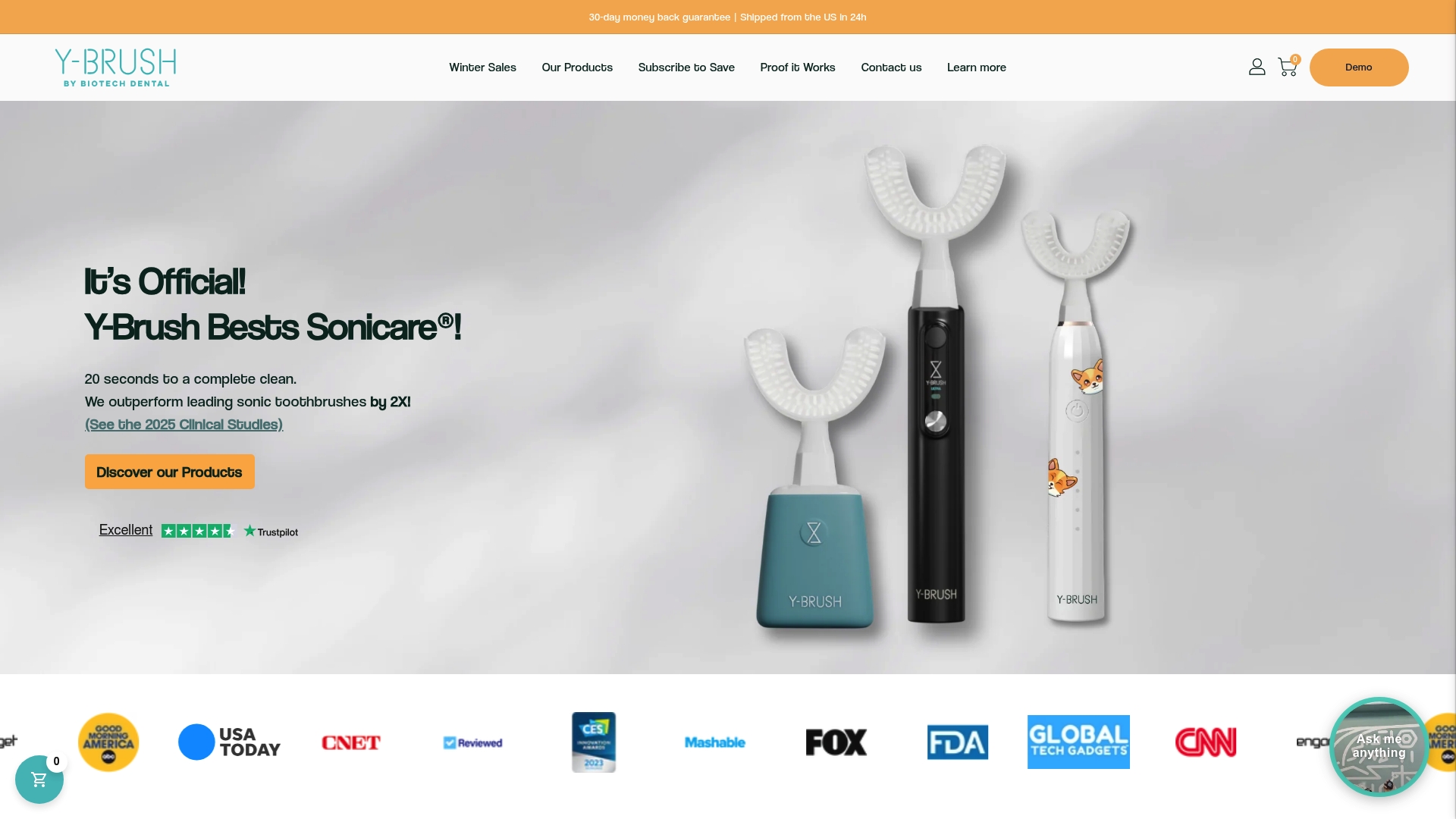
Pairing that shorter routine with a conservative, fluoride-containing, lower-to-medium RDA toothpaste gives you the benefits of thorough cleaning without stacking the risk factors covered in this guide. You can browse our full lineup of Y-Brush toothbrushes and plans, including the Core Plan, Pro Plan, and Pro+2 Plan, each built around the same 20-second brushing design. For households that want to keep brush heads fresh without reordering manually, membership plans can deliver replacement heads on a regular schedule, so you avoid brushing with worn bristles that transfer force unevenly across your teeth.
This article is general information, not a substitute for advice from a qualified doctor. Consult a qualified healthcare professional about your own circumstances before acting on anything here.
FAQ
What is the best toothpaste to use with an electric toothbrush?
A fluoride toothpaste with a low-to-medium RDA, generally at or below 150, works well for most people using a sonic or oscillating-rotating brush. Anyone with sensitivity, exposed dentin, or erosion should lean toward the lower end of that range and confirm the choice with a dentist.
Which toothpaste has the lowest abrasiveness?
Toothpastes formulated specifically for sensitive teeth typically carry the lowest RDA values, often at or below 70, which places them in the low-abrasivity band defined by ISO 11609 and ADA guidance. The exact RDA varies by brand and formula, so checking the product label or manufacturer information is the most reliable way to confirm it.
Why are my teeth sensitive when I use an electric toothbrush?
Sensitivity often comes from excess pressure, a high-RDA toothpaste, or brushing immediately after acidic food or drink, all of which increase enamel and dentin wear over time. Switching to a gentler technique and a lower-RDA fluoride paste resolves many cases, though persistent sensitivity deserves a dental exam. Our guide to electric toothbrush sensitivity covers the most common causes in more detail.
How do I stop toothpaste from dripping down an electric toothbrush?
Apply a smaller amount of toothpaste, roughly the size of a pea, and let it settle into the bristles for a few seconds before turning on the brush, since starting the vibration too quickly tends to fling paste outward. Angling the head slightly downward over the sink while loading the paste also helps keep it in place until brushing begins.
Sources
- Toothpastes | American Dental Association
- Effect of a sonic toothbrush on the abrasive dentine wear using toothpastes with different abrasivity values


