


Don’t brush your teeth immediately after vomiting. Rinse your mouth with plain water or a baking-soda solution, wait about 30 minutes, then brush gently with a soft-bristle brush and fluoride toothpaste. That single sequence protects your enamel from the most preventable damage that happens after stomach acid contacts your teeth.
Right after vomiting, do these instead:
- Rinse and spit with plain water to flush acid away from tooth surfaces
- Mix 1 teaspoon of baking soda into 1 cup of water, swish for 30–60 seconds, and spit
- Sip small amounts of water to stay hydrated
- Chew sugar-free gum if available to stimulate saliva flow
- Wait approximately 30 minutes before picking up your toothbrush
Key Takeaways
Waiting 30 minutes after vomiting before brushing, rinsing with a baking-soda solution, and using a soft-bristle brush with fluoride toothpaste are the three steps that protect enamel from acid-driven erosion.
| Point | Details |
|---|---|
| Don’t brush immediately | Stomach acid softens enamel; brushing right away abrades the weakened surface. |
| Rinse with baking-soda solution | Mix 1 tsp baking soda per 1 cup of water; swish 30–60 seconds, then spit. |
| Wait 30–60 minutes | Allow saliva to neutralize acid and begin remineralizing enamel before brushing. |
| Use a soft brush and fluoride toothpaste | Gentle pressure and fluoride support enamel recovery; avoid whitening abrasives. |
| See a dentist for recurring vomiting | Chronic acid exposure causes cumulative erosion that warrants professional assessment. |
Table of Contents
- Why brushing immediately after vomiting damages your enamel
- What to do in the first five minutes after vomiting
- How long to wait and how to brush safely once you do
- When to contact a dentist or a medical provider
- What dental organizations and clinicians actually advise
- A note on getting through it
- Sources
Why brushing immediately after vomiting damages your enamel
Stomach acid is extremely corrosive. Gastric acid registers a pH of roughly 1.5–2.0, which is far more acidic than coffee or citrus juice. Tooth enamel begins to demineralize when mouth pH drops below approximately 5.5, so vomiting creates an immediate, significant threat to your enamel’s structural integrity.
The problem with brushing right away is mechanical. Acid temporarily softens the enamel surface, and a toothbrush moving across that softened layer acts like sandpaper on wet plaster. Brushing immediately after vomiting spreads acid over more tooth surfaces and abrades the softened enamel, accelerating erosion and increasing long-term sensitivity. Waiting allows saliva to naturally buffer the acid and begin remineralizing the enamel before any mechanical contact occurs.
What to do in the first five minutes after vomiting
Acting quickly and correctly in the minutes right after vomiting limits how long acid stays in contact with your teeth. Follow these steps in order.
- Rinse with plain water immediately. Take a mouthful of water, swish gently around all tooth surfaces, and spit. Repeat once or twice. This physically removes residual acid without requiring you to brush.
- Prepare a baking-soda rinse. Mix 1 teaspoon of baking soda into 1 cup (8 fl oz) of water. Swish the solution around your mouth for 30–60 seconds, then spit. Baking soda is alkaline and directly neutralizes the residual gastric acid coating your teeth.
- Do not brush yet. Put the toothbrush down. Even a gentle brush on acid-softened enamel causes measurable abrasion.
- Skip acidic mouthwash. Alcohol-based or citrus-flavored rinses can lower mouth pH further. Choose a fluoride rinse or plain water only.
- Sip water steadily. Small sips help dilute remaining acid and support saliva production, which is your mouth’s built-in buffering system.
- Chew sugar-free xylitol gum if you have it. Chewing sugar-free gum stimulates saliva flow, which speeds up natural acid neutralization while you wait.
Pro Tip: If you’re dealing with repeated vomiting from illness, replace your toothbrush once you’ve recovered. Bacteria from a contagious illness can linger on bristles and contribute to reinfection.
For parents applying this guidance to children, the same sequence applies. See Y-Brush’s resource on fluoride toothpaste for children for age-appropriate product guidance once the waiting period is over.
How long to wait and how to brush safely once you do
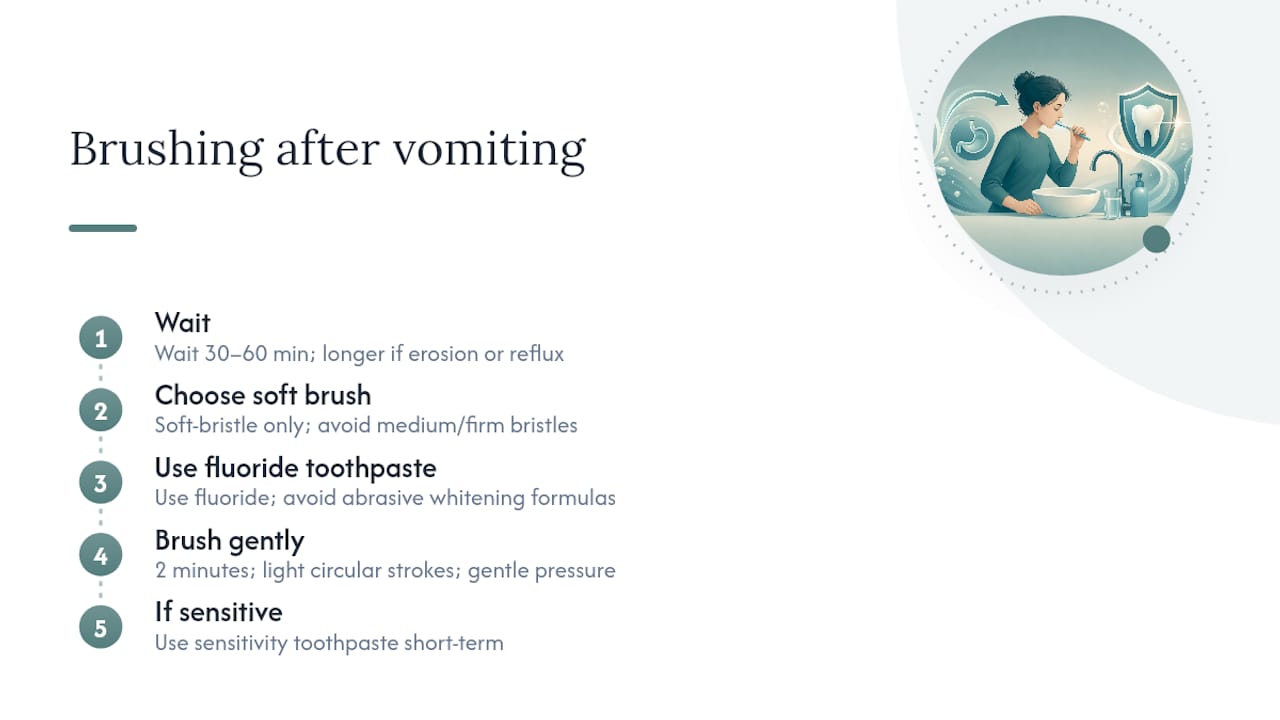
The standard clinical recommendation is to wait 30–60 minutes before brushing after vomiting. The ADA’s patient-facing guidance recommends waiting about 30 minutes after an acidic event to allow saliva to neutralize mouth pH and begin rehardening softened enamel. Some clinicians recommend longer waiting times for people with a history of enamel erosion or acid reflux.
When you’re ready to brush, technique matters as much as timing.
Choose the right brush. A soft-bristle toothbrush is the only appropriate option after acid exposure. Medium or firm bristles apply unnecessary pressure on enamel that may still be recovering.
Use fluoride toothpaste. Fluoride actively supports remineralization, helping to restore mineral content that acid temporarily depleted. Avoid aggressive whitening formulas immediately after vomiting — many contain abrasives that compound enamel wear. If your teeth feel sensitive, a toothpaste formulated for sensitivity is a better short-term choice. For guidance on selecting the right formula, Y-Brush’s breakdown of toothpaste selection criteria covers the key factors clearly.
Apply gentle pressure. Let the brush do the work. Two minutes of light, circular strokes covers all surfaces without adding mechanical stress to recovering enamel. An electric toothbrush with a pressure sensor, like those in the Y-Brush lineup, removes the guesswork entirely — the brush signals when you’re pressing too hard.
For readers managing ongoing sensitivity, this oral care routine for sensitive teeth offers complementary guidance on building a gentler daily regimen.
When to contact a dentist or a medical provider
A single episode of vomiting, managed with the steps above, rarely causes lasting dental damage. Repeated or chronic vomiting is a different situation entirely.
Contact a medical provider first if you experience:
- Inability to keep fluids down for more than 24 hours
- Signs of dehydration (dizziness, dark urine, rapid heartbeat)
- Vomiting blood or material that looks like coffee grounds
- Vomiting associated with a head injury
Schedule a dental appointment if you notice:
- Persistent tooth sensitivity to hot, cold, or sweet foods
- Visible thinning, chipping, or translucency at the edges of front teeth
- New discoloration or a yellowish appearance (exposed dentin)
- Recurrent acid exposure from conditions like GERD, bulimia, or cyclic vomiting syndrome
A dentist assessing enamel erosion has several options: professional fluoride varnish to support remineralization, prescription-strength remineralizing toothpaste, or in more advanced cases, restorative work to protect exposed dentin. Patient-facing dental education materials confirm that avoiding aggressive brushing after vomiting reduces the risk of long-term enamel damage, but professional monitoring is the right call when exposure is frequent.
What dental organizations and clinicians actually advise
The consensus across dental organizations is consistent and clear. Rinse with water or a baking-soda solution, wait approximately 30 minutes, then brush gently with fluoride toothpaste and a soft-bristle brush. The American Dental Association and Delta Dental both reinforce this sequence in their patient resources.
Dentists quoted in practice-focused guidance recommend rinsing with plain water, waiting 30–60 minutes, and using fluoride toothpaste and soft-bristle brushes to reduce long-term enamel wear after vomiting. The baking-soda rinse is not a home remedy — it is a clinician-recommended, low-cost intervention that directly addresses the chemistry of the problem.
A note on getting through it
Vomiting is unpleasant, and the instinct to brush immediately is completely understandable. Your mouth feels acidic and uncomfortable, and brushing feels like the obvious fix. The reassuring reality is that the correct steps are simple: rinse, wait, then brush gently. That sequence protects your enamel far better than reaching for your toothbrush right away. When in doubt, rinse with the baking-soda mix and give yourself the full 30 minutes. Your teeth will thank you.
Sources
- Should You Brush Your Teeth After Throwing Up? – Trident Dental
- Brushing Teeth After Throwing Up - Jackson Ave Dental
- Dentists warn not to brush too soon after being sick — The Dentist
- Oral health handout (baking soda rinse recommendation)
This article is general information, not a substitute for advice from a qualified doctor. Consult a qualified healthcare professional about your own circumstances before acting on anything here.


