


People who use tobacco in any form, drink heavily, carry oral HPV, chew betel quid, or have a history of head or neck cancer face the highest risk of developing oral cancer. If you fall into one or more of those categories, the single most important thing you can do right now is see a dentist or clinician if any mouth or throat symptom has persisted for more than two weeks.
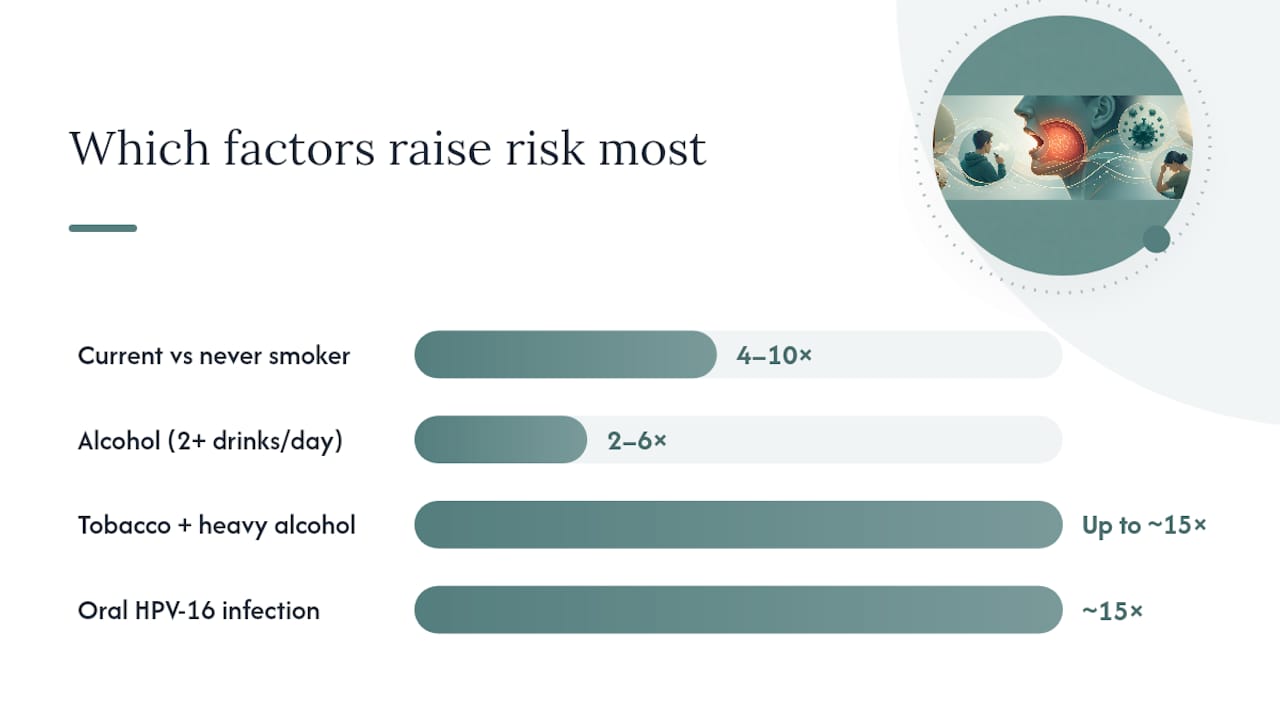
According to the NCI, current smokers face a risk roughly 4–10 times higher than never-smokers depending on the site, and oral HPV-16 infection alone confers about a 15-fold increase in oropharyngeal cancer risk. Those numbers are not meant to alarm you. They are meant to help you act.
Your three most impactful immediate steps:
- If you smoke or use smokeless tobacco, talk to your clinician about cessation support today.
- If you are between 9 and 26 years old (or up to 45 with your clinician’s guidance), ask about HPV vaccination.
- If you have a sore, lump, or patch in your mouth that has not resolved in two weeks, book a dental or medical evaluation.
Pro Tip: Make a short list of any oral symptoms you have noticed, including how long they have been present, before your appointment. Clinicians use duration as a key diagnostic signal.
Key Takeaways
Tobacco, alcohol, and oral HPV-16 are the three highest-magnitude modifiable risk factors for oral cancer, and quitting tobacco cuts risk by roughly half within 5–9 years.
| Point | Details |
|---|---|
| Tobacco and alcohol dominate risk | Current smokers face 4–10x higher risk; combining heavy smoking and drinking can push risk up to ~15x. |
| HPV-16 is a major driver | Oral HPV-16 infection raises oropharyngeal cancer risk roughly 15-fold; vaccination prevents new infections. |
| Early detection transforms outcomes | Cure rates vary widely when oral cancers are caught before they spread. |
| The two-week rule matters | Any mouth or throat symptom lasting more than two weeks warrants a dental or medical evaluation. |
| Prevention is time-sensitive | Quitting tobacco now produces measurable risk reduction within 5–9 years, not decades. |
Table of Contents
- What are oral cavity and oropharyngeal cancers?
- What are the main oral cancer risk factors?
- How can you reduce your risk of oral cancer?
- What symptoms should prompt you to see a clinician?
- How do providers screen and diagnose oral cancer?
- How much does each risk factor raise your risk?
- Which risk factors are still unproven or emerging?
- An editorial perspective on what the evidence actually tells us
- Sources
What are oral cavity and oropharyngeal cancers?
Oral cavity cancer and oropharyngeal cancer are malignant tumors of the mouth and throat, and the CDC confirms that the vast majority are squamous cell carcinomas, meaning they originate in the flat cells lining the mouth and throat surfaces.
The anatomic distinction matters because risk patterns differ by subsite. Oral cavity cancers affect the lips, tongue, floor of the mouth, gums, hard palate, and inner cheeks. Oropharyngeal cancers arise in the tonsils, soft palate, and base of the tongue. Tobacco and alcohol drive most oral cavity cancers. HPV, particularly HPV-16, is now the dominant driver of oropharyngeal cancers in the United States.
According to the American Cancer Society, the average age at diagnosis is about 63, though just over 20% of cases occur in people younger than 55. Men are diagnosed at roughly twice the rate of women, a gap that reflects historical differences in tobacco and alcohol use, though HPV-related cases are narrowing that disparity among younger adults.
Subsite and primary risk driver at a glance:
- Lip: UV radiation, tobacco
- Tongue and floor of mouth: tobacco, alcohol, poor oral hygiene
- Tonsils and base of tongue: HPV-16 (increasingly dominant), tobacco
- Hard palate and gums: tobacco (especially smokeless), alcohol
What are the main oral cancer risk factors?
The evidence base here is strong and consistent across major U.S. health authorities. Understanding which factors apply to your life is the first step toward reducing your personal exposure.
Tobacco in all forms
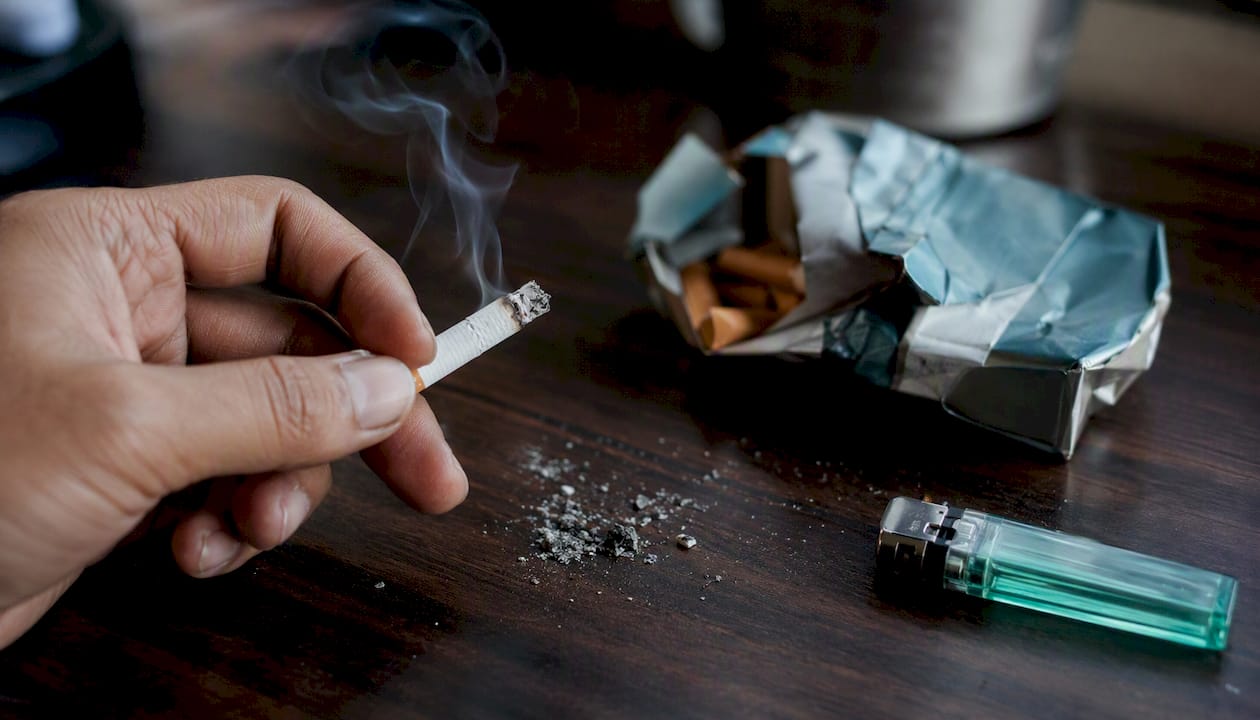
Tobacco is the single largest modifiable cause of oral cavity cancer. Cigarettes, cigars, pipes, and smokeless tobacco (snuff, chewing tobacco, snus) all carry risk, though the magnitude varies by product and duration of use. The NCI’s prevention guidance places current-smoker risk at several times that of never-smokers depending on the site. Smokeless tobacco specifically raises risk for cancers of the gum, cheek, and inner lip, sites that have direct contact with the product. For a closer look at how tobacco damages oral tissue at the cellular level, Y-Brush’s guide on smoking and oral health covers the mechanisms in plain language.
Alcohol
Alcohol increases oral cancer risk in a dose-dependent way. Consuming two or more drinks per day is associated with a 2–6-fold increase in risk compared with nondrinkers, based on multiple studies cited by the NCI. The mechanism involves acetaldehyde, a toxic byproduct of alcohol metabolism that damages DNA in mucosal cells. Alcohol also increases cell membrane permeability, which may allow other carcinogens, including tobacco compounds, to penetrate tissue more easily.

The tobacco-alcohol combination
When heavy smoking and heavy drinking occur together, risk does not simply add up. The American Cancer Society notes that pooled studies show combined exposure can push risk up to a very large increase in risk for people with very heavy use of both. This synergistic effect is one of the most clinically significant interactions in oral oncology.
Human papillomavirus (HPV)
HPV, specifically HPV-16, has reshaped the oral cancer risk profile over the past two decades. The NIDCR confirms that most oropharyngeal cancers in the U.S. are now linked to HPV rather than tobacco. Oral HPV-16 infection confers a very large increase in oropharyngeal cancer risk. Notably, HPV-positive tumors tend to respond better to treatment than tobacco-related tumors, though this does not reduce the importance of prevention and early detection.
Betel quid and areca nut
In communities where betel quid chewing is culturally common, particularly among South Asian, Southeast Asian, and Pacific Islander populations in the U.S., this practice represents a major independent risk factor. PMC research reports that meta-analyses show multiple-fold increases in risk, with the highest estimates for betel quid chewed with tobacco. Even betel quid without tobacco carries meaningful risk.
Age and sex
Risk rises with age. Most diagnoses occur after age 55, with a median around 63. Men are diagnosed at approximately twice the rate of women, though the gap is narrowing among younger cohorts where HPV-related cases are rising in both sexes.
Prior head or neck cancer
A personal history of head or neck cancer substantially raises the probability of a second primary tumor in the same region. This is partly due to field cancerization, a process where carcinogen exposure affects a broad mucosal area rather than a single spot.
Immunosuppression
People living with HIV/AIDS or those on long-term immunosuppressive therapy after organ transplantation face elevated risk. A compromised immune system is less able to clear HPV infections and repair DNA damage from other carcinogens.
Chronic oral irritation and poor oral hygiene
Ill-fitting dentures, broken teeth, and chronic mucosal trauma create persistent inflammation that may promote malignant transformation over time. Poor oral hygiene is associated with higher risk in several studies, though the causal pathway is still being clarified. Consistent brushing and regular dental visits reduce both irritation and the chance that a developing lesion goes unnoticed.
UV exposure for lip cancer
Squamous cell carcinoma of the lip is strongly associated with cumulative UV exposure, making it more common in people who work outdoors, live in high-altitude or high-UV regions, and have fair skin. SPF lip balm is a direct, evidence-supported preventive measure.
Genetic factors and family history
Certain inherited conditions, including Fanconi anemia and dyskeratosis congenita, significantly raise oral cancer risk. A family history of head and neck cancer may also reflect shared genetic susceptibility, though the contribution of hereditary factors in the general population is smaller than that of behavioral exposures.
Occupational exposures
Workers with prolonged exposure to wood dust, formaldehyde, asbestos, and certain paint or solvent compounds face modestly elevated risk for oral and oropharyngeal cancers. Evidence strength varies by specific exposure, but occupational history is worth discussing with a clinician when other risk factors are also present.
Pro Tip: Map your personal risk by going through each factor above and noting which ones apply to you. Bring that list to your next dental appointment. Dentists are trained to assess combined risk and can prioritize which lesions or symptoms need follow-up.
How can you reduce your risk of oral cancer?
Prevention is not passive. The actions below are ranked by the magnitude of their expected benefit, and each comes with a realistic timeline.
Priority prevention actions:
- Quit all tobacco. Risk drops by roughly half within 5–9 years of quitting and returns near never-smoker levels by about 20 years, per NCI data. No other single behavior change produces a larger risk reduction.
- Limit or stop heavy alcohol use. Risk declines with reduced consumption, though the timeline for full benefit is less precisely defined than for tobacco. Staying within one drink per day or less substantially lowers exposure.
- Get vaccinated against HPV. The CDC recommends HPV vaccination for preteens, teens, and young adults up to age 26, with shared decision-making up to age 45. Vaccination prevents new HPV infections, including the oral strains linked to oropharyngeal cancer.
- Protect your lips from UV. Use an SPF 30 or higher lip balm daily, especially if you spend significant time outdoors.
- Maintain consistent oral hygiene. Brushing thoroughly twice daily, flossing, and addressing broken teeth or ill-fitting dental appliances reduces chronic mucosal irritation. Avoiding common oral care mistakes is a practical place to start.
- Attend regular dental checkups. The NIDCR notes that a routine oral cancer screening takes only minutes during a standard dental visit and can catch suspicious lesions before they progress.
- Eat a diet rich in fruits and vegetables. Diets high in antioxidants are associated with lower oral cancer risk in observational studies, though this is a supporting measure rather than a primary one.
Pro Tip: Once a month, use a bright light and a mirror to check your own mouth. Look for any white or red patches, sores that have not healed, or lumps on the tongue, gums, or inner cheeks. If anything looks unusual and persists for two weeks, call your dentist.
What symptoms should prompt you to see a clinician?
Most mouth sores are benign and resolve within a week or two. The warning signs below are different because they persist, and persistence is the key clinical signal.
Common warning signs of oral cancer:
- A sore or ulcer in the mouth that does not heal within two weeks
- A lump, thickening, or rough patch on the gums, cheek, or tongue
- Red patches (erythroplakia) or white patches (leukoplakia) that do not wipe off
- Persistent sore throat or a feeling that something is caught in the throat
- Difficulty or pain when chewing, swallowing, or moving the jaw or tongue
- Unexplained bleeding in the mouth
- Numbness or loss of sensation in the mouth, tongue, or lips
- Loose teeth with no obvious dental cause
- Persistent hoarseness or voice changes lasting more than two weeks
- Unexplained ear pain on one side
The NIDCR recommends evaluation by a dentist or clinician for any of these symptoms lasting more than two weeks. Unexplained bleeding, rapid growth of a lesion, or difficulty swallowing warrant faster evaluation, ideally within days rather than weeks.
Early detection is the most powerful prognostic factor available. According to MedlinePlus, when oral cancers are found before they have spread, cure rates can be quite high depending on the site. Late-stage diagnoses carry substantially worse outcomes. The Hippocratic Cancer Research Foundation underscores that screening programs exist precisely because early-stage cancers are far more treatable, yet many people delay seeking evaluation.
For most people, the right first call is to a dentist. Dentists perform oral cancer screenings as part of routine exams and can refer to an ENT (ear, nose, and throat specialist) or oral surgeon when a lesion needs further evaluation.
How do providers screen and diagnose oral cancer?
A clinical oral exam is the starting point. During a standard dental checkup, the dentist or hygienist inspects the lips, tongue, floor of the mouth, cheeks, gums, palate, and throat, and palpates the neck for enlarged lymph nodes. This takes only a few minutes and is painless.
Typical diagnostic pathway:
- Clinical exam: Visual and tactile inspection of all oral mucosal surfaces and neck nodes
- Biopsy: Any suspicious lesion, particularly a non-healing ulcer, red patch, or white patch, should be biopsied; histology confirms whether cells are malignant and identifies the type (most commonly squamous cell carcinoma)
- Imaging: CT, MRI, or PET scans are used to determine tumor size, depth, and whether cancer has spread to lymph nodes or distant sites
- HPV testing: For oropharyngeal tumors, HPV status is routinely tested because it affects both prognosis and treatment planning
Stage at diagnosis is the strongest predictor of outcome. Stage I and II cancers are localized and carry far better survival rates than Stage III or IV disease, which involves regional or distant spread. HPV-positive oropharyngeal cancers, as the American Cancer Society notes, tend to respond better to treatment than HPV-negative tumors, even at comparable stages.
If you receive a suspicious finding, requesting a second opinion from an academic medical center or a head and neck oncology specialist is a reasonable and widely accepted step.
How much does each risk factor raise your risk?
The figures below come from authoritative sources and represent approximate ranges across studies. Actual risk depends on dose, duration, and individual biology.
| Risk Factor | Approximate Relative Risk | Evidence Confidence |
|---|---|---|
| Current smoker vs. never-smoker | 4–10x higher (site-dependent) | High |
| Alcohol (2+ drinks/day vs. none) | 2–6x higher | High |
| Tobacco + heavy alcohol combined | Up to ~15x higher | High |
| Oral HPV-16 infection (oropharynx) | ~15x higher | High |
| Betel quid with tobacco | Several-fold (varies by study) | Moderate-High |
| Betel quid without tobacco | Elevated (lower than with tobacco) | Moderate |
| Prior head/neck cancer | Substantially elevated | High |
| Immunosuppression | Elevated (magnitude varies) | Moderate |
Confidence disclaimer: These estimates come from epidemiological studies that vary in design, population, and exposure measurement. It means the probability is roughly 15 times higher than in people without that infection. Use these numbers as approximate guides to prioritize your conversations with a clinician, not as personal predictions.
The most important takeaway from this table: tobacco and alcohol are the most controllable high-magnitude risks, and quitting both produces measurable, time-limited benefits. HPV vaccination addresses the HPV risk before infection occurs.
Which risk factors are still unproven or emerging?
Not every claim that circulates online about oral cancer causes is backed by the same quality of evidence. Several factors are biologically plausible or show signals in early research but have not yet reached the threshold of established causation.
Factors with limited or conflicting evidence:
- High-alcohol mouthwash: Some studies have raised the question of whether frequent use of mouthwashes with high alcohol content increases mucosal exposure to acetaldehyde, but evidence is inconsistent and no major health authority currently classifies this as an established risk factor.
- Chronic denture irritation: Poorly fitting dentures cause persistent mucosal trauma, and some studies link chronic irritation to higher risk, but separating this from confounding factors like tobacco use and age is methodologically difficult.
- Oral microbiome changes: PMC research identifies the oral microbiome as an active area of investigation. Dysbiosis, an imbalance in the oral bacterial community, is associated with higher risk in some studies, but causality and the specific mechanisms remain under investigation.
- Epstein-Barr Virus (EBV) and other infectious agents: EBV is well-established as a cause of nasopharyngeal carcinoma, but its role in oral cavity and oropharyngeal cancers specifically is less clear. Research is ongoing.
- Specific occupational dusts and chemicals: Wood dust is classified as a Group 1 carcinogen by IARC for nasal and sinonasal cancers; its role in oral cavity cancer specifically is less definitively established, though occupational history remains worth discussing with a clinician.
Evidence moves from “possible” to “established” when multiple independent studies in different populations show a consistent association, when a plausible biological mechanism exists, and when confounding factors have been adequately controlled. A single study, even a large one, rarely settles the question.
Pro Tip: When you encounter a claim about a new oral cancer risk factor, check whether IARC, the NCI, or the CDC has reviewed it. These agencies publish systematic evaluations of carcinogen evidence. If none of them have classified the exposure, treat the claim as preliminary.
An editorial perspective on what the evidence actually tells us
The conversation about oral cancer risks has shifted meaningfully in the past decade, and not everyone has caught up with it. The dominant public mental model still centers on the older tobacco-and-alcohol story, which is accurate but incomplete. HPV has changed who gets oropharyngeal cancer. Younger, otherwise healthy adults who have never smoked are now being diagnosed, and many of them had no idea they were at risk. That gap between public awareness and clinical reality is where the real harm happens.
What strikes me most in reviewing this evidence is how actionable it is. Tobacco cessation, HPV vaccination, alcohol moderation, and a dental checkup every six months are not exotic interventions. They are available to most Americans right now. The 5–9 year timeline for meaningful risk reduction after quitting smoking is genuinely encouraging, not discouraging. It means the biology is responsive. It means the decision to quit today has a measurable payoff within a few years, not decades.
The other point worth stating plainly: oral cancer screening during a routine dental visit takes minutes and is painless. The barrier to early detection is not the test itself. It is the assumption that “it’s probably nothing.” Persistent symptoms lasting more than two weeks deserve professional evaluation, full stop. Consistent oral hygiene, including thorough daily brushing, is one of the simplest ways to stay connected to what is happening in your own mouth, and to give a clinician a cleaner baseline to work from. Y-brush’s oral wellness resources offer practical guidance on building those habits into daily life without clinical complexity.
Sources
These U.S.-focused resources offer authoritative, regularly updated information on oral cancer causes, prevention, and screening.
- Oral Cavity, Oropharynx, Hypopharynx, & Larynx Cancer Prevention - NCI
- Oral Cancer | NIDCR
- About Oral Cancer - CDC
- New Insights into Oral Cancer—Risk Factors and Prevention - PMC
- Oral cancer — MedlinePlus
This article provides general health information and is not a substitute for professional medical or dental advice. If you have concerns about oral cancer risks or symptoms, consult a licensed clinician or dentist.


