


Fluoride is the ionic form of fluorine, a naturally occurring mineral found in soil, water, and many foods. Its single most important role in dental health: it strengthens tooth enamel and helps prevent, stop, and even reverse early tooth decay. Cleveland Clinic’s population-level summary associates fluoride use with approximately a 25% reduction in cavity risk. That one figure explains why it appears in municipal water supplies, every major brand of toothpaste, and your dentist’s treatment kit.
Here is where you encounter fluoride most often:
- Municipal tap water adjusted to the CDC-recommended level of 0.7 mg/L
- Fluoride toothpaste, the most widely used daily source of topical protection
- Professional dental treatments such as varnish and gel applied during cleanings
- Some foods and beverages, including tea, seafood, and certain grains
The CDC, NIDCR, and ADA all recognize fluoride as safe and effective at recommended levels. The sections below explain the chemistry, the mechanism, the safety guidance, and exactly how to use it at home.
Key Takeaways
Fluoride strengthens enamel, helps reverse early decay, and reduces cavity risk by approximately 25% at the population level when used consistently through toothpaste and fluoridated water.
| Point | Details |
|---|---|
| What fluoride is | The ionic form of fluorine, a naturally occurring mineral that hardens enamel and inhibits bacterial acid production. |
| How it works | Fluoride accelerates remineralization and forms acid-resistant fluorapatite, protecting teeth from decay at consistent low levels. |
| CDC water standard | The CDC recommends 0.7 mg/L in community water supplies as the U.S. benchmark for lifelong cavity prevention. |
| Safe home use | Use a rice-grain smear for children under 3, a pea-size amount for ages 3–6, and always spit without rinsing to preserve the protective film. |
| Who benefits | All ages benefit; adults with dry mouth, gum recession, or high decay risk gain particular protection from daily fluoride toothpaste use. |
Table of Contents
- What is fluoride, exactly?
- Where does fluoride come from, and how are you exposed?
- How does fluoride actually prevent tooth decay?
- Topical vs. systemic fluoride: what are the main types and uses?
- What are the recommended levels, and is fluoride safe?
- Who benefits most from fluoride?
- What does a professional fluoride treatment involve?
- The public health case for community water fluoridation
- How to use fluoride safely and effectively at home
- Why consistent, low-level exposure is what actually drives results
- Fluoride’s role in daily oral care deserves more credit than it gets
- Get more from every brush with Y-brush
- Sources
What is fluoride, exactly?
Fluoride is the ionic form of fluorine, written chemically as F⁻. Fluorine itself is a highly reactive gas that does not exist freely in nature. When it bonds with other elements, it forms stable compounds, and those compounds are what we call fluoride in health and dental contexts. The distinction matters: elemental fluorine is corrosive and hazardous; fluoride ions in water or toothpaste are a different story entirely.
Three fluoride compounds appear most often in dental products:
- Sodium fluoride (NaF): the most common form in toothpastes, mouthrinses, and professional varnishes
- Stannous fluoride (SnF₂): used in some toothpastes and gels; also has antibacterial properties that help reduce gingivitis
- Sodium monofluorophosphate (MFP): found in many toothpaste formulas, particularly older or international brands
Delivery falls into two categories. Topical fluoride acts directly on the surface of erupted teeth, from toothpaste, mouthrinse, or professional applications. Systemic fluoride is ingested, absorbed into the bloodstream, and incorporated into developing tooth enamel before teeth erupt. Drinking fluoridated water is the primary systemic source for most Americans.
The FDA regulates fluoride in over-the-counter dental products as an active drug ingredient, which is why toothpaste carries a Drug Facts panel. The ADA and CDC provide the clinical and public-health guidance that dentists and policymakers follow.
Where does fluoride come from, and how are you exposed?
Most Americans receive fluoride from several overlapping sources without thinking about it. Understanding those sources helps you assess whether your daily intake is adequate or whether you need to adjust.
Water is the baseline. Groundwater naturally contains fluoride at varying concentrations depending on local geology. Municipal water systems adjust that level to the CDC’s recommended 0.7 mg/L. Some private well water runs higher than that, and some runs far lower. Bottled water is inconsistent: many brands contain little to no fluoride, and labels rarely specify the concentration. If your household relies primarily on bottled water, your fluoride intake from that source may be negligible.
Food and beverages contribute a modest but real amount. Brewed tea, particularly black tea, is one of the higher dietary sources. Seafood, especially fish consumed with bones, and some grains processed with fluoridated water also add to daily intake.
Dental products are the most controllable source. Standard adult fluoride toothpaste in the U.S. contains fluoride within the typical effective range. Prescription-strength toothpastes are available for high-risk patients. Fluoride mouthrinses provide a supplemental topical exposure suitable for daily use.
Professional treatments deliver a concentrated dose directly to enamel during dental visits, covered in detail in the treatment section below.
Pro Tip: To check the fluoride level in your community’s tap water, visit the CDC’s My Water’s Fluoride tool or contact your local water utility directly. They are required to publish annual water quality reports.
One preparation note worth knowing: if you mix infant formula with tap water in a fluoridated community, your baby may receive more fluoride than from breast milk or ready-to-feed formula alone. The ADA and American Academy of Pediatrics recommend discussing this with your pediatrician, particularly for infants under six months.
How does fluoride actually prevent tooth decay?
Teeth lose and gain minerals constantly. Every time you eat or drink something acidic or sugary, bacteria in your mouth produce acids that dissolve calcium and phosphate from enamel, a process called demineralization. Saliva naturally reverses this by redepositing those minerals, a process called remineralization. Fluoride accelerates and strengthens that repair process.
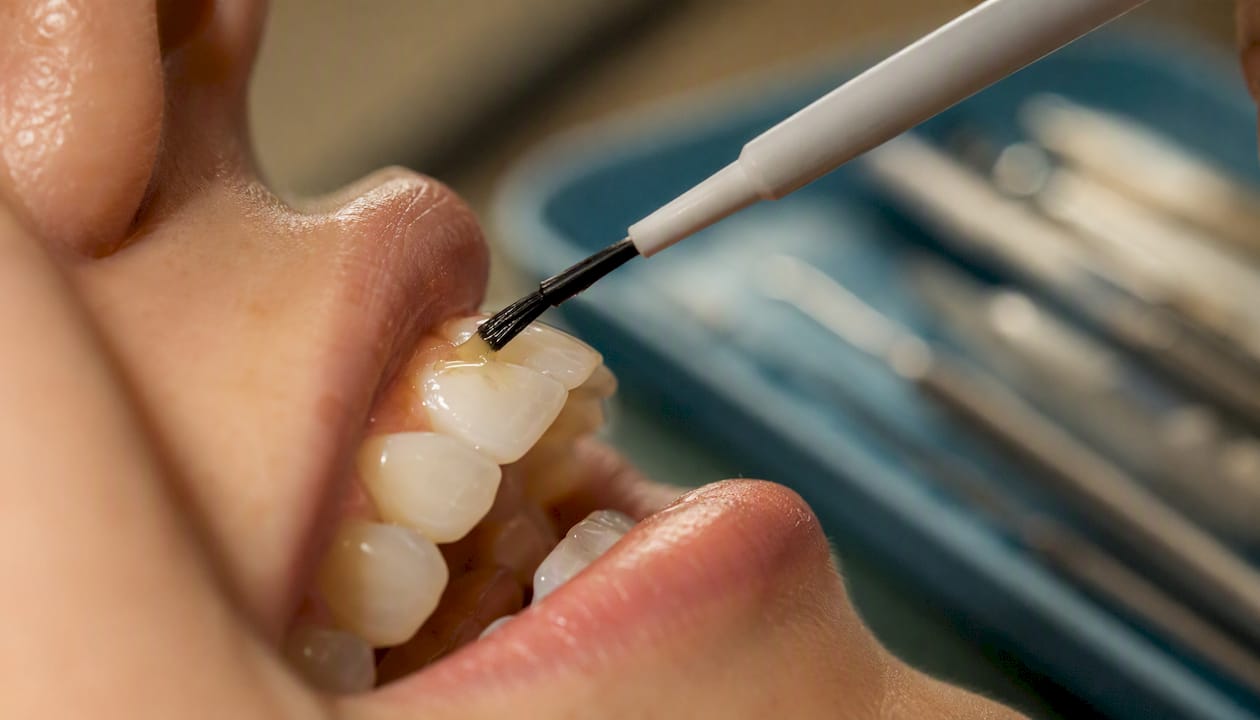
When fluoride is present in saliva and on tooth surfaces, it gets incorporated into the remineralization process, helping form a harder, more acid-resistant version of enamel called fluorapatite. This new surface is less soluble in acid than the original hydroxyapatite, so it holds up better against future bacterial attacks.
Fluoride also works against the bacteria themselves. It inhibits the enzymes bacteria use to metabolize sugar, which reduces the amount of acid they produce. At consistent low levels, it can also reduce bacterial adhesion to tooth surfaces.
NIDCR confirms that fluoride does not just prevent decay; it can stop and reverse early-stage lesions by replacing lost minerals and reinforcing the enamel layer. That therapeutic dimension is what separates fluoride from a simple protective coating.
A 25% reduction in cavity risk is the population-level figure Cleveland Clinic associates with fluoride use. That number reflects consistent, low-level topical exposure, not occasional high-dose treatments.
The key phrase is “consistent, low-level.” CDC oral health guidance emphasizes that keeping fluoride present in saliva and on tooth surfaces throughout the day, primarily through twice-daily brushing, is what maximizes the protective effect. A single professional treatment cannot replicate what daily toothpaste use delivers over months and years.
Topical vs. systemic fluoride: what are the main types and uses?
The ADA distinguishes two delivery routes: topical and systemic. Both contribute to protection, but they work at different stages of tooth development and through different mechanisms.
Topical products work on teeth that have already erupted. Toothpaste is the workhorse here: it delivers fluoride directly to enamel twice a day, every day. Mouthrinse adds a supplemental layer for people at elevated decay risk. Professional varnish and gel provide a concentrated topical dose that stays on enamel for hours after application.
Systemic sources matter most during the years when teeth are forming, roughly from before birth through early adolescence. Fluoride ingested during this window is incorporated into developing enamel, making teeth harder before they even appear in the mouth. Fluoridated water is the primary systemic source; supplements are prescribed only when local water fluoride is low and a clinician determines the child needs additional intake.
Two specialized options deserve mention. Silver diamine fluoride (SDF) is a liquid applied directly to cavities to arrest decay, particularly useful in young children or patients who cannot tolerate drilling. High-strength prescription varnish is used in community health programs and pediatric dentistry for its ease of application and strong evidence base, as StatPearls notes.
What are the recommended levels, and is fluoride safe?
Fluoride is safe at recommended levels. The concerns worth understanding are dental fluorosis from excess intake during childhood and acute toxicity from large accidental ingestion, both of which are avoidable with standard precautions.
U.S. benchmarks
The CDC recommends 0.7 mg/L as the optimal fluoride concentration in community water supplies. This level was set to balance cavity prevention against the risk of mild dental fluorosis, and it applies across the lifespan.
The NIH Office of Dietary Supplements publishes age-based Adequate Intakes (AIs) and Tolerable Upper Intake Levels (ULs) for total fluoride from all sources:
Dental fluorosis
Dental fluorosis occurs when children ingest excess fluoride during the years their permanent teeth are forming, roughly birth through age eight. Mild fluorosis appears as faint white streaks or spots on enamel; it is cosmetic, not a health hazard. Moderate to severe fluorosis, which involves pitting or brown staining, is rare at U.S. water fluoridation levels and is typically associated with naturally high-fluoride well water or inappropriate supplement use.
Acute toxicity
Swallowing a large amount of fluoride at once, far beyond what a child could get from toothpaste, can cause nausea, vomiting, and abdominal pain. If a child swallows more than a small amount of toothpaste, contact Poison Control at 1-800-222-1222 immediately.
Pro Tip: For children under 3, use a smear of fluoride toothpaste (about the size of a grain of rice). For ages 3–6, use a pea-sized amount. Always supervise brushing until children can reliably spit, not swallow, the toothpaste. These guidelines come from the ADA’s fluoride guidance.
Who benefits most from fluoride?
Fluoride benefits people at every age, but the nature of that benefit shifts across the lifespan. A common misconception is that fluoride is only for children. Adults, particularly those with elevated decay risk, gain substantial protection from consistent topical fluoride use.
- Infants (0–6 months): Breast milk contains very little fluoride. The primary concern at this stage is not deficiency but avoiding excess intake from formula mixed with highly fluoridated water. Discuss with your pediatrician.
- Children 6 months–6 years: This is the window when permanent teeth are forming. Fluoride ingested from water and food contributes to enamel hardness. Dental fluorosis risk is highest here, so toothpaste dosing and supervision matter.
- School-age children (6–12 years): Permanent teeth are erupting. Topical fluoride from toothpaste and professional applications provides direct enamel protection during a high-cavity-risk period.
- Adolescents: Orthodontic patients wearing braces face elevated decay risk around brackets; fluoride mouthrinse and professional varnish are commonly recommended.
- Adults: Fluoride toothpaste remains the primary protection. Adults with dry mouth (xerostomia), a history of radiation therapy to the head and neck, or frequent sugar intake are at higher risk and may benefit from prescription-strength toothpaste or more frequent professional applications.
- Older adults: Gum recession exposes root surfaces, which lack enamel and are more vulnerable to decay. Topical fluoride, including prescription toothpaste, is particularly valuable for this group.
CDC oral health resources and NIDCR guidance both address age-specific recommendations, and the ADA provides clinical criteria for when supplements or high-strength topical products are appropriate.
What does a professional fluoride treatment involve?
A professional fluoride treatment is one of the quickest procedures in dentistry. Most applications take under five minutes and are done at the end of a routine cleaning.
Varnish is the most common method today, especially for children and community health programs. The dentist or hygienist paints a sticky, concentrated fluoride solution directly onto tooth surfaces with a small brush. It sets quickly on contact with saliva and stays on teeth for hours. Patients are typically asked to avoid eating or drinking for 30 minutes afterward to let the fluoride absorb fully.
Foam and gel are applied using a tray that fits over the teeth for one to four minutes. These are more common in adult patients and in some school-based programs. The patient bites down on the tray, then spits thoroughly afterward.
Silver diamine fluoride (SDF) is a liquid painted onto active cavities to arrest decay without drilling. It stains the treated area dark brown or black, which is a cosmetic trade-off, but it is highly effective for young children, patients with dental anxiety, or those with limited access to restorative care.
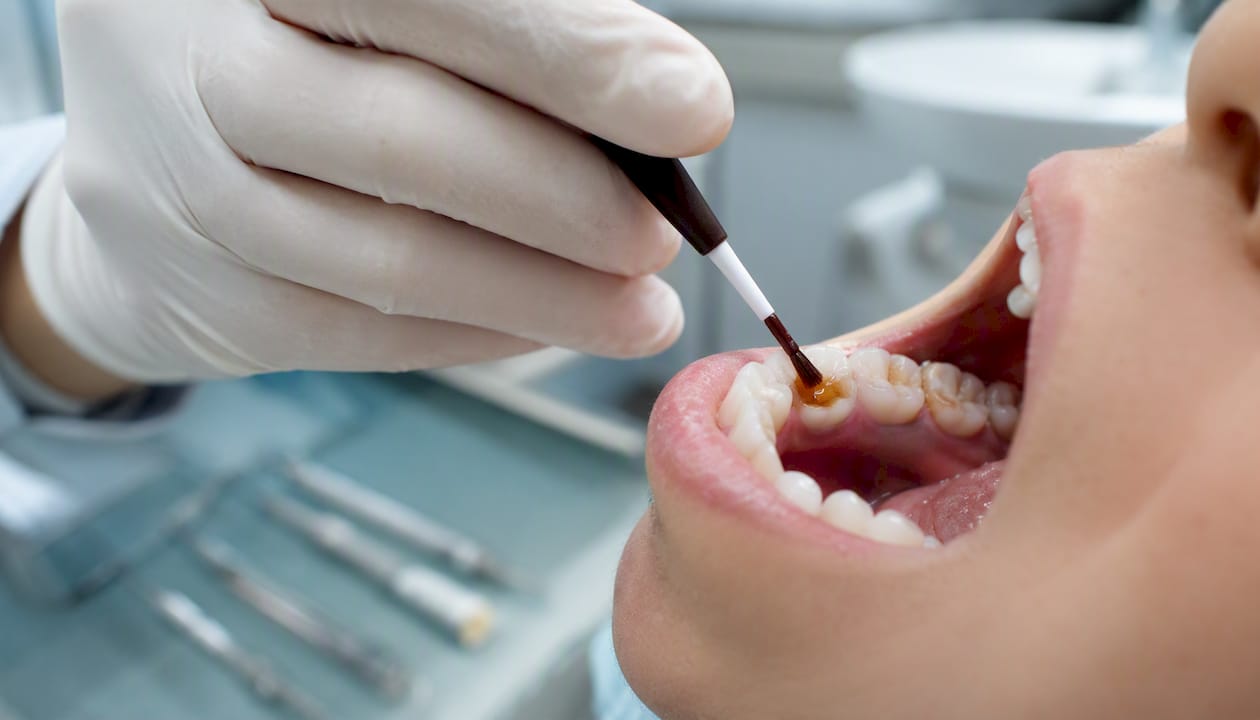
How often you need a professional treatment depends on your decay risk. Low-risk patients typically receive a fluoride application once a year, often as part of their annual cleaning. High-risk patients, including those with active decay, dry mouth, or orthodontic appliances, may benefit from applications every three to six months. Your dentist determines the frequency based on your clinical picture.
The public health case for community water fluoridation
Community water fluoridation has been a cornerstone of U.S. public health since 1945. The evidence base is extensive, and the position of every major U.S. health authority is consistent.
StatPearls summarizes that since water fluoridation began, caries prevalence has declined at the population level, and topical fluoride is now recognized as the primary caries-prevention mechanism. The CDC recommends maintaining community water at 0.7 mg/L as the optimal level for preventing tooth decay across all age groups.
The equity dimension is significant. Communities without fluoridated water tend to see higher rates of severe, costly dental disease, particularly among lower-income residents who have less access to professional dental care. Fluoridated water provides baseline protection regardless of income, insurance status, or how consistently someone brushes.
Common concerns about water fluoridation center on safety, particularly questions about cancer risk and neurological effects. The National Cancer Institute reports no convincing evidence that optimally fluoridated water causes cancer. Major review bodies, including the CDC and WHO, have consistently found that water fluoridated at recommended levels does not pose a health risk to the general population.
Pro Tip: To find out whether your community’s water is fluoridated and at what level, contact your local water utility or use the CDC’s fluoridation reporting resources. Your utility is required to publish an annual Consumer Confidence Report that includes this information.
How to use fluoride safely and effectively at home
Getting the most from fluoride at home comes down to a few consistent habits. The science is clear on what works.
Daily brushing rules:
- Brush twice a day with a fluoride toothpaste, once in the morning and once before bed
- Use the correct amount: a rice-grain smear for children under 3, a pea-sized amount for ages 3–6, and a full strip for adults
- Spit out toothpaste after brushing; do not rinse your mouth with water immediately afterward. Rinsing washes away the fluoride film that continues protecting enamel after you stop brushing
- Supervise children’s brushing until they can reliably spit, typically around age 6–8
Mouthrinse:
- OTC fluoride mouthrinse is appropriate for adults and children 6 and older
- Use it at a different time than brushing, such as after lunch, to extend topical fluoride exposure throughout the day
- Do not give fluoride mouthrinse to children under 6; the swallowing risk is too high
Supplements:
- Fluoride supplements (drops or tablets) are only appropriate for children in areas where tap water fluoride is below 0.6 mg/L, and only when prescribed by a dentist or physician
- Never self-prescribe supplements; excess systemic intake during tooth development increases fluorosis risk
Household practices to avoid:
- Do not dilute toothpaste with water before brushing; it reduces the fluoride concentration on the brush
- If your household relies on bottled water, check the label for fluoride content; most brands contain little to none
- Do not use a water filter that removes fluoride (such as reverse osmosis) without accounting for the loss in your family’s daily intake
Pro Tip: Pairing fluoride toothpaste with a consistent, thorough brushing routine is where the real protection comes from. Check out Y-brush’s fluoride toothpaste usage guide and daily oral hygiene checklist for practical steps that make this habit easy to maintain.
Why consistent, low-level exposure is what actually drives results
The most important insight from the research literature on fluoride is not about concentration; it is about consistency. CDC oral health guidance states that protecting teeth requires consistent, low levels of fluoride in saliva and on tooth surfaces throughout the day. A single high-dose professional treatment cannot replicate the cumulative effect of twice-daily toothpaste use over months and years.
StatPearls confirms that topical fluoride is the primary caries-prevention mechanism, and that community water fluoridation works partly because it maintains a low background level of fluoride in saliva all day, every time someone drinks tap water. The two sources together, daily toothpaste and fluoridated water, create a cumulative protective effect that neither delivers alone.
Population-level data supports this: the 25% reduction in cavity risk associated with fluoride use reflects the combined effect of consistent topical exposure and community fluoridation, not a single intervention.
The practical implication is straightforward. Twice-daily brushing with fluoride toothpaste, combined with drinking fluoridated tap water, is the most evidence-backed daily routine for cavity prevention. Professional treatments add a meaningful boost for high-risk patients, but they supplement rather than replace the daily habit.
Fluoride’s role in daily oral care deserves more credit than it gets
Most people know fluoride is in their toothpaste. Far fewer understand why it matters as much as it does, or how much of its benefit depends on what happens after you brush.
The “spit, don’t rinse” rule is a good example. Rinsing with water immediately after brushing is a deeply ingrained habit for many people, and it quietly undermines a significant portion of fluoride’s protective effect. The residual film left on enamel after spitting continues to remineralize and protect for an extended period. Washing it away with a glass of water cuts that window short. This is a small behavioral change with a real, evidence-backed payoff.
There is also a tendency to treat fluoride as something that matters only during childhood. The evidence does not support that framing. Adults with gum recession, dry mouth, or high sugar intake face meaningful decay risk, and consistent topical fluoride use is one of the most cost-effective ways to manage it. The NIH’s age-based intake guidance reflects this: the recommended adequate intake for adults is higher than for children, not lower.
The broader point is that fluoride works best when it is treated as a daily habit, not an occasional intervention. The research, from the CDC to NIDCR to StatPearls, consistently points to the same conclusion: low, consistent, topical exposure is the mechanism. Everything else, professional treatments, supplements, mouthrinse, builds on that foundation.
Get more from every brush with Y-brush
Fluoride toothpaste does its best work when brushing is thorough and consistent. Y-brush’s patented Y-shaped brush head covers all tooth surfaces simultaneously, delivering a complete clean in just 20 seconds with sonic vibrations. That means every brush stroke counts, and the fluoride in your toothpaste reaches every surface it needs to.
The Y-brush Essential Sonic Toothbrush is built for adults who want a clinically effective clean that fits into a real schedule. For families with children, the Y-brush KidsBrush makes supervised brushing faster and more consistent, which matters especially during the cavity-prone school-age years when fluoride protection is most critical.
Sources
The following primary sources were used throughout this article. Each covers a specific dimension of fluoride science and guidance:
- Fluoride: Uses, Benefits & Side Effects
- Community water fluoridation recommendations — CDC
- Fluoride | NIDCR
- The Role of Fluoride on Caries Prevention - StatPearls - NCBI Bookshelf
- Fluoride: Topical and Systemic Supplements | American Dental Association
- Fluoride - Health Professional Fact Sheet
This article is general information, not a substitute for advice from a qualified doctor. Consult a qualified healthcare professional about your own circumstances before acting on anything here.


