


Choose a soft-bristled toothbrush with a compact head, or a gentle sonic brush set on a low intensity, and keep your jaw in a relaxed, near-closed position while you clean. Avoid wide, prolonged mouth opening and take short breaks between quadrants. If brushing ever triggers new or worsening jaw pain, stop, switch to manual brushing, and check in with your dentist.
TL;DR:
- Using a soft-bristled toothbrush with a compact head minimizes jaw opening and reduces TMJ pain during brushing.
- Electric or sonic brushes with adjustable low settings can decrease manual effort and jaw strain but may cause discomfort from vibrations.
- Adopting gentle circular techniques and short, paced brushing with rest breaks helps prevent muscle fatigue and jaw tension.
- Interdental brushes, floss picks, and water flossers offer effective cleaning options that require less wide mouth opening than traditional floss.
- Consulting a dentist promptly is important if symptoms worsen, joint mobility decreases, or pain persists despite adjusted routines.
Table of Contents
- Which Toothbrush Reduces Jaw Strain With TMJ?
- How Should You Brush Your Teeth With TMJ?
- What Cleaning Tools Help With Limited Jaw Mobility?
- When Should You See a Dentist About TMJ Brushing Pain?
- What Evidence Backs These TMJ Brushing Recommendations?
- Small Changes That Actually Stick With TMJ
- A Faster, Lower-Effort Brushing Option Worth Testing
- Sources
- FAQ
Which Toothbrush Reduces Jaw Strain With TMJ?
The toothbrush itself matters less than its bristle softness and head size, and both directly affect how far you need to open your mouth. Dental professionals commonly recommend soft bristles and compact heads for exactly this reason: they clean effectively without demanding the jaw stretch that firmer, full-size brushes often require.
Soft bristles protect more than your joint. They flex around gumlines and enamel without the scraping force that medium or hard bristles apply, which matters if you already clench or grind, since that habit tends to leave enamel more vulnerable to abrasion.
A compact or children’s-size head changes the geometry of the job. Because the brush head covers less surface area per stroke, you can angle it into your back molars without opening as wide, which is where most TMJ brushing pain actually starts. A good sizing test: if your back molars have easy full contact with the bristles without your jaw feeling stretched to its limit, the head fits.
Electric and sonic toothbrushes offer a different advantage. The device provides most of the cleaning motion, so your hand and jaw do far less work, and a two-minute clean often feels shorter because you’re not manually scrubbing every surface. The tradeoff is vibration. Some TMJ patients find the buzzing sensation transmits into the jaw joint and increases discomfort, so test any powered brush at a low setting first and pay attention to how your jaw feels afterward, not just during.
A few shopping and maintenance basics apply regardless of which style you pick:
- Choose bristles labeled “soft” or “extra soft,” never “medium” or “firm.”
- Pick a head sized for reduced opening. A compact or children’s head works for many adults with TMJ.
- If going electric, start on the lowest vibration or speed setting available.
- Replace the brush head every 3 to 4 months, or sooner if bristles fray, since worn bristles need more scrubbing pressure to clean the same surfaces.
How Should You Brush Your Teeth With TMJ?
Technique matters as much as equipment. A common mistake among TMJ patients is “sawing,” dragging the brush horizontally back and forth to avoid opening the mouth wider. It feels like a shortcut, but it’s actually harder on your gums and less effective at clearing plaque along the gumline. Dentists recommend replacing that motion with small, gentle circular strokes, or letting a power brush oscillate slowly over a small area while you guide it.
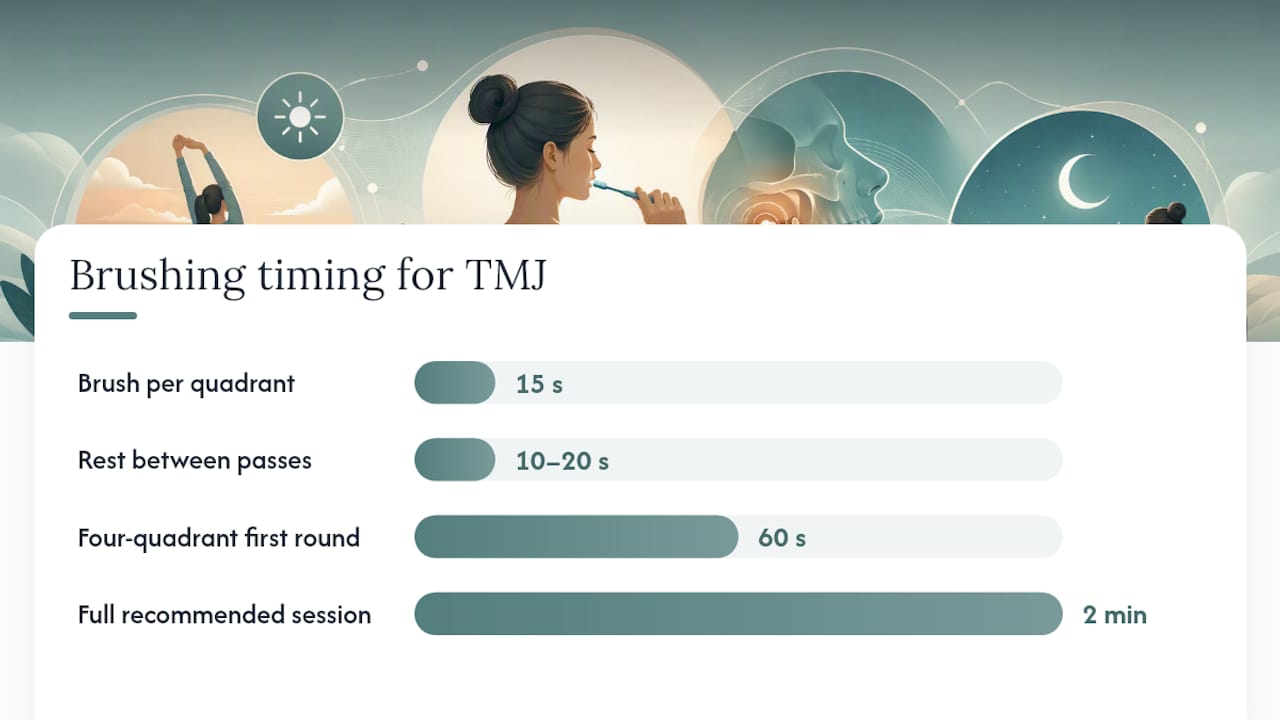
Pacing prevents the muscle fatigue that turns a routine task into a painful one. Short, repeated passes with planned rests beat one long session where your mouth stays open the entire time. Try this four-step pattern:
- Brush one quadrant (upper right, upper left, lower right, or lower left) for about 15 seconds.
- Close your mouth most of the way and rest your jaw for 10 to 20 seconds.
- Move to the next quadrant and repeat the same short pass.
- After all four quadrants, do a lighter second round if you still need the full two minutes.
Breathing and jaw position matter more than people realize. Breathe slowly through your nose while you brush, and let your jaw hang loose between passes instead of clenching it forward or to the side. Taking breaks and focusing on a few teeth at a time reduces jaw muscle strain and helps prevent the tension headaches that often follow a long brushing session.
Pro Tip: Set a phone timer for four 15 second intervals instead of one continuous two minute countdown. Watching the clock tick down in short bursts makes the micro breaks automatic instead of something you have to remember mid brush.
What Cleaning Tools Help With Limited Jaw Mobility?
Flossing often causes more TMJ pain than brushing, since wrapping floss around back teeth typically demands the widest, longest mouth opening of your entire routine. A few alternatives cut that time down substantially.
- Interdental brushes slide between teeth with a small handle, needing far less mouth opening than string floss.
- Floss picks and floss holders remove the finger-wrapping step and let you angle into back teeth faster.
- Water flossers clean along the gumline with a stream of water, and many patients find they maintain gum health without extended wide opening.
- Angled-neck or bi-level brush heads are shaped to reach molars at an angle, reducing how far you need to stretch your jaw to make contact.
Water flossers do have a catch worth knowing: the pressure setting matters. Start low, since a strong jet on sensitive gums or a stiff jaw can feel jarring even though it never touches the joint directly.
Whatever tool you add, the rule stays the same as with any powered brush: if it increases jaw pain rather than easing your routine, stop and go back to what worked before.
When Should You See a Dentist About TMJ Brushing Pain?
Some symptoms call for professional evaluation instead of another round of at-home adjustments. Get seen promptly if you notice worsening jaw pain, a mouth opening that keeps shrinking, persistent ear or facial pain, or visible signs of gum disease or decay you can no longer reach comfortably.
Bring specifics to that appointment: your current brushing routine, which tools you’ve tried, and a rough timeline of when symptoms started or changed. Useful questions include whether your brushing routine could be contributing to the pain, which tools fit your current range of motion, and whether a custom appliance or physical therapy might help.
You’re far from alone in needing to make this call. Many TMD patients report changing how they seek routine dental care because of their symptoms, which tells you adapting your dental habits isn’t an overreaction. It’s the norm.
What Evidence Backs These TMJ Brushing Recommendations?
The guidance here draws on established clinical sources, not guesswork. The TMJ Association and Mayo Clinic’s guidance on bruxism both point to the same core principle: reducing jaw strain during daily habits, paired with regular dental exams, helps catch problems like grinding before they compound.
The strongest signal in the clinical literature isn’t a single product recommendation. It’s the 63% figure showing how many TMD patients have already changed their dental-care routines. That number confirms what this guide recommends: adapting your brushing approach is standard practice, not a workaround.
Some sonic toothbrushes use a 20-second clean cycle and a Y-shaped head designed to surround the teeth rather than requiring you to guide a narrow head tooth by tooth. For readers managing TMJ, that shorter total brushing time may be worth testing, always starting at a low setting and stopping if vibration increases discomfort. Replacement head subscription plans can help maintain hygiene without repeated research every few months.
Small Changes That Actually Stick With TMJ
The patients who manage this well aren’t the ones with perfect technique. They’re the ones who found two or three small changes and kept them: a compact head, a habit of resting the jaw between quadrants, maybe swapping string floss for an interdental brush. Consistency beats perfection here, and a routine you’ll actually repeat every day matters more than an ideal one you abandon after a week.
If a faster, timer-based routine sounds appealing, it’s worth reading about toothbrushes with built-in timers or mouthpiece-style alternatives that cut down on manual guidance work.
— Joris
A Faster, Lower-Effort Brushing Option Worth Testing
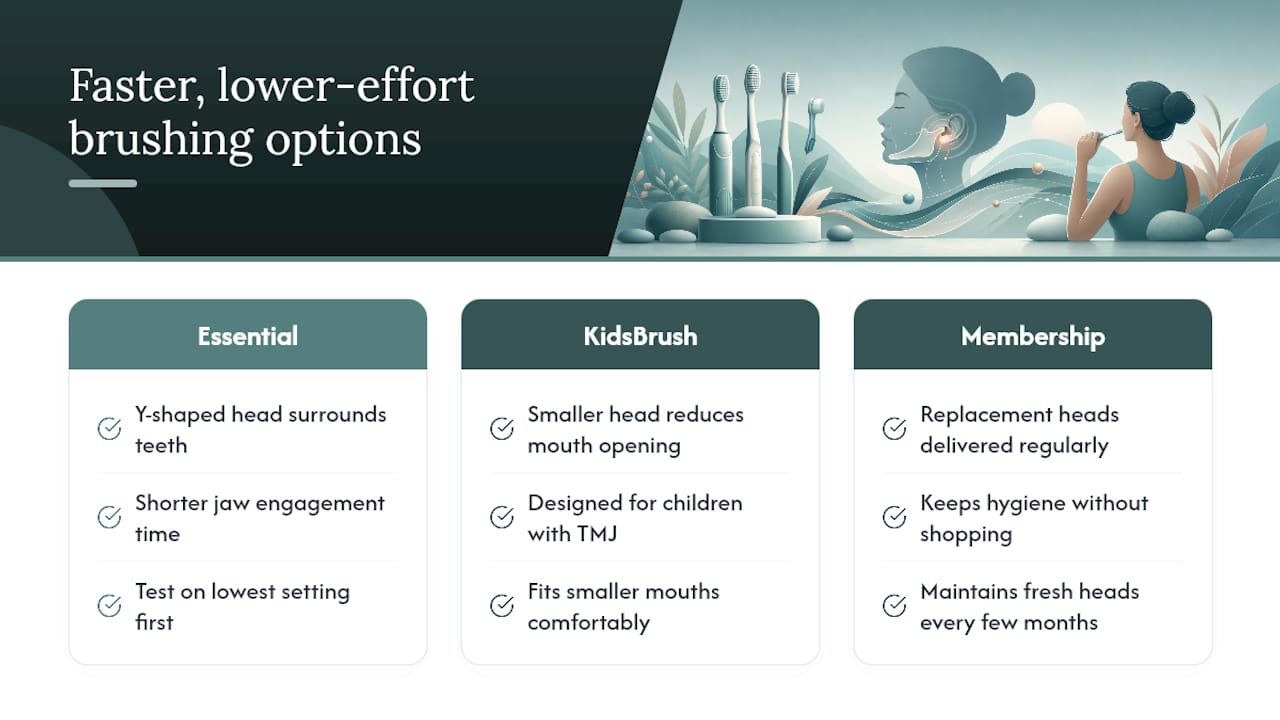
If wide mouth opening and long brushing sessions are the two things making your routine painful, a shorter cleaning cycle addresses both at once. The Y-Brush Essential Sonic Toothbrush uses a Y-shaped head that surrounds your teeth, so you spend less total time with your jaw engaged compared to guiding a narrow head across every surface manually.
For families managing TMJ symptoms in a child, the Y-Brush KidsBrush offers a smaller head sized to reduce required opening even further. And because replacement heads matter for hygiene either way, the membership plan keeps fresh heads arriving without you having to shop and compare options every few months.
If your TMJ symptoms are severe or vibration sensitivity is a known issue, test any sonic brush at its lowest setting and talk to your dentist before making it your daily routine. For most people managing moderate jaw discomfort, though, cutting brushing time down is one of the simplest changes you can make this week. Check out the Essential Sonic Toothbrush to see if it fits your routine.
This article is general information, not a substitute for advice from a qualified doctor. Consult a qualified healthcare professional about your own circumstances before acting on anything here.
Sources
- Temporomandibular Disorders, Dental Care and You - The TMJ Association
- Brushing tips for TMJ sufferers - MedCenter TMJ
- Teeth grinding (bruxism) - Diagnosis and treatment - Mayo Clinic
FAQ
How Do People With TMJ Get Their Teeth Cleaned Professionally?
Most dentists offer shorter appointment segments, extra rest breaks, and bite props or supports that hold the mouth open without muscle effort. So tell your office about your TMJ before scheduling a cleaning.
Does TMJ Ever Fully Go Away?
TMJ symptoms often improve significantly with consistent habit changes, gentler brushing tools, and professional guidance, though some people manage it as a long-term condition rather than experiencing a complete resolution.
What Is Considered a Severe Stage of TMJ Disorder?
Severe TMJ cases typically involve significant joint damage, a locked or very limited jaw opening, and pain that persists even at rest, which usually calls for imaging and a specialist evaluation rather than at-home management alone.
Can a Soft Bristle Toothbrush Really Make a Difference for TMJ Pain?
Yes. A soft-bristled, compact-head brush reduces both the pressure applied to your gums and the width of mouth opening needed to reach your back teeth, two of the biggest triggers for TMJ brushing pain.
Should I Avoid Flossing Entirely If I Have TMJ?
No. Skipping interdental cleaning raises your risk of gum disease, but switching to interdental brushes, floss picks, or a water flosser lets you clean between teeth without the wide opening that traditional floss often requires.


