


TL;DR:
- Full mouth automatic toothbrushes can significantly improve plaque removal when used correctly and paired with proper technique.
- These devices require active guidance from users and regular maintenance, including timely head replacements, to achieve optimal results.
Most people know they should brush for two full minutes. Most people don’t. A full mouth automatic toothbrush directly addresses that gap, offering a way to clean every surface in your mouth with less effort and more consistency than a standard manual brush. If you’ve been curious about how these devices actually work, what features matter, and whether they live up to the claims, this guide covers all of it. You’ll walk away knowing exactly how to use one correctly, what results to expect, and how to avoid the mistakes that undermine your results.
Table of Contents
- Key takeaways
- What you need before using a full mouth automatic toothbrush
- How to use a full mouth automatic toothbrush correctly
- Common mistakes and how to avoid them
- What results to expect and how to track progress
- My honest take on full mouth automatic toothbrushes
- Why Y-Brush delivers on the full mouth promise
- FAQ
Key takeaways
| Point | Details |
|---|---|
| Device type shapes technique | U-shaped and mouthpiece designs require different user engagement to clean all surfaces effectively. |
| Timers are the real advantage | Built-in timers improve brushing duration adherence, which is the most consistent predictor of better plaque removal. |
| “Automatic” does not mean passive | Users must actively guide the brush through proper motions to reach back teeth and gumlines. |
| Results require complementary habits | Brushing alone, even with an automatic device, does not replace interdental cleaning like flossing. |
| Replace heads on schedule | Brush heads should be replaced every two to three months to maintain effective plaque removal. |
What you need before using a full mouth automatic toothbrush
Before you start brushing, understanding what you’re working with makes a real difference. Not all full mouth automatic toothbrushes are built the same, and the features you choose will directly affect your results.
Device types: U-shaped vs. mouthpiece styles
The two most common designs are U-shaped brushes and enclosed mouthpiece brushes. U-shaped models wrap around your teeth like a mouth guard and use bristles on the inner surface to clean multiple teeth at once. Mouthpiece styles are similar but often include more enclosed coverage for the outer, inner, and chewing surfaces simultaneously. Both function as an automatic mouth cleaning device, but they differ in how much user input they require during the cycle.
Key features to look for in any model:
- Built-in 2-minute timer with 30-second quadrant prompts: Quadrant prompts improve coverage by signaling when to shift to the next section of your mouth.
- Pressure sensors: These signal when you’re brushing too hard, which helps protect gum tissue, especially for anyone with sensitivity.
- Multiple cleaning modes: Some models include settings for sensitive teeth, whitening, or gum care, which lets you customize your cleaning based on your current oral health needs.
- LED indicators: Useful for confirming the device is in the correct mode and that the cycle is running properly.
- ADA acceptance or independent clinical testing: This is your clearest signal that a device has been evaluated for safety and effectiveness beyond marketing claims.
Supplies you’ll need
Beyond the device itself, you need a few basics to get started:
- Toothpaste: Use a fluoride toothpaste unless your dentist has recommended otherwise. For U-shaped brushes, foam toothpaste often distributes more evenly across the bristle surface.
- Replacement brush heads: Replace brush heads every two to three months, or sooner if bristles show visible wear.
- Charging accessories: Most models use USB or wireless charging. Keep the charger accessible so you never skip a session because the battery is dead.
Pro Tip: Check whether your device’s replacement heads are widely available before you buy. Some models use proprietary heads that are hard to find or expensive to reorder.
| Feature | Why it matters |
|---|---|
| Built-in timer | Keeps brushing duration consistent with dental guidelines |
| Pressure sensor | Prevents gum damage from overbrushing |
| Quadrant prompts | Reduces missed areas during each session |
| Cleaning modes | Adapts to sensitive teeth or whitening needs |
| ADA acceptance | Confirms independent safety and effectiveness review |
How to use a full mouth automatic toothbrush correctly
Getting the most out of an electric toothbrush for complete cleaning comes down to technique. The device handles the mechanical work, but you still control where it goes and how well it covers each area.
-
Apply toothpaste to the brush head. Use a pea-sized amount of fluoride toothpaste. For U-shaped designs, spread it across the inner bristle surface so it contacts teeth from multiple angles from the start.
-
Position the brush head before activating. Place the device in your mouth and seat it correctly over your teeth before turning it on. Starting the vibration or sonic action before positioning can cause toothpaste to splatter and reduces initial contact with the tooth surface.
-
Activate the device and begin guiding. Even though this is an automatic mouth cleaning device, active guidance is required for best results. Use gentle side-to-side or figure-eight motions to work the bristles along the gumline and between teeth.
-
Follow the quadrant timer prompts. Most devices signal every 30 seconds to shift to the next quadrant. Upper right, upper left, lower right, lower left. Following these prompts is the simplest way to guarantee full coverage every session.
-
Pay extra attention to back teeth. The molars are the most commonly missed area. Tilt the device slightly toward the back of your mouth and slow your guiding motion when you reach those zones.
-
Complete the full two-minute cycle. Users who brush manually often stop well under the recommended two minutes. The built-in timer removes that guesswork entirely. Let it run to completion every time.
-
Rinse and clean the device. After brushing, rinse the brush head thoroughly under running water. Store the device upright so it dries properly between uses.
Pro Tip: If you’re new to a full mouth automatic toothbrush, spend the first week focusing purely on positioning. Correct placement matters more than anything else in the early learning curve.
Understanding how timers improve brushing is worth a few minutes of reading if you want to get the most out of this feature from day one.
Common mistakes and how to avoid them
Even with a well-designed device, a few consistent errors can significantly reduce your results. These are the ones that come up most often.
-
Treating it as fully hands-free. This is the most common misunderstanding. U-shaped brushes reduce the manual effort required, but they still require active technique to cover back teeth and gumlines. Simply biting down and waiting does not deliver a thorough clean.
-
Brushing too hard. Pressure sensors exist for a reason. Applying excessive force does not improve cleaning. It damages gum tissue over time. If your device’s pressure sensor activates frequently, consciously lighten your grip and let the bristle motion do the work.
-
Skipping the timer. Stopping early is the single biggest reason people miss plaque in specific quadrants. Timers and pacing features directly reduce the risk of missed areas by holding you to the full duration.
-
Neglecting brush head replacement. Worn bristles lose their ability to flex into the spaces between teeth and along the gumline. Frayed heads also harbor bacteria. Replacing on schedule is not optional if you want consistent results.
-
Skipping the gumline. Many users focus on the flat surfaces of their teeth and forget the gumline entirely. Plaque accumulates at the base of each tooth, and that’s exactly where periodontal problems begin.
“A 30-second brushing cycle with a U-shaped brush covers approximately one quadrant. Total brushing closer to two minutes is what ensures no zones are missed across the full mouth.”
If you’re comparing devices and want a clearer picture of whether automatic toothbrushes clean better or simply faster, that distinction matters when choosing the right model for your needs.
What results to expect and how to track progress
Setting realistic expectations helps you stay consistent. Here’s what the research and clinical data actually show about full mouth toothbrush benefits.
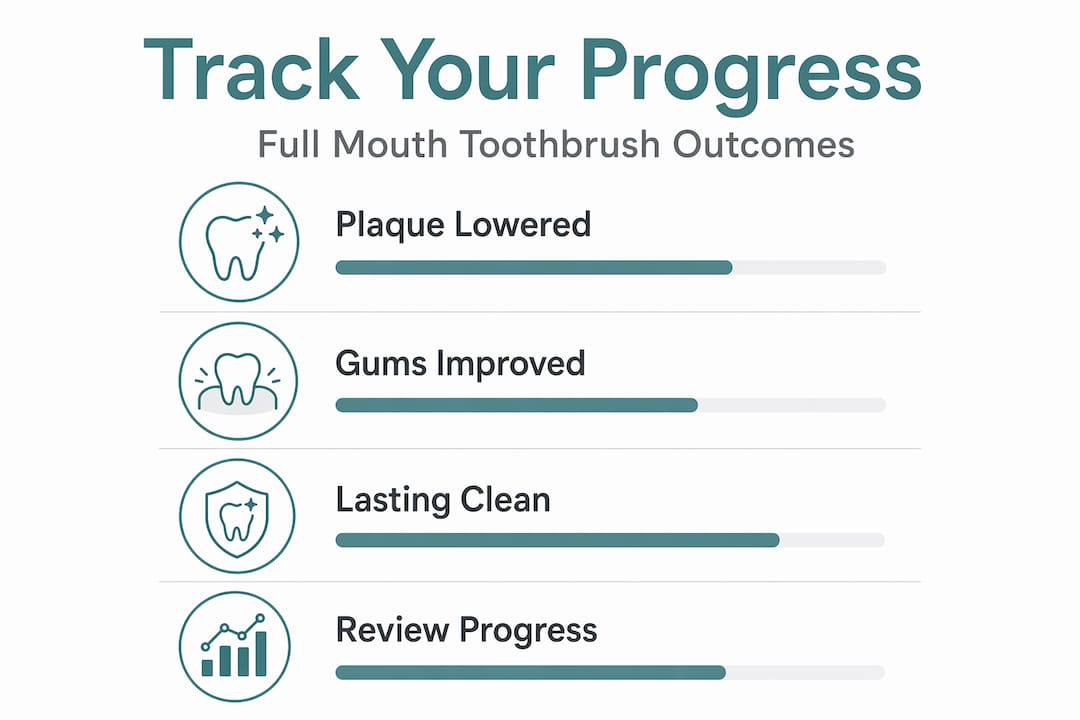
| Outcome | What to expect | Timeline |
|---|---|---|
| Plaque reduction | Significant improvement over manual brushing | 2 to 4 weeks of consistent use |
| Gum health | Reduced bleeding and inflammation | 4 to 8 weeks |
| Breath freshness | Noticeable improvement with consistent use | Within the first week |
| Whitening effect | Mild surface stain reduction | 4 to 6 weeks |
Clinical data on some U-shaped models with nylon bristles shows plaque removal up to 5.1x greater than manual brushing. That’s a meaningful difference, but it assumes correct technique and consistent use.

Signs that your routine is working include less bleeding when you floss, a cleaner feeling that lasts longer after brushing, and fewer areas of tenderness along the gumline. These are early indicators that plaque is being managed more effectively.
One thing the data is clear about: brushing alone does not replace interdental cleaning. Floss, interdental brushes, or a water flosser should be part of your daily routine alongside your automatic toothbrush. The spaces between teeth are simply not accessible to bristles, no matter how advanced the device.
If you’re not seeing improvement after six to eight weeks of consistent use, that’s a signal to book a dental appointment. A dentist can identify areas you’re consistently missing and recommend adjustments to your technique or device.
My honest take on full mouth automatic toothbrushes
I’ve followed the research on these devices closely, and the pattern that stands out most is this: the biggest benefit of any automatic toothbrush is not the mechanical cleaning power. It’s the improvement in brushing duration adherence. People brush longer when a timer tells them to. That alone accounts for a significant portion of the plaque reduction results you see in clinical studies.
What I find underappreciated is how much technique still matters. The word “automatic” creates an expectation of passivity that the devices themselves don’t actually support. The best results come from users who treat the device as a tool that handles the mechanical action while they handle the positioning and coverage. That’s a partnership, not a handoff.
I’d also push back on anyone who dismisses these devices as gimmicks. The independent testing data is consistent. When used correctly, full mouth automatic toothbrushes outperform manual brushing on plaque removal, gum health, and user consistency. The caveat is always “when used correctly.”
My recommendation: pair your automatic toothbrush with daily flossing and a regular dental checkup schedule. The device handles the surfaces. Floss handles the spaces. Your dentist catches what both miss.
— Joris
Why Y-Brush delivers on the full mouth promise
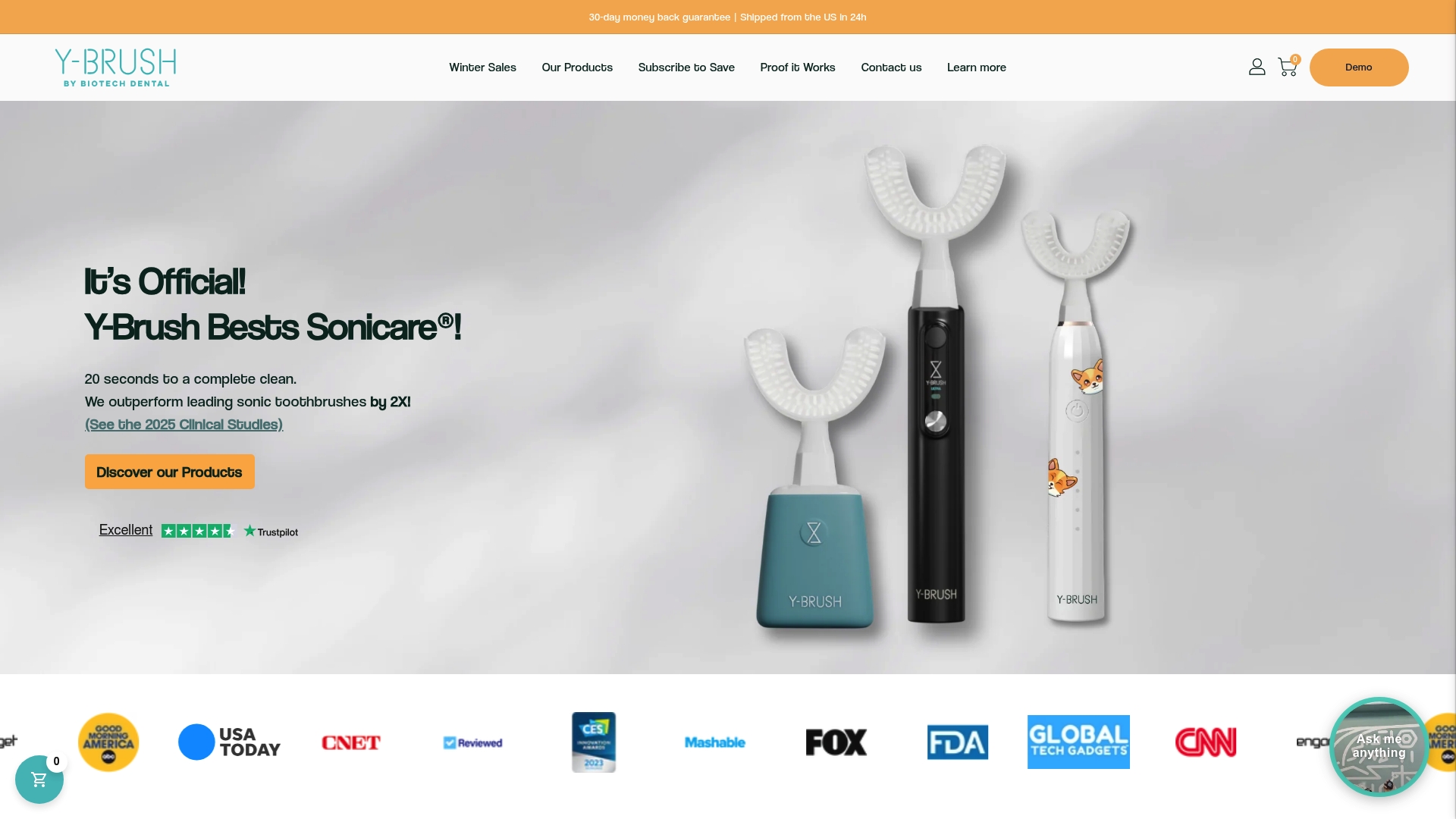
Y-Brush was built specifically for people who want a thorough clean without spending two minutes in front of the mirror twice a day. The Y-Brush Essential uses sonic technology to clean the full mouth in just 20 seconds, with a U-shaped brush head designed to contact all tooth surfaces simultaneously. For anyone looking for the best automatic toothbrush for full mouth cleaning that fits a real schedule, Y-Brush delivers clinically supported results without the time commitment of traditional brushing.
The Y-Brush Essential Sonic Toothbrush is the starting point for adults, while the Y-Brush Ultra offers advanced sonic power for those who want maximum performance. Families can add the Y-Brush KidsBrush for children ages 4 to 12. And to keep your device performing at its best, replacement brush heads are available directly through Y-Brush to make maintenance straightforward.
FAQ
How does a full mouth automatic toothbrush work?
A full mouth automatic toothbrush uses a U-shaped or mouthpiece-style brush head to contact multiple teeth simultaneously, powered by sonic or vibrating motor action. Users guide the device through the mouth while the bristles handle the mechanical cleaning motion.
Is a full mouth toothbrush actually hands-free?
No. While these devices reduce manual effort, active user guidance is still required to cover back teeth and gumlines effectively. Passive use alone does not deliver a thorough clean.
How long should you brush with a full mouth automatic toothbrush?
The recommended total brushing time is two minutes, typically divided into four 30-second quadrant intervals. Most devices include a built-in timer to guide you through each section automatically.
How often should brush heads be replaced?
Brush heads should be replaced every two to three months, or sooner if bristles show visible fraying. Worn bristles reduce plaque removal effectiveness and can harbor bacteria that compromise oral hygiene.
Do full mouth automatic toothbrushes replace flossing?
No. Dental professionals confirm that brushing alone does not reach the spaces between teeth, regardless of brush design. Daily interdental cleaning remains a necessary part of any complete oral hygiene routine.


