


Yes, for many people, a 20-second toothbrush like Y-Brush can deliver a cleaner mouth than they were getting before, mainly because it fits the routine they actually follow rather than the one dentists wish they followed. It works best for anyone who currently brushes under two minutes, has limited dexterity, or cares for a child who resists brushing. Readers with active gum disease, heavy orthodontic work, or complex dental conditions should still talk to a dentist before switching.
TL;DR:
- The Y-Brush’s arch-shaped mouthpiece and sonic vibration aim to improve compliance for those who brush less than two minutes, but interdental cleaning remains weak.
- Its effectiveness relies heavily on proper fit, toothpaste choice, and maintaining the device, with long-term clinical evidence still limited.
- Users typically experience an adjustment period of one to two weeks involving gum sensitivity and habituation to the bulkiness of the mouthpiece.
- The device is best suited for people who underbrush, children, or seniors, but not for those with complex dental conditions or major orthodontic hardware.
- Subscription plans for replacement mouthpieces simplify maintenance and may reduce overall costs compared to reactive purchases.
Table of Contents
- What Is a 20-Second Toothbrush and How Does Y-Brush Work?
- Does 20-Second Brushing Actually Work? What the Evidence Says
- What Does It Feel Like to Use a 20-Second Toothbrush?
- Who Benefits Most From a 20-Second Toothbrush?
- How to Use a 20-Second Toothbrush the Right Way
- What Do Replacement Heads and Membership Plans Cost Over Time?
- Why We’re Recommending Y-Brush and What Backs This Review
- A Month With a 20-Second Toothbrush: What Actually Changes
- How to Buy Y-Brush and Choose the Right Plan
- Sources
- FAQ
What Is a 20-Second Toothbrush and How Does Y-Brush Work?
Y-Brush’s mouthpiece looks nothing like a standard brush head. It’s shaped like a dental arch, built to cradle the upper or lower row of teeth so every surface gets touched at once instead of one tooth at a time. Nylon bristles sit at a deliberate incline inside the arch, angled to press against the front, back, and biting surfaces of teeth simultaneously rather than requiring the user to sweep back and forth.
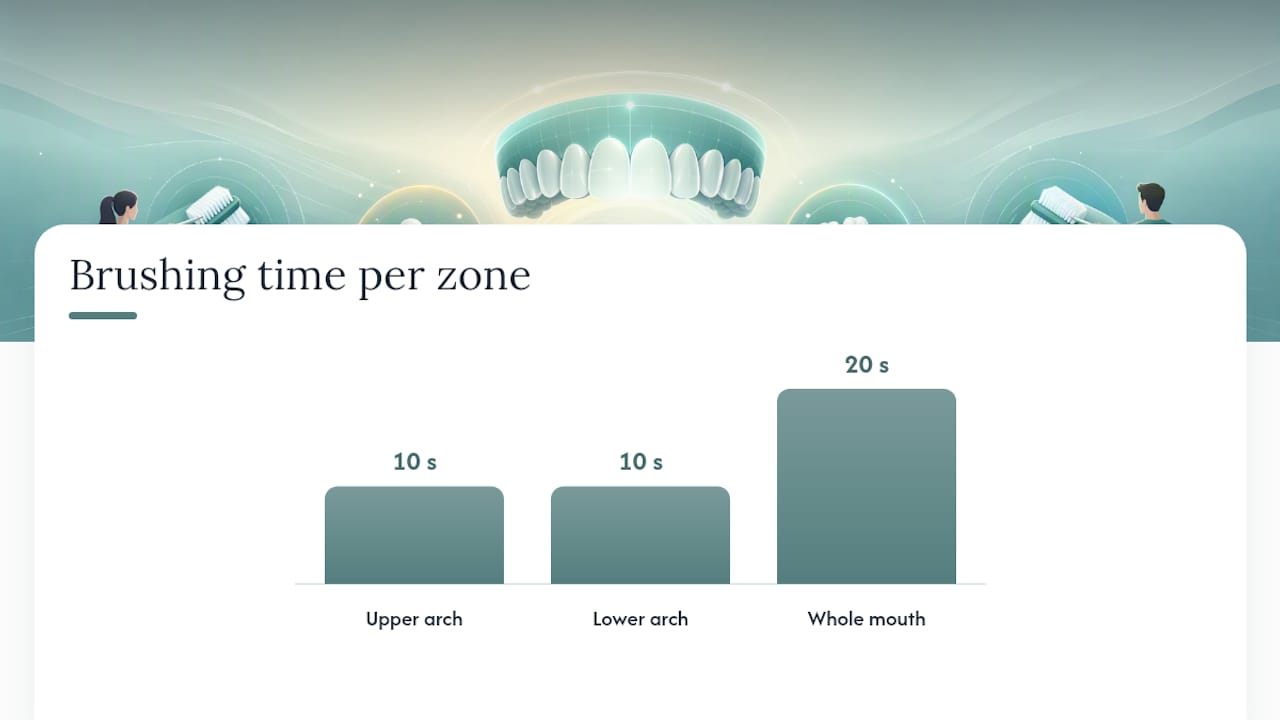
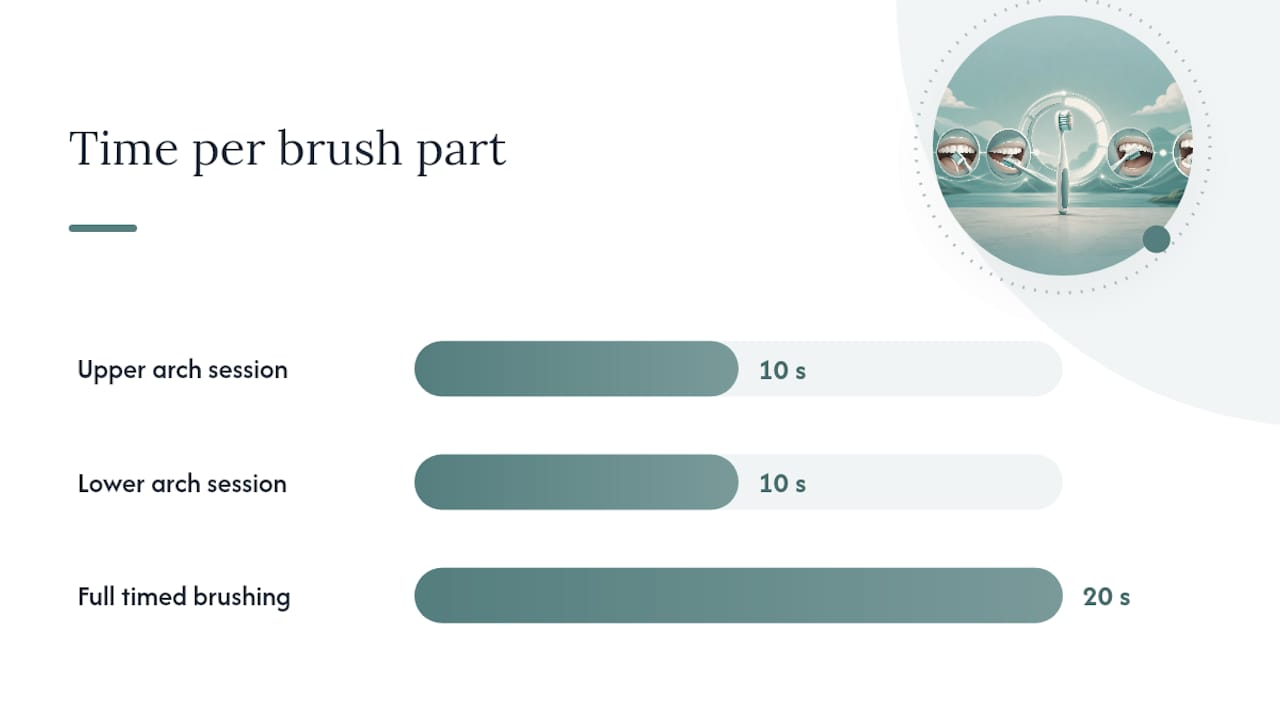
The mechanism behind the cleaning claim is sonic vibration. Once the mouthpiece is seated and the device is switched on, the bristles vibrate rapidly against enamel and gumline for 10 seconds on the upper arch, then 10 seconds on the lower arch. That sequencing is the entire session. Coverage in the British Dental Journal describes this arch-shaped, single-motion design as an attempt to reproduce the feeling of a dentist-clean mouth in a fraction of the time a manual routine takes.
A few practical specs matter once you’re actually holding the device day to day:
- Battery life typically spans one to two weeks per charge, depending on use frequency
- Mouthpieces come in multiple sizes to fit different jaw dimensions, including a dedicated kids’ size
- Replacement heads are designed for a predictable swap cycle rather than guesswork
- Some manufacturers have developed universal-fit replacement heads, letting some users pair compatible mouthpieces across different handle generations, which widens availability beyond a single locked ecosystem
Does 20-Second Brushing Actually Work? What the Evidence Says
The honest answer sits between marketing enthusiasm and clinical caution. The most direct hands-on assessment describing an AI-guided full-mouth toothbrush comes from TechRadar, whose reviewer used the device despite a dentist’s initial skepticism and found the bristle contact adequate on flat surfaces but weaker in tight interdental spaces than a standard two-minute sonic brush.
That tension, convenience against thoroughness, is the entire debate around this category.
The compliance gap is the real story here. Clinician-facing coverage from Dentistry IQ reports that only about 34% of people actually brush for the dentist-recommended two minutes. Short-duration devices were engineered specifically to close that gap for people who were never going to hit two minutes anyway.
That statistic reframes the whole comparison. A 20-second brush isn’t competing against a perfect two-minute routine; it’s competing against the 30 to 45 seconds most people actually spend. Seen that way, a full-coverage 20-second session can outperform a rushed, uneven two-minute brush, even if it can’t outperform a technically flawless one.
Reviewers converge on a few consistent points:
- The arch design and sonic vibration claim to touch every surface at once, a mechanical approach distinct from traditional back-and-forth sonic brushes explained in more detail in this breakdown of sonic toothbrush mechanics
- Interdental reach remains the weak point reviewers flag most often
- App and sensor features, where present in this device category, help with habit tracking but don’t substitute for solid bristle contact
The fair takeaway: 20-second brushing looks genuinely promising as a compliance tool for people who underbrush, but the category still needs more independent, long-term clinical trials before anyone can call it a full replacement for two minutes of properly executed manual or oscillating brushing, a rationale explored further in why the two-minute standard exists in the first place.
What Does It Feel Like to Use a 20-Second Toothbrush?
The first sensation most new users report is bulk. The mouthpiece fills more of the mouth than a slim brush head, and that can feel unfamiliar for the first several sessions. Some early adopters also notice mild gum sensitivity or occasional light bleeding in the first week or two, a pattern documented in hands-on testing from GearDiary, which generally resolves once gums adjust and the correct mouthpiece size is confirmed.
Here’s what typically happens over the adjustment period:
- Days 1 to 3: The fit feels large; gag reflex may trigger for people with a strong one, especially with the upper arch
- Days 4 to 7: Gums may feel tender or bleed slightly during brushing, particularly if gums weren’t previously well cared for
- Week 2 onward: Sensitivity fades, positioning becomes automatic, and the session starts feeling routine rather than novel
Toothpaste choice matters more than people expect. Because the mouthpiece surrounds the entire arch, standard high-foaming toothpaste can build up quickly and feel overwhelming in the mouth. Some short-mouthpiece devices, per lifecycle notes from NY Post coverage of a comparable smart brush, work better with a lower-foaming formula and a smaller dab than you’d use on a manual brush.
Pro Tip: Start with half the toothpaste you’d normally use. You can always add more once you know how much foam the mouthpiece actually produces.
After each use, rinse the mouthpiece under running water, shake off excess moisture, and let it air-dry upright rather than sealing it in a closed case while damp.
Who Benefits Most From a 20-Second Toothbrush?
The clearest winners are people who were never brushing long enough to begin with. If your honest average is 40 seconds with a manual brush, a full 20-second session with even bristle contact across every tooth is very likely a net improvement, not a downgrade.
Groups that tend to see the biggest gains include:
- People who consistently brush under one minute and know it
- Parents managing a child with ADHD or sensory aversions who fights a standard two-minute routine
- Caregivers assisting elderly or limited-dexterity users who struggle to maneuver a slim brush head
- Anyone switching from manual brushing who wants more consistent, even coverage
Caution is warranted for people with complex orthodontic hardware, significant interdental plaque buildup, or active gum disease, since clinician-focused reviews point out these cases often need targeted interdental attention a full-arch device can’t fully replace. A busy parent brushing a toddler’s teeth before school or an assisted-living aide managing a dozen residents each morning represents exactly the use case this category was built for.
How to Use a 20-Second Toothbrush the Right Way
Getting full value out of a 20-second session comes down to preparation and sequence, not brushing harder. A quick guide to the full 20-second method covers this in more depth, but the core routine breaks down into five steps:
- Apply a small amount of low-foaming toothpaste directly into the mouthpiece bristles
- Seat the mouthpiece fully over the upper arch, making sure bristles contact both front and back tooth surfaces
- Run the upper session for the full 10 seconds without repositioning
- Switch to the lower arch and repeat for another 10 seconds
- Follow with floss or an interdental brush to clean tight spaces the mouthpiece can’t reach
A slight hand-guided sweep or gentle repositioning partway through each 10-second cycle helps bristles reach marginal gumline areas more reliably, a technique reviewers at TechRadar specifically recommend rather than holding the device perfectly still.
If something feels off, check the basics first: poor bristle contact usually means the wrong mouthpiece size, excess foam buildup usually means too much toothpaste, and a loose fit usually means the mouthpiece needs reseating before you start the timer.
What Do Replacement Heads and Membership Plans Cost Over Time?
Mouthpiece heads are larger than standard brush heads, which means replacing them is a bigger physical swap and, unmanaged, a bigger recurring expense. Manufacturer guidance generally points to replacing the mouthpiece every three months, in line with standard toothbrush-head lifecycle recommendations reported across the category.
Subscription plans change the math considerably. A recurring membership plan that ships new replacement heads automatically on that three-month cycle tends to lower the effective per-month cost compared to buying single heads reactively, and it removes the risk of brushing with a worn-out mouthpiece for weeks past its useful life.
A few things worth checking before you commit to a plan:
- Confirm which mouthpiece size and material your handle uses before ordering replacements
- Universal-fit replacement heads can widen compatibility if you’re mixing handle generations
- Bundled multi-head packs often work out cheaper per unit than single replacements
Why We’re Recommending Y-Brush and What Backs This Review
This review leans on published, independently reported coverage rather than manufacturer claims alone. The British Dental Journal’s coverage of the arch-shaped mouthpiece and its 35,000-bristle sonic design gives the core engineering claim real editorial scrutiny, not just a spec sheet.
A few things worth knowing about how this review was built:
- Clinical and reviewer commentary was cross-checked against dentist demographic data from the ADA to keep the professional context grounded
- Joris, the author of this review, brings a background in evaluating oral care technology against published dental research rather than brand messaging alone
- Independent long-term clinical trials on the 20-second category are still limited, which is why this review treats compliance gains as promising rather than proven
- Readers can review the underlying claims directly through the linked coverage rather than taking any single source’s word for it
A Month With a 20-Second Toothbrush: What Actually Changes
The first week is an adjustment, not a verdict. Expect some gum tenderness, a mouthpiece that feels too big, and a strong temptation to go back to your old brush. By week three, the routine stops feeling like a gadget and starts feeling like brushing your teeth, just faster.
The honest pros: better full-arch coverage than a rushed manual brush, genuinely useful for people who never hit two minutes anyway, and a real time savings that sticks. The honest cons: interdental reach still lags a proper two-minute sonic routine, and the mouthpiece bulk isn’t for everyone immediately.
Buy it if you’re someone who underbrushes, cares for a child or dependent who resists brushing, or wants consistency over perfection. Consult a dentist first if you have active periodontal disease, extensive orthodontic hardware, or unusual arch anatomy.
— Joris
How to Buy Y-Brush and Choose the Right Plan
If the case for full-arch, 20-second brushing has you ready to try it, this category offers options that have been evaluated against real published evidence rather than marketing copy.
The Y-Brush Essential Sonic Toothbrush covers the core arch-shaped, sonic-vibration experience described throughout this review, while the Y-Brush KidsBrush is sized specifically for children ages 4 to 12, a genuinely useful option for parents managing brushing resistance. Households wanting more power or multiple users covered under one purchase can look at the Y-Brush Ultra Sonic Toothbrush.
Rather than guessing at replacement timing, a membership plan ships new mouthpieces on the recommended three-month cycle automatically, so cost and upkeep stop being something you have to track yourself. Check the product pages directly for current sizing guidance, warranty terms, and any active trial or return policy before you order.
Sources
- Introducing the 20-second toothbrush | British Dental Journal
- Product review: Hydrabrush, the 30-second electric toothbrush | Dentistry IQ
- I used this AI-powered full-mouth toothbrush even though my dentist told me not to | TechRadar
- Ada
FAQ
What Is the #1 Dentist-Recommended Toothbrush?
There’s no single universally recommended model. Dentists generally recommend whichever brush, manual or electric, a patient will actually use correctly for two minutes twice a day, since consistency matters more than brand.
Do Light Therapy Toothbrushes Actually Work?
Light therapy toothbrush claims are not supported by the same level of published clinical coverage as arch-shaped sonic designs like Y-Brush’s, and reviewers generally treat those claims with more skepticism.
Does the Y-Brush Work for Receding Gums or Sensitive Teeth?
People with receding gums or sensitivity should start with a smaller mouthpiece size and gentler introduction, since hands-on reviews note that mild bleeding during the adjustment period is common and usually temporary, but anyone with active gum recession should confirm suitability with a dentist first.
What Do Dentists Recommend as the Best Electric Toothbrush?
Dentists tend to prioritize consistent full-mouth coverage and correct technique over any specific brand, which is exactly the compliance gap that 20-second devices like Y-Brush were designed to close for people who underbrush.
Is 20 Seconds Really Enough Time to Brush Your Teeth?
Twenty seconds per arch, 10 seconds upper and 10 seconds lower, can provide even full-surface contact when the mouthpiece fits correctly, though reviewers note it should be paired with daily flossing for complete interdental coverage.


