


A toothbrush subscription is worth it if you routinely forget to swap brush heads, manage oral care for kids or aging parents, or travel often enough that a scheduled refill beats a shopping trip. If you already replace heads like clockwork every three months, the math tips the other way, and bulk retail buying usually wins on price. The cost comparison and the adherence evidence below explain exactly where that line sits.
TL;DR:
- A toothbrush subscription is usually more cost-effective than retail bulk buying only if you forget to replace heads on schedule or travel often enough that scheduled deliveries prevent last-minute shopping.
- Proprietary head shapes mean you cannot switch brands easily, and canceling subscriptions can be inconvenient, which matters if you value flexibility.
- Regular replacement according to ADA guidelines is essential for effective cleaning, and subscriptions are most helpful when they correct habitual forgetfulness.
- Buying generic or compatible heads in bulk typically costs less than subscription plans unless you are a light shopper or taking advantage of introductory discounts.
- Subscriptions primarily serve behavioral purposes by automating replacement routines and are less driven by price savings for disciplined users.
Table of Contents
- Is a Toothbrush Subscription Worth It? How the Model Works
- Is a Toothbrush Subscription Beneficial for Your Budget? Running the Numbers
- Does a Subscription Actually Improve Your Brushing Habits?
- Toothbrush Subscription Pros and Cons Beyond the Price Tag
- A Quick Checklist: Should You Subscribe or Buy as Needed?
- What I Think After Running the Numbers
- If You Decide a Subscription Fits: A Look at Y-Brush Plans
- Sources
- FAQ
Is a Toothbrush Subscription Worth It? How the Model Works
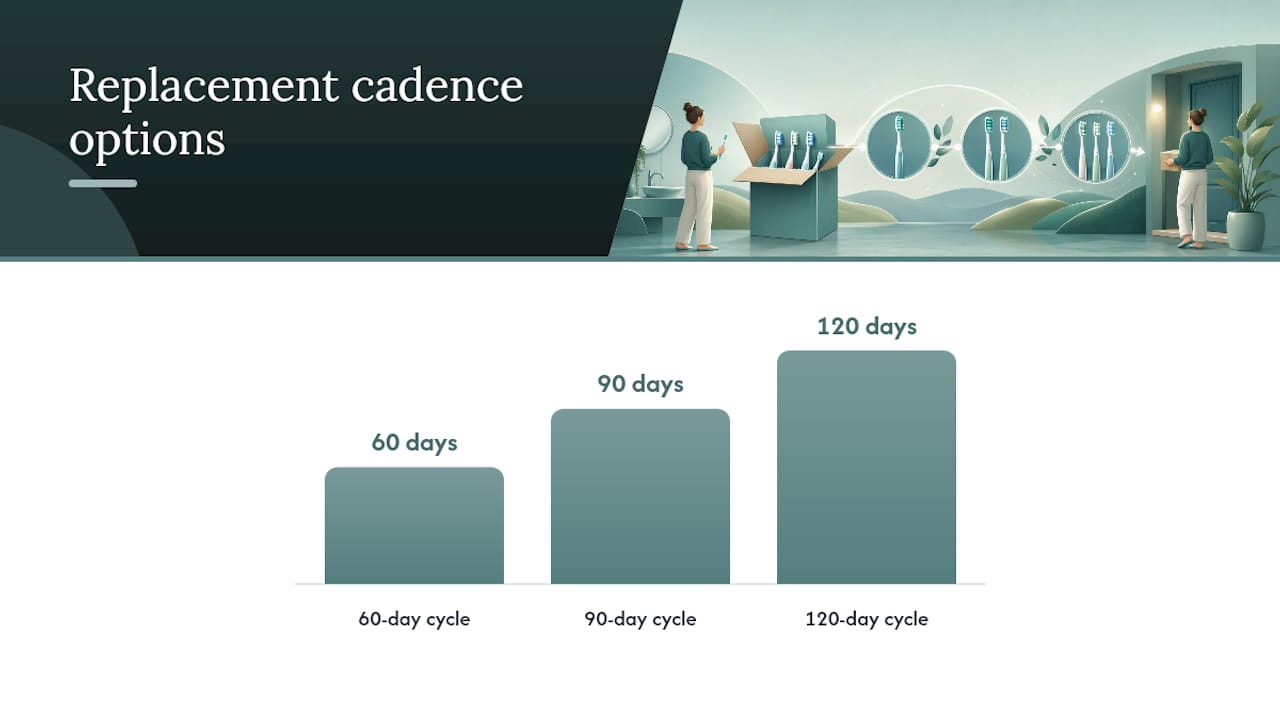
A subscription is really two products bundled into one: a device (sometimes included in a starter kit, sometimes sold separately) and a recurring shipment of replacement brush heads. Most services ship on a 60, 90-, or 120-day cycle, with 90 days the most common because it lines up with the American Dental Association’s replacement guidanceada.org/resources/ada-library/oral-health-topics/toothbrushes). Some plans bundle extras like travel cases, toothpaste samples, or batteries into the box, which sounds generous until you realize you’re paying for it either way.
The catch is compatibility. Nearly every subscription locks you into a proprietary head shape that only fits that brand’s handle, so once you’re in, switching brands means buying a whole new device, not just new heads. That’s the trade you’re actually making: convenience now, flexibility later.
Before signing up, look for these features and terms:
- Cadence flexibility: can you switch from 90 to 120 days if you’re not going through heads that fast?
- Pause and skip options: a good plan lets you delay a shipment without canceling entirely.
- Cancellation process: some services require a phone call or multiple account-page clicks rather than a single button.
- Bundle contents: know whether toothpaste or floss additions raise the per-shipment price.
- Head compatibility: confirm the subscription heads fit your specific handle model, not just the brand name.
Is a Toothbrush Subscription Beneficial for Your Budget? Running the Numbers
The only honest way to answer “is a toothbrush subscription worth it” for your wallet is to run the same formula against your own habits. Here’s the method:
- Find your subscription’s per-shipment cost. Divide the price by the number of heads included to get a per-head figure.
- Multiply by shipments per year. A 90 day cadence means four shipments; 120 days means three.
- Find retail per-head cost for the same brand or a generic equivalent, then multiply by how many heads the ADA guidance actually requires for your household in a year, typically four per person.
- Add shipping to the retail total if you’re not buying in bulk or hitting a free-shipping threshold.
- Compare the two annual totals, then factor in any one-time discount the subscription offered at signup.
Industry pricing typically ranges moderately per head through subscription programs, while buying OEM replacements individually at retail can be somewhat more expensive. That gap looks like a clear win for subscriptions until you check what bulk buying does to the retail side. A three-pack or six-pack of replacement heads bought once a year, especially through a retailer’s own auto-restock program, frequently lands at $4 to $6 per head, sometimes lower with a promo code. At that point, the subscription’s convenience is generally the main factor influencing the decision.
Two scenarios where subscriptions clearly win on price:
- You’re a light bulk shopper. If you buy one or two heads at a time at full retail price instead of stocking up, you’re likely paying more per head than most subscription plans charge.
- The intro discount is real money. A first-shipment discount of 30 to 50% can offset a full year of the premium if you cancel or pause right after redeeming it, though that only works if the plan makes cancellation easy.
Two scenarios where retail wins:
- You already buy in bulk. A six-pack purchased once a year, especially during a sale, usually beats subscription per-head pricing outright.
- Generic or compatible heads exist for your brand. Third-party heads can run 40 to 60% cheaper than brand-name subscription refills, though quality and fit vary by manufacturer.
Independent industry analysis puts it plainly: subscription models are chiefly behavioral tools that can save money in narrow cases but more often trade convenience for a small recurring premium. The cost math rarely favors subscriptions for someone already disciplined about replacement. It favors them heavily for someone who isn’t.
Does a Subscription Actually Improve Your Brushing Habits?
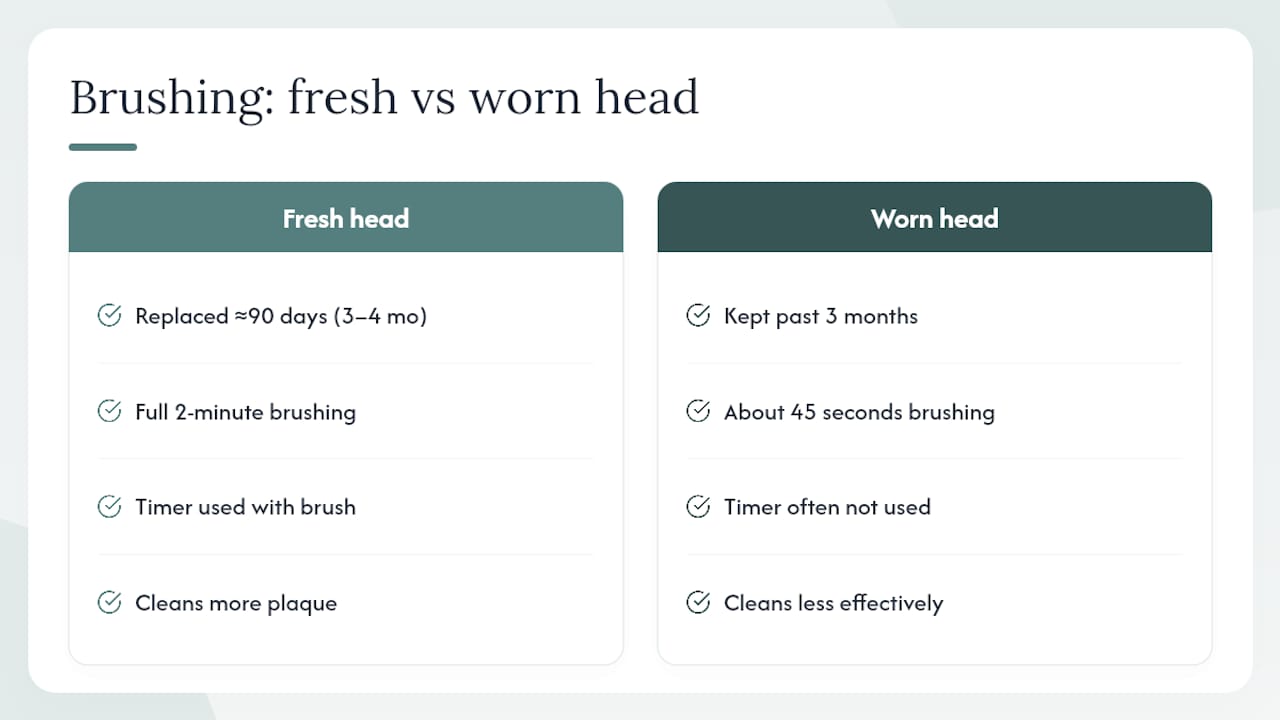
The ADA’s guidance is unambiguous: replace your toothbrush or electric brush head every three to four months, or sooner if bristles fray, because worn bristles clean less effectively and can irritate gums. That single guideline is the entire premise subscription services are built on. A 90-day shipping cycle is designed to land right at the edge of that window.
A behavior gap subscriptions exist to close is this: many people stretch a single brush head well past the three-month mark, simply because replacing it isn’t a habit. Subscriptions matter most when they correct exactly that pattern, turning a task people forget into a default that happens automatically.
Consumer Reports interviewed subscribers directly and found a consistent pattern: people liked the automatic replacements and appreciated not having to remember a shopping trip, but a meaningful share reported friction when trying to edit shipment frequency or cancel outright. That’s the honest trade. The service solves the remembering problem and introduces a new, smaller problem around account management.
Consumer Reports also points out that many electric brushes include built-in two-minute timers, a feature that pairs naturally with fresh bristles. Clinical evidence indexed on PubMed backs up why that combination matters: brushing duration and technique are directly tied to how much plaque actually gets removed, so a fresh head on a brush you use for the full two minutes does more work than a worn head used for 45 seconds. Subscriptions influence one half of that equation. They do nothing for the other half unless you’re also using the timer.
The behavioral threshold is simple to test on yourself: if you can’t remember the last time you replaced your brush head, you’re the exact person subscriptions are designed to help.
Toothbrush Subscription Pros and Cons Beyond the Price Tag
Price is only part of the decision. A few non-financial trade-offs deserve equal weight.
What works in favor of subscribing:
- Replacement heads arrive before the old ones wear out, removing the “did I already order this?” question entirely.
- Fewer purchase decisions per year means less mental overhead spent comparing products.
- Many plans bundle travel-sized cases or spare batteries, useful for frequent flyers who’d otherwise pack the full-size charger.
- Built-in timers on many electric handles reinforce the two-minute brushing habit alongside fresh bristles.
What works against it:
- Proprietary head shapes lock you into one brand’s ecosystem, and switching brands later means buying a new handle, not just new heads.
- Canceling or pausing isn’t always a one-click action. Consumer Reports’ subscribers specifically flagged this as their biggest complaint.
- Per-head pricing on subscriptions rarely beats a good bulk deal on generic-compatible heads.
- Extra battery-powered handles and chargers pile up in a bathroom drawer if you switch products mid-subscription, adding to electronic waste.
Wired’s testing coverage of subscription brushes found that handle feel and battery life vary enough between models that cleaning performance and personal comfort often matter more than the subscription discount itself.
Pro Tip: Run a three-month trial before committing to a full year of prepaid heads. Track what you actually spend, including any shipping fees on the retail side, then compare that single quarter against the subscription’s quarterly price before deciding which one you’d rather repeat four times.
A Quick Checklist: Should You Subscribe or Buy as Needed?
Run through these questions before committing to either path:
- Do you forget to replace your brush head on schedule? If you can’t recall your last swap, a subscription solves a real problem.
- Do you travel more than once a month? Bundled travel kits and scheduled shipments remove one more thing to pack or buy on the road.
- How many people in your household need heads? Multi-person or parent-managed households often benefit from staggered shipments that simplify who gets what and when.
- Do you or a family member need a specialty head (sensitive gums, orthodontic work, kids’ sizing)? Confirm the subscription actually offers that variant before signing up.
- Can you commit to checking the account every quarter to pause, skip, or adjust cadence if your needs change?
Before you commit, confirm three contract details: how pausing works, what the cancellation process actually requires, and whether the subscription heads are compatible with the exact handle model you own or plan to buy.
| If you’re deciding… | Subscription likely wins | Retail bulk-buy likely wins |
|---|---|---|
| Replacement habit | You regularly forget or delay | You replace on a fixed calendar reminder |
| Travel frequency | Frequent flyer or road warrior | Mostly home, buys in bulk once a year |
| Household size | Multiple users, staggered needs | Single user, predictable use |
| Price sensitivity | Convenience matters more than pennies per head | Generic or bulk pricing beats subscription rate |
If the checklist points you toward buying as needed instead, the fix is simple: set a recurring calendar reminder for every three months, and buy heads in a three or six pack during a sale rather than one at a time at full retail price.
What I Think After Running the Numbers
The subscription debate gets framed as a pricing question when it’s really a behavior question. Most people who ask whether subscriptions are worth it are quietly asking whether they can trust themselves to remember a task every 90 days without help. That’s not a knock. It’s just the honest version of the question, and it’s the one worth answering before you look at a single price tag.
Y-Brush was built around that same behavioral premise: a full clean designed to fit into 20 seconds, paired with a subscription option so the replacement schedule takes care of itself. The product philosophy isn’t “buy more heads.” It’s “make the habit automatic enough that you stop thinking about it.” That’s the same logic Consumer Reports found among satisfied subscribers, and it’s worth taking seriously even if the per-head math doesn’t always favor the subscriber.
— Joris
If You Decide a Subscription Fits: A Look at Y-Brush Plans
Y-Brush offers what a traditional buy-as-you-go routine can’t: a clean designed to take just 20 seconds, backed by a subscription that keeps fresh heads arriving before yours wear out.
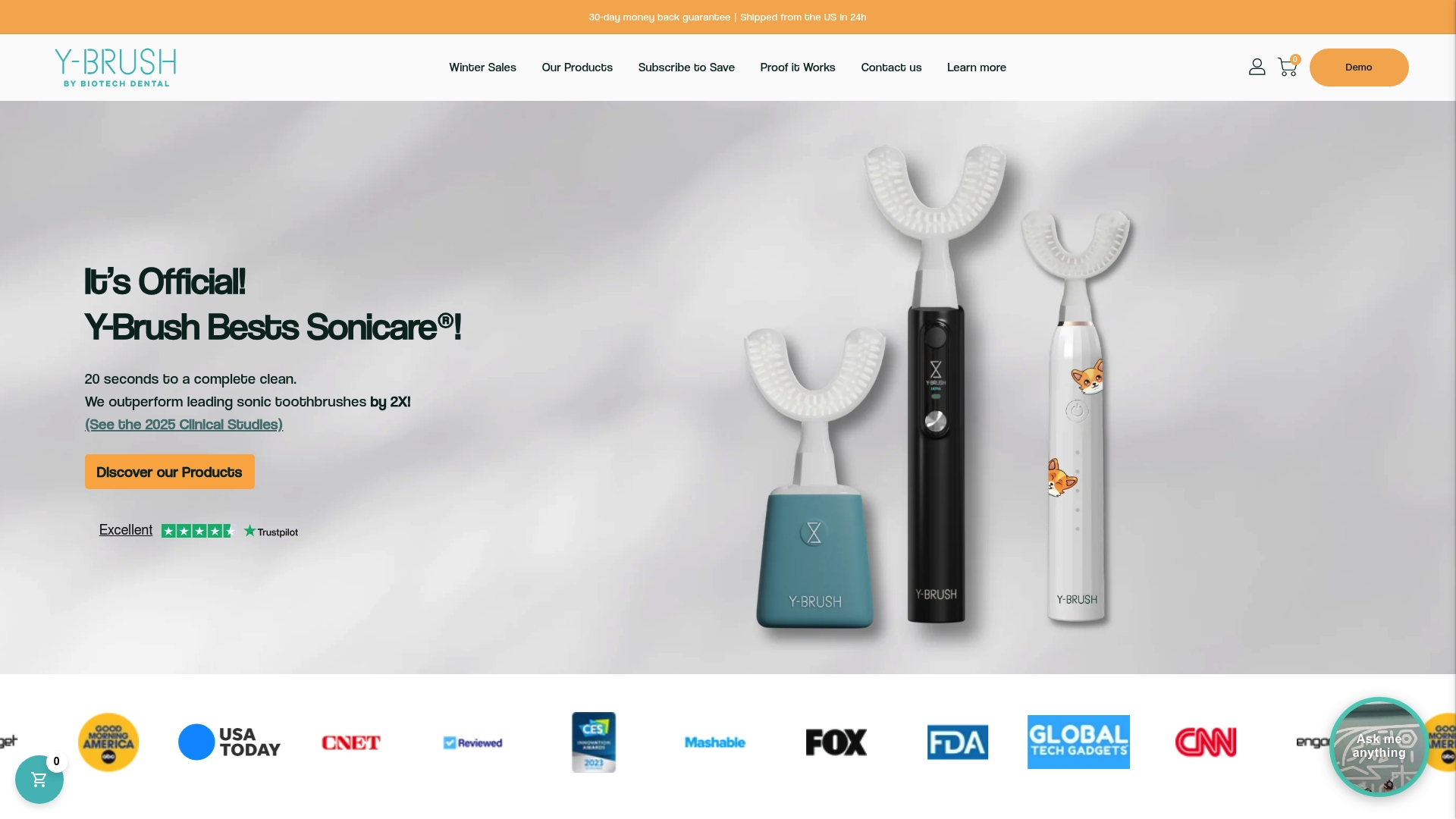
Three plans cover different needs. The Core Plan runs $29.90 per quarter, the Pro Plan runs $49.90 per quarter, and the Pro+2 Plan runs $69.90 per quarter, each delivering replacement heads on a schedule built around the same three to four month window dentists recommend. Because the design centers on a fast, complete clean rather than a longer brushing session, the subscription pairs the habit-forming convenience Consumer Reports found valuable with a brushing method built for people who don’t have two full minutes to spare twice a day.
If you’re weighing the numbers from this article against your own routine, browse the current plans and run the same per-head annual math against what you’re spending now. Compatible replacement heads are also available individually if you decide a full subscription isn’t the right fit yet.
This article is general information, not a substitute for advice from a qualified doctor. Consult a qualified healthcare professional about your own circumstances before acting on anything here.
Sources
- American Dental Association — toothbrushes
- Electric Toothbrush Subscription FAQ | Consumer Reports
- PubMed — clinical study on brushing and plaque
- The subscription toothbrush trap: When auto-ship saves money and when it doesn’t
FAQ
Are premium electric toothbrushes worth the extra cost?
Premium brushes often add features like pressure sensors and built-in timers that support better brushing habits, but the biggest factor in oral health outcomes remains consistent two-minute brushing and timely head replacement rather than price point alone.
What is the 3-3-3 rule for brushing teeth?
There’s no single dental-association-endorsed “3-3-3 rule.” The consistent, evidence-backed guidance is to brush for two minutes, twice a day, and replace your brush head every three to four months.
Is a toothbrush subscription beneficial if I already remember to buy heads?
Not usually. If you already replace heads on a fixed schedule, bulk retail buying almost always beats subscription pricing, since subscriptions charge a convenience premium rather than a cost discount.
Is the Oral-B app worth using alongside a subscription?
App-based brushing trackers can reinforce the two-minute habit and pair well with a subscription’s automatic head replacement, though the core benefit still comes from the replacement schedule itself, not the app.
Does Y-Brush offer a subscription for replacement heads?
Yes. Y-Brush offers several subscription plans that include scheduled replacement-head delivery on a quarterly cadence. Current prices can be found on the official pricing page.


