


TL;DR:
- Most Americans fall short of the recommended two-minute brushing twice daily due to busy schedules and routine monotony. Toothbrush mouth guards offer a quick, effective, full-mouth cleaning solution by covering all teeth simultaneously with sonic vibrations. Choosing an ADA-accepted model with proven clinical efficacy ensures consistent, thorough oral hygiene suited for demanding lifestyles.
Most Americans know they should brush for two full minutes, twice a day. Yet research consistently shows that 90% fall short, with the average brushing session clocking in at well under one minute. The gap between intention and action isn’t laziness. It’s the reality of packed schedules, early mornings, and the sheer monotony of a twice-daily ritual that feels like it never quite fits. Toothbrush mouth guards, the U-shaped devices that clean all your teeth at once, are changing that equation. This article covers how they work, what to look for, and which options stand out in 2026.
Table of Contents
- What is a toothbrush mouth guard?
- Essential criteria for choosing a toothbrush mouth guard
- Top toothbrush mouth guard options for 2026
- Side-by-side comparison: Mouth guard toothbrushes vs traditional brushes
- Situational recommendations: Who should (and shouldn’t) use a toothbrush mouth guard?
- The real verdict: Convenience versus precision in oral care
- Find your perfect toothbrush mouth guard — Upgrade your routine today
- Frequently asked questions
Key Takeaways
| Point | Details |
|---|---|
| All-in-one cleaning | Toothbrush mouth guards clean both upper and lower teeth at once, saving time. |
| Evidence-backed effectiveness | Top ADA-accepted models show superior plaque and gingivitis reduction versus manual brushing. |
| Best for busy lives | These devices simplify oral care routines, making it easier to maintain healthy teeth on a tight schedule. |
| Not a sole solution | Experts recommend traditional brushing and flossing in addition for optimal dental health. |
| Personal fit matters | Choose models with strong clinical evidence, comfort, and adaptable bristle design for your needs. |
What is a toothbrush mouth guard?
A toothbrush mouth guard is exactly what the name suggests: a mouthpiece-style device that you bite down on to brush your upper and lower teeth simultaneously. Unlike a traditional toothbrush that requires you to move a small head across each tooth surface individually, a mouth guard toothbrush wraps around your entire dental arch in one motion.
A toothbrush mouth guard, also known as a U-shaped or mouthpiece toothbrush like Autobrush Sonic Pro, is an electric device with a U-shaped nylon bristle head that fits over both upper and lower teeth for simultaneous cleaning. That simultaneous action is the defining feature. Instead of spending 30 seconds per quadrant, the device handles all quadrants at once.
Here’s what distinguishes these devices from standard electric toothbrushes:
- Coverage: A traditional brush head is typically 1 inch wide and cleans a small section at a time. A mouth guard toothbrush covers every tooth surface, including the inner, outer, and chewing surfaces, in a single placement.
- Speed: Brushing time drops from the recommended two minutes to as little as 20 to 60 seconds depending on the model.
- Vibration mechanism: Most mouth guard toothbrushes use sonic or ultrasonic vibration to dislodge plaque. To understand how sonic toothbrush technology works at the bristle level, the short version is that high-frequency vibrations break up biofilm more effectively than manual scrubbing alone.
- Bristle design: Nylon bristles are shaped in a U-curve to conform to the natural arch of both the upper and lower jaw, allowing pressure to be distributed evenly across the entire mouth.
- Ease of operation: You insert, bite gently, and let the device run. There’s no technique to master and no particular angle to maintain.
For people who rush through oral care or skip it altogether when time gets tight, this format removes the friction that often leads to poor brushing habits.

Essential criteria for choosing a toothbrush mouth guard
Now that you know what a toothbrush mouth guard is, here’s how to judge which one will fit your needs the best. Not all of these devices are created equal, and making an uninformed purchase can mean spending money on something that delivers mediocre results.
-
Clinical effectiveness. This is the single most important factor. A device that cleans teeth quickly but doesn’t actually remove plaque is not solving your problem. Look for models with independent clinical studies or, better yet, acceptance from the American Dental Association (ADA). ADA acceptance means the product has been evaluated against specific safety and efficacy standards.
-
Bristle quality and adaptability. Dense, soft nylon bristles that conform to varied tooth shapes are ideal. Teeth are not uniform. Crowded teeth, larger molars, and varying gumline depths all require bristles that can flex and reach without causing irritation.
-
Fit and comfort. A device that doesn’t seat properly in your mouth won’t clean effectively. Many brands offer multiple sizes or flexible heads to accommodate both adults and children. Test fit matters, especially for smaller mouths.
-
Battery life and cleaning modes. For daily use, a reliable battery is non-negotiable. Devices with multiple cleaning modes, such as a daily clean, sensitive, and whitening setting, offer more versatility across the whole household.
-
Ease of cleaning the device itself. A toothbrush that’s hard to rinse and sanitize is a liability. Look for designs with removable bristle heads that can be rinsed thoroughly or replaced on a schedule similar to a traditional brush head, roughly every three months.
-
Gumline and interproximal access. This is where many mouth guard devices struggle. Edge cases show they are less effective for crooked teeth or hard-to-reach areas without proper motion, and dentists note most U-shaped brushes (except ADA-accepted ones) don’t match traditional brushes for thorough plaque removal along the gumline and interproximal areas. That’s why clinical backing matters so much.
For more practical guidance, effective tooth brushing tips can help you get the most out of any device you choose.
Pro Tip: Always prioritize devices with ADA acceptance or documented, independent clinical studies. Marketing language like “advanced cleaning technology” means very little without evidence-backed data behind it.
Top toothbrush mouth guard options for 2026
Armed with the key selection criteria, here are the top models US consumers can consider in 2026. The market has evolved significantly, and a few standout products rise above the noise based on clinical validation, user experience, and value.
Autobrush Sonic Pro
This is currently the benchmark device in the category. Autobrush Sonic Pro is the world’s only ADA-accepted U-shaped toothbrush, with 5 clinical studies showing up to 5.1x better whole-mouth clean, 82% more plaque removal in hard-to-reach areas, and 45% better gingivitis reduction versus manual brushing. Those are not marketing claims; they are peer-reviewed findings submitted to the ADA for evaluation.
Key features:
- ADA Seal of Acceptance (the only U-shaped brush to hold this designation)
- Sonic vibration technology
- Multiple brush head sizes for adults and children
- Rechargeable battery with multi-week life on a single charge
- Available with whitening and sensitive modes
“The clinical evidence behind ADA-accepted mouth guard toothbrushes represents a meaningful shift in how we approach daily oral hygiene for people who struggle with brushing compliance. Consistency matters more than perfection, and these devices make consistency achievable.” — Consumer Reports oral health analysis, 2024
Y-Brush
Y-Brush takes a similar full-mouth approach but emphasizes its 10-second per-arch (20 seconds total) cleaning protocol, which is among the fastest on the market. It is designed for consumers who want efficient oral care without sacrificing results. The device features:
- Dense nylon bristle head angled at 45 degrees to target the gumline
- Multiple size options for adults and children
- Sonic vibration frequency calibrated for whole-arch coverage
- Replaceable brush heads for ongoing hygiene
For anyone interested in full-mouth toothbrush benefits for gum health, Y-Brush is a strong option for households looking to simplify the morning routine without cutting corners on dental wellness.
Pro Tip: If you’re buying for a family, look for brands that offer both adult and child-sized heads. A device that doesn’t fit correctly won’t deliver the cleaning performance shown in clinical studies.
Side-by-side comparison: Mouth guard toothbrushes vs traditional brushes
To simplify your decision, let’s put the leading mouth guard devices head-to-head with classic toothbrushes across the factors that matter most to busy Americans.
| Feature | Mouth guard toothbrush | Standard electric brush | Manual toothbrush |
|---|---|---|---|
| Cleaning time | 20 to 60 seconds | 2 minutes (recommended) | 2 minutes (recommended) |
| Whole-mouth coverage | Simultaneous, all teeth | Quadrant by quadrant | Quadrant by quadrant |
| Plaque removal | Up to 5.1x better (ADA-accepted models) | Strong, technique-dependent | Moderate, highly technique-dependent |
| ADA acceptance | Available (Autobrush Sonic Pro) | Many models accepted | Most manual brushes accepted |
| Ease of use | Very high (insert and run) | Moderate (technique required) | Low (full technique required) |
| Cost (entry level) | $40 to $100+ | $25 to $200+ | $2 to $15 |
| Best for | Busy users, kids, dexterity issues | Tech-forward users, moderate time | Budget-conscious, precision users |
| Interproximal cleaning | Limited on non-ADA models | Good with proper technique | Good with proper technique |
| Gumline access | Strong on ADA-accepted models | Strong | Moderate |
The data is clear: for users who want efficient brushing steps and measurable results without requiring two full minutes of focused effort, ADA-accepted mouth guard devices offer a compelling combination of speed and clinical performance.
It’s worth noting that ADA-backed mouth guard options, when used correctly, outperform manual brushes in speed and coverage for busy routines, making them ideal for US consumers seeking faster oral care. That’s a significant finding for anyone who has convinced themselves that “real” brushing requires two minutes of manual effort.
Situational recommendations: Who should (and shouldn’t) use a toothbrush mouth guard?
While the data is compelling, it’s critical to know who benefits most and when alternative approaches are needed.
Best-fit users:
- Busy professionals who rush through mornings and frequently brush for less than a minute. A 20 to 60-second full-mouth clean is dramatically better than a careless 45-second manual scrub.
- Children who resist brushing or find the routine boring. Mouth guard devices remove the technique barrier, making brushing faster and more consistent. ADA-accepted models designed for children are the safest choice.
- People with limited dexterity or mobility, including older adults or those managing conditions like arthritis. The insert-and-go format eliminates the need for precise hand movements.
- Anyone seeking simplicity. If decision fatigue or routine complexity is causing you to skip brushing, a mouth guard toothbrush removes the mental load.
Less ideal situations:
- Orthodontic appliances. Braces, retainers, and other fixed appliances create surfaces that U-shaped brush heads can’t navigate effectively. Traditional methods and specialized orthodontic tools are more appropriate here.
- Significant crowding or misalignment. Severely crowded teeth may not allow the bristle head to reach every surface evenly. Standard electric brushes or water flossers may be needed to supplement.
- Targeted precision cleaning. If a dentist has identified a specific trouble spot, a focused traditional brush allows more controlled, deliberate technique.
On the question of supplementation, expert guidance confirms that mouth guard toothbrushes are not a replacement for flossing or targeting specific issues. They work best as a supplement for uniform cleaning, with dentists preferring traditional methods for precision but acknowledging their benefits for consistency among hard-to-motivate brushers.
There is also a divide in professional opinion. Contrasting expert perspectives show that some dentists remain skeptical of non-ADA U-shaped designs, but Autobrush’s clinical studies and ADA Seal provide high-confidence support for effective plaque and gingivitis reduction. The takeaway: stick to certified models.
For users who want added accountability, automatic toothbrushes with built-in timers can help ensure each session runs the full recommended duration, whether you’re using a mouth guard device or a traditional brush.
The real verdict: Convenience versus precision in oral care
With all the core comparisons and scenarios laid out, here’s a candid look at what truly matters in daily oral care for busy people.
Conventional dental wisdom has long held that only a traditional toothbrush, wielded with proper technique for a full two minutes, can deliver a genuinely thorough clean. That assumption made sense when mouth guard toothbrushes were novelty items with no clinical support. The landscape has changed. Evidence now supports ADA-accepted mouth guard models for routine daily use, and even some clinicians are updating their perspective on what “good enough” brushing actually looks like.
Here’s the insight that most product reviews miss: the biggest threat to your oral health isn’t using a less-than-perfect tool. It’s not brushing consistently. A person who uses a mouth guard toothbrush for 30 seconds, twice a day, every day, is almost certainly better off than someone who brushes correctly once a day when they remember and skips the rest. Regularity beats technique when technique is the barrier to regularity.
This is why we think of full-mouth toothbrush devices and gum health as a scalable solution rather than a shortcut. Calling them a shortcut implies you’re getting less than you need. For many users, these devices actually deliver more, more often, because they fit real life rather than an idealized version of it.
The goal of good oral hygiene isn’t to perform a ritual perfectly under ideal conditions. It’s to maintain a clean, healthy mouth across the weeks, months, and years of your actual life, with its missed alarms, rushed mornings, and late nights. A device that makes that achievable isn’t a compromise. It’s progress.
Find your perfect toothbrush mouth guard — Upgrade your routine today
Ready to transform your brushing routine? The options covered in this article represent the best that mouth guard toothbrush technology has to offer in 2026, and finding the right fit for your household doesn’t have to be complicated.
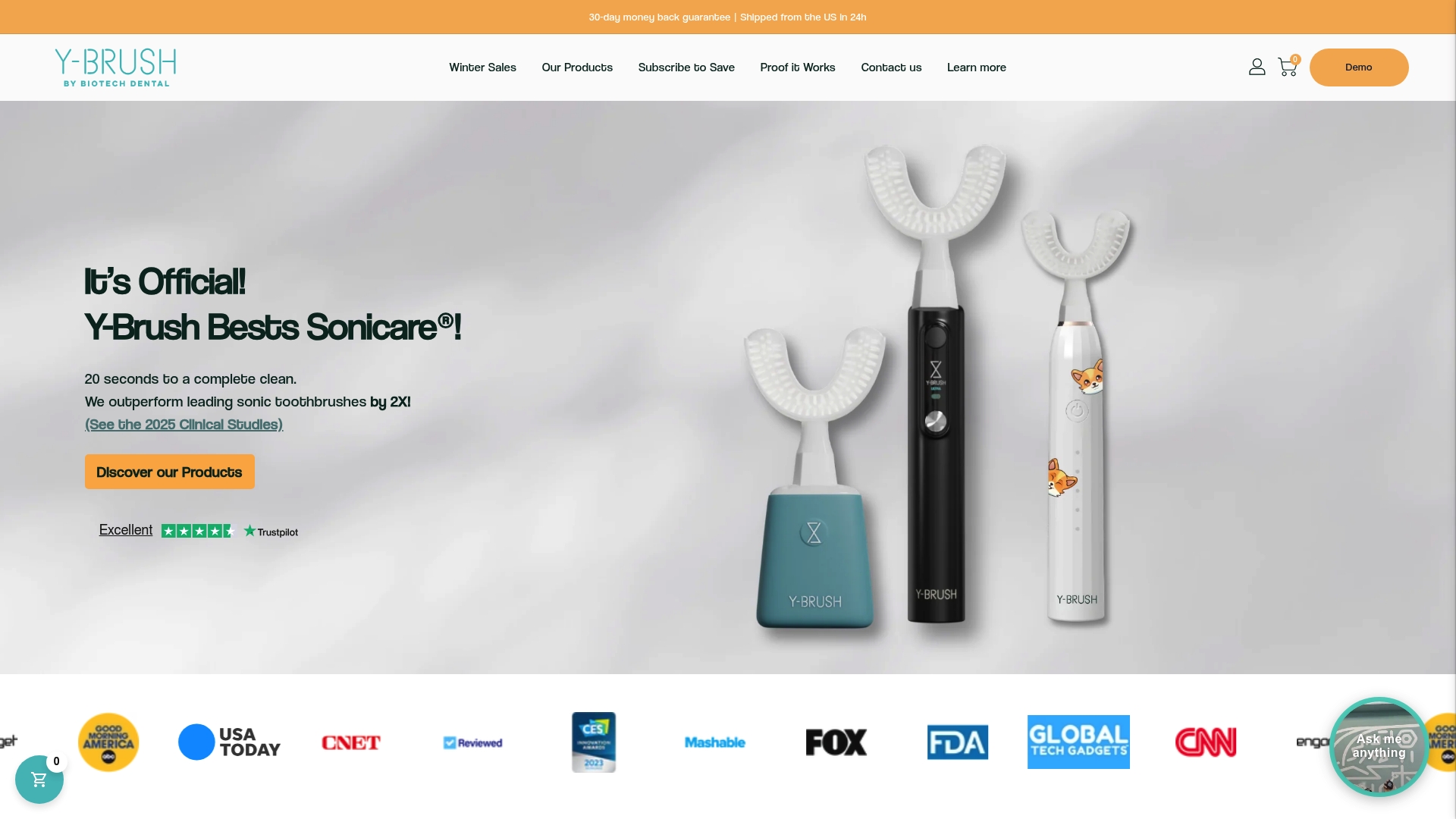
At Y-Brush, we’ve designed full-mouth toothbrush solutions specifically for people who want clinically effective results without spending two minutes in front of a mirror twice a day. The Y-Brush Essential Sonic Toothbrush delivers a complete clean in just 10 seconds per arch, making it one of the fastest clinically supported options available. For households brushing multiple people, the Y-Brush DuoBrush offers a practical dual-user solution that makes consistent oral care the default, not the exception. Explore the full lineup to find the model that fits your lifestyle, your schedule, and your family’s needs.
Frequently asked questions
Can a toothbrush mouth guard replace my traditional toothbrush?
It can supplement your routine for a fast, broad clean, but experts recommend keeping traditional brushing and flossing for precision and gum health, especially for targeting specific trouble areas.
Is a toothbrush mouth guard safe for children?
Yes, ADA-accepted devices designed for children are considered safe and effective. Clinical studies confirm significant plaque reduction and gingivitis improvement compared to manual brushing, making them a strong option for kids who resist traditional routines.
How long does it take to clean teeth with a toothbrush mouth guard?
Many devices clean all teeth in as little as 30 to 60 seconds, thanks to simultaneous brushing action across all tooth surfaces at once, with some models like Y-Brush completing a full clean in just 20 seconds total.
Are toothbrush mouth guards effective for braces or dental appliances?
They’re generally less effective on orthodontic appliances. Dentists note that U-shaped brush heads struggle to navigate around brackets and wires, making traditional methods and specialized orthodontic tools more appropriate in those cases.
What features should I look for in a toothbrush mouth guard?
Prioritize clinical backing like ADA acceptance, high-quality nylon bristles, multiple cleaning modes, and a comfortable fit that properly seats across your full dental arch for even coverage.


