


For reliable expander hygiene, use a soft-bristle manual or electric toothbrush alongside an interdental proxy brush and a water flosser. Rinse after every meal, and set aside a focused 2 to 3 minute expander cleaning session twice daily, once in the morning and once before bed. That combination, not any single tool, is what keeps plaque from building up around the bands and screw.
TL;DR:
- Electric toothbrushes with soft heads have been shown to improve plaque removal more effectively around expanders than manual brushes, particularly for hard-to-reach areas.
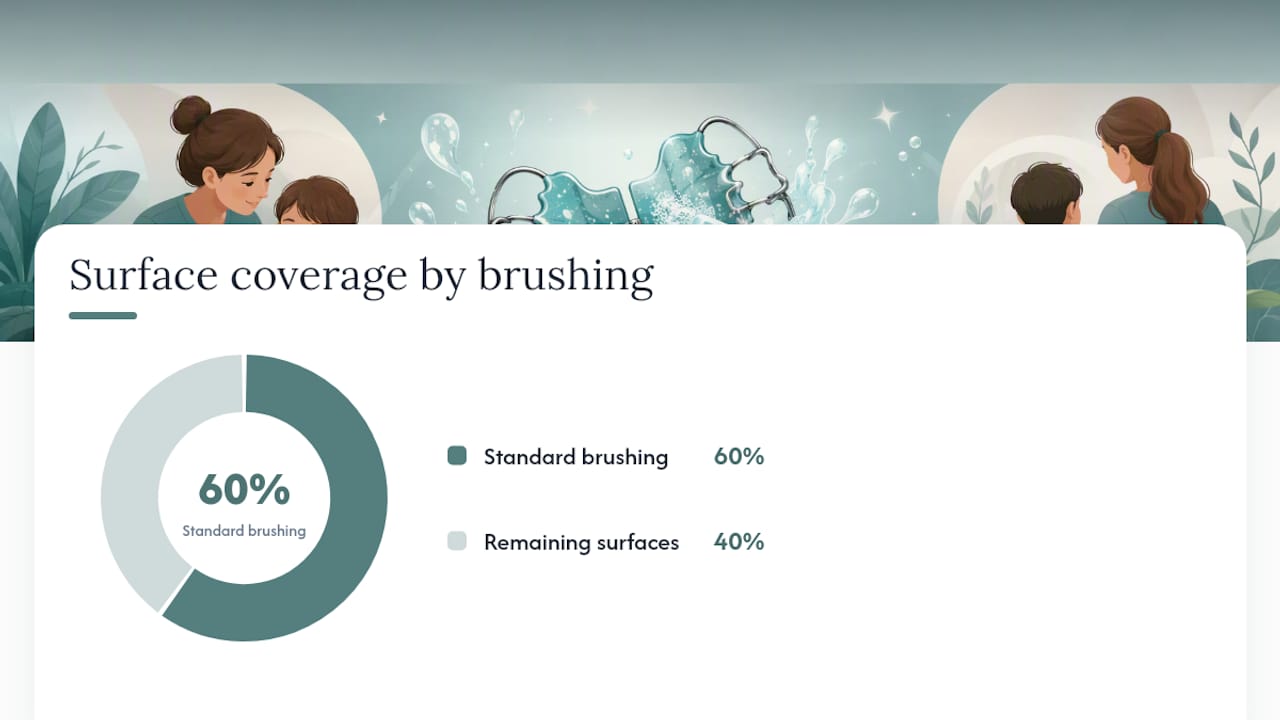
- Combining a soft-bristle toothbrush, an interdental proxy brush, and a water flosser with an orthodontic tip ensures cleaning coverage of over 60% of hardware surfaces, reducing trapped debris and bacteria.
- Rinsing immediately after meals and dedicating two-minute focused cleanings twice daily are crucial to prevent plaque buildup and gum inflammation around the appliance.
- Avoid abrasive pastes, boiling or heat cleaning, and sticky foods that increase cleaning difficulty or risk damaging the expander material.
- The Y-Brush sonic device can streamline morning and evening routines, replacing general brushing but still needing the proxy brush and water flosser for comprehensive hygiene.
Table of Contents
- The Toothbrush for Palate Expanders and the Tools That Back It Up
- How to Brush With Palate Expanders: A Step-by-Step Routine
- Brushing Technique: Angle, Pressure, and What to Avoid
- Diet Tips, Quick Fixes, and When to Call the Orthodontist
- What the Research Says About This Routine
- Don’t Forget Retainers and Other Appliances
- A Caregiver’s Take on Making This Routine Stick
- Where Y-Brush Fits Into an Expander Routine
- Sources
- FAQ
The Toothbrush for Palate Expanders and the Tools That Back It Up
A soft-bristle brush is non-negotiable. Hard bristles can micro-scratch the medical-grade acrylic on the expander’s palate piece, and those tiny grooves become the perfect place for bacteria to grip and multiply. That damage is invisible to the naked eye but it changes how the appliance behaves in the mouth for the rest of treatment.
Electric or manual both work, but the evidence leans electric. A randomized clinical assessment of children wearing rapid palatal expanders found that electric toothbrush users showed larger improvements in plaque and gingival index scores than manual brush users, especially around the palatal tissue that the expander covers, according to clinical assessment. If you go electric, confirm the head itself is labeled soft. Power alone doesn’t guarantee gentleness.
No brush, electric or manual, reaches everywhere on its own. Orthodontic guidance consistently recommends pairing the toothbrush with an interdental (proxy) brush sized to fit between the bands, plus a water flosser fitted with an orthodontic tip. That’s because standard brushing alone cleans only about 60% of the hardware’s surfaces, leaving the rest to trapped food and biofilm.
Pro Tip: Keep the water flosser on a low-to-medium setting for kids, roughly the gentlest one or two pressure notches on most models, to flush debris from the screw mechanism without irritating the gum tissue around it.
Your shopping list, in order of priority:
- A soft-bristle manual or electric toothbrush with a compact head
- An interdental proxy brush in a size that slides under the expander’s arms
- A water flosser with an orthodontic (narrow) tip attachment
- Fluoride toothpaste and, if recommended, a fluoride rinse
Skip anything abrasive, including whitening toothpaste with high abrasively ratings, and never boil a removable expander to sanitize it. Manufacturer instructions for removable palatal expanders specifically warn against boiling water or dishwasher cleaning, since heat warps the acrylic base.
How to Brush With Palate Expanders: A Step-by-Step Routine
Treat every meal as the start of a two-part cleaning job: a quick rinse right away, and a longer session later. Food doesn’t wait around, and neither should your first response to it.
Right after eating: Swish water vigorously for 15 to 20 seconds to knock loose the biggest debris before it has time to settle into the screw or under the bands. This isn’t a substitute for brushing. It’s damage control until the next full routine.
Morning and night, the full sequence:
- Brush all tooth surfaces normally for 1 to 2 minutes with a soft-bristle brush and fluoride toothpaste.
- Tilt the brush to a steep upward angle and clean underneath the metal arms of the expander, where standard horizontal strokes never reach.
- Work the proxy brush around each band individually, sliding it side to side to disrupt plaque the toothbrush bristles can’t touch.
- Aim the water flosser’s orthodontic tip directly at the screw and at each contact point between band and tooth, using low-to-medium pressure.
- Finish with a fluoride rinse. Spit it out, don’t swallow it, and don’t rinse with water right after so the fluoride has time to work on the enamel.
Budget 2 to 3 minutes for this focused expander pass, separate from the time spent on general tooth brushing. Orthodontic manufacturer guidance points to that window as the sweet spot for preventing gum inflammation without turning oral care into a nightly battle.
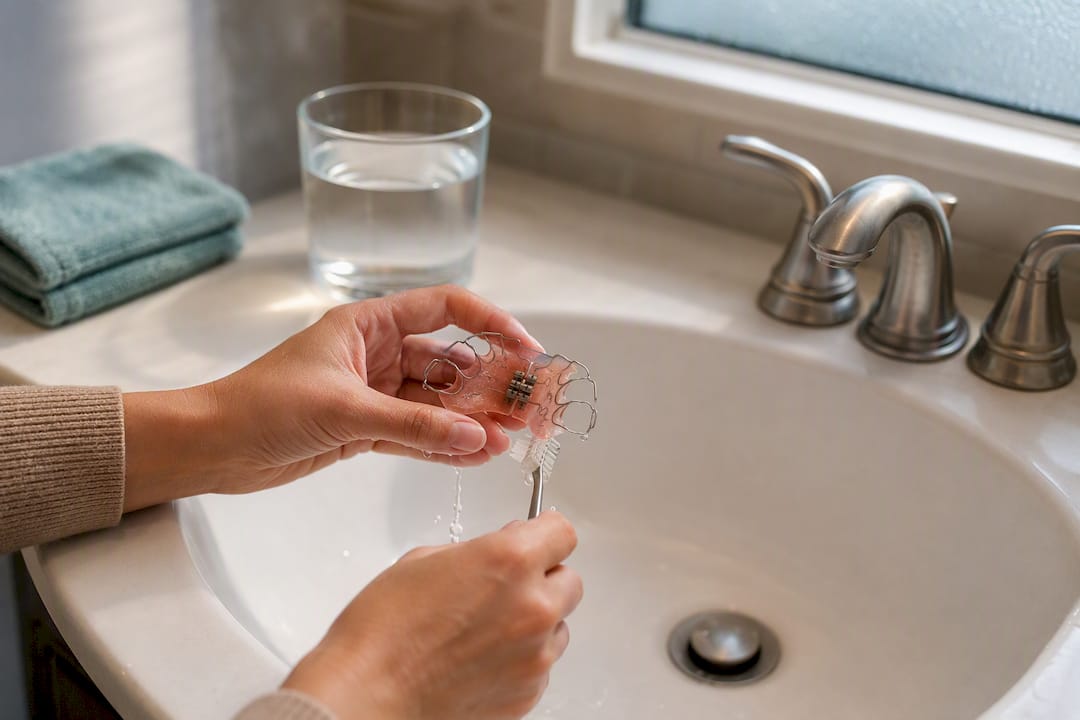
If the appliance is removable, take it out first. Brush it separately over a sink with a soft brush, warm (not boiling) water, and a small dab of toothpaste, then rinse thoroughly before it goes back in. Removable expanders are actually easier to keep clean precisely because you can get at every surface without working around a mouth full of teeth.
Brushing Technique: Angle, Pressure, and What to Avoid
The angle matters more than the brand of brush in your hand. Hold the brush at roughly 45 degrees, pointed upward toward the palate, so the bristles actually reach the gap between the appliance and the roof of the mouth instead of skimming past it.
Around each band, use small circular motions right along the gumlike, a technique often called sulcular brushing. Angled, circular strokes disrupt biofilm sitting under the arch far better than long horizontal sweeps, which tend to just push plaque sideways instead of removing it.
Pressure is where most people overcorrect. Clinical research on brush head design around orthodontic attachments points to moderate brushing force, in the general range of 1 to 1.5 newtons, as the point that balances effective cleaning against tissue and appliance safety. Scrubbing harder doesn’t clean better. It just irritates gum tissue that’s already adjusting to hardware in the mouth.
Watch for these common mistakes:
- Using stiff or worn bristles that splay outward instead of holding their shape
- Cranking the water flosser to its highest pressure setting to “get it all in one shot”
- Brushing in fast horizontal strokes across the bands instead of small circles
- Skipping the proxy brush because the toothbrush “feels like enough”
For smaller mouths or limited reach, a compact brush head and a flosser with an angled tip make a real difference. Trying to force an adult-sized head into a child’s mouth is how corners get missed.
Diet Tips, Quick Fixes, and When to Call the Orthodontist
Some foods make expander hygiene dramatically harder than others. Sticky candy, caramel, and stringy meats wedge into the screw mechanism and resist even a good flossing session. Swapping in softer fruits, well-cooked vegetables, and non-stringy proteins cuts down on how much rescue cleaning you need to do later.
When you’re out at a restaurant and a full routine isn’t possible, a rinse with water followed by a quick pass with a toothpick or a travel proxy brush buys time until you’re home with the water flosser. It’s not a permanent fix, just a bridge.
Call the orthodontist if you notice any of the following:
- Pain or soreness that doesn’t ease up after a day or two
- Swelling or redness around the palate or gums near the appliance
- A band that feels loose or shifts when you press on it
- Food that stays stuck no matter what you try at home
- Bad breath that persists even with a consistent cleaning routine
Ignoring these signs doesn’t just risk discomfort. Untreated plaque buildup and gum inflammation can slow the expansion timeline itself, which means more months in the appliance, not fewer.
What the Research Says About This Routine
The multi-tool approach isn’t a guess. The randomized comparison of manual and electric brushing in children wearing rapid palatal expanders found measurably better plaque and gingival index outcomes with electric brushes, particularly around palatal tissue that’s hard to reach with a manual brush alone.
Separate lab research on brush head design found that certain soft, dual-cleaning head designs left less residual buildup around orthodontic attachments than standard heads, and that brushing force directly affects how much plaque actually comes off.
Orthodontic clinics echo the same protocol in patient guidance: soft brush, proxy brush, water flosser, used together rather than any single tool alone. Two to three focused minutes twice a day is the time investment that clinicians consistently point to.
Don’t Forget Retainers and Other Appliances
Once the expander phase ends, most patients move into a retainer, and the same principles carry over almost unchanged. Retainers, whether the clear removable kind or a fixed wire behind the front teeth, trap the same biofilm and food debris that expanders do, just in a different shape.
Removable retainers should come out for cleaning, never scrubbed while still in the mouth. Brush them gently with a soft-bristle brush and lukewarm water, avoiding toothpaste on clear plastic retainers since the mild abrasives in most pastes can leave microscratches that turn cloudy over time and trap odor. A capful of retainer cleaner, or plain water with light dish soap, works better for that specific material.
Fixed retainers, the thin wire bonded behind the lower (sometimes upper) front teeth, need a proxy brush passed underneath the wire daily, plus a water flosser to reach the tight space between the wire and the teeth. This is the exact same combination used on expanders, just repositioned.
Never boil any removable orthodontic appliance to disinfect it, whether it’s an expander or a retainer. The heat that would kill bacteria will also warp the plastic long before it gets there. If a retainer or fixed wire feels loose, or a clear retainer no longer seats fully, that’s worth a call to the orthodontist rather than waiting for the next scheduled visit. Small shifts compound quickly once a retainer stops fitting the way it should.
A Caregiver’s Take on Making This Routine Stick
The tools matter less than what happens the third week in, when the novelty wears off and brushing turns into a negotiation. A short script helps: “Let’s do the palate brush first, then the little brush around the bands, then the water one.” Naming each step out loud keeps a child oriented instead of guessing what’s next.
Pair the routine with something already fixed, like a favorite show’s opening theme or a two-minute timer app, so the appliance cleaning rides on a habit that already exists rather than competing for willpower at bedtime. Praise the process, not just clean teeth. “You got every band that time” lands better than a vague “good job.”
Compliance dips are normal mid-treatment. Consistency, not perfection, is what actually protects the timeline.
— Joris
Where Y-Brush Fits Into an Expander Routine
Busy mornings and even busier evenings are exactly where expander hygiene tends to fall apart, not because caregivers don’t care, but because a rushed 45 second brush job leaves the palate and bands untouched. One product designed to streamline oral hygiene features a Y-shaped head that aims to deliver a full clean in a very short time using sonic vibrations, helping save time in a routine that also involves a proxy brush and water flosser to complete the cleaning process.
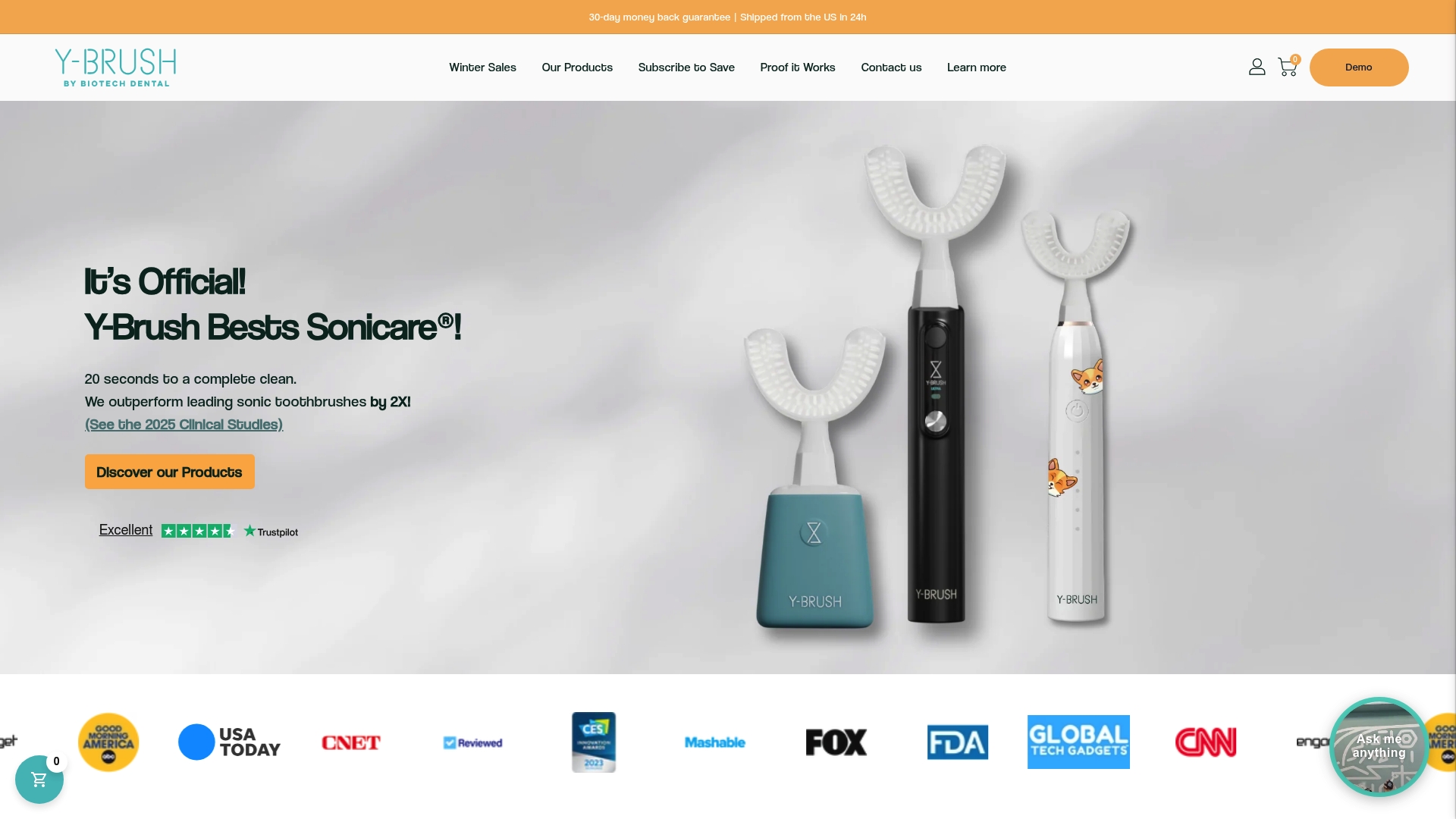
Used with an expander, Y-Brush should replace the general tooth-brushing step, not the specialty tools. Run the Y-shaped head for its full cycle to cover the tooth surfaces, then follow with the proxy brush around each band and the water flosser at the screw, exactly as the step-by-step routine above lays out. The soft-bristle design keeps the acrylic and gum tissue safe, and because the brushing portion takes only 20 seconds, the 2 to 3 minute focused expander clean feels far less like a chore for kids who already resist the mirror.
Y-Brush offers three plans, the Core Plan at $29.90 per quarter, the Pro Plan at $49.90 per quarter, and the Pro+2 Plan at $69.90 per quarter, each including regular brush head refills so the head stays soft and effective throughout appliance treatment. Browse the full lineup of toothbrushes and replacement brush heads to find the plan that matches your household’s routine.
Sources
For deeper reading beyond this guide, the randomized study on electric versus manual brushing in RPE patients offers the clearest clinical evidence behind the electric-brush recommendation. The in-vitro brush head comparison breaks down how head design and brushing force affect residual plaque. For manufacturer-specific care instructions, Invisalign’s palatal expander guidance covers removable-appliance handling directly from the source.
- Experimental assessment of oral hygiene achieved by children wearing rapid palatal expanders, comparing manual and electric toothbrushes
- How to Clean a Palatal Expander: The Daily Hygiene Routine
- Comparative in-vitro evaluation of toothbrush head designs around orthodontic attachments
FAQ
How do you brush teeth with expanders?
Brush all tooth surfaces with a soft-bristle brush at a 45-degree angle, tilting upward to reach under the expander’s arms, then follow with a proxy brush around each band and a water flosser at the screw. Finish with a fluoride rinse, spitting rather than swallowing it, and repeat this focused routine twice daily.
Can you use an electric toothbrush with an expander?
Yes, and a randomized clinical assessment of children wearing rapid palatal expanders found electric toothbrush users showed larger improvements in plaque and gingival index scores than manual brush users, especially around the palatal tissue. Just confirm the brush head itself is labeled soft, since some electric heads use firmer bristles than expected. Y-Brush’s soft, patented head works within this same routine and completes the tooth-brushing portion in 20 seconds.
What is the best way to clean a palate expander?
The most effective approach combines a soft-bristle toothbrush, an interdental proxy brush sized for the bands, and a water flosser with an orthodontic tip, since standard brushing alone reaches only about 60% of hardware surfaces. Removable expanders should come out for a separate soft-brush cleaning with warm water, never boiling water.
How do you keep food out of an expander?
Cut back on sticky, stringy, or hard foods that wedge into the screw mechanism, and rinse with water immediately after eating to loosen debris before it settles. At home, follow up with the proxy brush and water flosser as part of the twice-daily routine to clear anything the rinse missed.


