


Tooth decay affects 23% of kids aged 2 to 5, making it the number one chronic disease among U.S. children. Yet every night, millions of parents face the same exhausting battle: getting a reluctant toddler or preschooler to stand still long enough to brush. The struggle is real, and it is not a sign of bad parenting. Building a brushing habit takes strategy, consistency, and a little creativity. This article delivers 10 evidence-based, practical strategies that actually work, so you can protect your child’s smile without turning bedtime into a negotiation.
Table of Contents
- Why motivating kids to brush is important
- 10 engaging ways to motivate kids to brush
- Comparing top strategies: What works best by age and personality
- Expert insights and common questions for parents
- Smart tools to make brushing easier
- Frequently asked questions
Key Takeaways
| Point | Details |
|---|---|
| Start healthy habits early | Early routines help prevent cavities and set kids up for lifelong oral health. |
| Mix fun with brushing | Incorporate songs, games, and technology to keep kids engaged for the full 2 minutes. |
| Lead by example | Brushing together as a family and modeling enthusiasm encourages children to participate. |
| Supervision makes a difference | Research shows supervised brushing significantly reduces cavities in children. |
| Customize motivation | Adapt strategies based on your child’s age, needs, and personality for the best results. |
Why motivating kids to brush is important
With the scope of the problem clear, here is why it is worth making brushing a top priority in your home.
Tooth decay is the most common chronic childhood disease in the U.S. Cavities cause pain, difficulty eating, and missed school days. In fact, dental problems account for more than 51 million school hours lost each year. That is a significant consequence for something as preventable as daily brushing.
Habits formed in early childhood tend to stick. When brushing becomes a normal part of a child’s morning and bedtime routine, it transitions naturally into adulthood. The goal is not just reducing dental caries today. It is building a foundation for lifelong oral health.
Beyond clean teeth, good brushing habits build confidence. Children who maintain healthy smiles are more likely to smile freely, speak clearly, and feel good about themselves. And according to ADA advice, parents are the single most important influence on whether children develop strong oral hygiene habits.
Here is a quick look at what is at stake when brushing gets skipped:
- Cavities and tooth pain that interfere with eating and sleeping
- School absences linked to dental emergencies and infections
- Long-term gum disease risk that begins with plaque buildup in childhood
- Lower self-esteem from visible tooth decay or bad breath
- Higher dental costs for families when preventive care is skipped
“The habits children form before age 8 often define their relationship with oral hygiene for the rest of their lives.” — Pediatric dental research consensus
10 engaging ways to motivate kids to brush
Now, let’s break down the 10 most effective, evidence-backed ways you can turn brushing into a habit your child enjoys.
-
Play a two-minute song. Songs, timers, and apps make brushing more engaging and help kids reach the full recommended duration. Pick your child’s favorite song and make it the official brushing anthem.
-
Use a brushing app or video. Dedicated brushing apps feature animated characters, timers, and rewards that hold a child’s attention. Many pediatric dentists recommend them for kids aged 3 and up.
-
Brush as a family. Lead by example and brush alongside your child every morning and night. When kids see parents brushing consistently, they naturally want to join in.
-
Let them brush your teeth. Give your child a turn brushing your teeth or their stuffed animal’s teeth. This hands-on approach reduces resistance and makes the whole experience feel like play.
-
Create a reward chart. A simple sticker chart with a small reward after 7 or 14 consecutive days of brushing gives kids a visible goal to work toward. Consistency builds the habit, and the chart makes progress feel real.
-
Give them ownership over their toothbrush. Let your child pick their own toothbrush, whether it features their favorite character or a color they love. Ownership increases buy-in significantly.
-
Make it a game. Challenge your child to “brush away the sugar bugs” or count how many teeth they can clean before the timer runs out. Gamification turns a chore into a mission.
-
Establish a non-negotiable routine. Brush twice daily after meals and at bedtime, and supervise until age 8. Routine removes the daily debate because brushing simply becomes what happens next, not something up for discussion.
-
Celebrate milestones. Mark one month of consistent brushing with a small celebration. Positive reinforcement at key milestones keeps motivation high over the long term.
-
Try the “my turn, your turn” method. Let your child brush first, then you finish the job. This approach respects their growing independence while ensuring a thorough clean. If your child doesn’t want to brush, this method is one of the most effective ways to reduce conflict.
Pro Tip: Pair teaching brushing skills with a consistent verbal cue, like saying “time to fight the sugar bugs,” every single night. Repetition of both the action and the phrase accelerates habit formation faster than routine alone. You can also explore a guide to healthy brushing for age-specific techniques that reinforce each of these strategies.
Comparing top strategies: What works best by age and personality
With these 10 ideas in hand, let’s compare which options are most effective based on your child’s age and temperament.
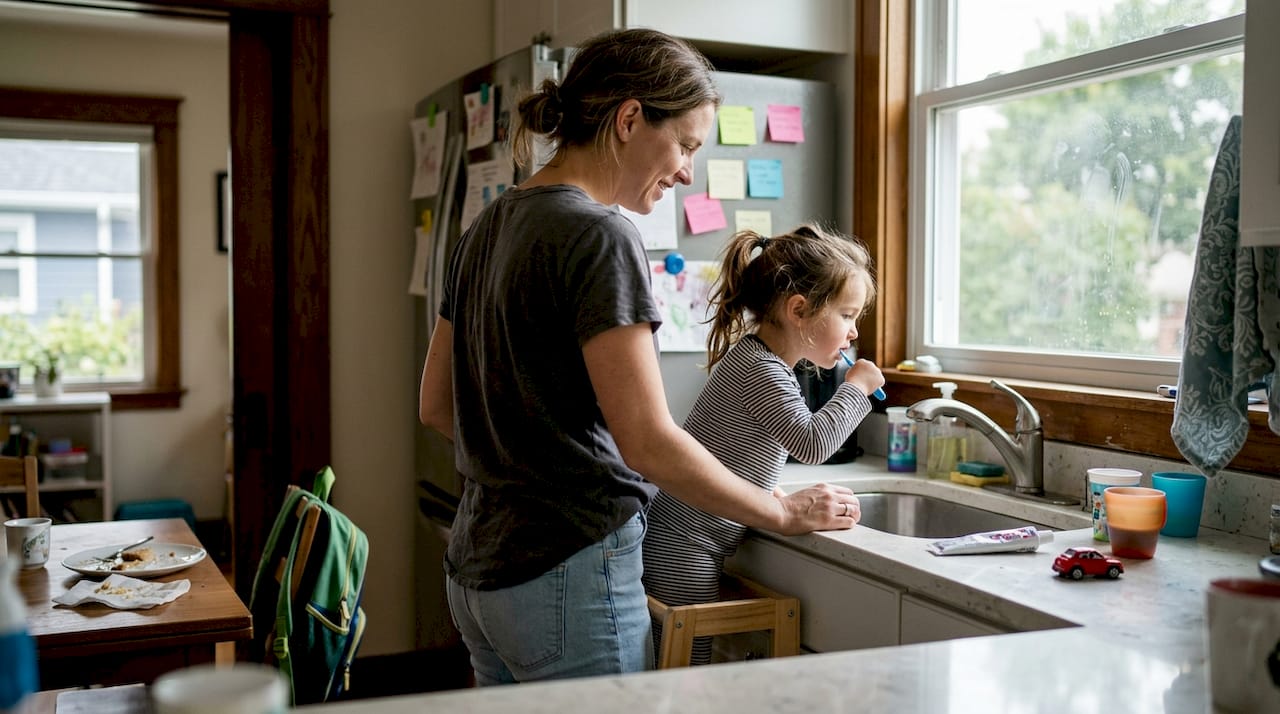
Not every strategy works equally well for every child. A competitive 7-year-old might thrive with a brushing app and a reward chart, while a sensitive 3-year-old may respond better to brushing alongside a parent. Supervised brushing programs reduce cavities significantly at the tooth surface level, making parental involvement the single most reliable factor across all ages.
| Strategy | Toddlers (2-3) | Preschoolers (4-5) | Early elementary (6-8) | Best for |
|---|---|---|---|---|
| Family brushing together | ✓✓✓ | ✓✓✓ | ✓✓ | All personalities |
| Songs and timers | ✓✓✓ | ✓✓✓ | ✓✓ | Reluctant brushers |
| Brushing apps | ✓ | ✓✓✓ | ✓✓✓ | Tech-curious kids |
| Reward charts | ✓✓ | ✓✓✓ | ✓✓✓ | Goal-oriented kids |
| My turn, your turn | ✓✓✓ | ✓✓✓ | ✓✓ | Reluctant brushers |
| Letting kids choose brush | ✓✓ | ✓✓✓ | ✓✓✓ | Independent kids |
| Gamification | ✓ | ✓✓✓ | ✓✓✓ | Competitive kids |
| Milestone celebrations | ✓✓ | ✓✓✓ | ✓✓✓ | All personalities |
For reluctant brushers, games, songs, and the “my turn, your turn” method consistently outperform passive strategies. For eager participants, apps and reward charts add structure and keep motivation high over time. Supporting child independence with brushing is a gradual process, and the table above can help you match the right strategy to where your child is developmentally.
Expert insights and common questions for parents
Experts have studied how best to help kids form lasting brushing habits. Here is what matters most, plus answers to the most common parent questions.
The research is consistent. Supervised brushing programs reduce cavities, motivational approaches improve behavior change, and all major dental organizations emphasize fluoride toothpaste, two-minute brushing, and twice-daily frequency with parental supervision. These are not suggestions. They are the evidence-based standard of care.
Here are the key expert recommendations every parent should know:
- Start brushing at the first tooth. Do not wait until your child has a full set of teeth.
- Use fluoride toothpaste in an age-appropriate amount: a rice-grain smear for under 3, a pea-sized amount for ages 3 to 6.
- Supervise until age 8. Most children lack the fine motor skills for effective independent brushing before then.
- Brush for two full minutes, twice daily. Morning and bedtime are the most critical sessions.
- Make it positive. Avoid framing brushing as a punishment or a chore with negative consequences.
“Parental involvement in brushing is the most consistent predictor of reduced cavity rates in children under 8.” — Pediatric oral health research
Technology can be a genuine asset. Innovative brushing tools designed for children make it easier to hit the two-minute mark and cover all tooth surfaces. Pairing the right tool with the right routine can make brushing easier for both parent and child. For a full breakdown of what the experts recommend at each stage, the brushing rules for kids resource is a practical reference. The ADA recommendations also provide clear, up-to-date guidance on toothbrush selection and technique.
Pro Tip: For children aged 6 and older, try motivational interviewing. Instead of telling your child why brushing matters, ask them open-ended questions: “What do you think happens to your teeth when you skip brushing?” This approach encourages kids to reason through the value themselves, which research shows leads to stronger, more self-directed behavior change than instruction alone.
Smart tools to make brushing easier
Having the right tools makes it even simpler to implement these motivation strategies. Here is how you can make brushing time more effective and enjoyable.
All the strategies above work best when paired with a toothbrush your child actually wants to use. The KidsBrush Sonic Electric Toothbrush from Y-Brush is designed specifically for children aged 4 to 12, delivering a thorough clean in just 20 seconds. That speed matters because most kids, like most adults, do not brush long enough. A brush that works faster removes the duration barrier entirely.
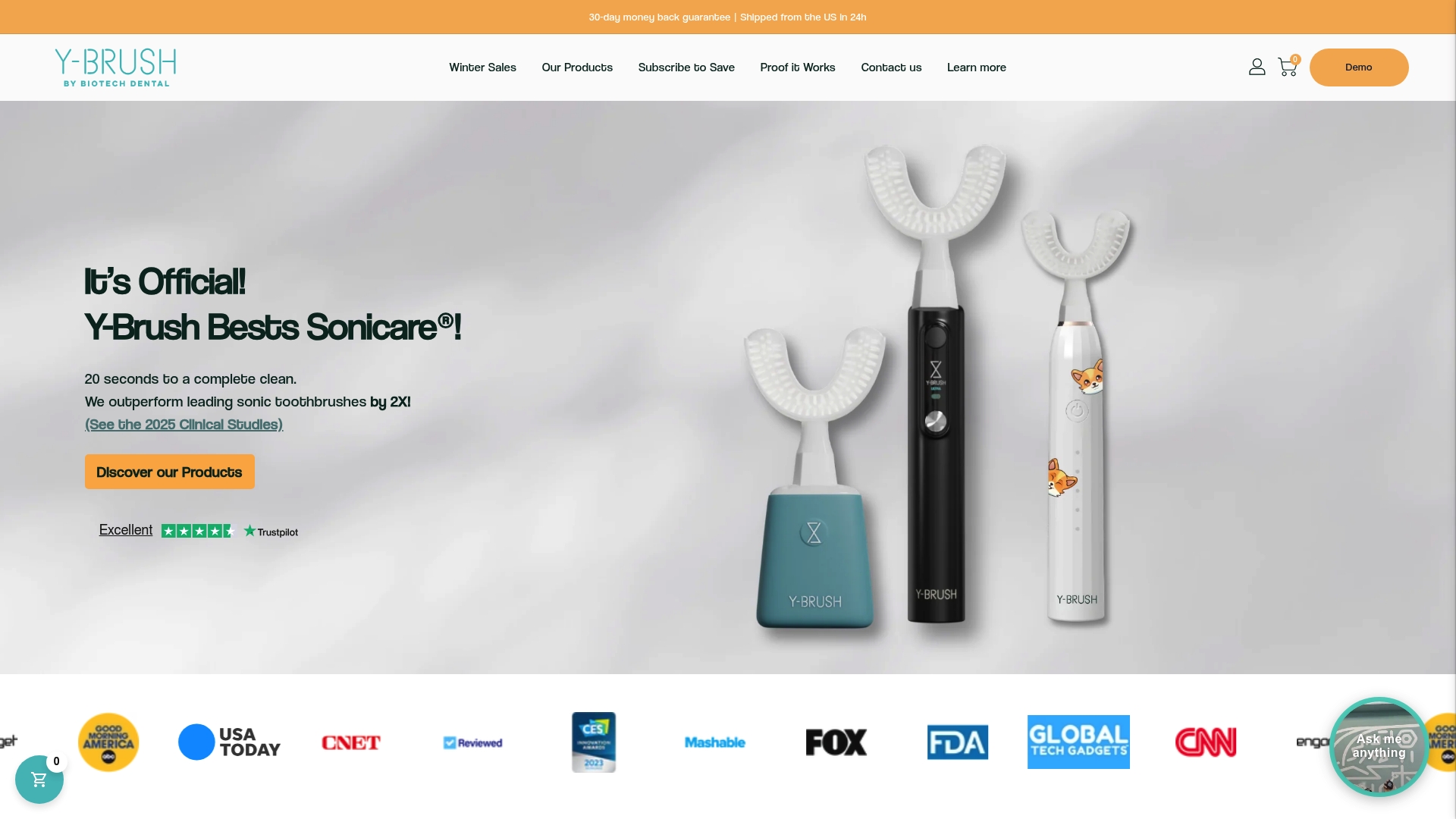
For parents who want to brush alongside their child and model the habit, the Essential Sonic Toothbrush offers the same 20-second clean for adults. Brushing together becomes faster, easier, and genuinely consistent. Visit the Y-Brush shop to explore the full range of kid-friendly and family brushing solutions designed to fit real life.
Frequently asked questions
How long should I supervise my child’s brushing?
Supervise until age 8, which is roughly when most children develop the fine motor control needed for effective independent brushing. A helpful rule of thumb: if your child can tie their own shoelaces, they are likely ready to brush more independently.
Is using technology like brushing apps really effective?
Yes. Songs, timers, and apps keep kids engaged for the full two minutes and make the experience feel less like a chore. Many pediatric dentists actively recommend them for children aged 3 and up.
What do I do if my child hates brushing?
Try the “my turn, your turn” approach or let your child brush a stuffed animal’s teeth first. Reducing the power struggle by giving kids a sense of control is one of the most effective ways to turn resistance into participation.
Are reward charts a good idea for tooth brushing?
Reward systems are positive motivation tools that work especially well for younger children. A simple sticker chart creates a visible record of success and gives kids a concrete goal to work toward each day.
Does supervised brushing really reduce cavities?
Supervised brushing programs show significant reductions in cavities at the tooth surface level in clinical studies. Parental involvement is not just helpful. It is one of the most evidence-backed interventions available for childhood oral health.
Recommended
- Oral Hygiene Checklist for Effortless Daily Clean – Y-Brush USA
- Kids Brushing Guide: Achieve Superior Dental Health Fast – Y-Brush USA
- Your child refuses to brush his teeth, what can you do ? – Y-Brush USA
- Y-Brush KidsBrush Sonic Electric Toothbrush (4-12 years old) – Y-Brush USA
- Offline homeschooling tools - Keep your kids engaged - The World Game


