


Regular dental visits are one of the most effective tools for preventing oral disease and protecting your overall health. A 2024 systematic review confirms that consistent dental attendance is directly linked to fewer missing teeth, reduced cavities, and higher quality of life across the lifespan. Yet a majority of U.S. adults had a dental exam or cleaning in the past year, leaving a substantial portion of the population at elevated risk for conditions that are largely preventable.
The dental visits importance extends well beyond clean teeth. Dentists screen for oral cancer, detect early signs of diabetes and heart disease, and catch gum disease before it becomes irreversible. Here is what routine dental care actually delivers:
- Cavity and gum disease prevention through professional cleanings that remove tartar no toothbrush can reach
- Systemic health screening for conditions like diabetes and cardiovascular disease that often show early signs in the mouth
- Oral cancer detection at a stage when treatment is most effective
- Personalized guidance on home care, diet, and risk factors specific to your mouth
- Long-term tooth retention, which directly supports nutrition, speech, and quality of life well into old age
What are the real health benefits of regular dental checkups?
Professional dental care does more than polish your teeth. Regular cleanings remove plaque and tartar that accumulate in areas a toothbrush and floss simply cannot reach, which lowers the risk of cavities and periodontitis. Left untreated, gum disease progresses from reversible gingivitis to periodontitis, a condition that destroys the bone supporting your teeth and has been linked to systemic inflammation.
The oral-systemic connection is well established. According to the Mayo Clinic, periodontal disease complicates blood sugar management in people with diabetes, and the mouth often shows the first visible signs of conditions like heart disease and HIV. Dentists are trained to recognize these signals, which means a routine checkup can prompt a referral that catches a serious condition early.
Oral cancer screening is another benefit that rarely gets enough attention. Dentists examine the tongue, floor of the mouth, throat, and soft tissues at every visit. When caught early, oral cancer has a significantly better prognosis than when it is diagnosed at a late stage.
Key stat: The CDC identifies dental caries as one of the most common chronic diseases in both children and adults, and routine dental visits are associated with fewer treatments and lower overall dental care costs.
The benefits of regular dental checkups also include something less obvious: accountability. When you see a dentist consistently, you get objective feedback on whether your home care routine is working, not just reassurance that everything looks fine.
- Reduced cavity risk from professional removal of calcified tartar
- Gum disease management through early intervention before bone loss occurs
- Diabetes and cardiovascular risk monitoring via oral-systemic health assessment
- Oral cancer screening at every visit, not just when symptoms appear
- Home care coaching tailored to your specific risk profile
How often do Americans actually visit the dentist?
The gap between recommended and actual dental care in the United States is wide. CareQuest Institute’s 2025 State of Oral Health Equity in America survey found that a majority of U.S. adults had a dental exam or cleaning in the past year. That means roughly one in three adults went without any professional oral care in 2024.

Utilization varies considerably by age, income, and health status. Children and working-age adults with employer-sponsored insurance tend to visit more consistently. Older adults on fixed incomes, adults without insurance, and people in rural areas face the steepest barriers to access.
| Population Group | Dental Visit Pattern | Key Influencing Factors |
|---|---|---|
| Children (1–17 years) | Generally higher utilization | School-based programs, parental awareness |
| Adults (18–64 years) | Moderate; drops without insurance | Insurance coverage, work schedules |
| Older adults | Variable; often lower | Fixed income, mobility, Medicare gaps |
| Adults with diabetes | Should visit more frequently | Periodontal-glycemic link |
| Smokers | Higher disease risk, often lower visits | Nicotine dependence, cost concerns |
The CDC notes that routine dental visits are recommended for people aged 1 year and over, and that consistent attendance is associated with fewer treatments for oral and craniofacial diseases. The public health implication is direct: the 35% of adults skipping annual care are accumulating preventable disease burden.
Public health note: Routine dental visits are linked to lower overall dental care costs. Skipping preventive care does not save money; it defers and amplifies it.
What do current professional guidelines say about visit frequency?
The traditional “every six months” rule is giving way to something more clinically sound. The American Dental Association now recommends personalized dental visit schedules based on individual risk factors rather than a fixed universal interval. Your dentist evaluates your specific oral conditions, medical history, and lifestyle to determine the right recall period for you.
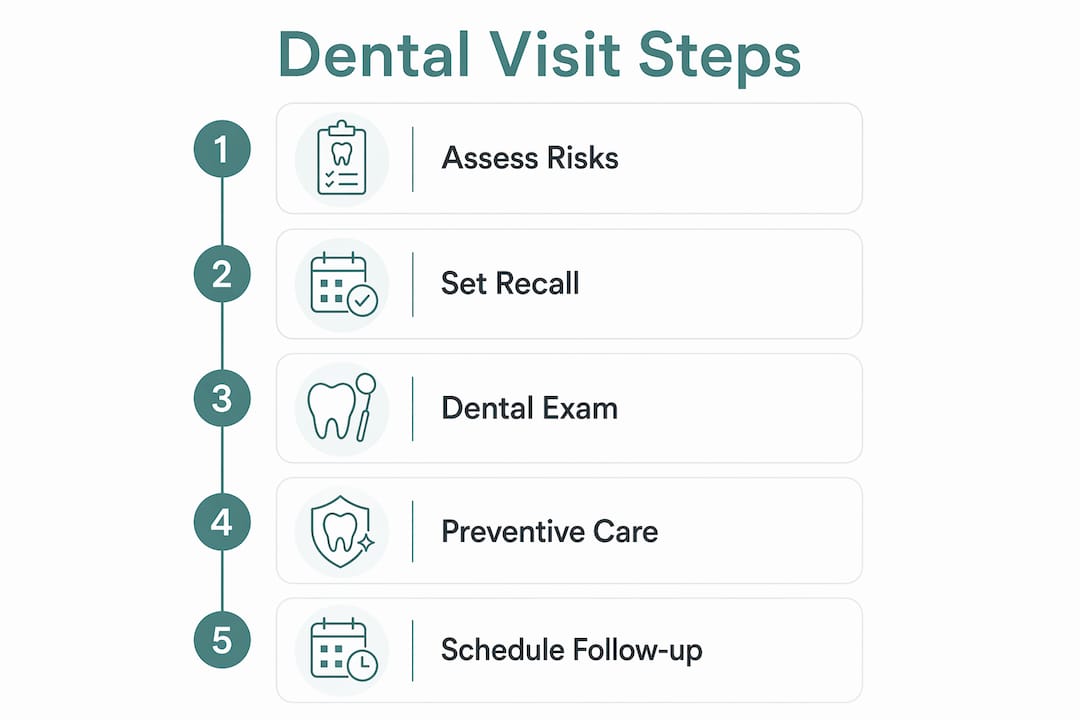
This shift reflects decades of clinical evidence showing that a healthy young adult with no history of cavities or gum disease has different needs than a 60-year-old with periodontal disease and type 2 diabetes. Personalized scheduling considers factors including smoking status, the number of existing restorations, gum disease severity, and systemic health conditions.
Factors that typically call for more frequent visits (every 3–4 months rather than every 6–12 months):
- Active or history of periodontal disease
- Poorly controlled diabetes
- Current tobacco or e-cigarette use
- Dry mouth caused by medications
- High cavity rate or multiple existing restorations
- Pregnancy, which increases gum disease risk
- Immunocompromising conditions
Even patients with complete dentures benefit from regular dental exams to monitor soft tissue health and jaw joint function. The absence of natural teeth does not eliminate the need for professional oral care.
Pro Tip: Ask your dentist at your next visit to explain your personal recall interval and the specific risk factors driving that recommendation. A dentist who can articulate the reasoning is giving you clinically grounded care, not a default schedule.
What stops people from going to the dentist, and how do you fix it?
Dental anxiety is the most commonly cited barrier to care. The ADA’s MouthHealthy resource confirms that anxiety is manageable with the right communication and modern comfort protocols, including nitrous oxide, oral sedation, and structured “stop signal” agreements with the dental team. Telling the front desk about your anxiety before you arrive gives the office time to prepare.
Cost and insurance confusion are the second major obstacle. Many dental insurance plans cover preventive visits at 100%, but patients often do not realize this until after they have skipped appointments. Reviewing your plan’s preventive benefits takes about ten minutes and can eliminate the cost concern entirely for twice-yearly cleanings.
Other common barriers and practical fixes:
- “I don’t have symptoms” — Cavities and early gum disease are often painless. Waiting for pain means waiting for damage that requires more invasive treatment. Bleeding gums and tooth sensitivity are early warning signs worth acting on immediately.
- Time constraints — Schedule your next appointment before leaving the current one. Morning or early-evening slots fill fastest; book them weeks in advance.
- Fear of bad news — A dentist finding a small cavity is a better outcome than finding a large one six months later. Early detection consistently means simpler, less expensive treatment.
Pro Tip: Before your appointment, write down any symptoms, medications, and questions you want to raise. Patients who arrive prepared get more out of every visit and leave with a clearer picture of their oral health status.
Why keeping your natural teeth into old age starts with visits today
The “80/20 rule” in dentistry refers to retaining at least 20 natural, functional teeth by age 80. Research published in the Journal of Dental Research established this threshold as the minimum needed for adequate chewing function and quality of life. Twenty teeth is not a high bar, but reaching it requires consistent preventive care over decades.
Tooth loss is not an inevitable part of aging. It is largely the cumulative result of untreated decay, advanced gum disease, and deferred care. The systematic review published in BDJ Open in 2024 found that consistent dental attendance is strongly associated with fewer missing teeth across the lifespan. Patients who visit regularly tend to keep their teeth longer, spend less on restorative work, and maintain better nutritional health in later years.
Preventive care also shifts the treatment equation. When a dentist catches a small cavity early, the fix is a simple filling. When that same cavity goes undetected for two years, it may require a root canal, a crown, or extraction. Viewing dental visits as maintenance rather than repair is the mindset that makes the 80/20 goal achievable. You can explore how dental aging affects tooth retention and what you can do at home to slow that process.
Key practices that support long-term tooth retention:
- Attend professional cleanings at your dentist-recommended interval
- Brush twice daily with a clinically effective technique for a full two minutes
- Floss or use interdental brushes daily to clear plaque between teeth
- Address early symptoms like sensitivity or bleeding gums without delay
- Maintain systemic health conditions like diabetes that directly affect gum disease risk
Your daily home care routine is the foundation that makes those dental visits count. Y-brush was built for exactly this: delivering a clinically thorough clean in 20 seconds, so the 90% of people who currently brush for under a minute can actually protect the teeth they are working to keep. Pair consistent home care with regular professional visits, and the 80/20 goal becomes a realistic target, not an aspiration. Explore the Y-brush Essential Sonic Toothbrush to see how it fits into a complete preventive routine.
Key Takeaways
Regular dental visits are the single most effective preventive measure for protecting both oral health and systemic health across your entire lifespan.
| Point | Details |
|---|---|
| Visits prevent disease, not just treat it | Professional cleanings remove tartar that home brushing cannot, stopping cavities and gum disease before they start. |
| A majority of U.S. adults visit annually | Per the 2025 CareQuest survey, one in three adults skips professional dental care each year, accumulating preventable risk. |
| Frequency should match your risk profile | The ADA recommends personalized scheduling; high-risk patients benefit from visits every 3–4 months rather than every six months. |
| Oral health reflects systemic health | Dentists detect early signs of diabetes, heart disease, and oral cancer during routine exams, often before other symptoms appear. |
| The 80/20 goal requires consistent care | Retaining 20 natural teeth by age 80 depends on decades of preventive visits, not last-minute intervention. |


