


TL;DR:
- An automatic toothbrush with a built-in timer guides proper brushing duration and coverage. Dentists recommend features like timers, quadrant pacers, and pressure sensors to improve oral health outcomes. These features lead to better plaque removal, gum health, and long-term tooth retention, especially for children and adults with habits needing correction.
An automatic toothbrush with a built-in timer is defined as a powered toothbrush that runs for the dentist-recommended two minutes and signals when to move between mouth sections. Dentists identify three features as non-negotiable for effective brushing: a 2-minute timer, a quadrant pacer, and a pressure sensor. These features work together to guide proper brushing duration, even coverage, and safe force. Electric toothbrushes with these features reduce plaque by 21% and gingivitis by 11% compared to manual brushing over the long term. For families and adults who want measurable oral health results, finding the best automatic toothbrush with timer is a practical, clinically supported decision.
How do timers and quadrant pacers improve brushing habits?

A built-in timer solves the single most common brushing failure: stopping too early. Most people brush for under a minute, which leaves plaque on teeth and along the gumline. A 2-minute timer removes the guesswork and holds you to the standard that dental professionals recommend.
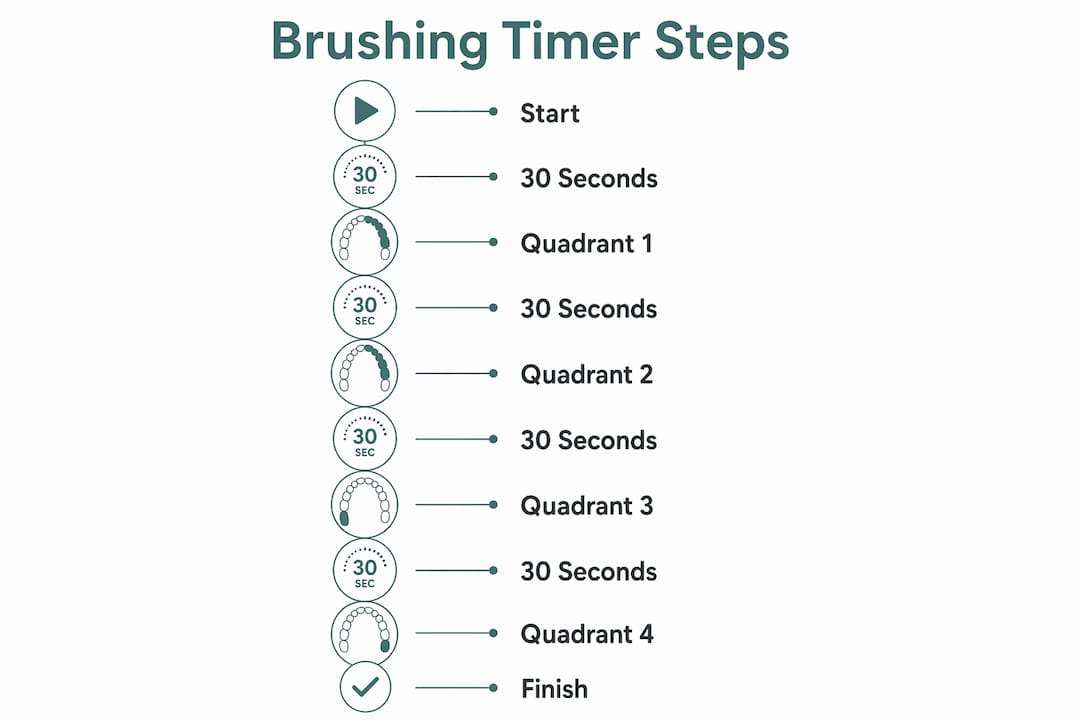
Quadrant pacers take this further by dividing the mouth into sections and signaling when to move. Standard pacing uses 30-second intervals across four quadrants: upper right, upper left, lower right, and lower left. Some models use 20-second intervals across six sections, which suits people who prefer a faster rhythm. The difference matters because uneven brushing is one of the most common causes of localized plaque buildup and gum inflammation.
The behavioral impact of these features is real. Timers and pressure sensors actively train users toward healthier habits by providing real-time feedback during every session. Over time, that feedback reshapes how you brush, even when you switch to a manual brush temporarily. Think of the timer not as a countdown clock but as a coach keeping you accountable.
Here is what to expect from a well-designed timer and pacer system:
- 2-minute total duration with an audible or vibration signal at the end
- Quadrant alerts every 20–30 seconds to prompt section changes
- Consistent rhythm that prevents rushing through difficult areas like the back molars
- Automatic shutoff or manual stop depending on the model (more on this in the buying guide below)
Pro Tip: If your toothbrush uses 30-second quadrant intervals, count four distinct sections in your mouth before you start. This mental map makes the pacer signal feel natural rather than disruptive.
You can learn more about how timers improve brushing and the evidence behind these features.
Why pressure sensors matter as much as the timer
Brushing too hard is more common than most people realize, and the consequences are serious. Aggressive brushing erodes enamel, recedes gums, and causes sensitivity that worsens over time. A pressure sensor detects when you exceed safe force levels and alerts you immediately, usually through a light, a vibration change, or an audible signal.
Pressure sensors provide immediate feedback on brushing force, which is critical for protecting gum tissue. Many people who brush hard do so out of habit, not intention. The sensor interrupts that habit at the moment it occurs, which is far more effective than reading about proper technique.
The benefits of pressure sensors extend beyond gum protection:
- Enamel preservation: Reduced abrasion means less sensitivity and longer-lasting tooth structure
- Gum recession prevention: Consistent gentle pressure keeps the gumline intact over years of brushing
- Habit correction: Real-time alerts retrain muscle memory faster than any instructional guide
- Confidence for new users: People who are unsure about proper technique get immediate confirmation they are brushing correctly
Pro Tip: When the pressure sensor activates, do not just lighten your grip. Slow your wrist movement. Most overbrushing comes from speed and wrist pressure combined, not just grip strength.
Electric toothbrushes with timers and pressure sensors together represent the most complete behavioral feedback system available for daily oral care. The timer ensures duration; the sensor ensures safety.
What does research say about automatic toothbrushes vs. manual brushing?
The clinical evidence for powered toothbrushes is consistent and compelling. Electric toothbrushes reduce plaque by 21% and gingivitis by 11% over the long term compared to manual brushing. The same research links long-term electric toothbrush use to 22% less gum recession and 18% less tooth decay. These are not marginal gains. They represent a meaningful difference in oral health across a lifetime.
“Long-term use of electric toothbrushes is associated with up to 20% more teeth retained compared to consistent manual brushing, underscoring the preventive value of powered brushing over decades.” Source
The advantage is especially pronounced for children. For kids aged 3–9, electric toothbrushes improve plaque removal and gingivitis reduction by 32–52% compared to manual brushing. Children lack the fine motor control for consistent manual technique, so the oscillating-rotating action of powered brushes compensates directly. The brush does the work that developing motor skills cannot yet deliver.
Adults benefit for a different reason. Most adults have established brushing habits, and many of those habits include technique errors that have persisted for years. Automatic toothbrushes reduce technique dependency through their mechanical action, which means even imperfect technique produces better results than manual brushing with the same errors.
| Metric | Manual brushing | Electric toothbrush |
|---|---|---|
| Plaque reduction | Baseline | 21% greater |
| Gingivitis reduction | Baseline | 11% greater |
| Gum recession | Baseline | 22% less |
| Tooth decay | Baseline | 18% less |
| Teeth retained (long term) | Baseline | Up to 20% more |
The data supports a clear conclusion: for most people, an automatic toothbrush with a timer delivers better outcomes than manual brushing, regardless of how carefully they try to brush by hand.
How to choose the best automatic toothbrush with timer for your family
The right toothbrush depends on your household’s specific needs, but three features are non-negotiable regardless of age or budget. Dentists recommend a 2-minute timer, a quadrant pacer, and a pressure sensor as the core feature set for any effective automatic toothbrush. Models with all three are available in the $40–$80 range, which makes them accessible without requiring a premium investment.
Features to prioritize
- 2-minute timer: Non-negotiable. Any model without one does not meet the basic clinical standard.
- Quadrant pacer: Ensures even cleaning across all four mouth sections. Prefer 30-second intervals for adults; 20-second intervals suit children with shorter attention spans.
- Pressure sensor: Protects gums and enamel. Particularly important for adults who have brushed aggressively for years.
- Brush head compatibility: Replacement heads should be easy to find and affordable. Check availability before buying.
- Battery life: Rechargeable models with at least two weeks of battery life per charge reduce daily friction. See top models by battery life for a detailed comparison.
Adults vs. kids: what changes
Adults benefit most from pressure sensors and longer pacing intervals that match a deliberate brushing rhythm. Children need shorter pacing intervals, lighter brush heads, and smaller head sizes that fit their mouths. A musical timer or color-changing indicator works better for kids than a vibration signal, which can feel alarming to younger users.
Timer behavior: auto shutoff vs. manual stop
Some models automatically stop after 2 minutes; others signal the end but keep running until you turn them off. Auto shutoff suits people who want a fully guided experience. Manual stop suits people who prefer to extend brushing on specific areas after the timer completes. Neither is wrong. The choice depends on whether you want the brush to make every decision or just the timing ones.
Pro Tip: If you are buying for a household with both adults and children, choose a model that supports multiple brush heads with different sizes. One handle with two heads is more cost-effective than two separate devices.
For a dentist-backed breakdown of which features matter most by age group, the automatic toothbrush guide for 2026 covers the full picture.
Key Takeaways
The best automatic toothbrush with timer combines a 2-minute timer, a quadrant pacer, and a pressure sensor to deliver clinically proven improvements in plaque removal, gum health, and long-term tooth retention.
| Point | Details |
|---|---|
| Timer is the foundation | A 2-minute timer is the minimum standard; without it, most people stop brushing too early. |
| Quadrant pacers prevent uneven cleaning | 30-second intervals guide adults; 20-second intervals work better for children. |
| Pressure sensors protect gums | Real-time force feedback prevents enamel erosion and gum recession over time. |
| Clinical results are significant | Electric toothbrushes deliver 21% more plaque reduction and 11% less gingivitis than manual brushing. |
| Kids gain the most per session | Children aged 3–9 see 32–52% better plaque removal with electric toothbrushes versus manual. |
Why I think most people underestimate what a timer actually does
Most people treat the timer on their toothbrush as a convenience feature. It is not. It is the single most behavior-changing element in the entire device.
I have seen this pattern repeatedly: people who upgrade to an electric toothbrush report that the first week feels surprisingly long. Two minutes, when you are actually counting it, is much longer than most people’s instinct. That discomfort is data. It tells you exactly how much brushing time you were skipping before.
The pressure sensor is the second underestimated feature. Most people who overbush do not know they do it. They have brushed the same way for 20 years and assume their technique is fine. The sensor disagrees, and it is right. Gum recession does not happen overnight. It accumulates over years of small, repeated damage that a sensor would have caught on day one.
My practical advice: do not buy a toothbrush without both features. A timer alone is useful. A timer plus a pressure sensor is a complete feedback system. The difference in long-term gum health is not theoretical. It shows up in your dental checkups within a year.
— Joris
Y-brush makes the timer work for you, not the other way around
Most people know they should brush for two full minutes. The reality is that the vast majority do not reach that mark consistently. Y-brush was built specifically for that gap.
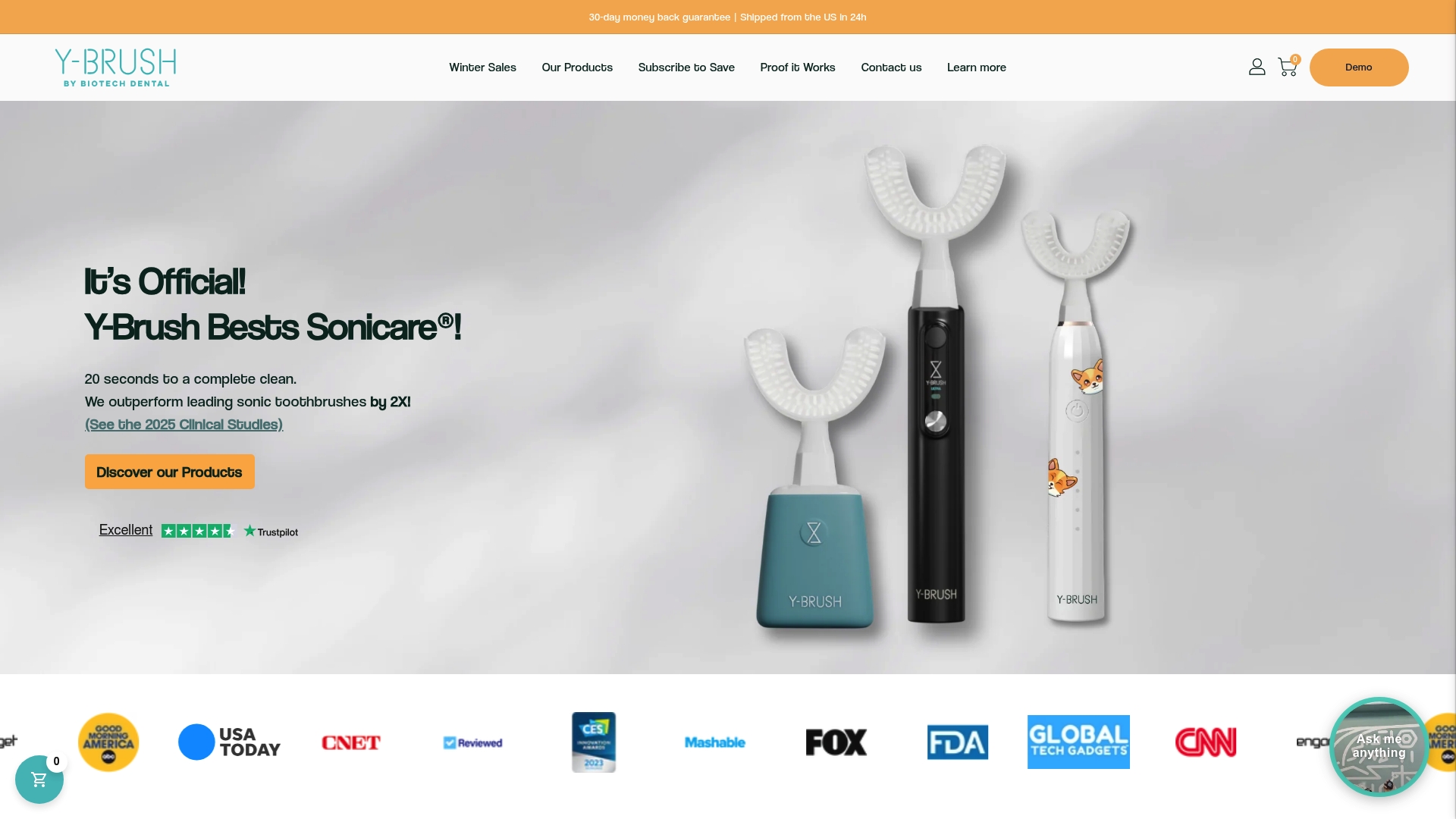
The Y-brush Essential Sonic Toothbrush includes a built-in timer, pressure sensor, and quadrant pacer in a model designed for adults who want effective results without adding time to their routine. For families with younger children, the Y-brush KidsBrush features a 2-minute musical timer and a gentle cleaning mode built for ages 4–12. Both models deliver the clinically recommended feature set at a price point that makes the upgrade straightforward.
FAQ
Do I need a toothbrush timer to brush effectively?
A built-in timer is the most reliable way to reach the dentist-recommended 2-minute brushing duration. Most people stop brushing well before two minutes without one.
What is a quadrant pacer on an electric toothbrush?
A quadrant pacer signals every 20–30 seconds to prompt you to move to the next section of your mouth. This ensures even cleaning across all four quadrants rather than over-brushing familiar areas.
Are automatic toothbrushes with timers good for kids?
Electric toothbrushes improve plaque removal and gingivitis reduction by 32–52% for children aged 3–9 compared to manual brushing. Models with shorter pacing intervals and musical timers work best for younger users.
What is the difference between auto shutoff and manual stop timers?
Auto shutoff models turn off after exactly 2 minutes, giving users a fully guided session. Manual stop models signal the end of the timer but keep running, which suits people who want to continue brushing specific areas.
How much should I spend on a top rated electric toothbrush with a timer?
Reliable models with a timer, quadrant pacer, and pressure sensor are available in the $40–$80 range. Spending more typically adds connectivity features rather than improving core brushing performance.


