


Yes, universal toothbrush heads can work, but only when the head matches your handle’s mounting system, so check your shaft and attachment style before you buy. Choose soft bristles and replace the head every 3 to 4 months, as the American Dental Association advises. If you want refills without thinking about it, a subscription with known compatibility is the fastest route.
TL;DR:
- The label universal may mean only a flexible collar or an adapter, so confirm shaft dimensions and named handle compatibility before buying.
- Choose soft bristles with rounded, evenly trimmed tips, and replace the head every 3 to 4 months or sooner if the bristles fray.
- Test a new head with light pressure, then run it briefly without toothpaste; stop if it wobbles, rattles, vibrates unevenly, or creeps off.
- Heads from other brands may void the handle warranty, and the ADA Seal applies to the complete brush system, not a replacement head sold alone.
Table of Contents
- How compatibility works across mounting systems
- How to check fit at home and test a universal head safely
- What to look for when buying replacement toothbrush heads
- Subscriptions and pack options that match ADA timing
- Where to buy, and which listing details prove compatibility
- Y-Brush compatibility and the design behind our heads
- How universal heads compare with proprietary heads for cleaning
- Customer support and warranty considerations for universal heads
- Environmental impact and recyclability of universal heads
- How to install and remove universal heads without damage
- Why subscription-backed compatible heads reduce friction
- Y-Brush replacement heads and subscription plans for predictable refills
- FAQ
- Sources
How compatibility works across mounting systems
A brush head is only as useful as its connection to the handle. Most electric handles use one of two approaches. Some have a round shaft that a head pushes or snaps onto. Others use a proprietary locking design with a specific collar, notch or keyed base that only matching heads can grip. The first style leaves room for third-party heads. The second often does not, which is why a head that looks right in a photo can still wobble, rattle or refuse to seat.
When a listing says “universal,” it usually means one of three things: a standardized shaft diameter, a flexible collar that tolerates small differences, or an included set of adapters. None of these is a guarantee. Treat the word as a starting point, then confirm the details.
Use this checklist to identify your handle type before shopping:
- Look at the base of your current head. A smooth round opening suggests push-on or snap-fit. A shaped notch or ridge suggests a proprietary lock.
- Note the handle’s brand and model number. It is usually printed on the underside or the charging base.
- Check the shaft diameter and length. Product specs should list both, and they should match what you see.
- Read the compatibility list. A seller who names specific handle families is more trustworthy than one who simply says “fits all.”
- Look for adapter mentions. If adapters are included, the listing should say which handle types they cover.
How to check fit at home and test a universal head safely
A short fit check can save a handle from damage. Follow these steps in order.
- Remove your current head and inspect the shaft. Look at the shape, diameter and any grooves or notches. Take a clear photo if you plan to compare it against product listings later.
- Compare the shaft with the listing before you purchase. Match the photos, measurements and compatibility notes. If the seller gives no shaft details, move on.
- Test the fit gently once the head arrives. A correct head slides on with light, even pressure and sits firmly with no wobble. Never force a head that resists, and use an adapter only when the seller explicitly provides one for your handle.
- Run the brush briefly with no toothpaste. Watch for rattling, uneven vibration or a head that creeps off the shaft. Stop immediately if you notice any of these.
Pro Tip: Keep the original packaging, or record a short video of your handle and current head, so a return is simple if the new head does not fit.
What to look for when buying replacement toothbrush heads
Fit is only half the decision. A head that seats perfectly but cleans harshly is a poor trade. Start with bristles. The ADA recommends soft bristles for every toothbrush because they reduce the chance of abrading gums and wearing down teeth. The same ADA page warns that generic or knockoff heads often miss bristle-stiffness standards and can feel harsher than tested originals.
Beyond bristle type, a few quality signals separate a sound head from a risky one:
- Rounded bristle tips and even trimming. Jagged or uneven tufts are a sign of poor manufacturing.
- Clear bristle details. Good listings state the bristle firmness and density instead of leaving you to guess.
- Honest photography. Sharp, close-up images of the bristles and the base are a good sign. Blurry stock images are not.
- Pack sizes and color rings. Multi-packs with colored rings help households tell heads apart.
- A visible return policy. If you are trying a generic head for the first time, make sure you can send it back.
Replacement timing matters just as much as the head you choose, and the ADA ties it to results:
Studies cited by the ADA show that three months of electric toothbrush use led to a 21% reduction in plaque and an 11% reduction in gingivitis. A worn head cannot deliver that benefit, so stay on schedule.
Subscriptions and pack options that match ADA timing
The ADA recommends a new head every 3 to 4 months, or sooner if the bristles fray. A subscription turns that guideline into a habit. Scheduled deliveries can help you replace the head when it is due instead of when you remember. For most people, a 3-month cycle is the simplest match.
Retailers sell replacement heads in a few common formats, and each suits a different household:
- Single heads: useful for testing a new style or filling a gap, but usually the highest cost per head.
- Small packs of 4 to 8: a good fit for one or two users, covering a year or more of replacements.
- Bulk packs: may offer a lower cost per head, but you pay upfront and need to store them.
- Subscriptions: spread the cost across deliveries and remove the reordering step, which tends to pay off for people who otherwise forget.
If several people share a household, set the cadence for each user instead of assuming one schedule fits everyone. Mixed packs with color rings also keep heads from getting swapped between family members.
Where to buy, and which listing details prove compatibility
Not every storefront gives you the information you need. The most reliable channels are manufacturer direct stores, direct-to-consumer subscription pages, and major retailers and pharmacies that display compatibility information clearly.
Whatever channel you use, look for these signals:
- Explicit mounting compatibility. The listing names the handle families or shaft type the head fits.
- A clear return policy. You should know how to send back a head that does not seat properly.
- Customer photos. Real images of the head on a real handle are hard to fake.
- Adapter details. If adapters come in the box, the listing states which handles they support.
Walk away from listings with no compatibility information, low-quality photos or no return option. Those gaps usually mean the seller has not tested the head against your handle.
Y-Brush compatibility and the design behind our heads
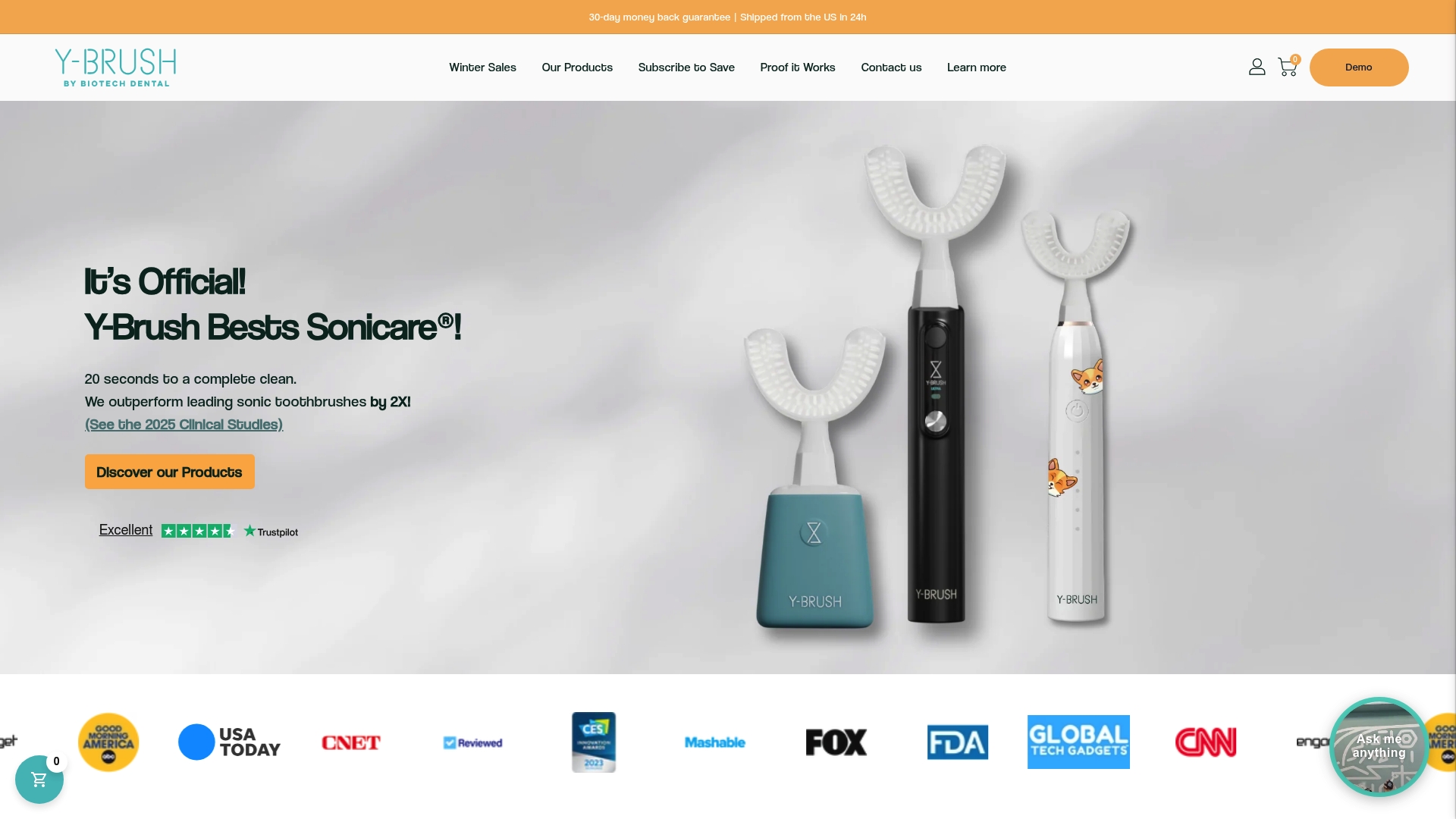
We build our brush heads around a Y-shaped design that uses sonic vibrations. That design shapes how you should think about compatibility. Our heads are made to work with our handles, and we also offer compatible brush heads for other brands, so you can keep a handle you already own while moving to a refill program.
If you are using a Y-Brush handle, the simplest path is to order the matching heads straight from our collection, where the fit is known. If you own another brand’s handle, check our compatible head listings against your shaft type using the checklist above before ordering. We recommend this approach because it takes the guesswork out of fit: you are matching a head to a handle that has been designed to work with it, instead of hoping a generic listing is accurate.
The design itself is a practical advantage. Our Y-shaped head is built for people who rarely manage a full brushing routine, with a 20-second brushing routine. Our own claim is that this approach removes plaque more effectively than leading sonic toothbrushes. Whatever your starting point, replace the head on the ADA’s 3 to 4 month schedule so the bristles stay effective.

How universal heads compare with proprietary heads for cleaning
Cleaning performance depends on three things: bristle quality, head shape and how securely the head sits on the handle. A well-made universal head with soft, evenly trimmed bristles and a snug fit can clean competently. The risk lies in the variation. The ADA notes that generic or knockoff heads often fail to meet bristle-stiffness standards and can feel harsher or “prickly” compared with authentic, tested heads.
Proprietary heads have an edge in consistency. The manufacturer designs the bristle pattern, the head angle and the base together, then tests them as a system. That tested pairing is what the ADA means when it notes that seals of acceptance apply to the whole brush system, not to a head sold separately.
A universal head can still be a sensible choice, particularly when it is affordable and the fit is secure. Judge it on the same terms you would judge any head: soft bristles, rounded tips, a firm seat on the shaft and a replacement date you actually follow. A cheaper head that you replace on time will usually serve your gums better than a premium head you use for far too long.
Customer support and warranty considerations for universal heads
Before you buy a non-original head, understand what it could do to your coverage. Using non-genuine replacement heads can void a handle manufacturer’s warranty and can invalidate seals such as the ADA Seal of Acceptance, because those certifications apply to the whole brush system rather than to individual parts.
In practice, that means a few questions are worth asking before you order:
- Does your handle still have an active warranty? If so, read its terms on third-party heads first.
- Who supports the head? With a universal head, the seller supports the head and the handle’s maker supports the handle. If a fit problem damages the handle, the two may point at each other.
- Is there a return window? A generous return policy is your main protection when a head does not fit.
With our own program, support is simpler because the handle and the head come from the same place. Our membership plans keep heads arriving on schedule, and our lifetime warranty is tied to staying on a subscription plan. If you are unsure which route protects your handle best, contact us before you order and we will help you match a head to your model.
Environmental impact and recyclability of universal heads
Every replacement head is a small piece of plastic, and a household that follows the 3 to 4 month schedule discards several per person each year. Most heads combine plastic, nylon bristles and sometimes a metal pin or rubber grip, and that mix of materials is the main obstacle to recycling. Municipal programs rarely accept them in standard curbside bins.
Universal heads do not change this picture on their own, but they do affect how much you throw away. Because one head can fit several handles, you avoid buying a whole new brush when the handle works fine, which cuts waste compared with replacing the full unit. Buying only what you need on a set cadence also helps. A subscription limits stockpiling and the leftover heads that end up discarded unused.
A few habits reduce the footprint further:
- Replace heads on the ADA’s schedule, rather than replacing them early.
- Check whether the manufacturer or a local program offers a take-back or specialty recycling option.
- Choose packs that use minimal outer packaging.
None of these steps is dramatic, but together they trim waste without compromising oral health.
How to install and remove universal heads without damage
A secure installation protects both the head and the handle. Start with a clean, dry shaft and a handle that is switched off.
To install a head, line up the opening with the shaft and press down with steady, even pressure until it seats fully. On a push-on style, you should feel it settle with no gap at the base. On a snap-fit style, listen for a faint click. Then give the head a light tug to confirm it holds, and turn the brush on for a few seconds to check for wobble.

To remove a head, switch the handle off, then pull the head straight off the shaft. Avoid twisting or levering it sideways, since that can crack the collar or strain the shaft. If a head sticks, wiggle it gently along the line of the shaft instead of increasing force.
Stop if anything feels wrong. A head that will not seat, spins loose or vibrates unevenly is the wrong fit, and forcing it risks damage. Rinse the base of the shaft after each swap to clear any toothpaste buildup, which can make future heads harder to seat. Keep any adapters with the handle so they do not get lost.
Why subscription-backed compatible heads reduce friction
Most people do not skip head replacement on purpose. They simply forget, or they run out and put off reordering. A subscription removes that failure point, and that is the part of the problem I find most worth solving. The ADA’s 3 to 4 month guideline only helps if you follow it, and a scheduled delivery turns good intentions into a habit.
For households with several users, the benefit multiplies. A compatible head that arrives on time removes the guesswork about who needs a new one and whether it will fit. Y-Brush fits this approach well: our program is built for busy routines, with refills that show up without extra effort. The gain is modest but real, since regularly replacing the head helps keep it in good condition.
— Joris
Y-Brush replacement heads and subscription plans for predictable refills
If you want compatible heads that arrive on a schedule, we make it simple. Our plans keep fresh heads coming so you stay aligned with the ADA’s 3 to 4 month guideline without tracking dates yourself.
- Core Plan: 29.90 $ per quarter.
- Pro Plan: 49.90 $ per quarter.
- Pro+2 Plan: 69.90 $ per quarter.
- Replacement brush heads: available to browse in our products collection, including compatible heads for other brands.
Each plan is built around regular refills, so reordering stops being a chore. Compare the Core, Pro and Pro+2 plans to find the right fit, or browse our replacement brush heads and start your first delivery today.
FAQ
Are all toothbrush heads compatible with every handle?
No. Fit depends on the mounting system, and many handles use a proprietary lock that only matching heads can grip. Always check your shaft type and the seller’s compatibility notes before buying.
How do I replace the brush head on a battery toothbrush?
Switch the handle off, then pull the old head straight off the shaft without twisting. Line up the new head, press it down firmly until it seats, and give it a light tug to confirm it holds.
Which toothbrush head works for a Sonicare handle?
Look for a head that explicitly lists your Sonicare model in its compatibility details. Because handles differ in their attachment style, a named compatibility list is more reliable than a general “universal” label.
Can I use a generic head without risking my warranty?
It depends on your handle’s terms. The ADA notes that non-genuine heads can void a manufacturer’s warranty, so read your warranty before switching and keep your return window in mind.


