


Sonic electric toothbrushes typically move their bristles at up to about 40,000 strokes per minute, according to UCLA Health. Some packaging claims higher figures, and oscillating-rotating brushes quote much lower ones. The catch is that these numbers are not measured the same way from brand to brand, and a bigger number does not automatically mean a cleaner mouth. This guide explains what a vibration count actually tells you, what else determines cleaning, and how to use the figure when you shop.
TL;DR
- Sonic toothbrushes commonly advertise figures in the tens of thousands of movements per minute, with UCLA Health citing up to 40,000 strokes per minute.
- Brands count “vibrations,” “strokes,” “movements” and “pulsations” differently, so two numbers on two boxes are often not comparable.
- Cleaning depends on frequency and amplitude together, plus brushing time, technique and head design, not on frequency alone.
- The ADA recommends two minutes of brushing, and research links that duration to more plaque reduction than one minute.
- Y-Brush takes a different route: a Y-shaped head designed to clean in 20 seconds, rather than a race for the biggest vibration number.
Table of Contents
- What “vibrations per minute” actually measures
- Typical ranges by brush type
- Why the numbers are hard to compare
- Does a higher vibration rate clean better?
- Time and technique still outrank speed
- Gums, sensitivity and the rest of your routine
- How to use the VPM number when you shop
- Our perspective
- Find the right Y-Brush for your routine
- Common myths about vibration counts
- FAQ
- Sources
What “vibrations per minute” actually measures
Vibrations per minute (VPM) is the number of times the bristles complete a back-and-forth cycle in 60 seconds. A brush rated at 31,000 VPM moves its bristle tips through that cycle roughly 517 times every second. That is why a sonic brush produces a hum rather than a visible wiggle.
Frequency is only half of the physics. As Inside Dentistry explains, cleaning performance depends on both frequency (cycles per minute) and amplitude (the distance the bristle tips travel). Together they set the bristle-tip velocity, and at high enough velocity the motion can create fluid activity that disrupts the sticky biofilm of plaque, even in spots the bristles do not directly touch.
Here is a simple way to picture it. Two brushes can both run at 30,000 cycles per minute. If one moves its bristle tips through a wide arc and the other barely shifts them, they will not clean the same way. A box that lists frequency but not amplitude gives you one input out of two.
Typical ranges by brush type
Electric toothbrushes fall into two broad families, and their numbers sit in very different places.
| Brush type | How the head moves | Typical advertised figure |
|---|---|---|
| Sonic | Rapid side-to-side or vibrating motion of the bristles | Up to about 40,000 strokes per minute (UCLA Health); some products advertise more |
| Oscillating-rotating | A small round head rotates back and forth, often with added pulsations | Several thousand oscillations per minute, with a separate, higher pulsation count |
| Manual | Moved by your hand | Not applicable |
Two things follow from this table. First, a sonic brush and an oscillating-rotating brush can look wildly different on paper while doing comparable work in the mouth. Second, “up to” matters: the top figure is often reached in the brush’s most intense mode, and many people use gentler settings day to day.
Why the numbers are hard to compare
Shoppers often search for a brand’s exact figure and then line it up against a rival’s. That comparison is shakier than it looks.
Different units for the same idea. One company says “vibrations,” another says “strokes,” a third says “movements” or “sonic pulses.” A stroke can be a single sweep in one direction or a full back-and-forth cycle. If one brand counts each direction separately, its number is twice another’s for identical motion.
Rated versus delivered. A rated speed is the motor’s design target, often measured without load. Once the bristles meet teeth, toothpaste and your cheeks, the actual motion can differ.
Mode dependence. Brushes with cleaning, sensitive and whitening modes run at different speeds. A headline number usually reflects one mode.
Amplitude is rarely stated. Because amplitude is missing from most listings, you cannot calculate bristle-tip velocity yourself.
The practical lesson: treat VPM as a rough category label (sonic-range or not), not as a score to rank products by.

Does a higher vibration rate clean better?
Not in any way the research has pinned to the number itself. A systematic review of 32 publications and 38 comparisons found a small, potentially clinically relevant longer-term advantage for oscillating-rotating brushes over high-frequency sonic brushes. A network meta-analysis reported high certainty for a small plaque-removal benefit of powered brushes over manual ones, and moderate certainty for a very small benefit of oscillating-rotating over high-frequency sonic brushes.
Read that carefully. The differences between powered technologies are small, and the clearest finding is that powered brushes as a category help with plaque. If a higher frequency were the dominant factor, the lower-frequency oscillating-rotating design would not hold its own. What seems to matter more is the whole system: head shape, bristle layout, motion pattern, a timer, and whether you actually use the brush for long enough.

Time and technique still outrank speed
The American Dental Association recommends brushing for two minutes, and notes that data associate this duration with greater plaque reduction than one minute. The ADA also says both manual and powered brushes can remove plaque and reduce gingival inflammation when used appropriately, and suggests considering a powered brush for people with special needs, caregiver assistance or limited manual dexterity.
This is where real-life habits collide with the ideal. Many people brush well under the recommended two minutes. A brush that spins at 40,000 strokes per minute for 40 seconds delivers fewer total cycles than a slower one used for two minutes, and it spends far less time at each tooth surface. Frequency multiplied by time is the rough quantity that matters, and time is the factor you control.
A few habits make any electric brush work better:
- Let the brush do the moving. Guide the head slowly from tooth to tooth rather than scrubbing.
- Angle the bristles toward the gumline. Plaque collects where tooth meets gum.
- Use light pressure. A review of toothbrushing and oral health found electric brushes more abrasive than manual ones when used with the same force and duration, and notes aggressive brushing can damage teeth and tissue. Many powered brushes have pressure sensors for this reason.
- Cover every surface. Outer, inner and chewing surfaces of every tooth, not only the front teeth.
- Replace the head on schedule. Worn bristles lose shape and clean less effectively, whatever the motor does.
Gums, sensitivity and the rest of your routine
Faster is not gentler. If your gums bleed or feel sore when you start an electric brush, pick a softer mode, reduce pressure and let your mouth adjust. Persistent bleeding, receding gums or pain are reasons to see your dentist or hygienist, not to buy a different motor.
What else you put in your mouth also shapes your gum and tooth health. If you use oral nicotine products, this guide to nicotine pouches and teeth covers how they can affect your gums, which is worth knowing alongside any brushing routine.
How to use the VPM number when you shop
Use the figure as a filter, then move on to the features that change results.
Step 1: Decide whether you want a sonic brush. If so, expect a number in the tens of thousands. A listing far below that is probably another technology; a listing far above it is probably counting differently, not cleaning dramatically better.
Step 2: Check the timer. A two-minute timer with quadrant reminders protects you from the under-brushing problem that no motor can solve.
Step 3: Look at the head. Shape, bristle density and how well the head reaches molars and gumlines affect what the motion can reach.
Step 4: Consider pressure feedback. It guards against the abrasion risk of heavy-handed brushing.
Step 5: Price the heads, not just the handle. Brush heads wear out, so ongoing cost matters as much as the sticker price.
Step 6: Look for independent evidence. Clinical data on plaque removal tells you more than a motor spec.
Our perspective
Most vibration-count debates start from a reasonable question and end in the wrong place. People want to know which brush cleans best, and the number on the box looks like an answer. It is really one input.
What we see is a different problem. Consumers know they should brush for two full minutes, yet most do not, and a typical brush session is under one minute. A faster motor does not fix that. A brush designed around how people actually live might.
That is why we built Y-Brush around a patented Y-shaped head that is designed to deliver a complete clean in 20 seconds using sonic vibrations. The head shape does work that frequency alone cannot: it is built to reach more of the tooth surface at once. In our clinical testing, Y-Brush has been shown to remove plaque 2X more effectively than leading sonic toothbrushes, and it is dentist-approved.
So when you compare brushes, we would encourage you to ask what the design does with the motion, how long the brush takes to finish the job, and whether you will use it every day. A brush you reach for twice a day beats a spec sheet you admire once.
Joris
Find the right Y-Brush for your routine
If you want a sonic brush built around speed and head design, Y-Brush offers membership plans that bundle the brush with regular head refills. Current published pricing is $29.90 per quarter for the Core Plan, $49.90 per quarter for the Pro Plan and $69.90 per quarter for the Pro+2 Plan. Our membership is backed by a subscription-based lifetime warranty. You can compare the options on the Y-Brush plans page.
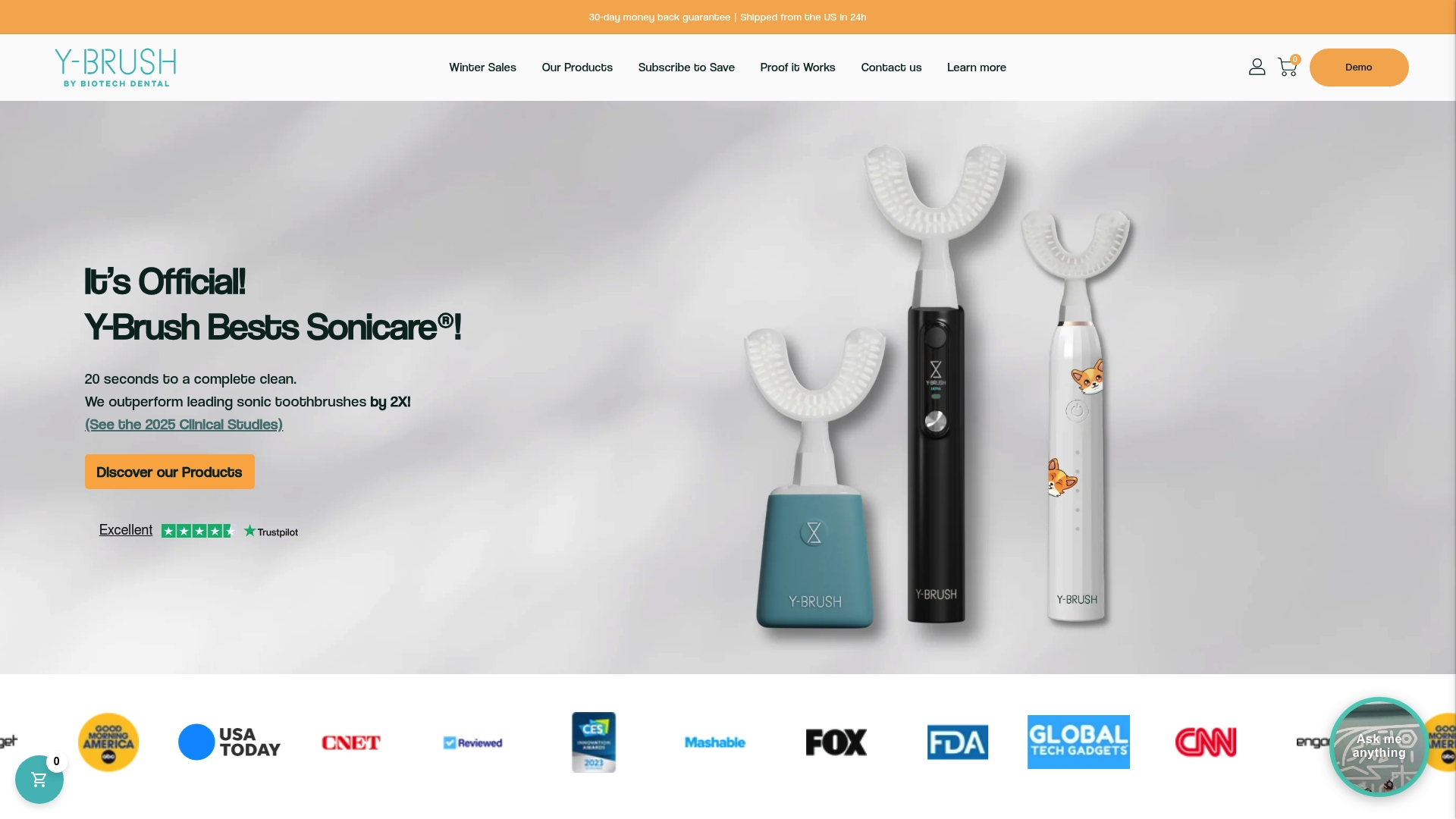
Already own a brush? We also make compatible brush heads for other brands, plus replacement heads for Y-Brush handles, in the Y-Brush products collection. Fresh heads are one of the simplest upgrades to any electric brushing routine.
Common myths about vibration counts
“A bigger number means a deeper clean.” The research above shows small differences between powered technologies, and the strongest evidence supports powered brushes over manual ones as a group. A bigger number is not a verified shortcut to a cleaner mouth.
“Sonic means the brush vibrates visibly.” At tens of thousands of cycles per minute, the motion is too fast and small to see. What you feel is a hum in the handle.
“Electric brushes make brushing time irrelevant.” They do not. The two-minute recommendation applies whether the brush is manual or powered, and that is the gap that design improvements try to close.
“More power means you can press harder.” The opposite is true. Extra force adds abrasion risk without helping cleaning, so use light pressure and let the bristles work.
FAQ
How many vibrations per minute does a sonic toothbrush have?
Sonic toothbrushes commonly move at up to about 40,000 strokes per minute, according to UCLA Health. Individual products advertise different figures, and some go above that range. Because brands count strokes, vibrations and pulsations differently, compare designs and evidence rather than the raw number.
Are vibrating toothbrushes more effective than manual ones?
A network meta-analysis found high certainty for a small plaque-removal benefit of powered toothbrushes over manual brushes. The ADA says both types can work well when used appropriately, and suggests powered brushes for people with limited dexterity or those who need caregiver help. Brushing for two minutes with good technique matters in either case.
Does a higher vibration rate mean better cleaning?
Not necessarily. Inside Dentistry notes that frequency and amplitude together determine bristle-tip velocity, and most packaging lists only frequency. Reviews also find only small differences between sonic and oscillating-rotating designs, so head design, timer and consistency count for more than the headline figure.
Can an electric toothbrush damage my gums?
Any toothbrush can if you press too hard. A review of toothbrushing and oral health found electric brushes more abrasive than manual ones at the same force and duration, and warns that aggressive brushing can harm teeth and tissue. Use light pressure, choose a gentle mode if your gums are sensitive, and see your dentist if bleeding or soreness continues.
How long should I brush with an electric toothbrush?
The ADA recommends two minutes, twice a day, and associates that duration with greater plaque reduction than one minute. Y-Brush is designed to give a complete clean in 20 seconds, which is our answer for people who find two full minutes hard to sustain. Ask your dentist which approach suits your teeth and gums.
Sources
- Ask the Doctors: Are electric toothbrushes worth the extra cost? (UCLA Health)
- Focus On: Power Toothbrush Technology, State of the Art (Inside Dentistry)
- Home Oral Care (American Dental Association)
- The efficacy of powered toothbrushes: a systematic review and network meta-analysis
- The efficacy of an oscillating-rotating power toothbrush: systematic review
- The Impact of Toothbrushing on Oral Health, Gingival Health and Tooth Wear


