


Plaque removal is about how much of each tooth surface the brush reaches, and how long it stays there. The American Dental Association (ADA) recommends brushing twice a day for two minutes with fluoride toothpaste, because two minutes achieves clinically significant plaque removal with a conventional brush. Most people brush for far less. Y-Brush was built around that gap: a patented Y-shaped head, sonic vibrations and a design meant to clean every surface at once in 20 seconds. Below we cover what the studies show about brushing time, why head design matters, and how to judge any 20-second claim.
TL;DR
- The ADA’s consensus is twice-daily brushing with fluoride toothpaste for two minutes, and research shows plaque removal rises with brushing time on conventional brushes.
- The time studies tested ordinary brushes, so they say little about a head designed to clean several surfaces at once.
- Y-Brush’s Y-shaped head is designed to deliver a complete clean in 20 seconds. We claim it removes plaque 2X more effectively than leading sonic toothbrushes.
- Technique, cleaning between teeth and regular dental visits matter with any brush.
- Y-Brush plans start at $29.90 per quarter and include regular refills.
Table of Contents
- What plaque is and why time matters
- What the research says about brushing time
- Why most people brush for under a minute
- How a Y-shaped head is designed to work
- Technique still matters, whatever brush you use
- If you have crowns, braces or other dental work
- Perspective: why we built Y-Brush around 20 seconds
- Choosing a Y-Brush plan
- How to judge any 20-second claim
- Signs it is time to see a dentist
- A simple daily routine
- FAQ
- Sources
What plaque is and why time matters
Mayo Clinic describes plaque as a sticky white film containing bacteria. After you eat sugar, those bacteria produce acids that attack enamel and can contribute to cavities. The NHS adds that plaque contributes to gum disease and tooth decay when teeth are not brushed properly.
Plaque returns every day, so it has to be disrupted every day. Left in place, it can harden. Mayo Clinic explains that plaque can turn into tartar, also called calculus, which makes teeth harder to clean, and buildup around the gums can cause inflammation and gum disease.
That is why brushing habits matter more than any single product feature. A brush only helps if you use it consistently and it reaches the surfaces where plaque collects.

What the research says about brushing time
The studies on brushing duration are consistent: on conventional brushes, more time means more plaque removed. Here is what they found.
| Study | What it tested | Main finding |
|---|---|---|
| 2025 systematic review (5 studies, 328 participants) | 1 minute vs. 2 minutes, manual and powered brushes | Two minutes gave significantly greater plaque-score reduction, with moderate certainty |
| 2009 in-vivo study (47 people, manual brush) | 30 to 180 seconds | 120 seconds removed 26% more plaque than 45 seconds; 180 seconds removed 55% more than 30 seconds |
| 1993 clinical study (20 subjects, four brushes) | 7.5 to 90 seconds per quadrant | Most of the effect came by about 30 seconds per quadrant; powered brushes did better than the manual brush at several time points |
| 2023 typodont study | Several brushing intervals on a model | Removal increased with time; the authors said clinical studies are needed before changing recommendations |
The 2025 review also gives average manual-brushing plaque-score reductions of about 27% after one minute and 41% after two minutes. For powered brushes, the reductions varied by plaque index but were higher at two minutes than at one.
How to read these numbers
Three points help put this evidence in context.
- The studies measure brushing time, not head design. The 2009 study used a manual toothbrush. The 1993 study compared four brushes that cleaned one quadrant at a time. None tested a head built to treat the upper and lower teeth together.
- Powered brushes already showed an advantage. In the 1993 study, powered brushes outperformed the manual brush at several time points, especially between teeth. Technology can change what each second delivers.
- Plaque scores are a stand-in. The ADA notes that plaque indices are surrogate measures rather than direct measures of cavities or gum inflammation. They are useful, but they are one part of the picture.
The practical takeaway is that the time you spend and the way your brush works together determine the result. Time is a proxy for coverage: how many surfaces get cleaned, and how thoroughly.
Why most people brush for under a minute
Two minutes is longer than it sounds. The ADA’s guidance is clear, and yet in our experience a typical brushing session lasts under a minute. Mornings are rushed, evenings are tired, and a manual brush asks you to work through each quadrant and each surface one at a time.
That gap is what we set out to close. The ADA says two minutes achieves clinically significant plaque removal. A product that gets people to a complete clean in the time they will actually spend is designed to serve the same goal: less plaque left behind, every day.

How a Y-shaped head is designed to work
A conventional brush head is a single flat rectangle. It cleans a small area at a time, so you move it around the mouth in a set pattern and hold it in each zone. Time adds up because the head is small.
The Y-Brush head is shaped differently. Its patented Y-shaped design is built to reach the outer, inner and chewing surfaces together, and sonic vibrations help disrupt plaque as the head sits against the teeth. The idea is simple: when a head covers more of the mouth at once, each second of brushing does more work.
Our claims for the design are:
- A complete clean in 20 seconds.
- Plaque removal clinically proven to be 2X more effective than leading sonic toothbrushes.
- A dentist-approved approach to daily cleaning.
- A subscription-based lifetime warranty.
These are the brand’s own claims. We suggest you ask your dentist how any brush fits your own mouth, especially if you have orthodontic hardware, restorations or gum disease.
Technique still matters, whatever brush you use
A good brush helps most when it is used well. The ADA’s technique advice applies to manual and powered brushes alike:
- Use a soft-bristled brush with fluoride toothpaste. The ADA recommends soft bristles and gentle pressure because they may reduce the risk of gum injury, and says either manual or powered brushes can be used effectively.
- Angle the brush at about 45 degrees to the gumline.
- Use gentle, short back-and-forth strokes.
- Clean the inner, outer and chewing surfaces. For the inner surfaces of the front teeth, hold the brush vertically and make several up-and-down strokes.
- Replace the brush or brush head every three to four months, or sooner if the bristles are matted or frayed.
That last point is where a refill plan earns its place. A worn head cleans less well, and it is easy to forget the date.
Don’t skip the spaces between teeth
Brushing cannot reach everywhere. The ADA recommends cleaning between your teeth daily with floss, interdental brushes, oral irrigators or woodsticks. The NHS describes the floss method: slide the floss gently to the gumline, curve it into a C-shape, and move it up and down each tooth.
Fast brushing and interdental cleaning work well together. Brushing handles the broad surfaces. Cleaning between teeth deals with the tight spaces where plaque gathers.
If you have crowns, braces or other dental work
Restorations and orthodontic appliances create extra edges where plaque can collect. If you have crowns, for example, it is worth understanding how they behave over time, including with habits like grinding. A guide to zirconia crowns and bruxism covers one common restoration. Whatever you have, ask your dentist or hygienist which brush head and cleaning aids suit it before you change your routine.
Perspective: why we built Y-Brush around 20 seconds
We started from an honest observation. People know they should brush for two full minutes, and about 90% don’t. A typical brush lasts under a minute.
We don’t think the answer is to scold people into a longer routine. We think the answer is a brush that fits how people live. That’s why we designed a Y-shaped head that cleans more of the mouth at once, and why we pair it with sonic vibrations.
The research on brushing time tells us why coverage matters: plaque removal rises with the work a brush does. Our design aims to put that work into 20 seconds, so a rushed morning or a tired night still ends with a clean you can feel.
We also believe a good brush should stay good. That’s why our plans include regular refills and a subscription-based lifetime warranty. Fresh heads, delivered on a schedule, remove one more reason to skip.
Joris
Choosing a Y-Brush plan
Y-Brush is sold online direct to consumers, and the plans bundle the brush with regular refills. These are the current prices as published on our site:
| Plan | Price |
|---|---|
| Core Plan | $29.90 per quarter |
| Pro Plan | $49.90 per quarter |
| Pro+2 Plan | $69.90 per quarter |
The Core, Pro and Pro+2 plans are the simplest way to get a brush and keep fresh heads arriving. They suit adults and parents buying for children, and the heads follow the replacement schedule the ADA recommends.
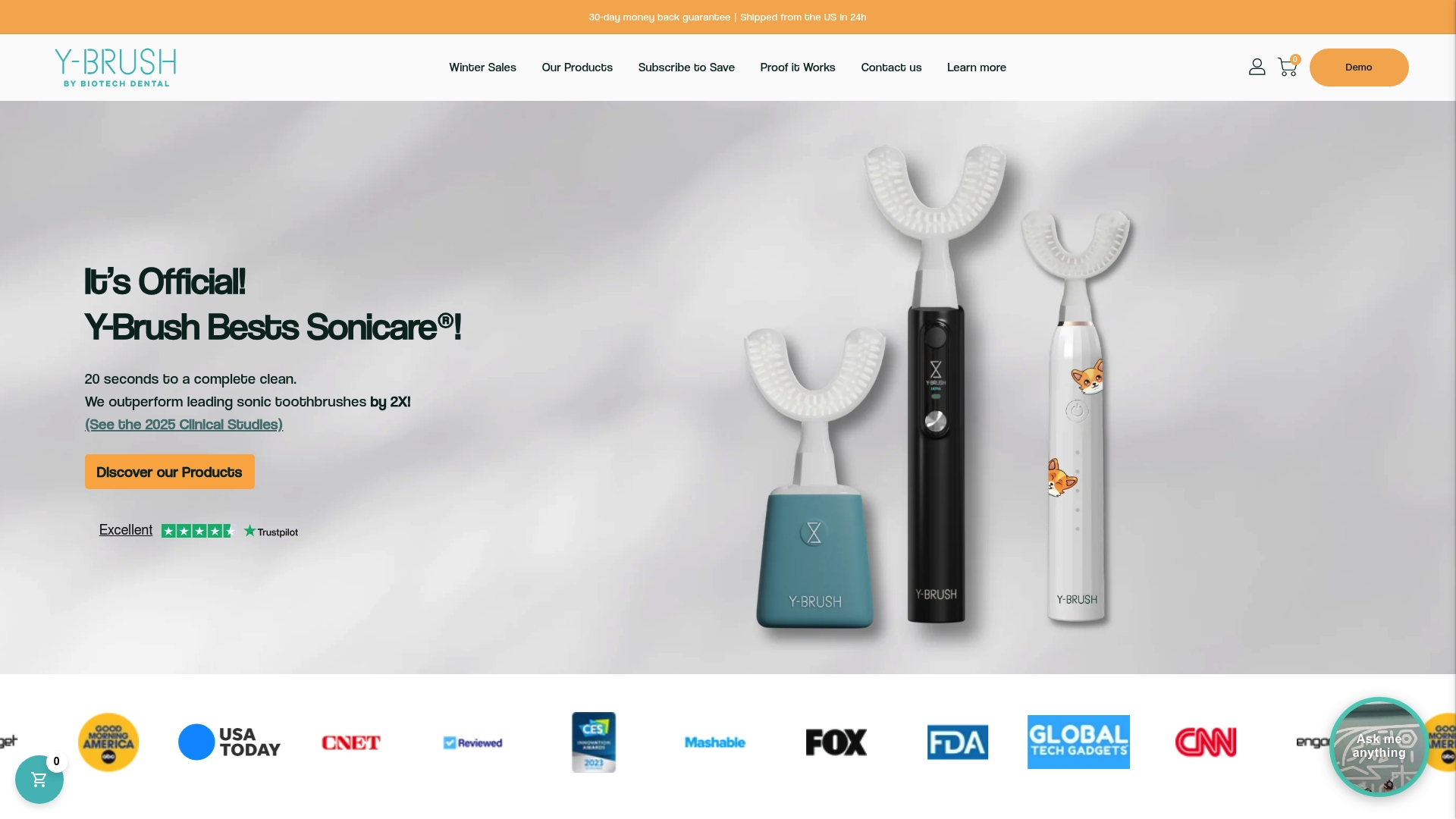
If you already own a sonic brush, our range also includes brush heads, including heads compatible with other brands, so you can try the shape before you switch. You can see everything we offer at Y-Brush.
How to judge any 20-second claim
When a brand promises a fast clean, these questions help you decide whether to trust it:
- What was measured? Look for plaque scores in a clinical setting, not only a lab model. The 2023 typodont study shows why: its authors stressed that clinical studies are needed.
- What was the comparison? A result against a manual brush is different from a result against a leading sonic brush.
- Does it replace the basics? Fluoride toothpaste, daily cleaning between teeth and regular dental visits remain part of any routine.
- What happens after purchase? Replacement heads, warranty terms and how the plan renews affect the real cost.
- What does your dentist say? Your own mouth, gums and dental work are the final test.
Signs it is time to see a dentist
No brush removes tartar once it has hardened. Mayo Clinic says plaque left on teeth can harden into tartar, which makes teeth harder to clean. Hardened deposits are removed in a dental office, not at home, so book a cleaning if you notice rough, crusty buildup near the gumline.
See your dentist or hygienist promptly if you have gums that bleed or look swollen, persistent bad breath, or sensitivity that is new. Mayo Clinic notes that buildup around the gums can cause inflammation and gum disease, so these signs are worth checking early. Routine visits let your dentist spot problems before you feel them.
A simple daily routine
Here is a routine that works with the ADA’s guidance and a fast-cleaning brush:
- Morning: brush with fluoride toothpaste, using the angle and strokes above.
- Evening: brush again, then clean between your teeth with floss or an interdental tool.
- Every quarter: swap in a fresh brush head.
- Every visit: ask your dentist how your brushing time and technique are working, and follow their advice on how long to brush with your particular brush.
Consistency beats intensity. A routine you keep every day removes more plaque over a year than a perfect routine you skip.
FAQ
Can you remove plaque in 20 seconds?
The time studies tested conventional brushes, and they found plaque removal rises with brushing time. They did not test a head built to cover more of the mouth at once. Y-Brush’s Y-shaped head is designed to deliver a complete clean in 20 seconds, and we claim it removes plaque 2X more effectively than leading sonic toothbrushes. Ask your dentist how long you should brush with your own brush.
How long does the ADA say you should brush?
The ADA recommends brushing twice a day for two minutes with a soft-bristled brush and fluoride toothpaste. It says two minutes achieves clinically significant plaque removal. It also says either manual or powered brushes can be used effectively.
What is the difference between plaque and tartar?
Plaque is a sticky film of bacteria on your teeth. If it stays there, it can harden into tartar, also called calculus. Tartar makes teeth harder to clean and can irritate the gums, so a dental professional needs to remove it.
How often should I replace my brush head?
The ADA says to replace your brush every three to four months, or sooner if the bristles are matted or frayed. Y-Brush plans include regular refills, so fresh heads arrive on a schedule.
Sources
- Toothbrushes | American Dental Association
- Home Oral Care | American Dental Association
- How to keep your teeth clean | NHS
- Brushing your teeth: How often and when? | Mayo Clinic
- Plaque scores after 1 or 2 minutes of toothbrushing (2025)
- The effect of brushing time and dentifrice on dental plaque removal in vivo (2009)
- A comparative study of electric toothbrushes for the efficacy of plaque removal (1993)
- Effects of brushing duration on the efficacy of dental plaque removal (2023)
- Zirconia crowns and bruxism


