


Stained or yellowed teeth can make you feel self-conscious about your smile. You want quick, convenient whitening solutions that fit your busy lifestyle without harsh treatments or expensive dentist visits. This guide walks you through safe, effective at-home teeth whitening methods backed by the latest 2026 research. You’ll discover the right materials, step-by-step application techniques, and how to achieve noticeable results in just two weeks while minimizing sensitivity and protecting your enamel.
Table of Contents
- What You Need For Effective Teeth Whitening
- Step-By-Step Teeth Whitening Process At Home
- Common Mistakes And How To Avoid Them
- What Results To Expect And How To Maintain Your Whitening
- Explore Y-Brush Solutions For Better Oral Care
- How Long Does At-Home Teeth Whitening Take To Show Results?
- Is Teeth Whitening Safe For Sensitive Teeth?
- Can I Whiten My Teeth Naturally Without Gels?
- When Should I See A Dentist For Teeth Whitening?
Key takeaways
| Point | Details |
|---|---|
| Low-concentration gels work effectively | Clinical outcomes show significant whitening with mild sensitivity in two weeks using 3% hydrogen peroxide or 8% carbamide peroxide gels. |
| Proper preparation reduces risks | Good oral hygiene and avoiding staining foods before treatment improve results and minimize discomfort. |
| Multiple whitening options available | Choose based on your sensitivity level, time commitment, and desired whitening intensity. |
| Avoid common mistakes | Following guidelines carefully prevents excessive sensitivity and maximizes brightness safely. |
| Maintenance extends results | Daily habits like avoiding staining foods and good oral care keep teeth white longer. |
What you need for effective teeth whitening
Before you start whitening, gather the right materials and prepare your mouth properly. Using quality products designed for safe home use makes the difference between disappointing results and a noticeably brighter smile.
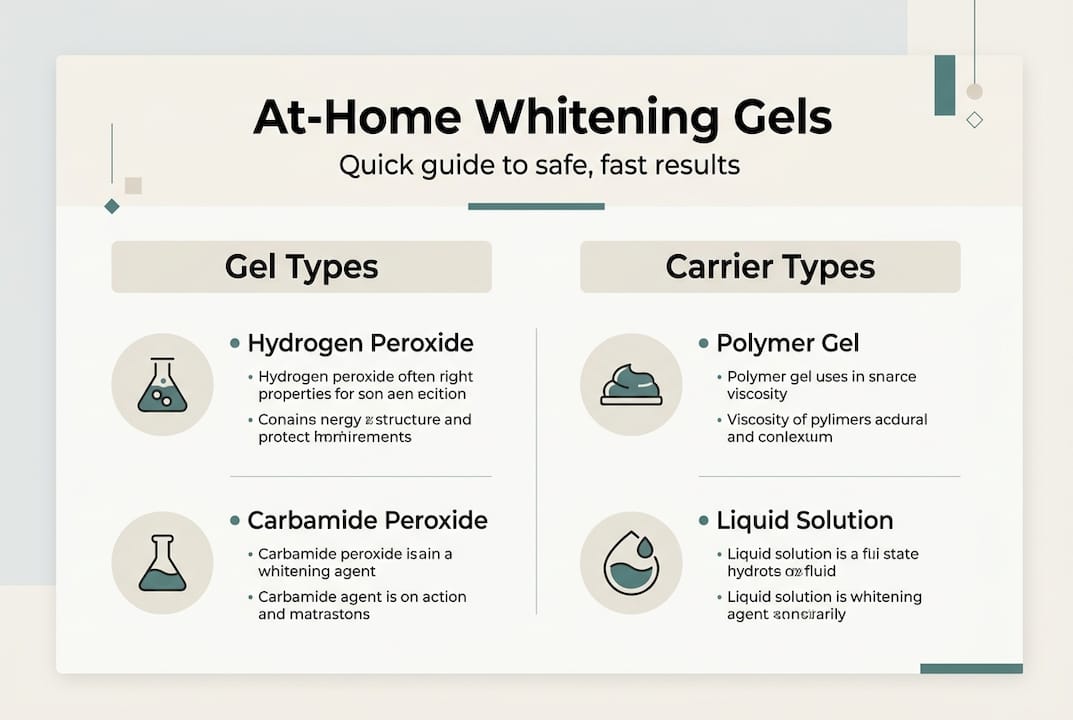
You’ll need low-concentration whitening gels containing either hydrogen peroxide or carbamide peroxide. Research shows low-concentration gels achieve significant whitening with minimal side effects. Look for 3% hydrogen peroxide or 8% carbamide peroxide formulations. You’ll also need a mouthguard or gel carrier, a soft-bristled toothbrush, and desensitizing toothpaste if you have sensitive teeth.
Polymer carriers in whitening gels matter more than you might think. These carriers help the gel adhere to your teeth, control peroxide release, and reduce sensitivity during treatment. When shopping for whitening products, choose gels with polymer carriers rather than simple peroxide solutions.
Prepare your mouth by brushing and flossing thoroughly. Schedule a dental cleaning if you haven’t had one recently, as plaque and tartar block whitening agents from reaching enamel. Avoid coffee, red wine, and dark berries for 48 hours before starting treatment. Check out these tips for whiter teeth to optimize your preparation.
Here’s what different gel concentrations deliver:
| Gel Type | Concentration | Expected Whitening (ΔE) | Sensitivity Level | | — | — | | Hydrogen Peroxide | 3% | 4.7-5.2 | Mild | | Carbamide Peroxide | 8% | 4.5-5.0 | Mild to Moderate | | Hydrogen Peroxide | 6% | 5.5-6.0 | Moderate | | Professional Grade | 10-15% | 7.0-8.5 | Moderate to High |
Pro Tip: Test any new whitening product on a small area of one tooth before applying it to your entire smile. Wait 24 hours to assess sensitivity and ensure you don’t have an adverse reaction. Understanding the risks of dental bleaching helps you make informed choices.
Step-by-step teeth whitening process at home
With your supplies ready and your mouth prepped, follow these steps to whiten your teeth safely and effectively. Consistency matters more than intensity when using at-home whitening methods.
-
Clean your teeth thoroughly. Brush and floss right before applying whitening gel. This removes food particles and plaque that could interfere with the whitening process. A clean surface allows better gel contact with enamel.
-
Apply gel to your carrier. Squeeze a thin ribbon of whitening gel into your mouthguard or apply it directly to whitening strips. Use just enough to cover the front surface of each tooth. Excess gel can irritate your gums and doesn’t improve results.
-
Insert the mouthguard carefully. Place the loaded mouthguard over your teeth, pressing gently to ensure even contact. Wipe away any gel that squeezes onto your gums with a clean finger or tissue. Keep the guard in place for 30 to 60 minutes daily.
-
Rinse and clean after treatment. Remove the mouthguard and rinse your mouth thoroughly with lukewarm water. Clean the mouthguard with a soft toothbrush and mild soap, then let it air dry. Store it in a clean, dry container.
Continue this process daily for two weeks. Most people see noticeable results within 10 to 14 days using low-concentration whitening gels. Explore various devices for teeth whitening to find what works best for your routine.
Never leave whitening gel on longer than recommended or use it more frequently than directed. Overuse increases sensitivity without improving whitening results and can damage enamel over time.
Pro Tip: Maintain excellent oral hygiene during your whitening treatment by using a quality sonic toothbrush twice daily. Clean teeth respond better to whitening agents and help you achieve more uniform results. Learn more about using hydrogen peroxide for whitening to understand the science behind the process.
Common mistakes and how to avoid them
Even with the right products and good intentions, certain mistakes can sabotage your whitening efforts or cause unnecessary discomfort. Knowing what to avoid protects your teeth and ensures better results.
Many people leave whitening gel on too long, thinking more exposure means whiter teeth. This doesn’t work. Excessive application increases sensitivity without boosting whitening power. Stick to recommended times.
Here are the top mistakes and how to prevent them:
-
Applying gel to damaged teeth. Never use whitening products on cracked teeth, exposed roots, or open sores. The peroxide can penetrate deeper layers and cause severe pain. Address dental problems before whitening.
-
Ignoring sensitivity warnings. Mild tingling is normal, but sharp pain signals a problem. If sensitivity persists beyond 24 hours after treatment, stop whitening and use desensitizing toothpaste. Check out causes of tooth sensitivity to understand what’s happening.
-
Consuming staining foods during treatment. Coffee, tea, red wine, and dark berries can stain teeth more easily while you’re whitening. Your enamel becomes slightly more porous during treatment, making it vulnerable to new stains.
-
Skipping oral hygiene. Some people think they should avoid brushing during whitening. Wrong. Continue brushing twice daily with a soft-bristled brush to remove surface stains and maintain gum health.
-
Using expired products. Whitening gels lose potency over time. Check expiration dates and store products in cool, dark places. Old gels won’t whiten effectively and may cause irritation.
If you experience persistent sensitivity, try remedies for tooth sensitivity before resuming treatment. For severe discoloration or ongoing problems, consider when to see a dentist for yellow teeth rather than continuing home treatments alone.
What results to expect and how to maintain your whitening
Understanding realistic outcomes helps you set appropriate expectations and stay motivated throughout your whitening journey. Results vary based on your starting tooth color, the method you choose, and how consistently you follow the protocol.
Research shows at-home gels achieve color change above ΔE 4.7 in two weeks with mild sensitivity. This represents a noticeable difference that most people find satisfying. Here’s how different methods compare:
| Whitening Method | Average ΔE Change | Treatment Duration | Cost Range | Sensitivity Level |
|---|---|---|---|---|
| Low-concentration gels | 4.7-5.2 | 2 weeks | $30-$80 | Mild |
| Natural methods | 1.5-2.5 | 4-8 weeks | $5-$20 | Minimal |
| Professional in-office | 7.0-9.0 | 1-2 sessions | $400-$800 | Moderate to High |
| Whitening strips | 3.5-4.5 | 2-3 weeks | $25-$60 | Mild to Moderate |
Your teeth won’t stay bright forever without maintenance. New stains accumulate from daily eating and drinking. Follow these habits to extend your results:
- Rinse your mouth with water after consuming staining foods or beverages
- Use a straw for coffee, tea, and dark sodas to minimize contact with front teeth
- Brush within 30 minutes of eating pigmented foods
- Schedule touch-up treatments every 3 to 6 months using your whitening gel
- Avoid tobacco products, which cause stubborn yellow and brown stains
Consider natural teeth whitening methods as part of your maintenance routine between gel treatments. These gentler approaches help preserve brightness without constant chemical exposure. Review these tips for whiter teeth for additional strategies.
Professional whitening delivers faster, more dramatic results but costs significantly more. For most people, at-home gels provide the best balance of effectiveness, safety, and affordability. If you want maximum whitening quickly for a special event, explore professional teeth whitening options with your dentist.
Explore Y-Brush solutions for better oral care
Whitening your teeth is just one part of achieving and maintaining a confident smile. Daily oral care habits make the biggest difference in keeping your teeth bright and healthy long term.
Y-Brush sonic toothbrushes complement your whitening routine perfectly by removing surface stains and plaque that dull your smile. The Y-Brush Essential sonic toothbrush delivers a complete clean in just 20 seconds, making it easy to maintain excellent oral hygiene even on your busiest days. Consistent brushing prevents new stains from setting in and keeps your whitening results looking fresh.
Consider Y-Brush membership plans for convenient delivery of replacement brush heads and oral care products. Regular deliveries ensure you always have fresh supplies without thinking about it. Explore new Y-Brush products designed to make oral care faster and more effective, fitting seamlessly into how you actually live.
How long does at-home teeth whitening take to show results?
You’ll typically notice visible whitening within 7 to 10 days when using low-concentration peroxide gels consistently. Most people achieve their desired results after two full weeks of daily application. The exact timeline depends on your starting tooth color and how stained your teeth were initially.
Some methods work faster than others. Professional treatments deliver results in one or two office visits, while natural methods may take four to eight weeks for modest improvement. Whitening strips usually show results in two to three weeks.
Consistency matters more than anything. Skipping days or irregular application extends your timeline and produces uneven results. Following the recommended daily schedule gives you the fastest, most uniform whitening. Check out these tips for whiter teeth to maximize your results.
Is teeth whitening safe for sensitive teeth?
Yes, teeth whitening can be safe for sensitive teeth when you use low-concentration hydrogen peroxide gels and follow proper protocols. These formulations cause only mild sensitivity in most users, which typically resolves within 24 hours after treatment.
Choose gels with polymer carriers, which reduce discomfort by controlling peroxide release. Start with shorter application times and gradually increase as your teeth adapt. Use desensitizing toothpaste for two weeks before beginning whitening treatment.
Avoid whitening if you have untreated cavities, gum disease, or exposed tooth roots. These conditions make sensitivity worse and can lead to serious pain. Learn more about tooth sensitivity causes to understand your risk factors.
Can I whiten my teeth naturally without gels?
Natural methods can mildly improve tooth color, but they work much slower and produce less dramatic results than peroxide gels. Brushing with baking soda, oil pulling with coconut oil, and eating crunchy fruits and vegetables may remove surface stains over time.
These approaches typically achieve only 1.5 to 2.5 ΔE color change after several weeks, compared to 4.7 to 5.2 ΔE from low-concentration gels in two weeks. Natural methods work best for maintenance between gel treatments rather than primary whitening.
For noticeable whitening, peroxide-based products remain the most reliable option. Explore natural teeth whitening methods as complementary strategies to support your main whitening routine.
When should I see a dentist for teeth whitening?
Consult a dentist before whitening if you have severe discoloration, dental restorations like crowns or veneers, or any untreated oral health problems. Professional evaluation ensures whitening is safe for your specific situation and helps you avoid complications.
Dentists can identify the cause of discoloration and recommend the most effective treatment. Some stains, like those from tetracycline antibiotics or tooth trauma, don’t respond well to standard whitening methods. Professional treatments may be necessary for these complex cases.
Never use whitening products if you have active cavities or gum disease. Address these issues first to prevent pain and further damage. Read about when to consult a dentist for yellow teeth to determine if professional care is right for you.


