


No, an electric toothbrush cannot replace a professional dental cleaning. Powered brushing controls daily plaque and helps prevent gum disease, but it cannot remove hardened tartar or substitute for a clinical exam. The National Institute of Dental and Craniofacial Research frames home care and professional care as partners, not alternatives, with visit frequency depending on individual risk. We see powered brushes, including our own Y-Brush, as tools that improve compliance rather than replacements for the dentist’s chair.
TL;DR:
- Electric toothbrushes offer only a small but meaningful advantage in plaque reduction over manual brushing, especially with consistent use and proper technique.
- Professional dental cleanings are necessary to remove hardened tartar and subgingival calculus that home devices cannot reach or remove.
- Routine dental exams include X-rays, gum probing, and oral health assessments that cannot be replaced by home brushing alone.
- For high-risk individuals like those with gum disease, diabetes, or smoking habits, more frequent professional visits are recommended beyond annual checkups.
- The Y-Brush improves daily compliance by reducing brushing time to 20 seconds but does not eliminate the need for professional evaluations or calculus removal.
Table of Contents
- How Electric Toothbrushes Help: What the Evidence Shows About Plaque and Gingivitis
- Limits of Brushing: Why Tartar and Deep Deposits Need a Professional
- What a Professional Cleaning and Dental Exam Actually Do
- When You Can Safely Reduce Visit Frequency
- A Practical At-Home Routine That Reduces Plaque Buildup
- Where Y-Brush Fits Into a Compliance-Focused Routine
- Risks of Skipping Professional Cleanings Entirely
- Costs and Frequency: Weighing a Toothbrush Against Dental Visits
- What We Think Consumers Get Wrong About This Question
- Keep Your Home Routine Consistent With Y-Brush
- FAQ
- Sources
How Electric Toothbrushes Help: What the Evidence Shows About Plaque and Gingivitis
Powered brushes have a measurable, if modest, edge over manual brushing. A network meta-analysis of powered toothbrush trials found a statistically significant advantage for powered brushes in reducing plaque, with some improvement in gingival health as well. The effect size is small in absolute terms, but it compounds over months and years of daily use.
A network meta-analysis found a small but statistically significant plaque reduction advantage for powered toothbrushes over manual brushes. This difference matters most when it is sustained day after day, according to the same review.
Two brushing technologies dominate the powered category, and they do not perform identically:
- Oscillating-rotating (OR) brushes spin the brush head in small circles and show a slight edge over sonic brushes in certain plaque and gingival measures.
- High-frequency sonic (HFS) brushes vibrate at high speed and still outperform manual brushing, just by a narrower margin in some comparisons.
The technology matters less than most people assume. Consistency and correct technique drive most of the real-world benefit: a sonic brush used properly twice a day will almost always beat an oscillating brush used for thirty seconds once a day. The American Dental Association notes that powered brushes are especially useful for people with limited dexterity, children, and anyone wearing braces or other dental appliances, precisely because these groups often struggle with manual technique.
Limits of Brushing: Why Tartar and Deep Deposits Need a Professional
Plaque is a soft, sticky film of bacteria that forms constantly on teeth. Left undisturbed for roughly a day or two, it begins to mineralize into tartar, also called calculus, a hardened deposit that no toothbrush, powered or manual, can scrape off. Once plaque crosses that line, removal requires dental instruments.
- Plaque is soft and removable at home with brushing and interdental cleaning.
- Tartar is hardened and bonds to the tooth surface, requiring professional scaling to remove.
- Subgingival calculus forms below the gumline, in pockets a toothbrush bristle physically cannot reach.
The CDC’s guidance on gum disease explains that plaque left to harden into tartar irritates the gums and can progress to gingivitis, then periodontitis, if it goes untreated. Deep periodontal pockets compound the problem: once gum tissue detaches from the tooth, bacteria colonize a space that no home device can clean.
Periodontal disease often causes no pain in its early stages, which is exactly why symptom-free does not mean disease-free.
Pro Tip: Bleeding gums during brushing are not normal and are often the first sign of inflammation that home care alone will not resolve.
What a Professional Cleaning and Dental Exam Actually Do
A dental visit covers ground that no home routine touches. The exam portion typically includes a review of medical history, a visual and manual oral exam, periodontal probing to measure gum pocket depth, X-rays to spot decay or bone loss invisible to the eye, and an oral cancer screening.
- Prophylaxis removes supragingival plaque and tartar above the gumline using hand instruments or ultrasonic scalers.
- Scaling and root planing targets deeper, subgingival calculus and smooths root surfaces so gums can reattach.
- Periodontal maintenance follows active treatment for patients who have already experienced gum disease.
- Individualized care planning adjusts the recommended interval and treatment based on what the exam finds.
The ADA’s chairside guide for chronic periodontitis recommends scaling and root planing as the initial treatment for chronic periodontitis, sometimes requiring local anesthetic and multiple visits when disease is widespread. Prophylaxis and periodontal therapy are not interchangeable procedures. A routine cleaning addresses a healthy mouth with minor buildup, while root planing addresses active disease that has already damaged the attachment between gum and tooth.
When You Can Safely Reduce Visit Frequency
There is no single interval that fits everyone. Some people do well with standard annual checkups, while others need cleanings every three to four months because of specific risk factors.
- A history of periodontitis or gum disease that required treatment.
- Diabetes, which impairs healing and increases infection risk in the gums.
- Smoking or vaping, both linked to higher rates of gum disease progression.
- Pregnancy, which can heighten gum sensitivity and inflammation.
- A weakened immune system from illness or medication.
In 2023, 65.5% of U.S. adults reported having had a dental exam or cleaning within the past year, according to CDC FastStats, a figure that reflects general utilization rather than a personalized recommendation for any one reader.
Certain symptoms should prompt an appointment regardless of how disciplined your brushing routine is: gums that bleed regularly, persistent bad breath, teeth that feel loose, visible tartar buildup near the gumline, or gum recession. None of these resolve with a better toothbrush alone.
A Practical At-Home Routine That Reduces Plaque Buildup
Good daily habits narrow the gap between dental visits and lower the odds of needing anything beyond routine prophylaxis.
- Brush twice daily for two minutes with a powered brush and fluoride toothpaste, replacing the brush head every three months or per the manufacturer’s guidance.
- Clean between teeth once a day using floss, interdental brushes, or a water flosser, chosen based on your tooth spacing and gum health, since the ADA notes that bristles alone miss tight contact points.
- Cut back on sugary snacks and drinks between meals, since frequent sugar exposure feeds the bacteria that form plaque.
- Quit smoking if you smoke, and keep diabetes well managed, since both directly affect gum healing and infection risk.
- Use dentist-recommended adjuncts, such as an antimicrobial rinse, only when a clinician suggests one for your specific situation.
Adherence beats novelty. A timer or phone app that tracks two full minutes, a consistent brushing order so no surface gets skipped, and a subscription that keeps fresh brush heads arriving on schedule all do more for long-term gum health than chasing the newest brush feature.
Pro Tip: Brush right before bed, not right after a meal, since food particles and acid need a little time to settle before brushing to avoid enamel wear.
Where Y-Brush Fits Into a Compliance-Focused Routine
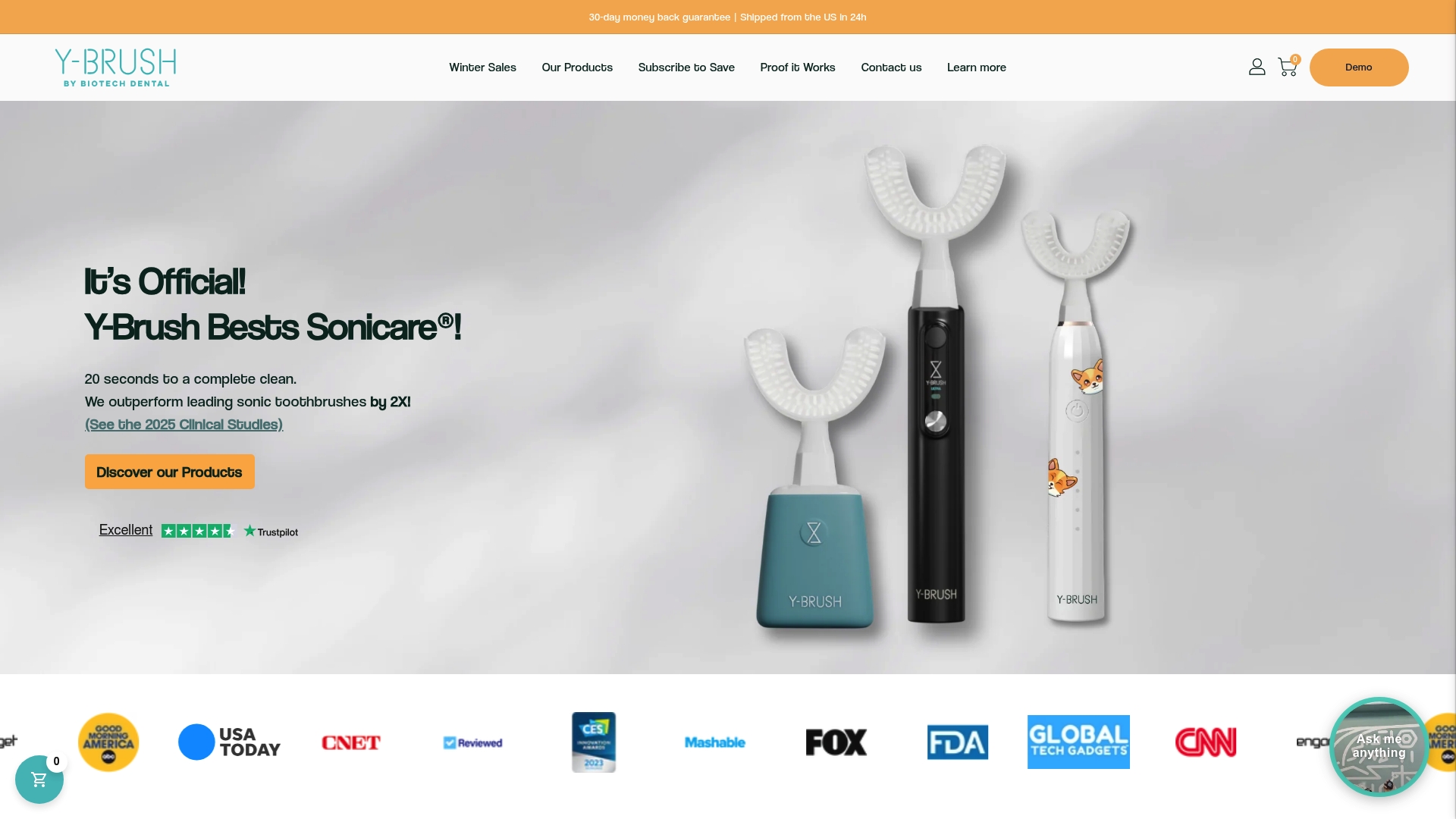
Our Y-Brush uses a patented Y-shaped head paired with sonic vibrations, designed to clean all tooth surfaces in a single 20-second session rather than the two minutes a standard brush head requires covering the same ground. The design goal is simple: when brushing takes less effort and less time, people are more likely to do it correctly and do it twice a day without skipping.
- The Y-shaped head surrounds the teeth to reach surfaces a flat brush head has to cover one pass at a time.
- A shorter brushing session is aimed at people who routinely cut brushing time short, which is common according to general brushing habit research.
- Consistent use supports the same plaque control goals that powered brushing research points to, without claiming to replace professional calculus removal.
Better compliance at home lowers the risk of new plaque hardening into tartar between visits, but it does not change the need for a dentist to assess gum pockets, take X-rays, or remove deposits that have already mineralized.
Risks of Skipping Professional Cleanings Entirely
Relying only on an electric toothbrush, no matter how advanced, carries real downsides when professional visits stop altogether. Tartar that forms below the gumline keeps accumulating silently, since no home device can reach or remove it. Over months, that buildup irritates gum tissue and can progress toward periodontitis, a condition that causes irreversible bone and attachment loss if it goes untreated.

Skipping exams also removes the early warning system dentistry provides. X-rays catch decay between teeth before it causes pain, and oral cancer screenings catch changes a mirror check at home will never reveal. A mouth can feel perfectly fine while harboring problems that only show up on a radiograph or under a dentist’s probe. The CDC’s explanation of gum disease is direct about this: gingivitis is often painless, which is exactly why it is easy to ignore until it has advanced.
There is also a compounding cost to waiting. Untreated gingivitis that progresses to periodontitis typically requires scaling and root planing rather than a simple cleaning, a more involved procedure that can mean multiple appointments and, in some cases, anesthetic. Catching problems early through routine visits is almost always simpler and less invasive than treating them after they have advanced.
None of this means an electric toothbrush is doing harm. It means the toothbrush is handling one job (daily plaque control) while a completely different job (diagnosis and calculus removal) sits undone.
Costs and Frequency: Weighing a Toothbrush Against Dental Visits
A powered toothbrush and a dental cleaning solve different problems, so they are not really competing for the same budget line. One is a daily maintenance tool with an upfront or subscription cost. The other is a periodic clinical service with its own fee structure that varies by provider, location, and whether any treatment beyond a routine cleaning is needed.
Our Core Plan runs $29.90 per quarter, the Pro Plan runs $49.90 per quarter, and the Pro+2 Plan runs $69.90 per quarter, each available through our toothbrush and plan collection. These costs cover ongoing brush head refills so the brushing surface stays effective, which matters since a worn-out brush head loses much of its plaque-removal benefit regardless of the technology behind it.

Professional cleaning costs are not something we price or control, and they vary by dental practice and by what the exam finds. The practical point for budgeting is this: consistent, correct brushing at home can reduce how much plaque hardens into tartar between visits, which may keep routine visits simpler and shorter. It does not eliminate the need for the visit itself, and skipping cleanings to save money tends to shift costs toward more involved periodontal treatment later rather than avoiding them.
What We Think Consumers Get Wrong About This Question
The real mistake is not choosing the wrong toothbrush. It is treating brushing and professional care as competing options instead of two different layers of defense. A superior brush narrows the gap between visits; it never closes it. Talk to your dentist about your own risk factors, keep up interdental cleaning alongside powered brushing, and let the exam, not your brushing streak, decide when something needs attention.
— Joris
Keep Your Home Routine Consistent With Y-Brush
A better home routine is the piece most people actually control day to day, and that is where our Y-Brush toothbrushes aim to make a difference. The Y-shaped head is built to clean every surface in a single 20-second session, which removes the biggest reason people skip or shorten brushing: it takes too long.
-
Our Core, Pro, and Pro+2 plans include regular brush head refills so the brushing surface stays effective between replacements.
-
Our full product catalog covers toothbrushes and replacement heads for anyone comparing models before buying.
-
Using Y-Brush supports better daily plaque control, but it works alongside regular dental visits, not in place of them, especially if you have any signs of gum disease.
If you want a simpler way to stay consistent with brushing between dentist visits, check our current plans and find the option that fits your routine.
This article is general information, not a substitute for advice from a qualified doctor. Consult a qualified healthcare professional about your own circumstances before acting on anything here.
FAQ
Can an electric toothbrush replace a dental cleaning?
No. An electric toothbrush controls daily plaque buildup, but it cannot remove hardened tartar or calculus, which requires professional instruments according to NIDCR guidance. Routine exams also catch issues like cavities and oral cancer that brushing cannot detect.
Do electric toothbrushes clean better than manual brushing?
Research shows powered toothbrushes offer a modest but statistically significant improvement over manual brushes in reducing plaque and gingivitis, according to a network meta-analysis of toothbrush trials. The advantage is real but works best when paired with interdental cleaning and consistent daily use.
How often should I get a professional dental cleaning?
There is no single interval for everyone. Many people do well with a yearly exam, while those with periodontitis, diabetes, or other risk factors often need cleanings every three to four months, based on ADA guidance on individualized care.
What can a dentist remove that an electric toothbrush cannot?
A dentist removes hardened tartar and subgingival calculus that forms below the gumline, areas no toothbrush bristle can reach. For more advanced disease, the ADA’s periodontitis guide recommends scaling and root planing as treatment.
Does Y-Brush replace the need for a dentist?
No. Our Y-Brush is built to improve daily brushing compliance with a 20-second cleaning session, which supports plaque control between visits. It does not remove tartar or replace the diagnostic work a dentist performs during an exam.


